
Latest Posts
Arpita’s creativity flowers in the sewing room – as told to Punya (Part 2)
An old farmer wrote to his son in prison.
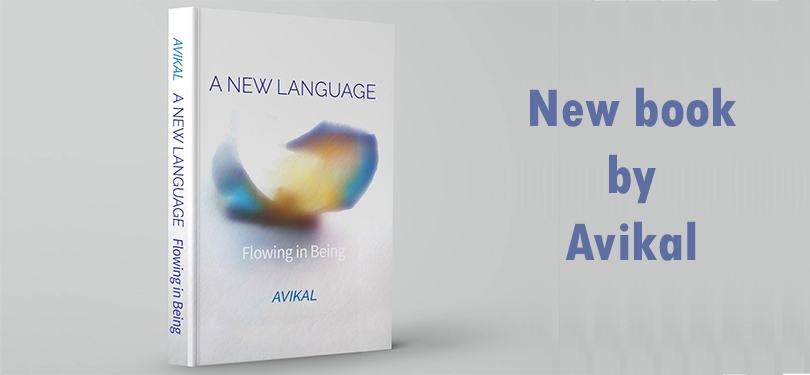
From Avikal’s collection, Coming Home – note no. 16
Dharmamurti’s journey is coming closer to sannyas – from an interview with Madhuri (Part 2) [Long Read]
This month, Marga continues her exploration into Ra’s approach to the six lines in Human Design, and examines how the next three lines tend to shape relationships
Arpita’s creativity flowers in the sewing room – as told to Punya (Part 2)
From Avikal’s collection, Coming Home – note no. 16
by Sajjad
An observation by Subhan
Satyamurti shares the story behind a restored photograph from Rajneeshpuram – and the freedom of not having to become somebody else
The smartphone, of all things, is supposed to help with meditation? This month, an experiment gets under way that approaches a contradiction of our time in earnest and turns it into research, writes Dwariko Pfeifer
Tarangini and Prachi from Osho World present their new project in detail
Osho Archives search tool (English and Hindi) launched today thanks to Anuragi’s initiative
Insights / Essays
Sarjo wonders what a web novel about humans becoming gods has to do with two hundred enlightened people and a sutra of the Buddha
Discourses and Darshans
Osho speaks on a sutra by Chuang Tzu; “Be a door, become empty…”
“If you live a fully awakened life, suddenly you live in eternity, timelessness. You have become the whole; now no time exists for you.”
Siddhena shares drawings he made for a book of Osho’s commentaries on Tao – plus more recent artwork
Shravan’s artwork in our online Art Gallery; “When the creative spirit calls, I just pick up my colours.”
Photographs by Bhaven, with a poem by Abhinava
Photographs by Michael Sudheer
Back from her travels, Madhuri writes about books by Andy Cave, Doris Lessing, Dodie Smith, Joe Biel and Elly Blue, Walt Larimore, Karolina Ramqvist, Charlotte Bingham, Heather McDonald, Dave Barry, June Tate
S D Anugyan on the Emily Dickinson TV show, the Transcendentalists, death and astral travel
Madhuri reviews Dr Chris van Tulleken’s book, subtitled ‘Why Do We All Eat Stuff That Isn’t Food… and Why Can’t We Stop?’
Thanks to Priya’s efforts, Neelam’s memoir – that Osho had asked her to write for ‘seekers on the path’ – is now available in Hindi
Madhuri reviews books by Andrew Terrill, Cathy Glass, Amy Baker, Richard Frere, Stanley Tucci, Kate Furnivall, Laurie Graham, Mary Morris and Larry O’Connor, Barbara Kingsolver, Kate Morton, Satoshi Yagisawa, Patricia Bosworth, Cliff Goodwin, Leslie Thomas
The authors of this month’s book reviews by Madhuri are: Catherine Cookson, Joanna Hodgin, Jonathan Kellerman, Sylvia Townsend Warner
“I know only of one miracle… and that miracle is a jump of consciousness between the Master and the disciple.”
“You cannot solve it from the outside; you cannot just be a spectator to it – you are in it – you are it.”
[This book] is not only an account of an actor’s admiration for a spiritual figure. It offers a glimpse into how a body of thought can accompany someone influencing the way they understand themselves and the world. In mathrubhumi.com, 11 Nov 2026
The exhibition will run from 14 November to 9 December 2026, with acrylic, oil and mixed media works on display – by Stephi Wild in Broadway World, November 6, 2026
“Just a liquid friendliness… is enough”
“Almost each sentence is going to create trouble for anybody who wants to organize a religion around me.”
A short, inspiring paragraph from Osho
A meditation from the Vigyan Bhairav Tantra (The Book of Secrets)
A meditation by Atisha explained by Osho
An old farmer wrote to his son in prison.
From the Archive
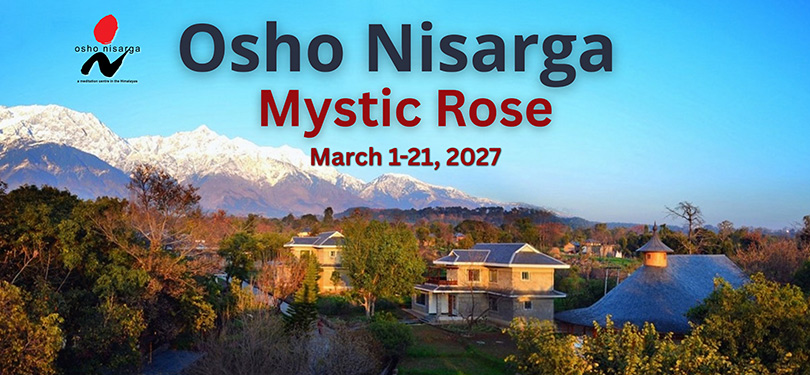
“The ultimate growth is symbolized as the mystic rose – when your being blossoms and opens all its petals and releases the beautiful fragrance.”
Priya’s journey from the first experiment to becoming a co-facilitator of this Osho Meditative Therapy technique
Leela reveals the beginning of the Mystic Rose Meditation
Series
This month, Marga continues her exploration into Ra’s approach to the six lines in Human Design, and examines how the next three lines tend to shape relationships