

Article in Ratopati, Nepal, April 26, 2026
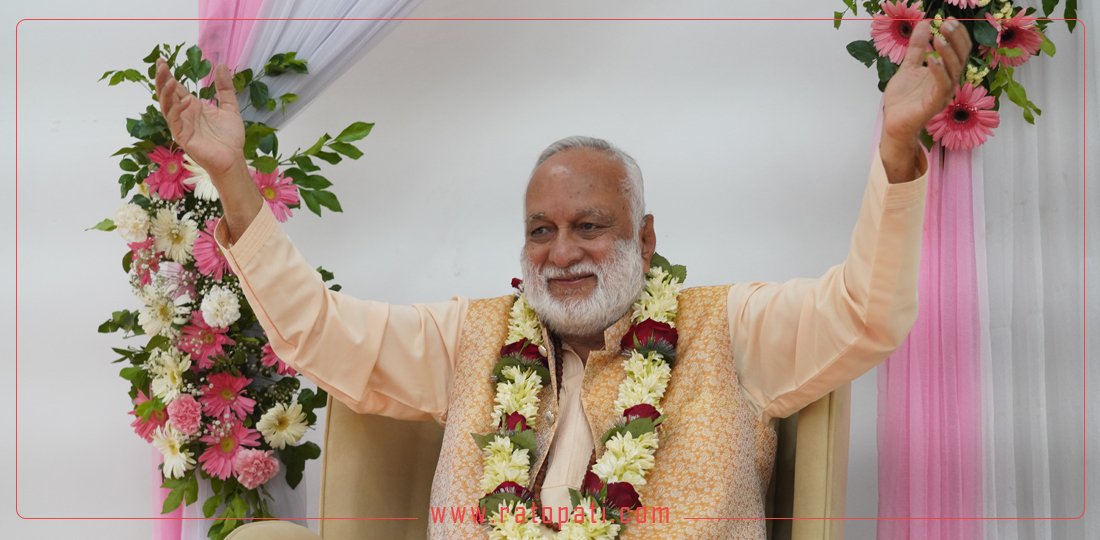
Kathmandu. Swami Anand Arun, founder of Osho Tapoban, has unveiled a comprehensive ‘Common National Agenda’ for Nepal’s long-term social, economic, cultural, and humanitarian welfare. Emphasizing the need to rise above partisan interests during the country’s critical transition, he presented an eight-point roadmap.
Swami Anand Arun has proposed the establishment of a ‘Ministry of Yoga, Meditation, Ayurveda, and Alternative Health Systems’ to develop Nepal as a global hub for yoga and meditation. He argues that a separate government structure, similar to India’s ‘AYUSH’ ministry, is necessary to institutionalize Nepal’s ancient knowledge amidst rising mental health and lifestyle issues. Additionally, he demanded that religious and spiritual organizations be managed through a separate ‘Religious Trust’ rather than NGO laws.
He defined the monkey menace, which poses a challenge to the rural economy and agriculture, as a national crisis. Presenting the fact that about 25 percent of arable land remains barren due to monkeys, he suggested the government introduce a ‘Human-Wildlife Coexistence Policy’ that includes scientific control measures and, if necessary, export options.
In the areas of economic and social reform, he proposed abolishing the 15 percent interest tax on donations to spiritual organizations and providing tax exemptions on interest for senior citizens over 65, people with disabilities, and single women. He also demanded the removal of the 100-rupee limit on border transactions and zero customs duty on essential food, medicine, and books.
For tourism development, Swami Arun proposed innovative plans with a target of attracting 10 million tourists in 10 years. This includes upgrading Himalayan airports like Lukla and Jomsom to international-standard ‘base airports,’ granting permanent residency to foreigners investing $1 million, and making Nepal a destination for ‘biological renewal’ (epigenetic tourism). He emphasized operating direct ‘merit flights’ from Buddhist nations to Lumbini and developing Pashupatinath, Muktinath, and Lumbini as global centers for ancestral remembrance.
Pointing to the potential to increase Nepal’s hydropower capacity to 200,000 megawatts, he suggested using energy as a diplomatic tool. Regarding cultural identity, he demanded that the ancient Mithila philosophical heritage, ‘Ashtavakra Mahagita,’ be declared Nepal’s ‘National Book.’ He believes that using this text as a symbol of national pride and a diplomatic gift will spread Nepal’s intellectual originality worldwide.
On the issue of international relations, Swami Arun proposed a special initiative for Nepal to lead the formation of an ‘Asian Union.’ He noted that if Nepal can mediate peace and economic integration among Asian nations modeled after the European Union, the capital could be based in Nepal, granting the country international prestige. He believes these agendas will open new doors to prosperity while preserving Nepal’s unique identity.


Comments are closed.