

Tarpan’s thoughts on the subject of smell, and an excerpt from the chapter titled, Horse Dung and History of Smell from his recently published book, The Crows of Kedarnath
Do thoughts have a smell?
Not sure. But thoughts evoke some smell, for sure. And smells evoke some thoughts too. Here I don’t know what triggered Punya to write something along with Aungyan’s article. And I do not know what inspires me to add something more on Punya’s thoughts on smell. How can we be sure that it’s not the pheromones aroused from the common interest in the subject caused these write-ups? God nose!
I feel that Punya had left out some, to me vital, aspects, that of memory and of remembering!
Before we dive into that topic, let’s give her a moment to briefly explain why she didn’t address a common misconception in her article: namely, the belief that humans have a poor sense of smell compared to animals like dogs, and that our sense of smell is deteriorating because we no longer rely on it for survival.
This idea dates back to the 19th century, when scientists discovered that humans have far fewer olfactory receptor cells than some other animals. Based on that, it was assumed those animals had a much stronger sense of smell. However, recent research shows that humans actually have a highly sensitive and refined sense of smell – just geared toward different things. While animals may be more attuned to smells like urine, which they use to find mates and mark territory, humans are especially sensitive to scents like chocolate, fruit, flowers, and even human blood (as in: “Am I injured?”). In other words, we don’t have a weaker sense of smell – we just smell different things.
I think there could be another reason for the remarkable reduction in the olfactory receptors and related functions. Different from other species, when mind had been developed in human beings as another powerful faculty, capable of coordinating with all other senses, almost all of our other senses must have come down to a certain level of performance. (Here, in Indian scriptures, many times we refer to mind as the sixth sense organ, the monitoring one, and we call it Indra, the leader of indriyas – the sense organs.) With the capacity of MIND (not the chattering mind) we were able to escalate and expand the functions of all our senses as per the requirement. Our survival measures had been taken over by the mind; it was not needed to depend on any sense organ particularly.
Whilst other species are having a very sharp vision (e.g. eagles), we could compensate it with other tools and devices. We are able to have more accurate analytical methods than just by mere touching or tasting. And looking into the whole evolutionary history, we can understand that we would have gone astray into some other lower species having an extra capacity on any particular sense. The species who is falling behind with all these senses was going to be more specified. When other senses developed into more ability and efficiency in other species, with the formation of MIND, human beings got a faculty called ‘understanding’. That’s how we got more evolutionary freedom. As Osho says, we started growing more vertically, unlike other species who grew horizontally with their exceptional sensory skills.
In the case of other species, as they don’t have a Mind like human beings, any particular sense is forced to play the role of Mind. That’s how dogs become experts in smelling. All other senses of a dog will be translated into the ‘smell language’, like each typed command is being converted into machine language in a computer. Even if his owner’s face looks angry, it will be evaluated and confirmed through the capacity of smell. The power of ‘NO’ falling in his ears will be weighed by the smell only.
A bat is navigating by echolocation; the same thing is used to confirm whether the fruit is ripened or edible. The same thing is used to recognize its enemy. So in a way, they become more capable in one particular sense at the cost of other sense organs. Yes, we just smell differently.
Now back to the aspect of smell and memory. Science says that smell is one of the most powerful triggers of memory because, unlike other senses, the olfactory system has a direct connection to the brain’s limbic system, especially the amygdala and hippocampus – regions deeply involved in emotion and memory. This is why a single whiff of a familiar scent can instantly transport someone back to a forgotten moment, evoking vivid feelings and images from the past.
Smells not only bring back just mere memories in words; they carry the whole cloud, the ambience, the situation, and bring everything – however ancient or old – into the immediate present. When Punya says smell is information, I would like to say it is ‘something more’ (this can be said about all other senses too!). And when smell is just information, it is already a memory. When smell is ‘something more’, let me call it ‘quantum smell’, it is a great potential of remembering.
For different species, the different senses create different quantum fields. For a dog, all the data coming from any sense organ, are converted, processed and preserved as memory, first as smell and then maybe as sound. For some other species, all other senses might be converted into sound waves. It is almost like astrophysicists calculating all information about a million light years-away star just by seeing the colour of light emitted from it.
I remember, I usually get the call to visit the OIMR Pune as a smell. It’s a particular smell, very similar to the freshness of a good hand wash! It comes to me like a jolt. I start getting ready in my head, and then all outside things fall in tune by themselves. And to my surprise, I could never imagine or fantasize that smell. When it comes, it comes, that’s all. Is smell imaginable?
In the beautiful movie Perfume: the story of a murderer, that boy – Jean Baptiste Grenouille – had a particular smell in his nostrils from his childhood, and had a very adventurous life in order to create a perfume of that smell. Still, I don’t think it was a mere memory working in him. Species like dogs and elephants, keep the ‘Quantum smell’ as it is, throughout their lives. I would say, we are literally ‘re-membering’ into that quantum cloud which is already throbbing with life. How easily our normal time dimension gives way for a mode of eternity!
Random thoughts on smell could become a very long article, which I don’t want to go for now. An excerpt from one of my articles on the same subject, which has already been published, is shared here below. Before that, let me say, Punya has concluded her article with a ‘zen scent’ which is really impressive – Niten’s words, ‘So beautiful to hug sannyasins, because they smell… of nothing.’
What is the smell of emptiness? It could be asked as a koan.
Astronauts say empty space has an unpleasant smell, like burnt gunpowder or acrid. Mainly it is because empty space is not that much empty at all. (youtube.com)
But the ‘space within’ is also not dead or empty as such. There may not be something ‘in’ that space, but the ‘space’ itself is something.
Is there anything like smell of transcendence? Awareness smells like what? Perhaps, also death may have a hidden smell!
Wasn’t it the smell allergy and banning of deodorants, body smells in darshan and all such things another experiment and exploration on the secret dimension of the sense of smell by Osho?
Osho says that Mahavir was finally recognised as the enlightened Tirthankara by his fragrance only! (osho.com)
Osho frequently uses the word fragrance in the context of silence, awakening, enlightenment, Buddhahood, etc. Yes, the flowering of being may always have a different smell, carrying the quantum of beyondness!
The last haiku I read recently was this:
a man enters
the room, disturbing the scent
of daffodils
Yoshino Yoshiko, tr Makoto Ueda
from Far Beyond the Field: Haiku by Japanese Women
(Columbia University Press, 2003)
Thanks Punya, thanks Anugyan.
Here an excerpt from my book, The Crows of Kedarnath. It’s from the chapter titled, Horse Dung and History of Smell, where I trek from Gaurikund, Uttarkhand, on the Kadarnath Trek up the valley along the Mandakini River. Suddenly hundreds of tourists had arrived who needed to be transported on horseback. That’s why there were so many horses around the guesthouse and on the trek – and all these memories about horses came back:
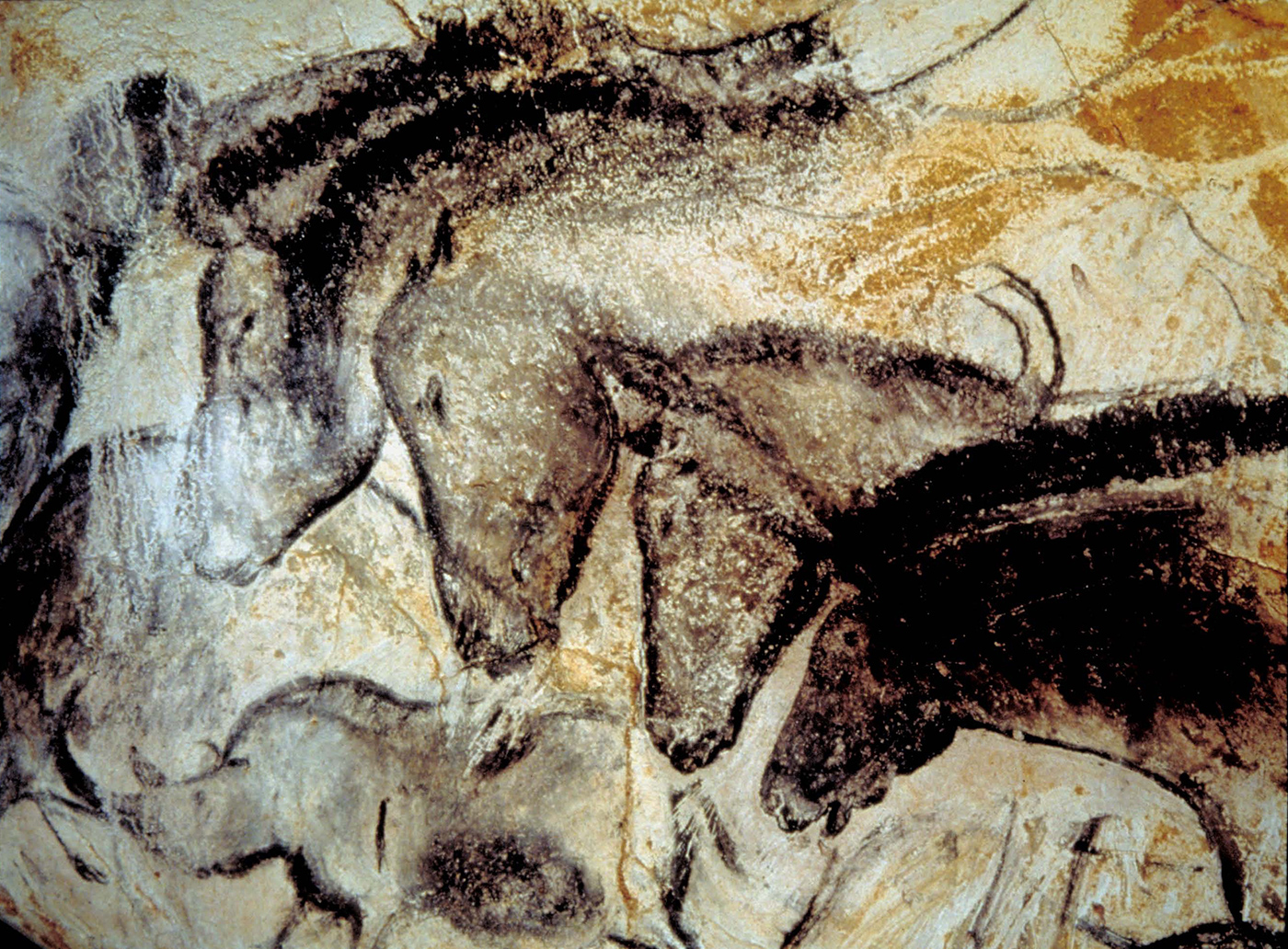
From prehistorical hunts to historic battlefields… from rural farmers’ casual horse-drawn carts to symbols of national power… from ancient yajnas to modern-day horse-race tracks… from prehistoric cave paintings to the Viswaroopa darshan (beholding the supreme form of consciousness) by the Upanishadic Rishis… these silent creatures have played an integral role as symbols of fastness in nearly every aspect of human civilisation.
That being said, the road ahead of me isn’t the only place where the smell of horse urine and dung has been known to permeate the air. Perhaps the potentially prominent aroma of valour could be the blood-soaked excrement of thousands of fiercely deranged horses, dashed to the brink of insanity, across countless battlefields.
Who knew that these equine odours didn’t trigger any of our most vivid memories? Each of our body cells holds the memorial plaques from the dawn of the cosmos, making the memories of the most recent births relatively new. Moreover, the sense of smell has a particularly important role in evoking specific memories. Does the scent of horse urine lead me back to the retreat of my previous life? Could it transport me back to the clamour of a particular battlefield? Or towards which of the enigmatic Gita mysteries? Could it be directed towards the final groans of a wounded animal from an ancient game hunt?
Which battalion celebrates a bloody victory with cheers and howls? The memory plaques would etch the gallops of tens of thousands of horses, a testament to a man who had only engaged in wars. […]
Along the way, I came across a beautiful waterfall. Nearby, I spotted an eatery, so I stepped in. The vacant chairs drew my attention more than any urge for a meal. At the very least, I could sit alone for a while.
There was still a faint smell of horse urine in the air. Many people were riding horses, while others walked barefoot up the slope, including women, men, children, and the elderly. Not even anyone was gasping. The stones had collected horse droppings and urine, yet it posed no harm to those passing by. Won’t their noses pick up odours?
In his book, In Search of the Miraculous, Osho talks about the sense of smell. It is a collection of discourses conducted at the very first meditation camp, in Nargol, Gujarat.
If you go through the whole of the Vedas, then it does not seem that there was any awareness of fragrance or smell during the times of the Vedas. In all the scriptures of the world that are contemporary with the Rigveda, there is no mention of the sense of smell anywhere. Flowers are of course mentioned, but not fragrance. Those who know say that until the times of the Rigveda, man’s sense of smell had not awakened. Subsequently it awoke in the case of a few individuals. Even today, smell does not have any meaning for many people; only for a few persons does it have significance.
In fact, the sense of smell has yet to awaken fully in all people. The more developed communities have more of it, and the less developed ones have much less of it. There still exist a few tribes on this earth who have no word for fragrance in their languages. So the sense of smell first came to a few individuals and gradually grew and became part of the collective mind.
The evolution of life is not limited to the body; it also includes the multidimensional growth of intelligence. Physical growth just paves the way for the expansion of intelligence. Not just the sense of smell, but every sensuous faculty is evolving. Deep in meditation, one experiences extraordinary powers of sensual communication. It is a matter of subjectivity that, upon entering that meditative state, one will ultimately begin to perceive sights, sounds, and smells that one has never experienced before.
The fog rolled in, obscuring our view of the horses. The gentle chime of their bells is the only sound that reaches our ears at this moment. The bells that they wear around their necks are but tin plates with metal or iron nails suspended within. The corroded metals, however, made sounds, most likely komal swaras. The bell tones were gentler and less reverberant than the regular tolling.
* Souce: smithsonianmag.com
Featured image: Horses from the Hillaire Chamber, Chauvet Cave. Courtesy of the French Ministry of Culture and Communication, Regional Direction for Cultural Affairs, Rhône-Alpes region, Regional Department of Archeology. (phys.org)
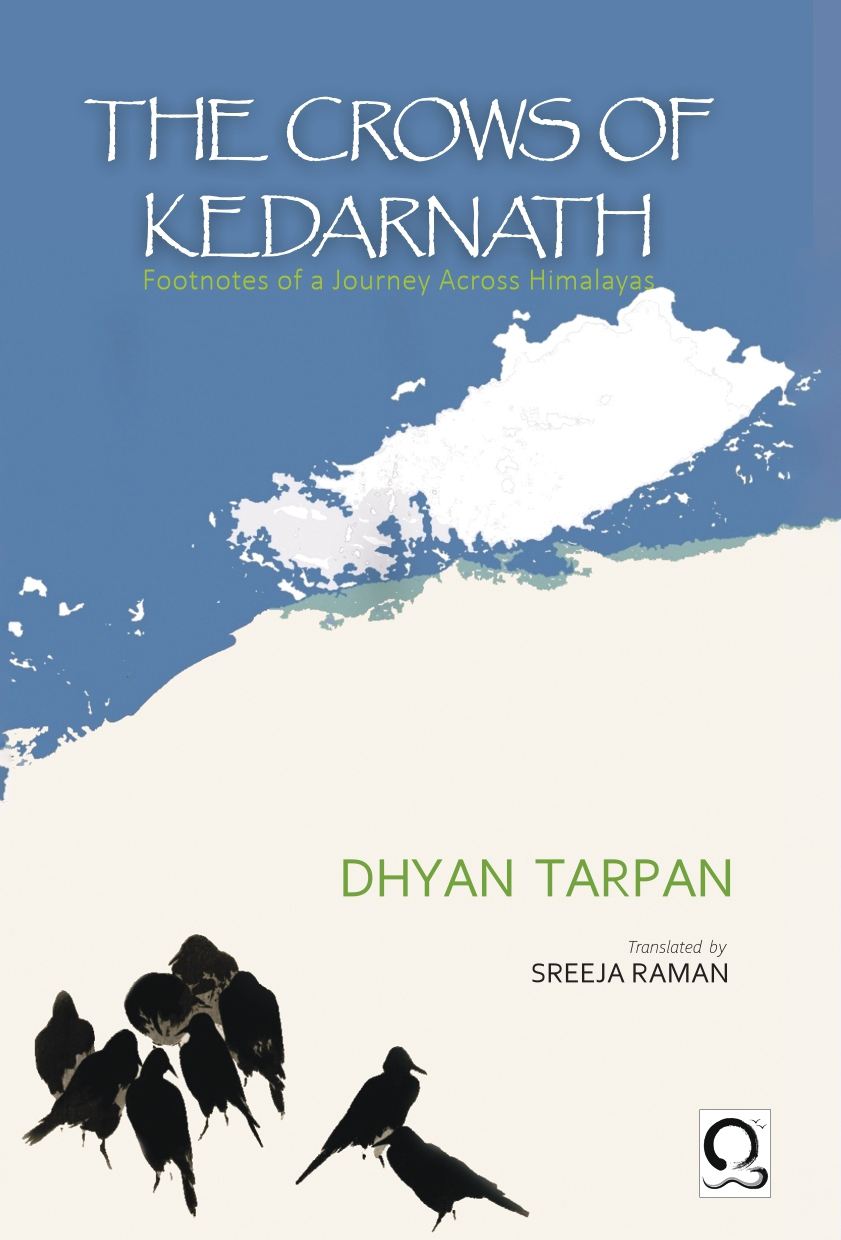 The Crows of Kedarnath
Footnotes of a Journey Across Himalayas
by Dhyan Tarpan
translated from Malayalam by Sreeja Raman
Kindle and Paperback: amazon.in
Kindle: amazon.de
Related articles
- The Crows of Kedarnath – presentation & review of Tarpan’s book
- A perfume called ignorance – by S D Anugyan
- Smell is ‘information’ (and ‘dis-information’) – Random thoughts by Punya
Related discourse excerpts
- What has happened to smell? – “What calamity has happened to smell? There seems to be no reason why smell has been so suppressed. No culture anywhere has consciously suppressed it but it has become suppressed.”
- Smell can be made an object of meditation – Osho speaks on the topic of ‘Perfume’; “Each sense has two possibilities: if the energy falls …downwards, then it is sexual; if the energy rises upwards, then it is spiritual.”



Comments are closed.