

Abheeru Sufi remembers three encounters with the man
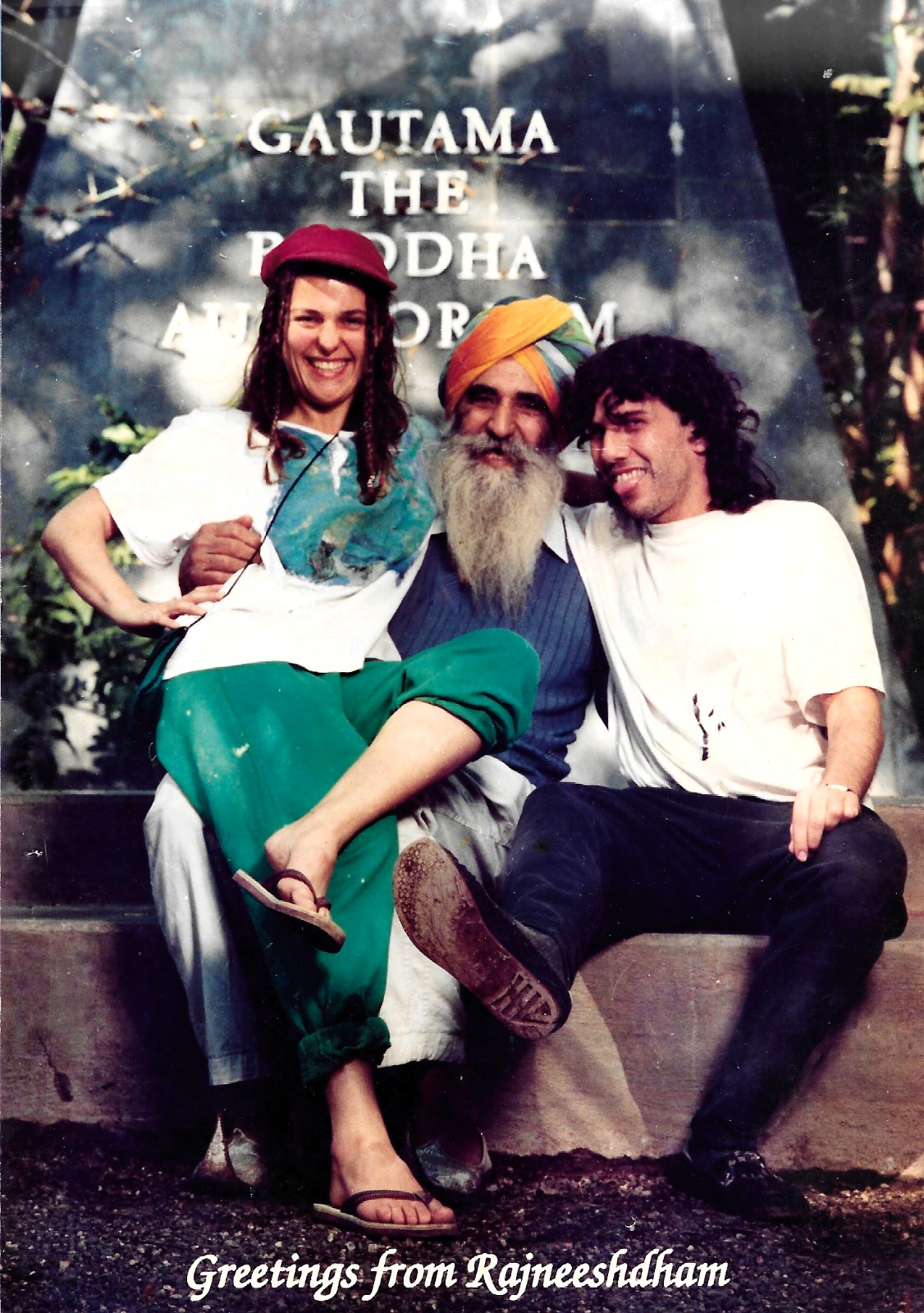
1 – The Question
On that sunny day there was a party in Pune, at the home of a couple of friends – she was from Bahia and he was Japanese. A party full of Brazilians, as they would say.
As well as Brazilians, there were Japanese, Germans, Indians and other people I can’t quite name because I simply don’t remember. It was 1988, so please forgive this sixty-seven-year-old’s failing memory.
At this Bahian-Japanese party in India, there I was, a bit shy, having just arrived in this city, this country, this continent. Just arrived on planet Osho and its surroundings. At some point, along comes a portly Indian man, our friend Sardarji. Yes, I call him ‘our’, because Osho being today my intimate friend and Sardarji a friend of Osho’s, I can say that Osho has introduced me to Sardarji.
This big, famous Indian man with his wonderful laughter and the mischievous spirit of a child, meets the author of this piece; or rather, to set the record straight: I meet Sardarji and he asks me: “Are you enjoying yourself?”
I found that question wonderful. It could only have come from someone Indian. Only from India – the land of so many masters, of so many traditions; the land of the Mughal emperor who built the Taj Mahal; the land of Krishna, of Mahavira, the land where Gautama the Buddha once walked. The land of Osho, Master of Masters.
A wonderful question, yes – and I’ll tell you why. Usually, people ask whether you’re enjoying the party, don’t they? Or they come up with some other automatic, empty question like, “How are you?”
Sardarji asked if I was enjoying myself. In that moment, I wasn’t really enjoying myself that much – caught up in my shyness as I was. But the question took me back to that very moment and to the place where I was, and sparked the question within me: Am I enjoying myself? It wonderfully brought me back to the present, and I became aware of myself.
That was Sardarji’s question – the laughing one, the chubby, mischievous Indian man.
I leave you, dear reader, with his question: “Are you enjoying yourself?”
2 – The Laughter Osho Loves
In April 1988, shortly after arriving in Pune for the first time, I was taking part in a Zen group with Prashantam, the Portuguese therapist. The group was called Kyo, the name meaning – if I remember correctly – ‘emptiness’. I had already taken part in a Kyo group in Rio de Janeiro, from which I had emerged feeling an extraordinary lightness. Kyo is a beautiful process, which deserves a story of its own.
The group’s activities, which were residential and took place within the ashram, also involved meditations and the Evening Meeting with Osho.
On one of the first nights, a very strange episode occurred: a group of people began laughing loudly during Osho’s talk, but it was laughter completely out of context. Osho waited for them to stop, but the nervous laughter did not cease. Faced with this, Osho said: “This is out of the joke.” He got up, and while walking out of the hall his words – that could be heard only by those in the first few rows – were: “Don’t wait for me to come out tomorrow night.” 1
He left, leaving everyone stunned by what had happened. I remember that some of those involved recorded a video apology, and Osho was asked to reconsider. I don’t know the details or the exact sequence of events, but the fact is that Osho was persuaded and returned the following day.
At that time there was a buzz of new exciting developments; a series of talks had begun, giving rise to the book Ya-Hoo! The Mystic Rose. When the Mystic Rose Meditation was introduced – a beautiful and transformative 21-day process that drew queues of people signing up – it was, for me personally, deeply transformative and yet another turning point in my own little life story. After taking part, I decided to leave my important position at a major law firm, the dream of every young lawyer that I was at the time.
Shortly after that episode, I heard Osho say that only one person was allowed to laugh out of context: our friend Sardar Gurudayal Singh, or simply Sardarji, as he was affectionately known.
His laughter was a contagious phenomenon; it came in waves, a tsunami of laughter – loud, hearty bursts followed by smaller chuckles – sending ripples of laughter through the entire audience.
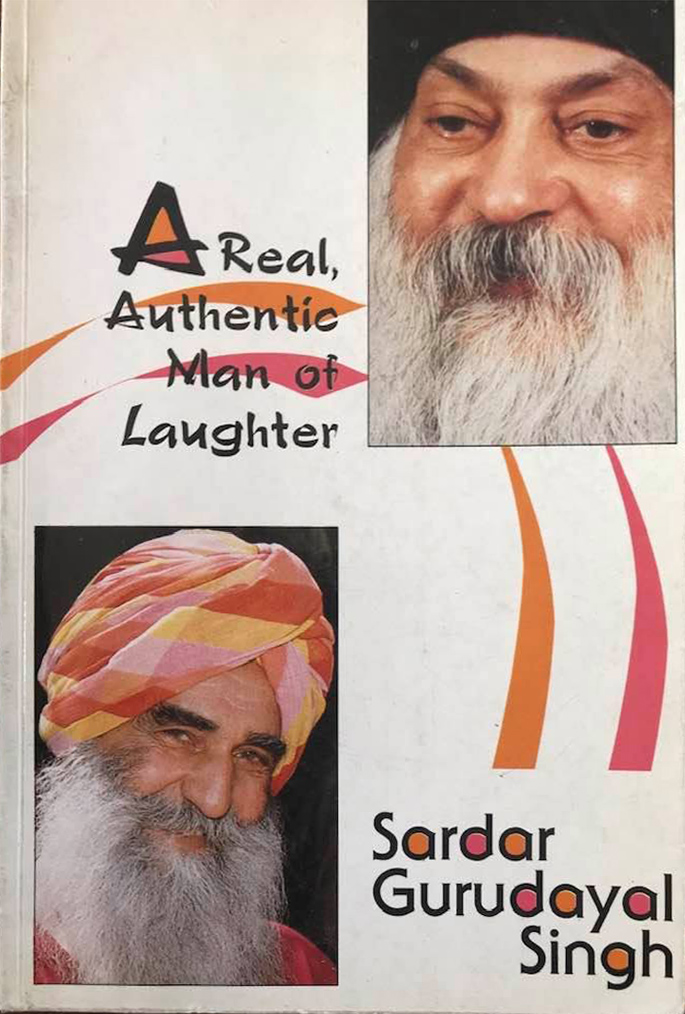
Osho loved Sardarji. He was a former officer in the Indian armed forces and once his bodyguard: “That’s what makes Sardar Gurudayal Singh special. He laughs before you tell the joke. Everybody laughs after the joke, that is very normal, but laughing before the joke shows immense trust that something great is going to happen.” 2
3 – The Rebel Guard
In December 1990, shortly before the first anniversary of Osho’s leaving the body, I returned to Pune and the Ashram for the last time (so far).
In the years I had been there before – from 1988 to 1990 – the extraordinary Indian flautist, Hariprasad Chaurasia, beloved by Osho, had come to Pune to pay his respects, giving a concert in Buddha Hall, as part of Osho’s birthday festival, around 11 December, the day our Master had come into the world in human form.
I never missed those concerts. They were pure delight – about two hours during which I would close my eyes and journey inward, sitting still in meditation for the entire performance of my favourite musician.
For those concerts I always followed a kind of ritual: I would bring my meditation chair and place it at the base of the podium, below the spot where Osho’s chair had stood during his daily discourses and satsangs. The energy of that place made sitting there even more special.
To my surprise, something had changed from last time, and caught my attention; the podium was now cordoned off by a rope, isolating the area. A new rule had appeared where none had existed before. Finding this strange, I stepped over the rope, placed my chair and sat down, just as I had done in previous years. The concert hadn’t started yet. My eyes opened when someone gently touched me.
It was Sardarji, working as a guard at the commune. “Swami, you can’t stay here. It’s not allowed.”
I asked, “Why not? Every year, on Osho’s birthday, I place my chair here to meditate during Hariprasad Chaurasia’s concert. When Osho was still in the body, it made sense – the area had to be protected because of his fragile health. But why now? Do they want to isolate Osho’s energy from the audience?”
Sardarji’s response was: “You are right, Swamiji. You may stay.”
He let me stay and left the area. No one else came to disturb me.
This simple episode left a deep impression on me and made me admire even more the integrity and loving heart of that extraordinary man, Sardarji, the rebellious guard.
I am sure there are many who could share similar stories – moments when the intelligence of a true rebel recognises that rules which make no sense are there to be questioned.
Translated from Portuguese by Osho News
Sources
- Osho, YAA-HOO! The Mystic Rose, Ch 20
- Osho, Communism and Zen Fire, Ch 7 and Sardar Gurudayal Singh, A Real, Authentic Man of Laughter, Sangam Press, Pune, 1994, p. 21



Comments are closed.