

Note no. 15 from Avikal’s collection, Coming Home
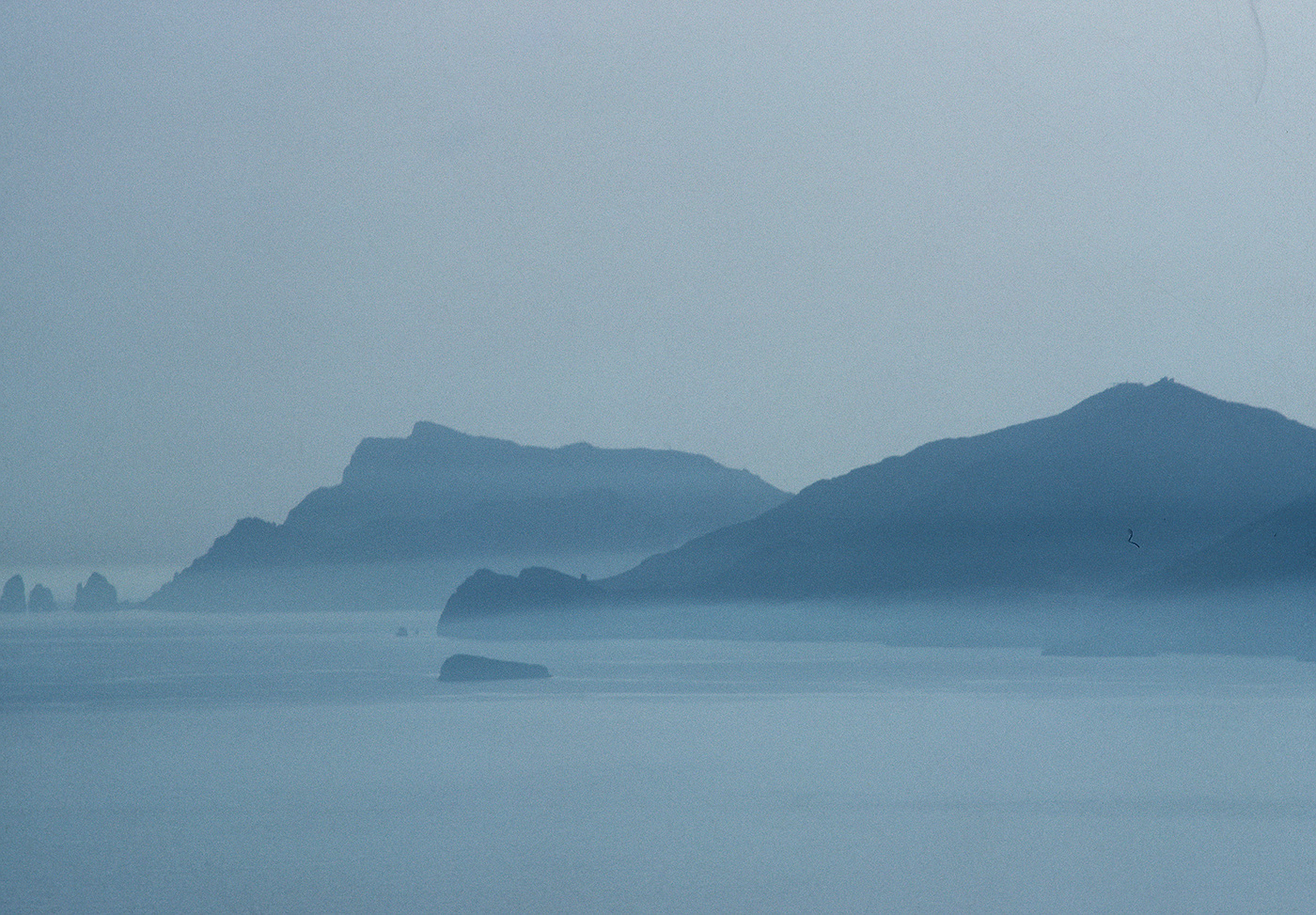
One thing I remember very well from my youth is melancholy. Or at least that’s what, from a certain point onward, I began to call a particular feeling.
In truth, when I was experiencing it, it wasn’t clear what it was: a sense of unease, a feeling of being out of place, as if there were an empty space between me and the world around me… a no-man’s-land.
At times it was something light, almost imperceptible, as though I were looking through a layer of mist; at other times it was a radical despair, the existential hole into which everything disappeared, sucked in by an absolute lack of meaning and sense.
Over time I came to realize that this feeling of separation, and the pain it caused me, was the main motivation behind my search – the engine of my passionate questions, above all “Who am I?”
I also realized that this melancholy changed as the distance between myself and myself, and between myself and the world, changed.
First of all, I learned to fight. Fighting was, at the time, the only way I knew to feel alive and to assert the fact that I existed – and wanted to exist – as an individual, not as a carbon copy of society.
At that stage, my freedom was proportional to my ability to say no, to uproot and set boundaries against society’s intrusion into my life.
That no-man’s-land was a pain that lingered there, separating me but also protecting me: on the one hand, I wanted it to disappear; on the other, I needed it to feel different.
Melancholy often took on the appearance and flavor of fanaticism and excess. Politics, sex, drugs – these were all roads toward a narcissistic assertion of my individuality. “I stand on the fringes; I won’t blend in with you, but I will fight against this dividing line – can you see me now?” That’s what my soul was screaming.
The frustration generated by this constant external conflict – together with my soul burning quickly through hundreds upon hundreds of experiences – created an even stronger detachment from the things of the world, and for a while it was as though only the no-man’s-land existed. I had almost entirely lost interest in fighting, and the need to prove to others that I existed; and along with the loss of that fury, the excitement of novelty and the search for the particular also began to fade. I, the other, and the space that seemingly separated us began to blur together.
Paradoxically, I began to feel my individuality with far greater precision – not as an island, but as something constantly in contact with everything that was not me. Ceasing to fight, abolishing the need for boundaries and protection, opened up a vaster spatial dimension in which I perceived myself deeply and, above all, without effort and the need for recognition – while at the same time I kept relating with everything around me.
For the first time, I began to feel a sense of belonging, and of having roots in this planet.
Today, the no-man’s-land no longer exists, and the melancholy has transformed into a yearning that is like a river flowing, at the same time, towards its source and towards the ocean. There is a curiosity and a compassion that continually unite and connect that mysterious center, which is me and the world around me. Today, my freedom is not measured by borders and territories, positions or prejudices, separation or belonging. It is a fluid spontaneity that is an intrinsic part of the mystery of life.
Where am I going? I do not know.
Related articles
- Follow the whole series: Coming Home
Featured image by the author – Translated by Osho News from the booklet:
 Tornando a casa
Frammenti del già e sempre
by Avikal Costantino
ilmiolibro self publishing, 2019, 52 pages
ISBN-10: 8892359398
ISBN-13: 978-8892359390
lafeltrinelli.it – amazon.it

Comments are closed.