

Srajan introduces Baruch Spinoza, the 17th-century philosopher who bridged reason and mysticism, challenging religious dogma while pointing toward a deeply unified vision of existence
Benedictus de Spinoza (Baruch Espinosa) (1632–1677) was a Portuguese Sephardic Jew who lived during the time of Rembrandt, in the Golden Age of the Netherlands. The Dutch Republic of the Seven United Provinces was then a relatively free haven for dissenters. Jews from Spain and Portugal, such as Spinoza’s family, fled the Inquisition there, while Huguenots persecuted by the Catholics in France sought refuge in the comparatively tolerant north.
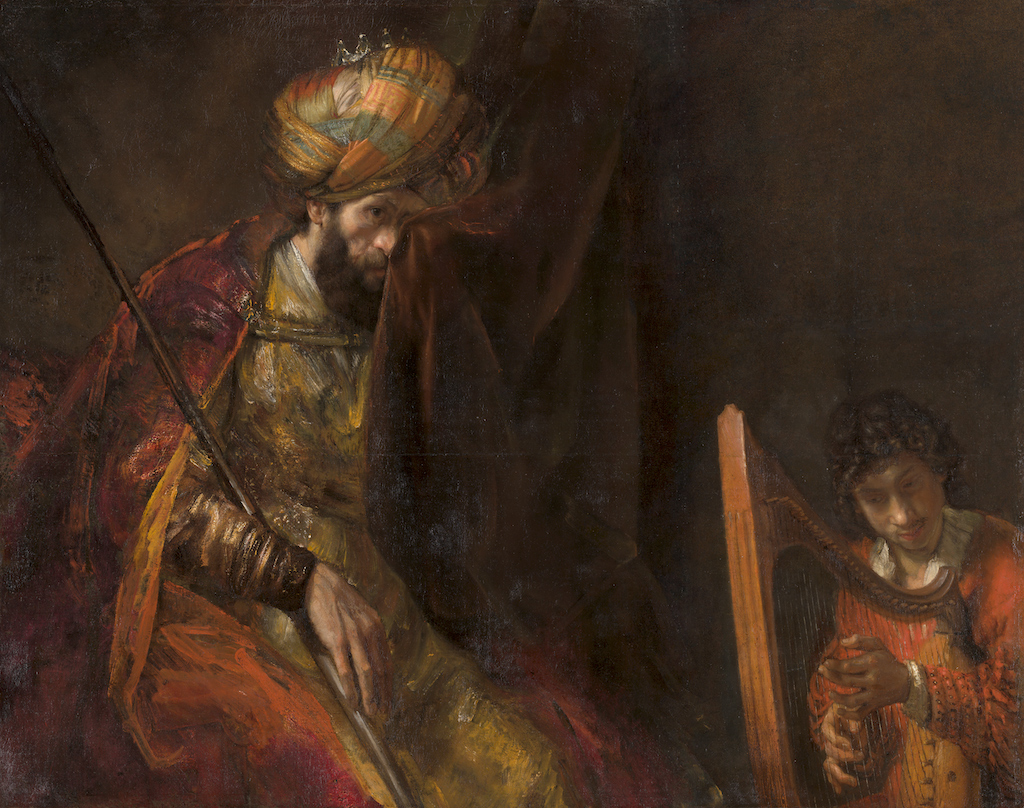
Spinoza’s family were traders in Mediterranean products in Amsterdam. At seventeen, he left school to work with his brother in the family trading company. However, when they took it over, the business was burdened with debts due to the naval wars with England.
At school, young Spinoza received instruction from a rabbi, but he soon came to feel that both the Talmud and the Torah “betray the human spirit to such an extent that the holy scriptures of the Jews cannot possibly be the work of God.” He called them “inventions of human imagination.”
Spinoza, who grew up speaking Portuguese and Dutch, immersed himself in Latin and studied philosophy. The French philosopher René Descartes lived in Amsterdam at the time, and Spinoza learned a great deal from his work – while also remaining critical of it. He likewise criticised the important Jewish scholar Maimonides of Egypt, who had attempted to reconcile the Bible with philosophy.
Spinoza opposed the idea of God as a human-like figure, rejected the notion that the Jews were God’s chosen people, and denied that the Bible was of divine origin. He questioned the authorship of Moses’ Ten Commandments and emphasised instead the importance of living a virtuous life.
At the age of 23, he was expelled from the Sephardic Jewish community because of these ideas – and also out of fear that the Calvinist Dutch establishment might be offended. He remained in Amsterdam for some time to study at the Latin school, but soon moved to Rijnsburg, a village near Leiden. By then he had mastered the craft of lens grinding, and his work was praised by scholars such as Christiaan Huygens, one of the first theoretical physicists, and the great mathematician Leibniz.
In Rijnsburg, Spinoza joined the Collegiants – freethinkers who advocated a universal form of Christianity that excluded no believer, regardless of denomination. Averse to dogma and rigid theology, they emphasised experience and direct contact with God. Everyone – including women – was free to speak at their monthly meetings.

Spinoza’s first name as a child was Bento; later he received the name Baruch. After being expelled from the Jewish community, he adopted the Latinized pen name Benedictus.
Bento, Baruch and Benedictus all carry the same meaning: ‘the blessed one’.
When his works were distributed illegally, he just used his initials, BdS.
In 1663, the first part of Spinoza’s greatest work, Ethics, circulated privately among his friends. Some of them encountered serious trouble because of his ideas: Oldenburg was imprisoned in the Tower of London, and Koerbagh died in a penitentiary workhouse.
Spinoza later moved to The Hague and wrote the Tractatus Theologico-Politicus, published anonymously in 1670. In it, he argued for freedom of speech and an independent judiciary – almost a century before Montesquieu. The book was soon banned by the steward, or Stadtholder, William III.
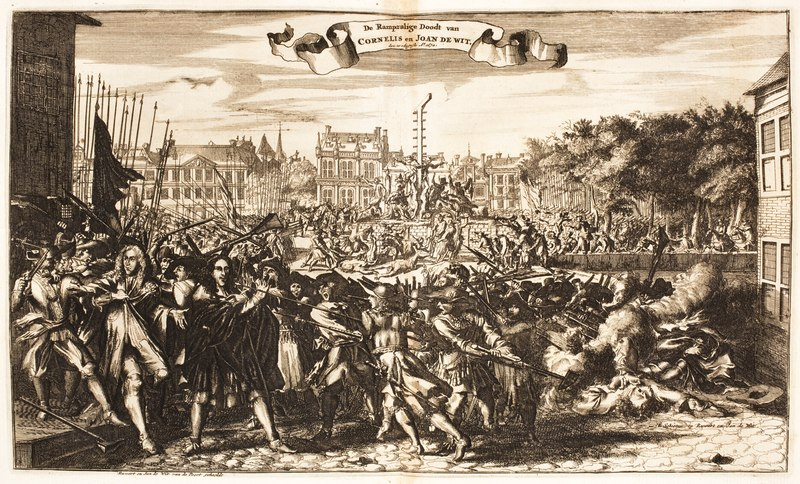
William III of Orange ended the First Stadtholderless Period (1650–72) in the Dutch Republic of the Seven United Provinces. He later became King of England in 1689 through his marriage to the Crown Princess Mary. The brutal murder in The Hague of the raadpensionaris (prime minister) Johan de Witt and his brother Cornelis by members of the Orangist militia marked the end of the Dutch Golden Age.
The Republic had been an innovative centre of art (Rembrandt, Vermeer), commerce (the VOC – the Dutch East India Company – the first multinational corporation), a haven for those fleeing religious persecution (Jews and Protestants), and a centre of philosophy (Descartes), natural sciences (Huygens, Van Leeuwenhoek) and esoteric thought.
Spinoza was deeply shocked by the murder of Johan de Witt – a political leader with whom he corresponded and whom he admired for his wisdom and tolerance. His landlord in The Hague had to lock him inside to prevent him from rushing out in protest. Despite the relative tolerance of the Republic, Spinoza remained cautious and published his works anonymously. Most of his writings appeared only after his death.
Spinoza is considered one of the founders of rationalism and one of the key inspirers of the Age of Enlightenment – particularly of what later came to be called the “radical Enlightenment,” as distinct from the more “moderate Enlightenment” of Descartes and Voltaire, which was tempered by religious and political interests.
In modern times, pantheism gained renewed attention through his theological and philosophical work. Ethics was, in part, a response to Descartes’ famous dualistic theory that body and mind are separate. Spinoza held that mind and matter are one, both attributes of a single original substance – God. In this sense, he stands remarkably close to the Eastern idea of advaita, or non-dualism.
Discarding the dualistic barrier between God and creation, Spinoza’s pantheism has deep roots – in the Greek Stoic philosophers, in the early Christian Gnostic tradition, and in mystics such as Meister Eckhart. In the East, Kabbalah, Sufism, Vedanta, Taoism and Zen had long arrived at similar non-dual insights. Many have compared Spinoza’s philosophy to these Eastern traditions, particularly to advaita. Strangely enough, however, Spinoza seems to have been entirely unaware of Eastern mystical teachings.
One could say that his particular merit lies in having reached similar conclusions through systematic development and explanation – through a scientific approach. In this way, he built a bridge between rationalism and mysticism.
Western thinkers such as Hegel, Kant, Nietzsche, Wittgenstein and Goethe were influenced by Spinoza’s writings. When Albert Einstein was asked whether he believed in God, he replied: “I believe in Spinoza’s God, who reveals himself in the orderly harmony of what exists, not in a God who concerns himself with the fates and actions of human beings.”
Spinoza stressed the importance of observing emotions and fears, analysing them rationally, and accepting what cannot be changed. He lived a simple and contented life in Rijnsburg and The Hague, corresponding with scholars and meeting friends. He died at the age of 44, suffering from a lung disorder – possibly caused by years of lens grinding.
Quotes
He who clearly and distinctly understands himself and his emotions loves God.”
from Ethics, Part V, Prop. 15
A free man thinks of nothing less than of death, and his wisdom is a meditation not of death but of life.”
from Ethics, Part IV, Prop. 67
We feel and know by experience that we are eternal.”
from Ethics, Part V, Prop. 23
It is the part of a wise man to refresh and recreate himself with moderate and pleasant food and drink, with scents, with the beauty of green plants, with decoration, music, sports, the theatre, and other things of this kind, which anyone can use without injury to another.”
from Ethics, Part IV, Prop. 45
Related articles


Comments are closed.