

by S D Anugyan

Twenty years ago when I was in the midst of writing a very long (still unpublished) book, I frequently underwent crises of faith. I wasn’t making a penny from my writing even though it occupied most of my time. I couldn’t even claim moral support from the artistic community as few people were interested in what I was doing.
In the midst of one of these crises I had the opportunity to visit Jane Austen’s house in Chawton, Hampshire. There weren’t many visitors that day, and I was free to wander around as I wished.
It was when standing by her chair and desk something happened. Because of my extensive background in working on people’s houses, there was an added psychological element of space I could comprehend. I envisaged the author clearly in the adjacent living room listening to those around with great interest, then a word, a line, an expression from someone putting a smile on her lips as she excused herself, leaving the room to sit at the desk and write down her thoughts. It was a behaviour I could recognise in myself.
Looking down at the tiny desk by the window, I thought, this woman had less than I do, yet she changed the world from here. At that moment I felt a kinship. The loneliness I had been experiencing dissipated. We may have been very different kinds of writers, but in the pursuit of truth through art, and art through truth, we were much the same. To this day I feel she is like a colleague, our meeting transcending two centuries of separation. It no longer mattered that at the time I could count my readers on one hand – and I need at least two hands now, and maybe a few feet.
The experience at Chawton may have been time travel in a sense, but I was very firmly and undeniably rooted in the 21st century while it was happening.
In another experience, that certainty was removed.
I was visiting a friend in the Algarve in southern Portugal. She had a theatrical performance that evening at a festival. Everything was in order, she was relaxed about it as we wandered around town, but wanted to drop in at an old mill where the rest of the cast – all women as I recall – were staying.
When we got there she opened the big wooden door from the street, and we stepped into a large room where they had probably done the threshing when it was a working mill. There were stone platforms on one of which I could imagine a wheel having been placed. The room was completely empty otherwise.
My friend called out and slowly, one by one, the women started to emerge from a room at the back, all wrapped in white robes. They had been bathing.
As they greeted us, and draped themselves on the various platforms, my friend discussed arrangements with them for the evening, and I started to look around.
It then struck me that we were in an extraordinary situation. Apart from us two intruders, there was not a single thing in the environment that identified us as being in the modern world. We could have been present in any moment from the past several hundred years. With the women reclining in their white robes and surveying us, a particular kind of magic was being imparted.
We didn’t stay long but that moment has lasted forever inside me.
That ‘stepping outside of time’ whilst remaining in the world, has happened a few other times to me, twice with horses involved. Horses are interesting in this context, as the destinies of humans and horses have been so intertwined for millenia our brains have evolved in parallel. Apparently increases in brain size have occurred simultaneously in the two species.
The first time the timelessness occurred I was with a group who had hired horses for the day from a stable on Dartmoor. It was during winter and the upper slopes on the moor were covered in snow. As we progressed deeper into the moor, the terrain became more difficult with the ice and the cold wind. We hardly spoke to each other. When reaching the lower slopes of the hills, we stopped to survey the landscape, uncertain whether to proceed. I was at the front and when I looked back, everyone was silent, heads covered, the horses picking up on the uncertainty and awaiting instructions.
The timelessness of the scene swept over me. We could have been from any time and era. Not only that, there was something distinctly Native American about our group. We could have been by the snowy Rockies in Colorado, or anywhere. Even as we spoke, discussing the situation, the words didn’t intrude on the impression of this vast landscape, seeming small and insignificant. We decided we couldn’t go on, turned our horses around and headed back into the contemporary world. I used this experience for Sesonsfin, in a passage that proved particularly salient to some readers.
The other time was during a particularly ferocious storm elsewhere in the south-west of England. It was twilight and a friend had to go and sort out her horses which were in a field by the cliffs above the village. The weather would be spooking them, she said, and she had to take down the electric fence so that they didn’t entangle themselves. I had other things to do and we parted but I felt concerned for her welfare as the storm worsened, so eventually I headed off after her.
I found her easily enough despite the encroaching dark, as she was struggling to get the fences down in the mad weather. The horses, as expected, were running about in a frenzy. She told me what to do, and we were hunched down in the semi-dark, desperately winding up the fencing. The real danger, she said, was that the horses and we got caught up in the wire while we were doing this, so we had to work fast. It was a perilous task.
As we were hunched down, I glanced up for a moment and drank in the scene: the stormy cliff-top, the wild sea, the horses running around neighing and we two focused on our work whilst being battered by the rain and wind. It could have been from any moment in time. Even our clothes in the dark could have been from another era. How many times, I wondered, had people been in this situation, trying to protect their horses and themselves during such a storm? The sense of timelessness pervaded once again.
One of the key factors in all these experiences was the removal of obvious modern trappings. There is a book by Richard Matheson called Bid Time Return, made into a film called Somewhere In Time. It’s an unusual, special film, hence its cult status and it certainly stands up to the test of time.
Without going into the story too much, in order to find the love of his life the protagonist has to find a way to go into the past whilst staying in an old hotel. To do so he removes all modern paraphernalia from his room, makes sure to be in clothes from the era which he is visiting, and lies down on his bed. Regular readers may recognise here one of the meditations I often suggest: entering the borderlands of sleep without actually falling asleep, but slowing down the brain rhythms sufficiently. Shiva, in his 112 meditations imparted to Parvati, puts it thus: At the point of sleep, when the sleep has not yet come and the external wakefulness vanishes, at this point Being is revealed.
What is different from the meditation, is that the character in the story was focusing on a particular time and place to which he wished to go. To be honest, this can also be achieved simply through darkness – though I’m not guaranteeing you’ll always wake up in another era! At least not for very long.
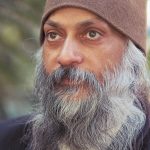
There is, of course, also the mirror meditation as described in The Orange Book by Osho. This is where you sit in front of a mirror in a room lit only by a candle to the side. By keeping your eyes open and not blinking, you will notice your face changing. In my experience it will usually settle down to one particular face staring back at you, and it is not yours – at least not from the present day, but what appears to be a past life. This can be a very startling technique, and when I have used it in groups – not necessarily in candlelight, in one case we took mirrors into a dark wood – I have found participants often need support to process what they have seen and experienced. It can change one’s entire perception of oneself.
I have also noticed this in low light settings with other people that, as we sit around, discussing things, their faces shift to what I clearly see as other lives, providing profound insights as to their characters and journeys. If they are open to this, I share what I have seen with them. Otherwise, I stay silent.
Taking all of this further, I do sometimes set up a situation where participants meet for drinks, or dinner, with the stipulation that they leave their phones behind plus any other obviously modern paraphernalia, including plastic clothing. The room will be low-lit, usually by candles, and everyone is instructed to just play with the concept by now and again focusing on another person’s face, remaining focused on it, and not blinking. When appropriate, we share what we have seen. A dinner party with a twist! But it can be quite lively, not everyone can handle it, so remaining centred is key.
I trust I have managed to convey just how easy it is to do time travel. One does not need machines or magic potions. In fact, the key is getting rid of extraneous items. A quotation I’m fond of is from the Senegalese novelist Cheikh Hamidou Kane, ‘The West has become a world of things, not people.’ So it is completely fitting that in order to experience a more profound understanding of Time, one removes paraphernalia and gets back to the essentials of life such as survival, beauty, truth and love.
What’s that, you say? You’d like to travel into the future? Well, that’s easy. You don’t even have to attend Time Travel 101 for that, because you’re doing it now, we all are – one moment at a time.


Comments are closed.