

In the last days of 1984, Hafiz, together with four others, is dispatched from Medina to join the Rajneesh commune in Freiburg, via the ferry from Harwich to Hook of Holland… [Long Read]
Bundling through Dutch border controls in the wee small hours: questions are being raised about our one-way tickets and our evident lack of supporting funds. I catch the word “Cult”. This is evidently explanation enough.
Many hours later, our train arrives in Freiburg. We step out onto a very cold platform, flurries of snow blowing around our legs. We are expected, bade welcome.
The snow lay thick for several weeks. I had never been anywhere so cold. Fortunately, the block of flats which constituted our commune residence was well insulated and comfortable: the standard of living seemed far in advance of Britain. It was quite a different story at my designated place of work. There were around fifteen of us engaged in constructing a Spielhalle – an amusement arcade – in the city centre. All lay open to the elements, barely mitigated by the blasts of warmed air being blown onto us by the onsite heaters. Thickly encased in several layers of overalls, I did my best to perform my allotted tasks, making fumbling acquaintance with a range of useful tools. After a week or two, questions were raised about my suitability for the task; in particular, my eyesight was deemed to be not quite up to the mark.
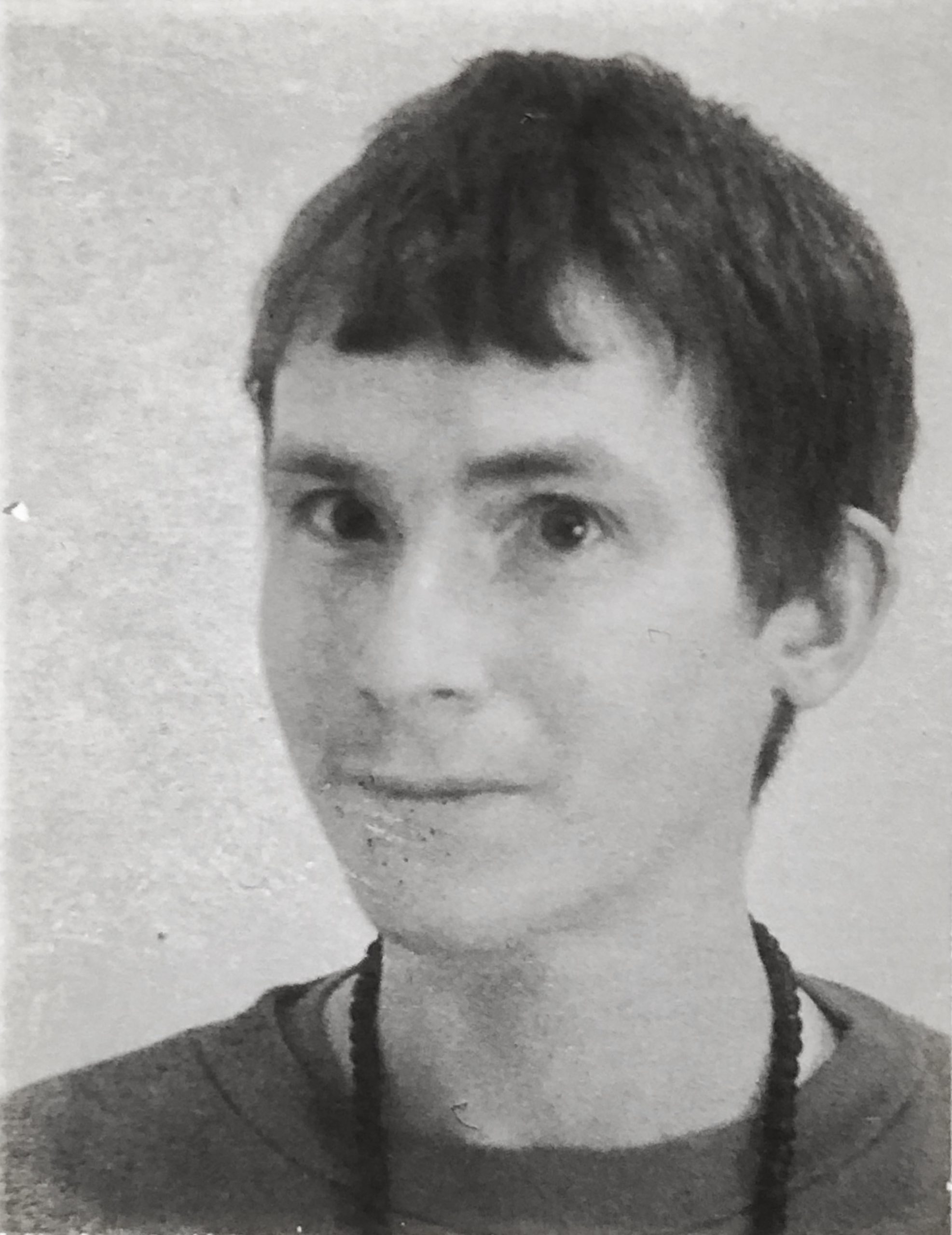
One of the things which I had left behind me in Oxford, as I embarked on my adventures, was my pair of spectacles, worn since childhood. I had embraced the doctrine of “better eyesight without glasses” – the Bates method, as championed by Aldous Huxley. In retrospect, I can understand that this had served to disempower the rational aspect of my brain (the Old Nag!), whilst correspondingly enabling more holistic, impressionistic modes of perception. It had become easier to look into another’s eyes, and to allow them in.
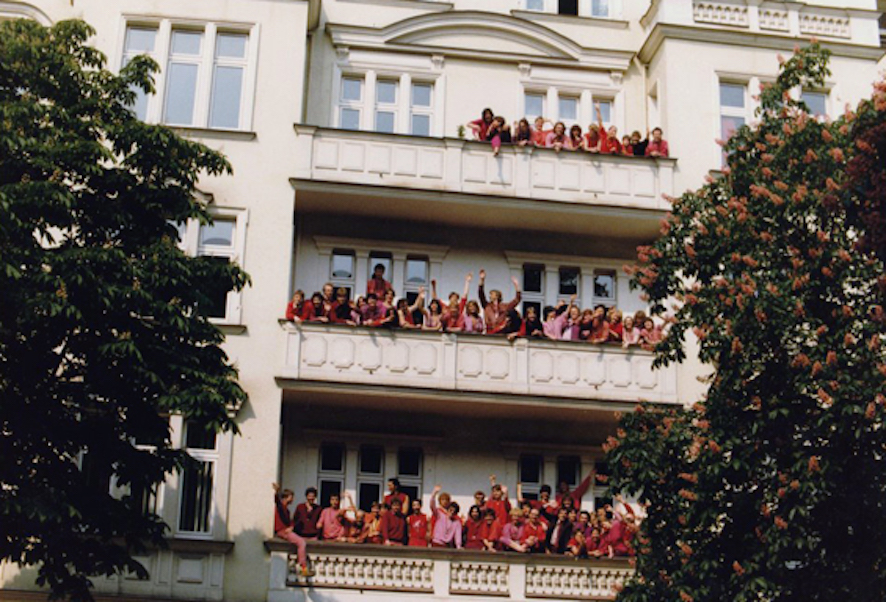
I was consigned to domestic duties: the unglamorous routine of the laundry, processing the steady throughput of the communal wardrobe. Sharing a collective clothing ethos – comfortable, but always red – made pooling of garments surprisingly unproblematic. Outward appearance had become so much less important as we concentrated on cultivating our inner being. Once worn, clothes were simply returned to the laundry and replacements sourced from Vimalkirti, the clothes bank. If you really wanted to cling to a particular item, this might be achieved by a safety-pinned label.
The laundry was steady and calming, but a little bit dull. Being posted to the cleaning department offered more opportunity for movement and exploration, getting to know the layout of my new home. We occupied most of a six-storey block of flats, accessed through two adjacent front doors. In the basement was a large car parking area, a grey zone of concrete and buttresses, with an automatic entry system redolent of James Bond. The building was impressively modern, and gloriously situated: in front, just over the road, the side of the valley rose steeply, neatly planted with vines to catch the sun; to the rear, a wide patio skirted the building, below which was a rapid stream, running freshly off the Black Forest hills – except now it lay deeply frozen, glinting.
Our day was structured from breakfast time at 7.30 until the end of supper twelve hours later, but it was by no means relentless activity. We didn’t actually “work”: our daily duties had been redefined as “worship”, to be performed as if it were a meditation, with awareness and a sense of gratitude. The various departments to which we were allocated were known as Temples. It really is surprising what a terminological shift can effect. I wasn’t cleaning toilets, that shameful occupation; I was worshipping in Raidas Temple, happily scrubbing under the rim and polishing the porcelain, for the benefit of my fellow beloveds. There was a sign above each loo, respectfully requesting swamis to pee sitting down, for the sake of hygiene and because “it is more relax”. The sign was, of course, embellished with a big red heart. This was a very heart-filled environment.
In pairs, we visited each flat, home to about ten communards, who typically shared a room with two or three others. Personal space was restricted to a mattress with duvet, plus a small bedside cabinet, which might bear a picture of Bhagwan but no more than two books. The overall style was known as “Zen”: promoting an atmosphere of clarity through clear lines, white walls, and absence of clutter. There was a strong emphasis on keeping everything clean and tidy. Each washroom received special attention, following a specified routine, being sure to use the appropriate coloured cloth.
At the appointed hour, we would break for tea, heading down to the canteen on the ground floor, taking our steaming mugs onto the patio. I was always surprised at how many commune members were smokers; they would gather in their designated “smoking temples”, wreathed in aromatic fug.
Lunch was a splendid buffet, helping ourselves to an array of freshly prepared salads, tasty soup, neatly sliced bread and cheese. There would be a little time afterwards to relax with a special friend – maybe cuddled up in bed. Then back to worship until teatime, then through again till supper. It was an intense discipline, all conducted in a methodical, unhurried but diligent manner. It felt like love in action.

Should there still be surplus energy to burn, we could head into town, maybe using one of the commune bicycles, to visit the commune disco – the Far Out. This really was far out. It had been purpose built just a year or two previously, at the same time as the commune was established, and provided a good source of income for the 100-strong community. The style, in common with other “Far Outs” established in the larger German cities, had the same Zen aesthetic: light and clean, with an absence of dark corners. It was extremely popular, notably with the local squaddies, French soldiers based just across the border, who had their own style of synchronised dancing, forming disciplined lines on one side of the oval marble dancefloor, whilst the other side would be filled with wildly gyrating sannyasins.
After a few weeks of domestic worship, I was delighted to be assigned to Disco duties, which was essentially a night shift. This also coincided with Carnival time – the municipal festival common in Catholic Germany. We took part in the civic procession, an anarchic floatful of cavorting angels and devils amongst an endless stream of marching gnomes, witches, dangerous beasts, huntsmen – all the phantasmagoria of the Teutonic imagination. In the evening, everyone was ready to party. Kitted out in my devil’s horns, I had a marvellous time running one of the several disco bars, caught up in the wild celebration.
Gradually, a change had set in. My sense of self was shifting: I was learning to set aside the embattled “I”, wrapped in its protective cocoon, and allowing myself to dissolve in a wider identity – “Us”. Here was an easy intimacy of hugs and smiles, and playful touch. Language had become secondary to feeling.
Although most commune members were German – apart from my fellow Brits, there was a smattering of Italians, plus some more exotic nationalities – our lingua franca was a very basic form of English, known as “Rajneesh English”. This was certainly not a language for abstruse thought; my Oxford education counted for nothing. Should I ever launch into a sentence with “I think . . .” I would be immediately admonished: “Swami, tell us what you feel . . .”
Back in the house, I was set to worship in Magdalena, the kitchen temple. Each day began with the Gacchamis: kneeling on the floor, we performed a threefold ritual of submission: bowing to the master, to the teaching, and to the community. Then we got busy, each to their own task, co-ordinated by the kitchen mama: chopping, cooking, setting out the eating space, cleaning up. All was focussed on the end result: a meal imbued with Love. Magdalena, it was often said, was the Heart of the Commune.
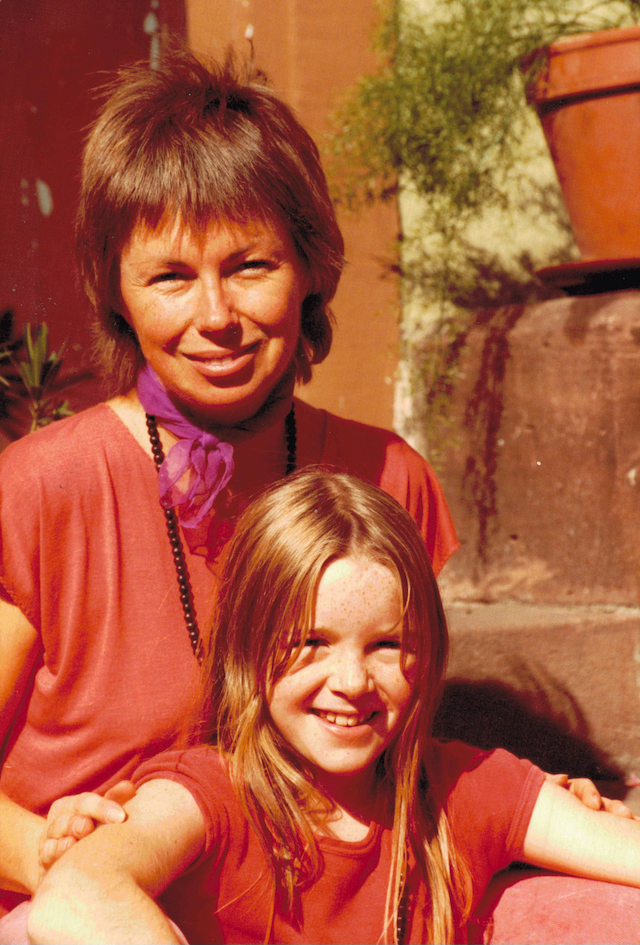
I began to take notice of the “snacks mama”, kneading the dough for sunflower bread, to be served at teatime. Soon we were hanging out together at teabreak each day. Her name was Kabira; we formed an attachment.
Of all the many remarkable people I came to know in my commune days, Kabira was one of the few whose backstory was known to me, at least in part. She was old enough to have been married, raising two children with her Dutch husband in Brazil, where he worked for an international tobacco corporation. The marriage had then fallen apart, and she had returned with her children to Freiburg, where she had grown up. She started to attend meditation sessions, and had joined the fledgling commune not too long before I showed up. This much I gathered, sufficient to be impressed by her strength of will, in rejecting an unsatisfactory conventional lifestyle in favour of something radically different. Recently, she has provided me with a more nuanced account of her early days in the commune, for which I provide the following translation:
I was appointed Office Mama; I assumed it was part of my job to have an opinion about the commune income and outgoings – but Sakshi [the commune main man] didn’t approve. I’d thought that the commune was supposed to be democratic.
There was a row, at the end of which I’d lost my Mama job and was appointed to washing-up duties.
That was the first shock that burst my dream of an ideal world. I was riven by tears.
But somehow, despite this disappointment, I trusted that this might only strengthen my connection with Osho, since I didn’t believe any more that the leader and most influential people in the commune were really “enlightened”. I still thought that this was the right place for me to explore my self-awareness.
When I came into the washing-up kitchen there were mostly younger swamis, including a young Engländer, Hafiz. All were good-humoured and fun to be with. Hafiz sat next to me often, while he waited for his tea to cool down to the right temperature, English style!
I came to realise that the Mama job, for all its apparent kudos, had only brought me stress, and that working on the washing-up was a much better way of enjoying being myself.
Later, though, when one of Sheela’s aides came visiting, I complained that this job wasn’t very fulfilling. That’s when I became the afternoon snacks chef. This suited me very well, because I got a lot of appreciation. I was only surprised that the finance department gave me no spending guidelines for my ingredients – flour, butter, almonds, etc. So I had my little revenge, always buying top quality!
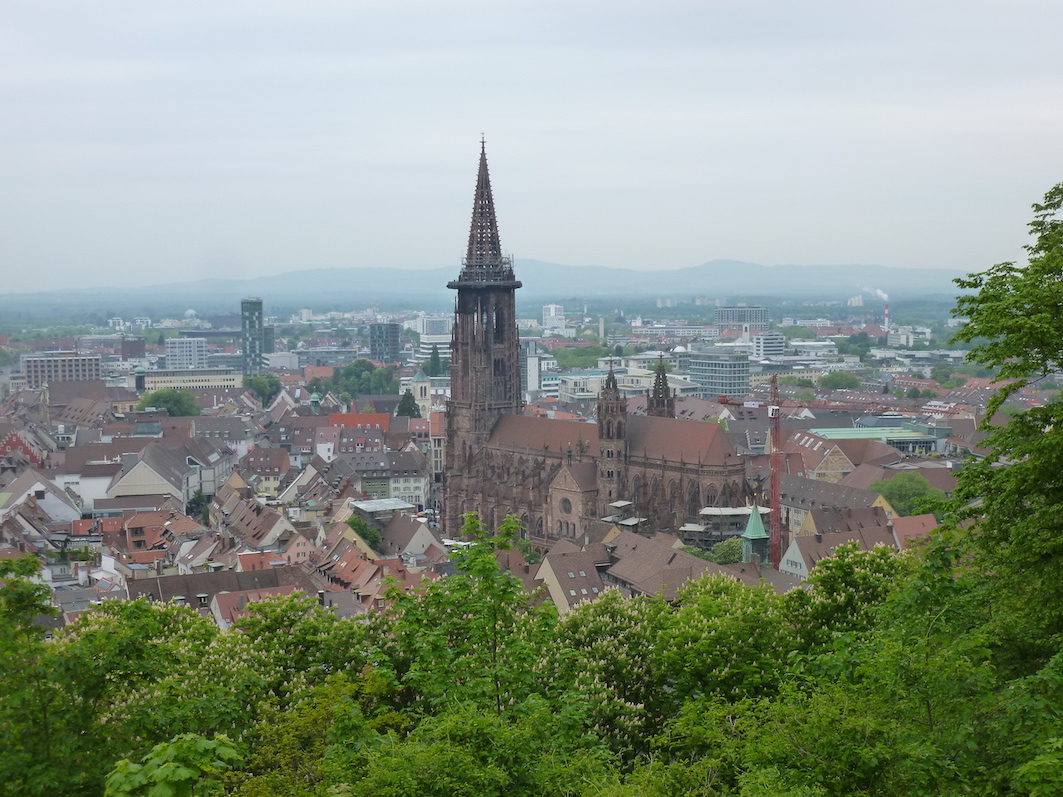
The ice had long since broken up in the rushing stream; spring had arrived, and I was beginning to appreciate what an interesting locality this was. Freiburg, nestling amid the wilderness of the Black Forest, was a special place: like Oxford, it was a famous seat of learning, except that it had been severely smashed up in the war. Most of the old centre had been obliterated: only the Münster, with its dramatic russet spire, had escaped damage. I was looking forward to exploring further.
Sheela showed up, calling us all to a meeting in the disco. She didn’t mince her words. We were all a disgrace to Bhagwan. In particular Sakshi, who had set up the commune and built the disco, was the worst sort of disgrace. It was hard for me to grasp what was happening; it didn’t match my experience at all. But it was soon clear what Sheela intended. The Freiburg commune was to be disbanded, and all were to be dispatched to other nodes in the European commune. Only the disco, evidently a valuable money-spinner, was to escape this inferno: a small crew were going to stay on to keep it going, moving to a house in a local village.
In just a few days, so I was informed, I would be leaving for Berlin. Kabira, as my acknowledged partner, would be travelling with me on the train.
This was my fourth uprooting within a single year. I was becoming used to it – the discipline of fitting my entire belongings into a single small suitcase, with the confidence that all my needs would be duly met at my eventual destination. And what could be more exciting than moving to Berlin – “the city that never sleeps”?
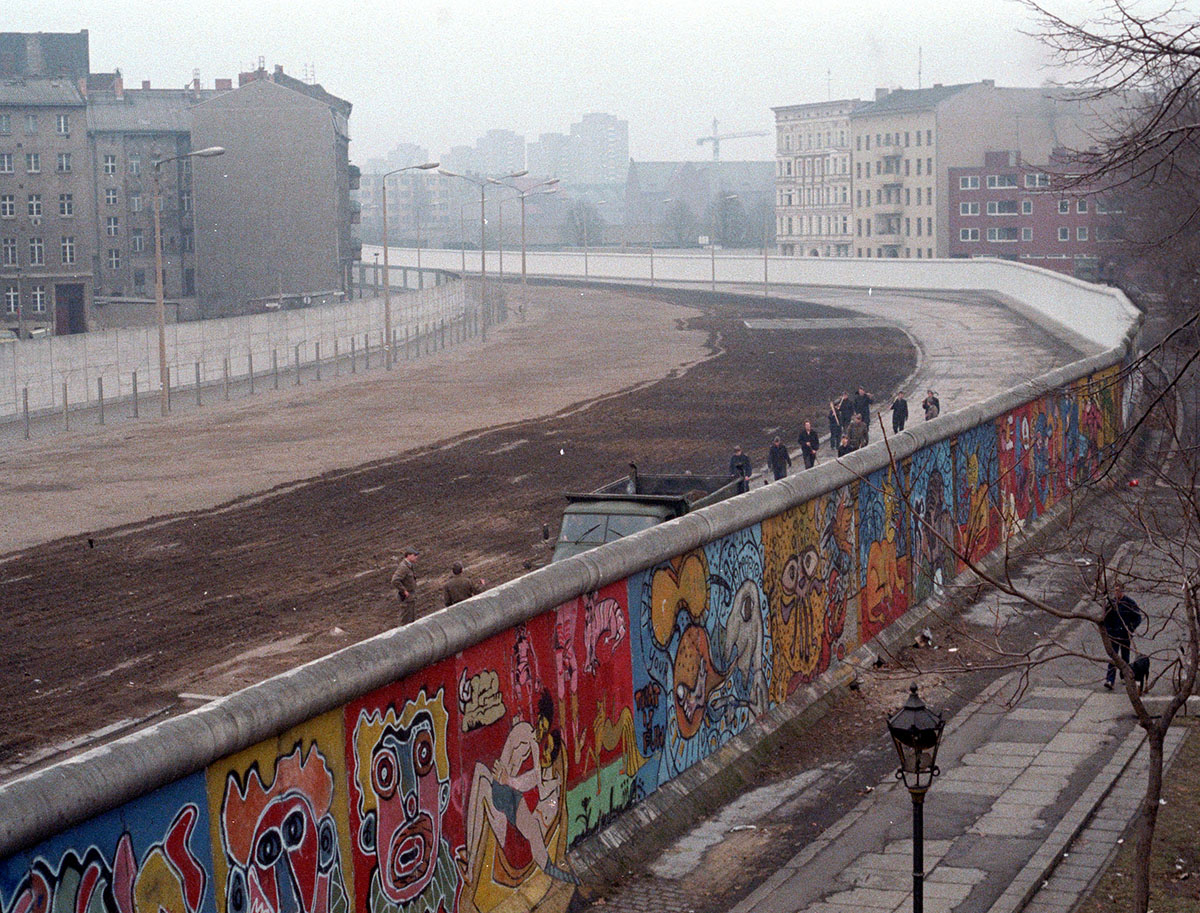
Here was a strange anomaly, in which History had never quite resolved. Berlin was a walled enclave within a hostile socio-political system that had threatened ruin on Western civilisation throughout my whole life. Its designated role in the Cold War face-off was quite specifically as provocation: an alluring shop window of consumer goods forever tantalisingly out of reach, for those whose parents had made the wrong choice back in 1960, when the Wall was erected. The shop windows stretched several kilometres along both sides of the Kurfürstendamm; and the Ku-damm was precisely where we were headed.
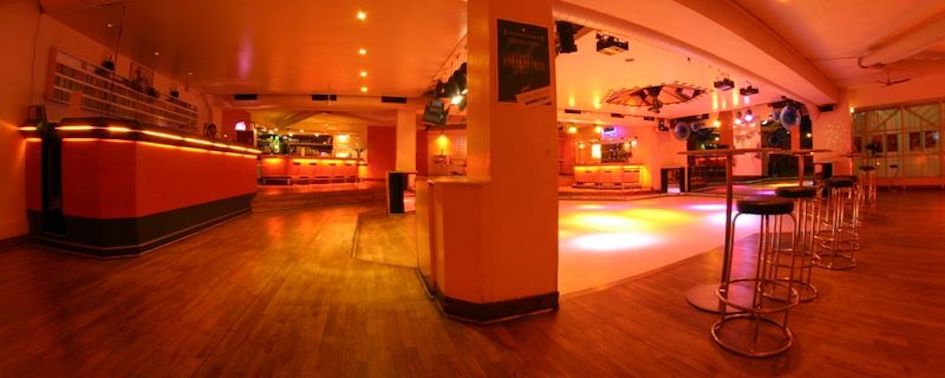
The Far Out Disco on Lehniner Platz might look a lot more shop-worn than its Freiburg counterpart, but it far surpassed it in popularity. It could indeed claim to be the city’s number one nightspot – a key destination for any vagrant Ossi lucky enough to have wangled his way across the border, at least for one evening of precious freedom. Where else, at precisely 11 o’clock, would the guests be asked to clear the dance floor, to make way for the entire disco crew, all smartly attired in purple-grey uniforms (made in East Germany!), who would parade onto the marble, hands pressed together, and namaste to their guests? When the music started up again, the energy was redoubled. At the weekends it was normal for the party to continue until 5 am. It was so much fun.
Unlike Freiburg, the commune itself, Dörfchen Rajneesh, was just a few minutes away, occupying most of the flats at Dahlmannstraße 9. This was a style of building common in metropolitan Germany: a central courtyard flanked by two parallel six-storey apartment blocks, linked at the base by a single-storey structure. At the back – the Hinterhof – was a small garden area. By the time I arrived there were more than 200 residents, twice as many as Freiburg. It was rather crowded.
Sheela’s ongoing policy of closures and consolidation had resulted in a very international population. Alongside many faces familiar from Medina were representatives of a range of European nationalities, plus a selection of more exotic breeds: to my great delight, here was a small cohort of Brazilians, who had been encouraged by Sheela to abandon their homeland, trusting in the European welcome. I became aware that, however much I might consider myself a unique individual, I was indelibly stamped by my peculiar national characteristics: English were English, Italians Italian; while Brazilians, for all their variety of character, shared a special delight in life, a non-seriousness which provided the essential leaven to so much stolid Germanity.
“Celebrate Everything!” was the over-riding ethos; it was no wonder that our disco was such a success. Life was a dance in which the ego could fall away. What was it that remained? Such was the great mystery we were all committed to exploring.
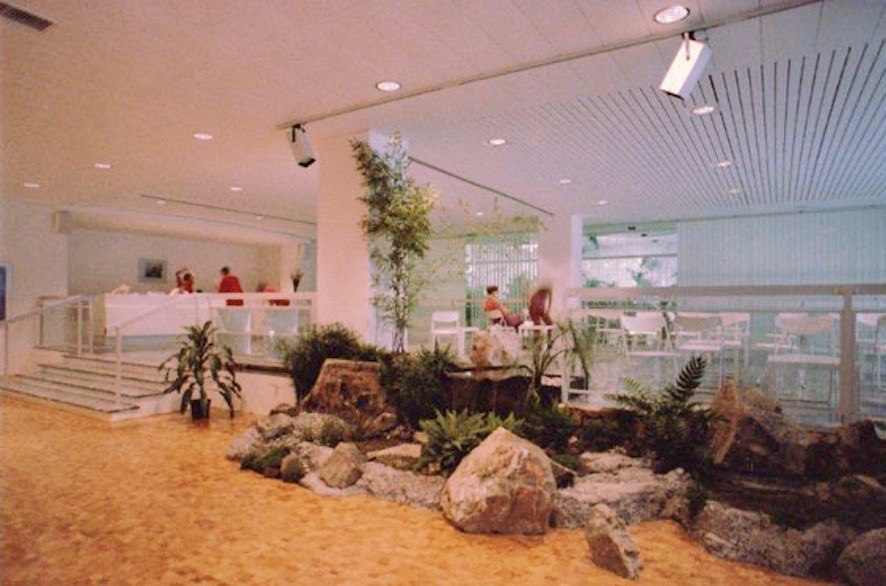
Bhagwan was our trusted guide on this adventure. We were so fortunate to have the gift of his teachings, of his diffused presence. Videos of his marathon discourses were screened regularly at the Institute, just a few hundred metres further down the Ku-damm. This was an impressive establishment, conveying an atmosphere at once both austere and bling, affluent and Zen: clear white walls, marble and open space.
In the basement was a large room for group meditations, and for watching the latest video discourses from the Ranch. The Master had recently resumed speaking again, after three years of public Silence; it was a privilege, once again, to partake in his wisdom.
Bhagwan’s voice was remarkable, a measured flow of sibilance. Whatever he happened to be talking about, it was a mesmeric, spellbinding experience. Perhaps it didn’t really matter what his ostensible subject was; as he explained, “Don’t be distracted by the words, listen to the space between them.” Slumped in front of the giant screen, more often than not we would fall fast asleep long before the two-hour discourse was done; or perhaps we would have drifted into a delicious dream of transcendence.
Sharing the space on the ground floor was Zorba the Buddha Restaurant, intended to convey the essence of Bhagwan’s teaching through gastronomic pleasure. I felt very privileged and excited to be asked to help out with the cooking operation. The kitchen was certainly better equipped and designed than the rather makeshift commune facilities. This was my first experience of a commercial kitchen; I was curious how a wide range of dishes might be made available at short-order. Organisation, anticipation and effective preparation were evidently the key. There was a very large pot of cream sauce on the go, which might be used as the basis for various different dishes; could I just check the seasoning? As I brandished the salt container, I quipped that it would be a disaster if the lid were to fall off. The lid promptly plopped off into the pot, together with all of the contents. They never asked me back.
Magdalena, the commune’s kitchen Temple, was much less exposed to the temptations of the ego. Fully engaged in chopping a vast bucket of onions, there was no need to consider its eventual destiny. The quiddity of existence (tathagat, in Buddhist parlance) lay in this very moment.
Just as in every room in the commune, a large photo of Bhagwan presided over our activities. The Magdalena image was adorned with an additional caption, well suited to the location: “I Am Cooking Something Else”. What might that be? Bhagwan was the Master-Chef, and we had submitted to his guidance. This was a journey beyond the rational. No need to waste energy on mind-fuck; only trust, and all would be well.
There was growing excitement and anticipation about the forthcoming summer celebration in Oregon, to which the entire commune would be going. We would be in the presence of the Master: it was a thrilling prospect.
As if to stoke the process of impending transformation, our conditions of worship were suddenly reconfigured, with a further three hours added to our daily quota, three evenings per week. Taking our cue from the Ranch, all communes worldwide participated in this ramping up of energy: it was known as “The Crunch”. Our tired bodies were asked to help in the construction project next door, by which what had been our difficult neighbour’s flat was being transformed into a new meditation institute. We were doubtless too weary to speculate why this might be occurring. Ours not to reason why . . .
At last the day arrived: the whole commune filed through Tegel airport in a boisterous red-clad crocodile, Ranchward-bound, via a stopover in Texas – which was where I mislaid my carefully packed suitcase.
Arriving in Portland, I was assured that my suitcase would most likely turn up, sooner or later; for some distraction, I picked up a copy of the Oregonian newspaper. There was a special feature about the arms build-up at Rajneeshpuram: a meticulous breakdown of the Ranch’s expanding arsenal.
There is much that I could say about the 1985 Summer Celebration in Rajneeshpuram. The recent Netflix documentary, Wild Wild Country, has brought this event, and its dramatic sequel, back into the public eye. In particular, the enigmatic relationship between Bhagwan and Sheela has been the object of much speculation. But I shall restrict my own recollections to a single impression.
Lined up at the edge of a dusty metalled road, under the blazing midday sun, caught up in febrile exuberance, we wait for Bhagwan’s Rolls Royce to draw slowly near. Here he is, with beaming smile, hands off the wheel, waving to us. It is a sweet moment. And then, following twenty yards behind, a second vehicle: a station wagon, in the back of which is a giant machine gun, prominently displayed. I can’t help but feel that I have seen a Shadow; reflecting back on this, it occurs to me that this was absolutely the intention. Truly, here was a mystery on open display.
My suitcase was waiting for me at Portland airport. On the return flight I purchased a large bottle of Southern Comfort; I was seriously rattled.
Newly reassembled back in Dörfchen, the commune struggled to attain its former cohesion and shared sense of purpose. I certainly wasn’t alone in being unnerved by my experience on the Ranch, without being able to say why. All had gone slack: the springiness, the overarching sense of fun, was gone.
One morning, just a few weeks later, I was busy in the basement scrubbing a well-cleaned skirting board, nursing an uncharacteristic hangover, when a rumour blew past: “Sheela has left the Ranch.” It was a heart-stopping moment.
Our bubble of belief, of faith, was pricked and burst. Over the next few days, an avalanche of revelations crashed against our dream palace. Bhagwan, talking once more, invited the world press onto the Ranch to witness the catastrophe. “Sheela and her Gang” were vilified as a fascist conspiracy. Witnesses were coming forward, sharing the stories they had been too afraid to utter. Had it all been a sham, a grotesque fraud? Where was the solid ground on which to tread?
Many residents left, checking in their malas on the way out. Some sought refuge in the bottle. Me, I struggled to comprehend this calamity: I was struck by a resonance with Orwell’s fable, Animal Farm. The animals in the farmyard had failed to notice how the rules were subtly rewritten, day by day, so that what had once asserted “Two legs bad, four legs good,” was suddenly proclaiming “Four legs good, two legs better.” Our vision of an ideal society had become a totalitarian nightmare. How could this have happened?
I needed to pay more attention.
The population of the commune thinned out, by half, and then still further. Just before Christmas I decided I too would depart. Sitting on the bus, heading into the shadow zone of East Germany, a song came to me, a distillation of this turbulent time. It was an evocation of strong resolve, and a recognition of the impermanence of outward appearance. It played through my mind as Germany slipped past; England drew ever closer.
House Burning Down
Existence is a house burning down
That’s what Buddha said, and now he’s dead
Burnt my fingers once or twice in this town
But the flesh don’t heal till the soul gets real
So I tell you
Each day of my life I will be true
Each day of my life I will be true
Each day of my life . . .
Each day of my life . . .
Each day of my life I will be true
Life is a house on fire
See this tower fall, and that ain’t all
My friend had a dream about fire
But it could not destroy all her love and joy
(So she tells me)
Each day of my life I will be true
Each day of my life I will be true
Each day of my life . . .
Each day of my life . . .
Each day of my life I will be true
Digging down deep in my dreams
Day by day let them burn away
But that clear spot is not what it seems
Always something else, I gotta say
Each day of my life I will be true
Each day of my life I will be true
Each day of my life . . .
Each day of my life . . .
Each day of my life I will be true
Whatever I expected to find in England, I was quite mistaken: the dismal spirit of Thatcher lay over the land; all was cold and grey, uninviting. It didn’t feel like home; so, once again, on Boxing Day I was on the train back to Berlin. From the station, I walked back along the Ku-damm through the slush, for want of two Marks’ bus fare; arriving at Dörfchen, I humbly requested readmittance, pleaded forgiveness from Kabira. It was good to be back home.
I lived in Dahlmannstraße for the next year and a half, along with around seventy fellow residents, some of whom were new to the commune. It was a time of slow adjustment, hesitantly feeling out the parameters of our new freedom. Red clothes and beads were first things to be abandoned; all rushed to purchase blue jeans. There was money in our pockets – pocket money, paid out by the still-flourishing disco – sufficient to support our new sense of individual identity. As the commune emptied out, so the urgent aspiration asserted itself, to possess a room of one’s own, a door to close against the world. There were outbreaks of rivalry and bad feeling. Fortunately, through all of this drawn-out turmoil, Kabira was one of the few wise enough to retain her integrity. She offered a haven of stability.
We had more say in choosing our place of worship: I started to assert myself in the kitchen, taking on a variety of roles. Managing the stores was particularly satisfying. Cooking duties were also fun, now that the strict adherence to set menus had been abandoned. I can’t say I have particular memories of this time in the kitchen; it was simply something I did.
It was a sort of fallow period, quite different from the intensity of Peak Commune. I taught myself German, explored Berlin, went to concerts, shopped for clothes. I was spending a lot more time in my own company, drawing away from Kabira. Life was tending towards normality, with all its frustrations and inadequacy. Were we still sannyasins? I know I wasn’t the only one wondering what had happened to the spiritual adventure. This was all too safe, too dull.
I had heard Bhagwan tell of his own youthful questing, how he dared himself to dive into the centre of the river whirlpool, sensing that it was precisely there where a point of stillness might be found. Bhagwan was now re-established back in Poona; nobody spoke about the Ranch anymore. The rolling river had moved along, but it was still calling. I decided to head East.
Excerpted from the book:
 “I Am Cooking Something Else”
The story of Oxford’s legendary Magic Café
by Hafiz Ladell
ASIN : B09JRGGLPB
Publisher: Independently published (18 Oct. 2021)
Paperback: 252 pages
ISBN-13: 979-8492328382
Dimensions : 18.9 x 1.52 x 24.61 cm
amazon.com
amazon.co.uk
amazon.de
Related articles
- “I Am Cooking Something Else”: The story of Oxford’s legendary Magic Café – Hafiz Ladell’s introduction to his book
- Hejira: my journey to Medina Rajneesh – Hafiz recalls his early taste of sannyas at the English commune – extracted from his memoir, I Am Cooking Something Else, the story of Oxford’s legendary Magic Café
- Berlin by Night – Antar Marc remembers living and working in Osho’s Berlin commune, Vihan (May 2013)
- Interview with Dharmen on the ‘rise and fall’ of the Meditation Centres in the Netherlands
- In conversation with Ma Anand Bhagawati, Part 4.1 Poona to Berlin (video): oshoworld.com
Credit for images go to the author, Osho News archive and Wikimedia Commons



Comments are closed.