

Rabindranath Tagore, Hazrat Inayat Khan and Jiddu Krishnamurti each set foot on Dutch soil – essay by Shanti
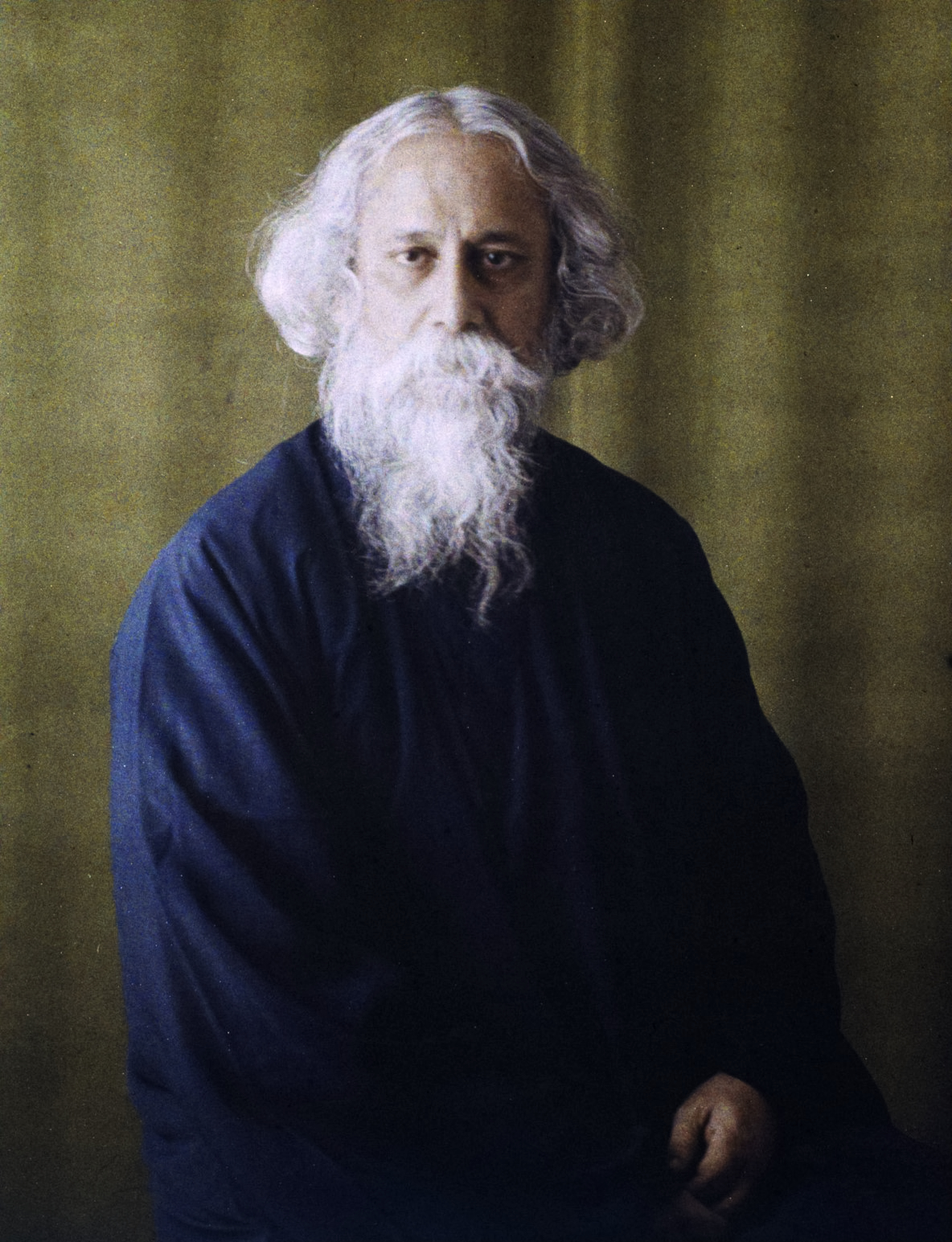
Rabindranath Tagore (1861–1941)
A little over a century ago, three distinguished visitors arrive in the Netherlands. On 19 September 1920, Rabindranath Tagore, recipient of the 1913 Nobel Prize in Literature, arrives and is greeted at the railway station by the Dutch writer and psychiatrist Frederik van Eeden. Van Eeden later recalled: “I awaited him at the railway station. The first thing I saw was his shining grey hair…”
Frederik van Eeden is a great admirer of Tagore. He plays a key role in introducing Tagore’s work to the Netherlands and translates parts of Gitanjali into Dutch. The collection was originally written in Bengali and first published in 1910; Tagore himself translated a selection into English as Gitanjali: Song Offerings, which appeared in 1912.
I love Tagore’s poetry. Please listen to the beauty of these words, which are sung in me too:
“Thou hast made me endless, such is thy pleasure. This frail vessel thou emptiest again and again, and fillest it ever with fresh life. This little flute of a reed thou hast carried over hills and dales, and hast breathed through it melodies eternally new. At the immortal touch of thy hands my little heart loses its limits in joy and gives birth to utterance ineffable. Thy infinite gifts come to me only on these very small hands of mine. Ages pass, and still thou pourest, and still there is room to fill.”
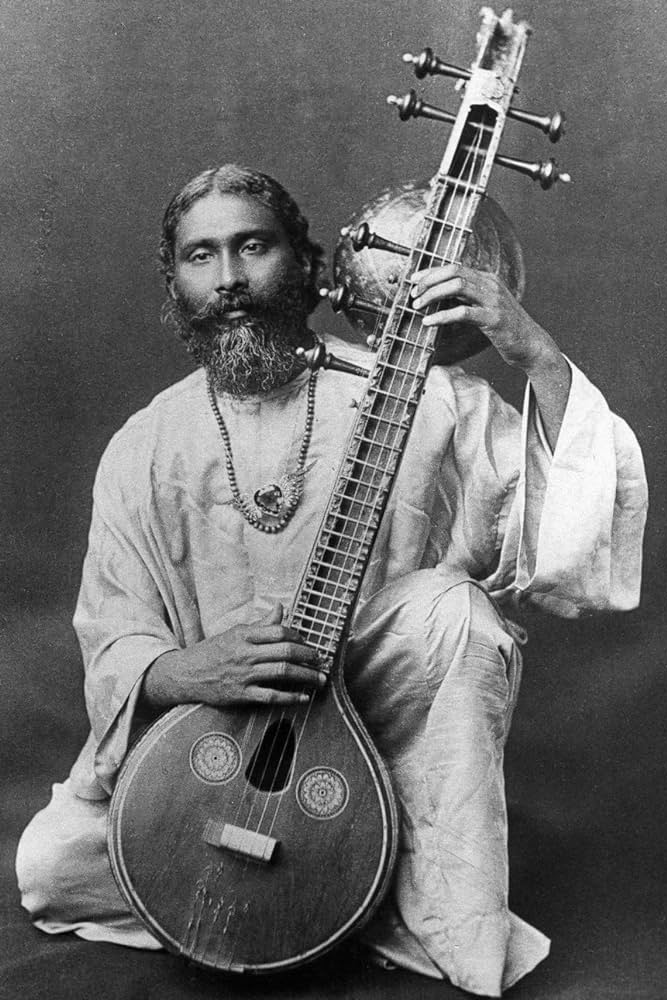
Hazrat Inayat Khan (1882–1927)
In February 1921, it is the turn of the musician and mystic Hazrat Inayat Khan, founder of what becomes the International Sufi Movement, who steps off the train onto a platform in Rotterdam.
His son and successor, Pir Vilayat Inayat Khan (1916–2004), is well known and still dear to many Osho sannyasins, myself included. I treasure my memories of his summer camps at the Camp des Aigles, high in the Alps near Chamonix, in the early 1970s, as well as my darshan with him in his cave in the wonderful Mont Blanc region.
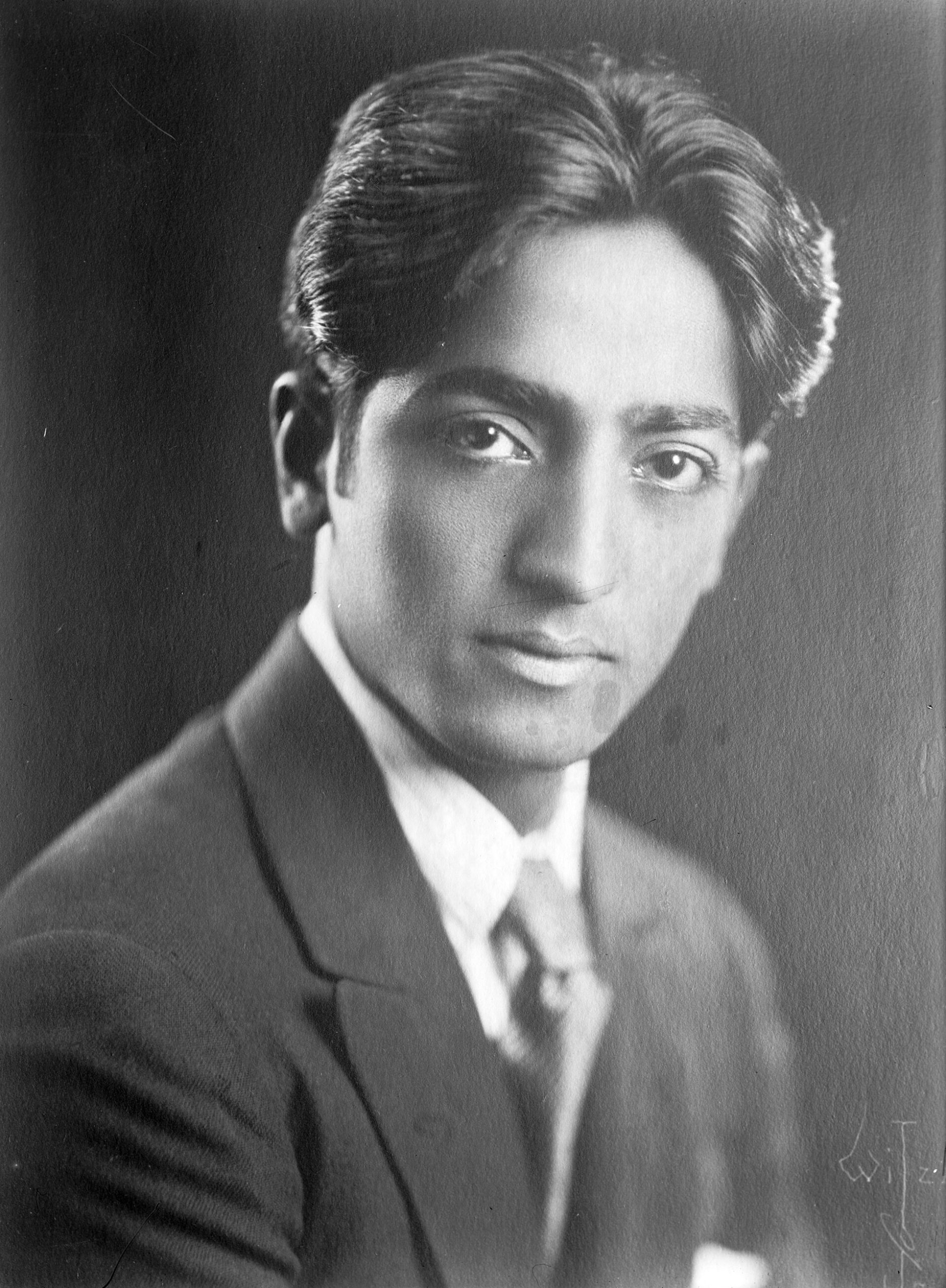
Jiddu Krishnamurti (1895–1986)
In the summer of 1924, Jiddu Krishnamurti pays his first visit, at the invitation of the Dutch section of the Theosophical Society. He stays at the Eerde Estate near Ommen, which the wealthy theosophist Baron Philip van Pallandt has made available to him. The Baron himself meets Krishnamurti at the small railway station in Ommen, driving up in his Wolseley limousine.
Krishnamurti’s first visit marks the beginning of a lifelong relationship with the Netherlands. For more than sixty years he returns here regularly to give talks, and the country becomes one of the principal centres from which his message of freedom, self-inquiry and inner responsibility spreads throughout the world.
Between 1924 and 1938, thousands of people from across Europe, America, India and Australia travel each summer to Ommen to hear Jiddu Krishnamurti speak.
These annual Star Camps are organised until its dissolution by The Order of the Star in the East, whose members believe that Krishnamurti is the long-awaited World Teacher.
By 1928, the Order has representatives in 47 countries, underscoring Ommen’s international significance. The camps are made possible by Baron van Pallandt, owner of the estate, who places a large part of his property at the disposal of the Order. A self-contained temporary community arises on the grounds, with tents, kitchens, shops, a post office and sanitary facilities. Because of the ever-growing number of visitors, a dedicated station is even built, enabling international guests to reach the camp directly. At the heart of the site stands a large open-air theatre where Krishnamurti delivers his talks.
These Star Camps are far more than religious gatherings. They attract artists, scientists, educators and intellectuals interested in theosophy, world peace and the emergence of a new spiritual culture. In some years they welcome several thousand participants.
The climax – and at the same time the turning point – comes on 3 August 1929. During the Star Camp, Krishnamurti declares that spiritual truth cannot be organised. Before an audience of 3,000 members, he dissolves the Order of the Star and speaks these words that would become famous:
“I maintain that Truth is a pathless land, and you cannot approach it by any path whatsoever, by any religion, by any sect. That is my point of view, and I adhere to that absolutely and unconditionally.
“Truth, being limitless, unconditioned, unapproachable by any path whatsoever, cannot be organised, nor should any organisation be formed to lead or coerce people along any particular path. If you first understand that, then you will see how impossible it is to organise a belief. A belief is purely an individual matter, and you cannot and must not organise it. If you do, it becomes dead, crystallised; it becomes a creed, a sect, a religion, to be imposed on others.
“This is what everyone throughout the world is attempting to do. Truth is narrowed down and made a plaything for those who are weak, for those who are only momentarily discontented. Truth cannot be brought down; rather, the individual must make the effort to ascend to it. You cannot bring the mountain-top to the valley. If you would attain to the mountain-top you must pass through the valley, climb the steeps, unafraid of the dangerous precipices.” 1
His declaration shocks many of his followers, yet it also marks the beginning of his independent philosophy – one rooted in the profound experience he had under a pepper tree in Ojai in August 1922, which brought about a complete transformation.
Although the Order of the Star has been dissolved, gatherings at Ommen continued until 1938. Nowadays there is a campsite – much as Rajneeshpuram has become a youth camp.
I have read his books and a biography of him, and I have sat in Krishnamurti’s presence, listening to his lectures, in Saanen, Switzerland, and in Amsterdam. I have also visited his place in Ojai, California.
Sources
- From J. Krishnamurti’s dissolution speech: kfoundation.org
Related articles – Rabindranath Tagore
- Osho speaks on Rabindranath Tagore
- From 1001 Tales: Four words changed in a poem’s translation
- From 1001 Tales: Rabindranath, the houseboat, the moon and silence
- From 1001 Tales: The reflection of the moon in the ocean
- From 1001 Tales: The house where God lives
- From 1001 Tales: God creates man out of mud and bakes him
- From 1001 Tales: The lover’s condition: to live separately
- More on Rabindranath Tagore on Osho News
Related articles – J. Krishnamurti
- Osho speaks on J. Krishnamurti
- Osho’s discourses: We have to create a discontinuity with the past
- Books I Have Loved: J. Krishnamurti’s The First and Last Freedom
- Books I Have Loved: Commentaries on Living
- Personalities (biographies by Marc and Bhagawati): Jiddu Krishnamurti
- More on J. Krishnamurti on Osho News

Comments are closed.