

Chapter 2 from Satya Niranjan’s memoir, I Leave You My Dream
You have forgotten about
your own being,
the real master.
After meeting Osho for the first time in August 1964, I had the opportunity to listen to him 3-4 times in the next six months. During this period, I was experiencing a confused state of mind. My strong belief in atheism was shaken as I was being drawn towards Osho. His charisma, his unique way of approaching any subject and giving a totally different insight to each aspect, left me spellbound. Whenever I sat alone, Osho’s image flashed before me. His big, bright eyes, his smiling face, loving personality, compassionate nature and rebellious thoughts created in me a deep longing to be with him wholeheartedly and, at the same time, my atheistic thinking prevented me from surrendering to him. His sharp criticism of blind faith in religious customs, traditions and God left me in complete awe of his genius, but his emphasis on inner search and meditation left me in a confused state of mind, as I could not comprehend the very existence of such a phenomenon.
The desire to meet him as often as possible kept growing and so did the feeling that his tremendous capacity to see things in utmost clarity would help me sort out my confusion.
Fortunately, after that Osho visited Pune quite often and I did not miss a single opportunity to meet him. A few friends in Pune had already accepted Osho as their spiritual master. Ramlalji Pungaliya, Mr & Mrs Bafna, P.K. Sanghvi and his brother B.K. Sanghvi, Dr. H.N. Phadnis and a few others took keen interest in inviting Osho to Pune.
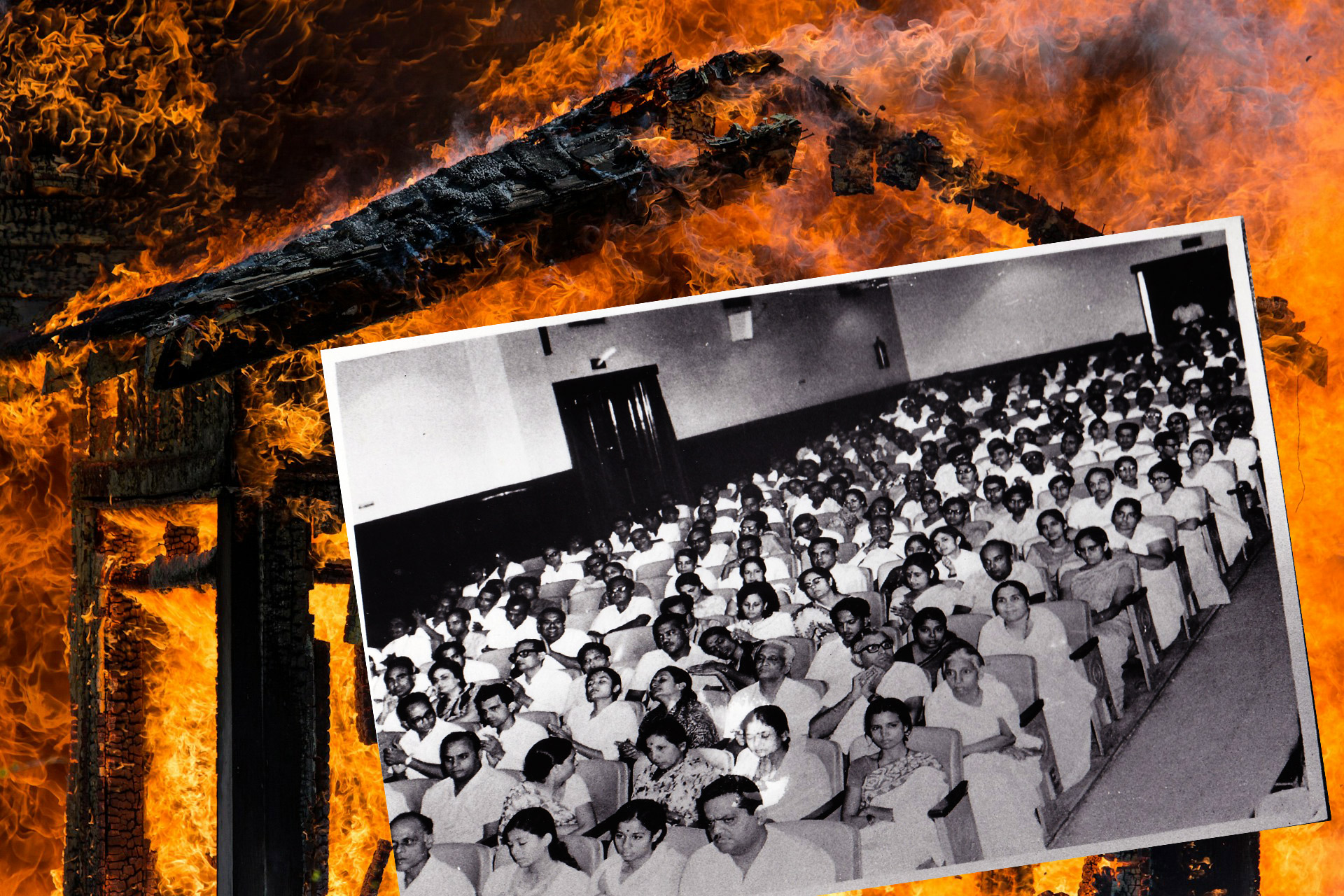
Osho’s second discourse was arranged in Vijayanand theatre and the third one in Vasant talkies in Pune. I still vividly remember the third discourse held at Vasant talkies because it again had a great impact on me.
The talk was scheduled at 8.00 a.m. I reached the venue well in advance and could find a seat for myself. The auditorium was filled to its capacity and many people were sitting on the floor or standing in the passages. Many dignitaries were also present. Exactly at 8.00 a.m., Osho took his seat on the podium. As usual he was sitting with his legs crossed in Indian style.
Pungaliyaji announced that Osho would start his talk right away to avoid any delay. However, Osho suggested to Pungaliyaji that before he started to speak, someone should sing a bhajan. On Pungaliyaji’s request, one woman volunteered to sing a melodious devotional song. After this, Pungaliyaji ensured that every discourse of Osho was preceded by a devotional song.
That day Osho began his discourse with a story which goes like this: In a small town there lived a rich man who had built his palatial house in the middle of town. He lived in the house with his only son. One day early in the morning, he went for a walk and on returning found that his house had caught fire. Seeing his house burning, he went blank and could not think of any proper action to be taken. People from all around rushed to the spot. Most were trying to extinguish the fire by pouring water, whereas some people entered the burning house and tried to retrieve some precious articles. The rich man sat on a chair under the tree in front of the burning house and whenever somebody saved some precious item from the burning house, he would pat that person’s back in appreciation.
Soon the flames started rising high and it became dangerous to enter the house. But even then one young man ran inside to retrieve something. There was a stir in the crowd. People exclaimed that it was extremely risky to enter the house in this condition. As there was no sign of the young man returning for some time, people started remarking (as is the habit of the masses) that it was stupid of him to enter the burning house. He might have succumbed to the fire or might have choked on the fumes.
In the midst of this commotion somebody shouted, ‘No, he is not dead. I can see him coming.’ Because of the smoke the visibility was poor but a person who was intently watching said, ‘He is coming out but he appears to be very sad and perhaps he is weeping.’ Someone from the crowd remarked, ‘He is sad maybe because he could not fetch anything from the house despite his heroic act.’ But someone else shouted, ‘He is not coming empty handed, he is bringing something with him and it seems to be quite valuable because he is holding it tightly onto his chest!’
As the youth came out of the burning house the commotion stopped. There was total silence. He was holding a bundle in his hand which was wrapped in a piece of cloth. He went straight to the rich man and placed it at his feet and covering his face with his palms, started sobbing uncontrollably. The rich man could not understand why the young man was crying in this manner. The rich man bent down and removed the piece of cloth from the bundle. And alas! What a calamity! What he saw was the dead body of his only son.
After this, Osho stopped speaking for a while and looked all around at the audience and said, ‘It seems that this tale has made you quite sad. I can see tears in the eyes of some women. But I have narrated this story to remind you that each one of you is that rich man and your own house is on fire. Do not pity that rich man who wasted time in piling up all sorts of mundane things and forgot about his only son, who was the real owner of everything he had worked hard to achieve and possess. You too, throughout your entire life are so engrossed in accumulating so much junk that you totally forget about your own being – the real master.’
This discourse of Osho penetrated deep into my being. I was so much impressed by it that I eventually wrote an article under the title, ‘Your own house is on fire!’ with the summary of the discourse, which was then published in a widely-read local newspaper.
From chapter 2, titled Your Own House is on Fire, from Niranjan’s memoir, I Leave You My Dream
Featured image composite of photo taken in Patkat Hall Mumbai 1971, on photo by Dave Hoefler on Unsplash
Related articles
- More excerpts on Osho News from I Leave You My Dream
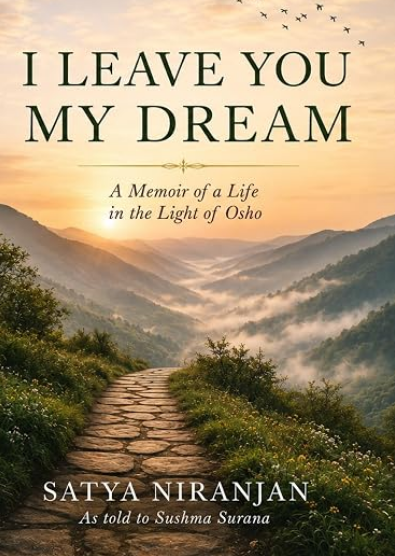 I Leave You My Dream
A Memoir of a Life in the Light of Osho
by Satya Niranjan, ed. Sushma Bharti
Self-published, second, revised edition, 3 September 2026
Format: Kindle edition (paperback out of print)
ASIN : B0HHNYMY7M
amazon.in – Amazon *

Comments are closed.