

Veet Karen shares her candid, joyous journey through menopause – and a nourishing recipe to support you along the way
When I was a teenager, I started to hear a lot about menopause. On the radio, on the TV, and my mum was about menopause age – she started talking about it and was worried about it. I secretly hoped it would never happen to me, maybe the world would end before menopause. It sounded dreadful. I watched my mum have a difficult time, and she went to the doctors for support.
A change in attitude
I started to hear more and more about it, and thought, what a drag, it sounded intense. Then a friend told me her friend was in menopause and she was loving it. That she felt it didn’t have to be this thing that unhinged you, that it could be an easy time with the right attitude.
This really got me thinking. I started to read more and more about menopause and how, in many cultures it was revered and regarded as a time for celebration. At the time I had 5Rhythms dance as my weekly practice and I read and heard that Gabrielle Roth, the founder of 5Rhythms, likened the rhythm of joy to post-menopause. A time when life became joyous and small things that bothered you no longer did.
I was starting to like the idea of menopause. I knew, though, that I wanted to prepare myself for it, and there wasn’t a whole lot on offer in the way of courses and further learning.
Then another friend told me her doctor said she was going through peri-menopause. What the actual F, now there was another part to it that I hadn’t heard of? It still didn’t put me off, though – I was determined to ride peri-menopause and menopause with the mindset that this wasn’t something to dread or hate, or want to change.
Missed peri-menopause
Looking back now, I realised I missed the whole peri-menopause. Well, I did experience it – I was just oblivious that I was in it. I had become moodier and more irritable. My periods were still regular, but I did get plantar fasciitis, which took forever to get over because I was so focused on the physical and unaware that it was an indication of peri-menopause. Then a nurse, who came to do the vegan foundation cooking course, told me about phytoestrogens. This was before I did my nutrition degree, I started to eat more phytoestrogen-rich food which, I realised, must have helped me through the later stages of peri-menopause. [Phytoestrogens are natural plant compounds that can mimic weak oestrogen activity in the body, ed.] (If you would like to receive Veet’s menopause fact sheet, with the list of phytoestrogen-rich foods, sign up for it here.)
Menopause hit
Then one day, out of the blue: I had just finished a huge day and night of catering for a Deva and Miten retreat, and was sitting with 270 other people, singing along with them all, when, all of a sudden, I broke into a massive sweat. I felt like I was dripping, but no one else seemed to notice.
This was so unusual for me, as I rarely sweat. I was concerned that I was coming down with something, but also really happy to be sweating.
Then, the next week, I felt incredibly hot all the time and I had an excruciating stomach pain that left me literally doubled over. My period was due, but I had never experienced such pain before. I was sure I was coming down with a virus. But Mak checked my temperature and I was fine. I did get my period, and that was my second-to-last period.
When my period didn’t arrive the following month, and I had been having hot flushes during that time, it dawned on me that I was menopausal.
Instantly I went into an “oh no!” reaction. I am not going to be attractive anymore, I’m never going to be young again, I am officially old. I am going to get fat. How am I going to navigate all these hot flushes? I will never be able to get pregnant. (For goodness sake, I was already 48 and had decided not to have children – why was this all of a sudden a concern?)
And then after three days of these concerns, I realised, woo hoo, this could be it – this could mean I wasn’t going to get my period again – I wouldn’t have to carry tampons and menstruation paraphernalia around with me ever again.
I have to be honest, though – in those three days of worry, I had been a nightmare to be around, and Mak got the brunt of it. He said to me on one of those days, “I’m not sure if our relationship is going to survive menopause.”
I replied, “Good!” and stormed out of the house, went and sat by the river for hours on end, thinking how wonderful life would be on my own.
By the time I got home, I found the most magnificent bunch of flowers waiting. Mak had been on the internet researching what to do when your partner’s menopausal. He had found that it was best to be understanding and kind, and to give them lots of hugs and buy them flowers…
Navigating menopause
The hot flushes seemed to happen daily at first, and then they got less. I realised that I needed to give up coffee, as this was not helping at all. So I went about doing that, which was tough, but I did it.
Sleeping was an issue, but I was used to only sleeping 5 hours a night (due to the intensity of catering), so I managed that, but I did take naps where and when I could.
Then I started to notice what brought on my hot flushes. I started to keep a diary. There was a clear pattern; they came whenever I felt stressed. Whenever I was teaching a course or class and I did a demo and all eyes were on me, I would get a hot flush which stopped me in my tracks. After that happened the first time, I realised I couldn’t do that on my own, so the next time it happened, I let all the participants know I was having a hot flush. We all took a breath together and then it was so much easier for me to navigate.
Whenever I was overthinking anything, a hot flush came on. More meditation was needed. But even in meditation, I would get lost in thought and – pronto – a hot flush appeared.
Next, I got plantar fasciitis. It was excruciating. It came soon after my friend died, and continued for six weeks. None of the physical things I had done for it in the past worked, until it dawned on me that it was a result of menopause. I grabbed the list of phytoestrogen-rich foods. I hadn’t been looking at it, as I’d assumed I was already eating lots of them. What I didn’t realise was that I wasn’t eating them consistently enough.
I consciously ate as many as I could every day and within three weeks the plantar fasciitis went away and it has not come back. Hot flushes became less frequent.
What wasn’t changing, though, was my sleep. I found it hard to stay asleep for more than two hours at a time. I had to make sure I didn’t have too many covers on at night, and chamomile tea and ashwaganda just weren’t working, or I wasn’t consistent enough.
I then decided I wasn’t going to worry about it. I was just going to catch sleep when I could. So I would have a cat nap at lunchtime, and sleep in on weekends. It worked. I was less irritable, but I had gained weight, which is a result of not enough sleep. I knew older friends had gained weight in menopause and then lost it post-menopause, so I decided I would just have to be a bit chubbier.
Post-menopause
After five years of what I would consider a really easy and quite joyous time in menopause, I realised I must be in post-menopause.
Done and dusted.
I hadn’t had a hot flush for a very long time and I didn’t have vaginal atrophy anymore. And I had started to sleep better. It was a fabulous realisation. I felt really comfortable in myself, even with the extra weight. Sure, I want it to go, because I know my body will be healthier without these extra five kilos, but I actually am fine with how I look too.
Last year, I suddenly got a hot flush, after not having one for well over a year, and then another one the very next day – it was quite pleasant actually, and what I realised is that I had eaten refined sugar on both of those days.
Then I didn’t have another one for a year, until recently, when I was super stressed with Mak being in hospital.
So let’s see where to go from here.
What I love about menopause is being more authentically me. Sure, not everyone likes that, but that’s okay too.
Not everyone’s path is the same
This is my path with menopause, but not everyone’s path is the same. Some people have a much more intense time in menopause. But what I feel helped me was my attitude towards menopause – I embraced it, I didn’t want to make it go away, I treated it like a rite of passage.
I slowed down – I decreased my workload where I could, so that it didn’t matter if I didn’t have a good sleep. I ate heaps of phytoestrogen-rich foods.
I avoided foods that cause inflammation:
- meat
- dairy
- eggs
- preservatives
- sugar
I did try taking ashwagandha, but it didn’t seem to have much of an effect, so I went down the route of eating as clean as I could, adding foods that would support my menopause journey. I started facilitating and enjoying a menopause cooking and nutrition course.
In 2023, I developed a course called Enjoying Menopause Cooking and Nutrition, for people in any stage of menopause or curious about the subject, with the intention that this is seen as an ongoing time of our lives. Once the body stops producing oestrogen, we have to provide it with foods that support oestrogen-like activity, so that we can have a healthy rest of our lives. Menopause isn’t a period of life that comes and just stops. We are post-menopause until the day we die, and our bodies need nutrition and a lifestyle that supports them.
Learning to eat to fully nourish ourselves in this time of our lives – which hopefully will go on for decades – is essential. I don’t want hip pain, plantar fasciitis, brittle bones, or other complications, nor do I want that for anyone else. By choosing food to support our bodies, we can avoid these ailments and live our best lives.
‘We are what we eat’ was a slogan that I grew up with, and a slogan that I will grow old with.
Phytoestrogen-rich Jar
½ cup cooked quinoa or black rice
100g tempeh or tofu fried or baked (cubed or slices)
Steamed broccoli
1 pear or tomato or grapes
Sprouts
Sauerkraut
Lettuce or rocket
2 tbsp pepitas
¼ cup peanut butter
Juice of 1 lemon
1 tsp ginger grated fine
1 tbsp tamari or to taste
1 clove raw or cooked garlic minced
Water to thin
For the dressing, mix all the ingredients together with a fork.
Add the sauce to the bottom of two jars, then the quinoa, tofu, broccoli, sauerkraut, fruit (pear or tomato or grapes), lettuce and sprouts, then pepitas.
This article was first published on Veet Karen’s blog: veets.com.au
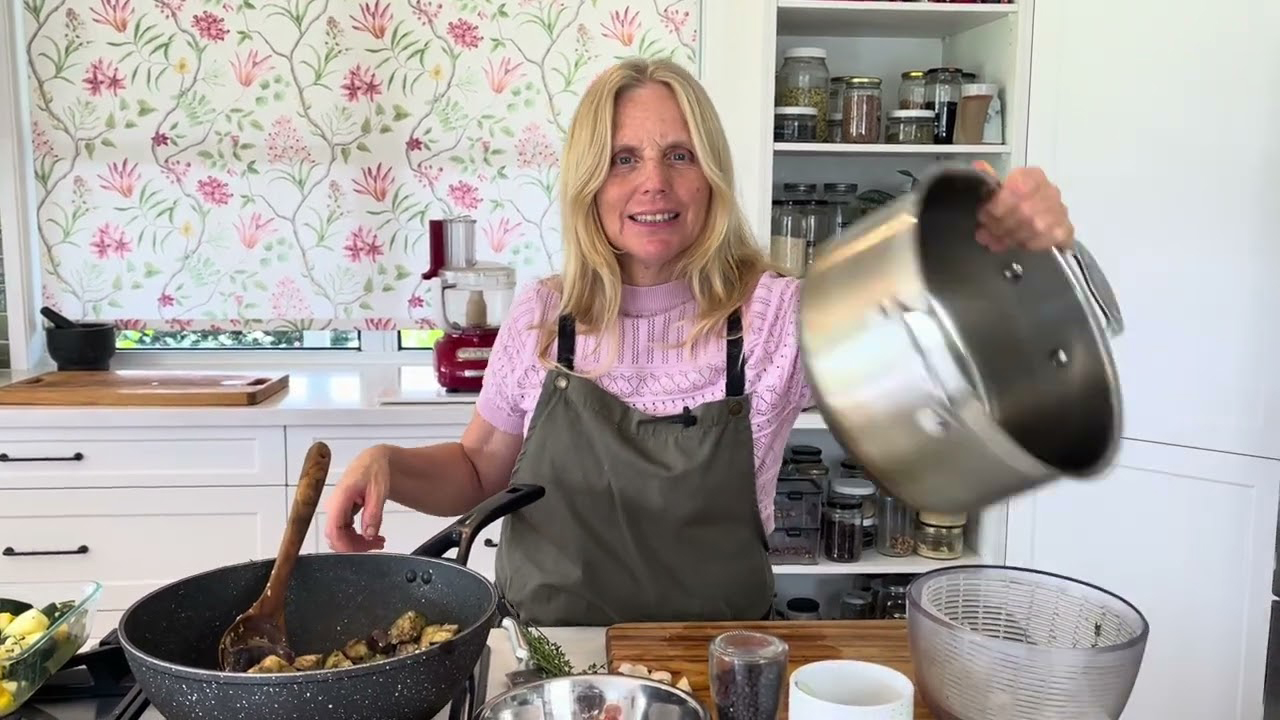
Featured image: from a video by the author
Links
- For information on the Enjoying Menopause workshop, now more accessible as it is run online. You can do it in person but it is easier doing it from the comfort of your own home: veets.com.au
- To sign up for the free menopause fact sheet: veets.us7.list-manage.com
- To sign up for the complete protein chart: mailchi.mp
- Sign up to ‘Eat More Plant-based Food, Feel Sensational’ free eBook: veets.com.au
Related articles
- The magic of menopause – Sarita was asked the question: Do you have any tips on how to approach menopause?
- Recipes by Veet Karen on Osho News
- 16 years of Veet’s Vegan Cooking School – The story of Veet Karen’s successful venture in Australia, from catering to teaching (June 2024)


Comments are closed.