

Sudas’ reflections on the history, ways of making and joys of drinking tea
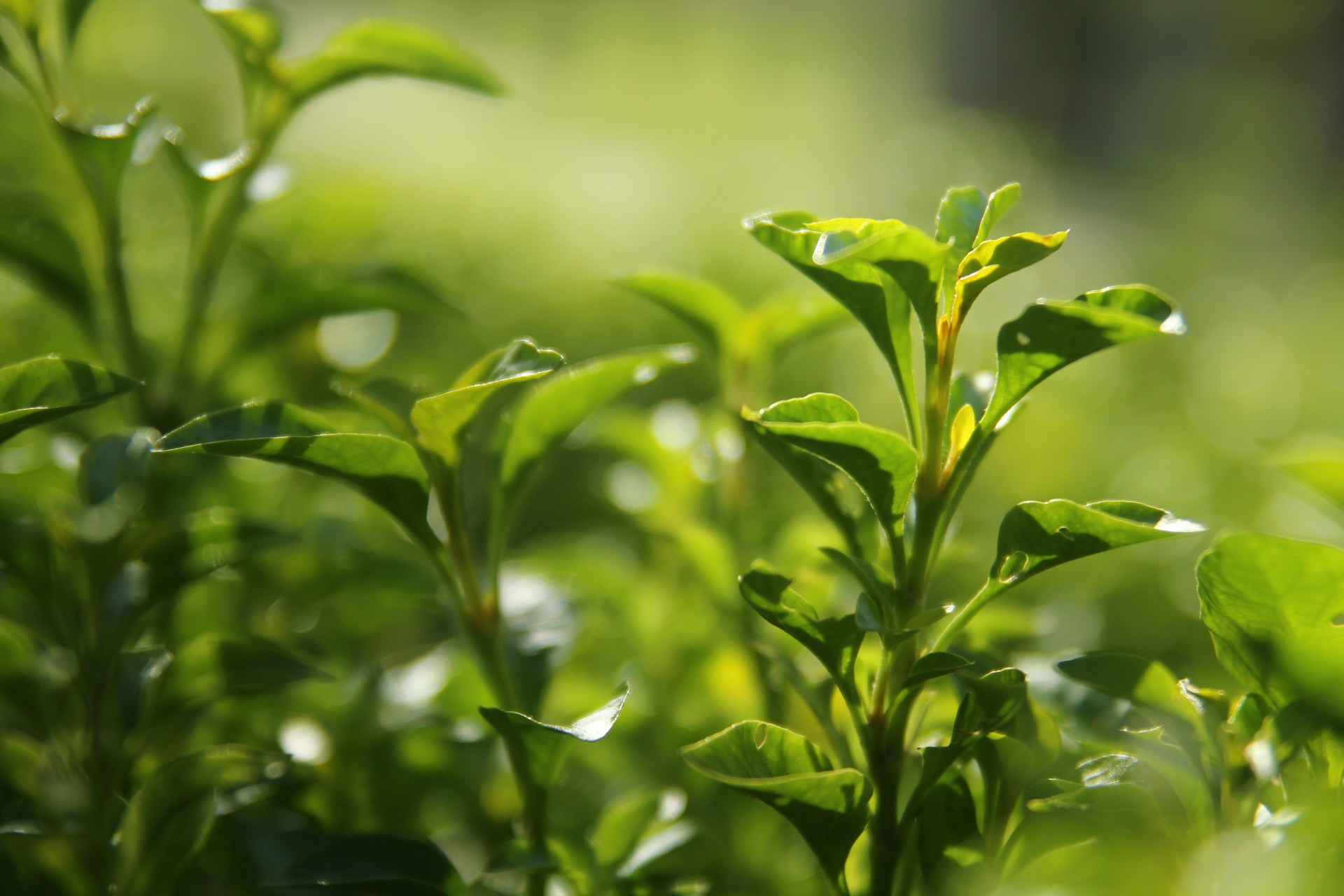
Tea and philosophy have been friends for a long time. Together they have helped strangers become closer, renewed friendships that have grown stale through neglect or harsh words, and sometimes given birth to new ideas or resolved old misunderstandings. A cup of tea can lift a dark mood, soften a difficult conversation and create a small space in which something new becomes possible.
Some centuries ago, the tea rituals of Asia, notably China and Japan, crossed the globe, and as they took root in England, they gave rise to a new way of seeing the world, of spending time with one’s neighbours, or relaxing on one’s own. This reality had already been well known in the Orient for a much longer time, as tea has had an active social role as far back as the 4th century.
In his impressive book on Oriental culture from 1906, The Book of Tea, the Japanese fine arts expert, Kakuzo Okakura, makes the following statement: “Those who cannot feel the smallness of great things in themselves are inclined to overlook the greatness of small things in others.”
Tea was identified in Southwest China over four thousand years ago, but became firmly embedded in Chinese society during the Tang Dynasty (600 – 900 CE). Before that, tea had been seen as a medicine or something to be added to a soup. There was not generally a defined way to drink tea, but during the above-mentioned Tang Dynasty, Lu Yu wrote a treatise on tea, called the Tea Classic. This soon became the bible of how to think about tea throughout the whole of China.
The book, divided into ten chapters, describes in detail the mechanics of making tea. It describes what kind of water to use, and how many tea leaves to put in the pot. It also refers to which kind of utensils are useful, and so on. There are for example fifteen tools for picking, steaming, pressing, drying and storing tea leaves. There are twenty-eight items used in the brewing and drinking of tea. In short, he describes all the guidelines for the proper preparations necessary for producing the perfect cup of tea.
Some might say we have come a long way in modern times with our tea bag culture. It is not necessarily an improvement. But few of us feel we have the time, the stamina, or often the patience or enough routine, to go through a convoluted tea program just to produce a morning or afternoon cup of tea.
I visited Shanghai this spring and experienced up close the Chinese tea culture. I confess that initially I felt a slight impatience. It may have been around four in the afternoon. I was tired from a busy sightseeing programme in the downtown section of Shanghai, and all I wanted was a quick cup of tea. Instead, I was thrown into a whole whirlwind of kettles, special tea tongs, and other paraphernalia for producing the best taste. I wondered when we would get the tea…
In my limited mindset, I was thinking that it would all be much easier if we just had a Barry’s tea bag on hand. But the cup of tea moment developed into a cultural exposition, a kind of revelation of something of the soul of a great tradition, which has been around for countless centuries before I was born.
As I relaxed, my eyes opened up to something new. I felt a sense of awe at the strangeness, the skill and complexity of how a simple cup of tea was being brought to life in front of me. It was very different to my own lifelong understanding of making a cup of tea. I began to feel admiration and appreciation for the sophisticated yet down-to-earth approach of the Chinese tea culture.
I undoubtedly compared it to my own tradition. But the more I relaxed, the more I marvelled at the dexterity of the tea master in moving water from one container to the next and back again. I delighted at the way the tea leaves were carefully chosen and measured and added, as if by sleight of hand, into a pot or a cup. Water was added and subtracted and removed and put back and poured through the air like a waterfall. It felt like being at a magic show and the tea master was some stage avatar.
What he poured from cup to pot, from pot to gourd and back again seemed to be transformed into something I had never tasted before. Watching through my simple ‘tea bag’ eyes, the method was complicated. After a time I accepted that it was definitely something new and interesting. I was a novice who basically didn’t understand how it was all being done in front of me.
Something changed inside. I could no longer overlook the greatness of little things in front of my eyes. Each small movement was a step to the next small movement until finally they all converged into a taste I had never known before. This was art and the result was a cup of tea. And alongside the tea, my companion, the tea master and I had all merged into the experience. Everything in our lives before disappeared. We forgot ourselves and became absorbed in the tea, the taste and the exotic surroundings of the tea house.
In the 9th century, Lu Tong wrote a poem to thank someone for sending him a supply of tea:
The first cup caresses my dry lips and throat.
The second shatters the walls of my lonely sadness.
The third searches the dry rivulets of my soul to find the series of five thousand scrolls.
With the fourth, the pain of past injustice vanishes through my pores.
The fifth purifies my flesh and bone.
With the sixth I am in touch with the immortals.
The seventh gives such pleasure I can hardly bear.
The fresh wind blows through my wings,
As I make my way to Penglai the mountain of the immortals.
Tea offers many levels of experience, depending largely on the attention we give to what, how, when and where we drink it. And the company we keep for our tea moments is also of significance. In the Japanese tradition, five participants would be considered the perfect number for a tea ceremony.
The development of our modern tea cultures goes back a long way, with many twists and turns. Suffice it to say that nowadays the majority of tea drinkers are fairly innocent about the origin of tea and don’t have much knowledge of the varieties of ways in which tea can be enjoyed. To a large extent, the kind of tea you will enjoy is determined by where you find yourself in the world. It is very much a matter of culture and tradition.
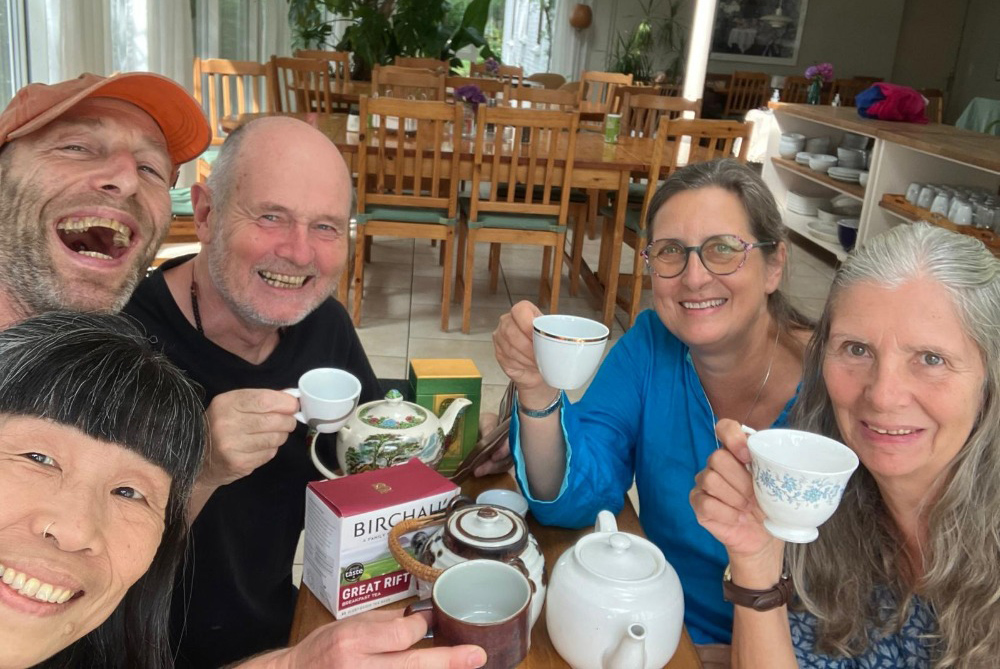
Recently, at Osho Risk in Denmark – which this year is celebrating its 40th anniversary – I was invited to join an afternoon tea party, where the participants could bring their favourite tea. We were five participants from four countries, each coming with different tea habits.
Yoko, from Japan, had her Sencha green tea. Moumina from England had some high class Kenyan tea called Birchall’s Great Rift Black Tea bags. I, being Irish, brought my Barry’s Gold Red tea bags, a strong morning breakfast tea. As well as Barry’s, I also had an unopened 100-gram bag of (Shou) Pu-erh tea leaves from Shanghai to share. Two other friends from England and Switzerland, Jwala and Nirvan, joined in for the fun. So it was really a tea tasting experience.
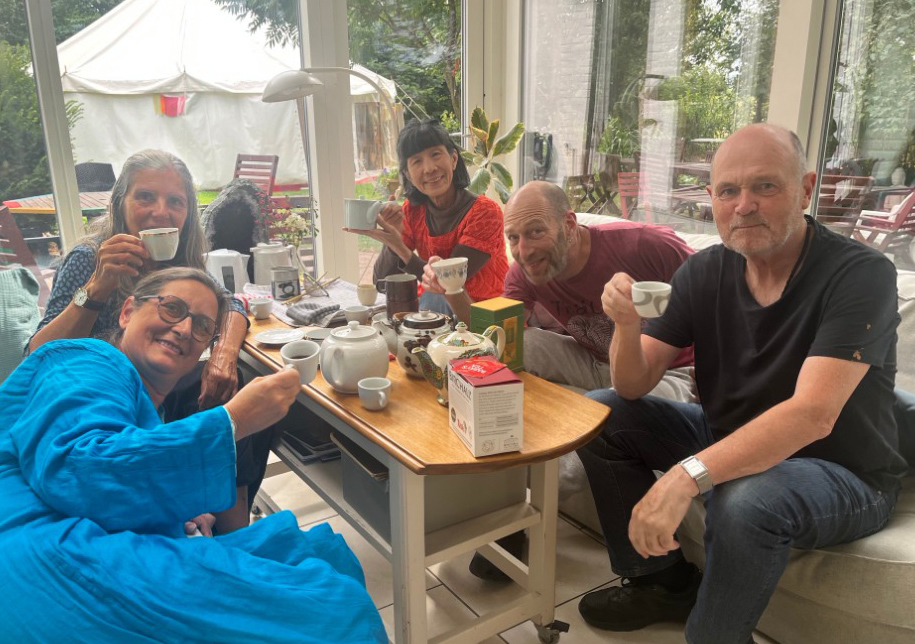
There we all sat in a corner of the Risk dining room on a pleasant afternoon and gave ourselves good time to try the different tastes and styles of tea.
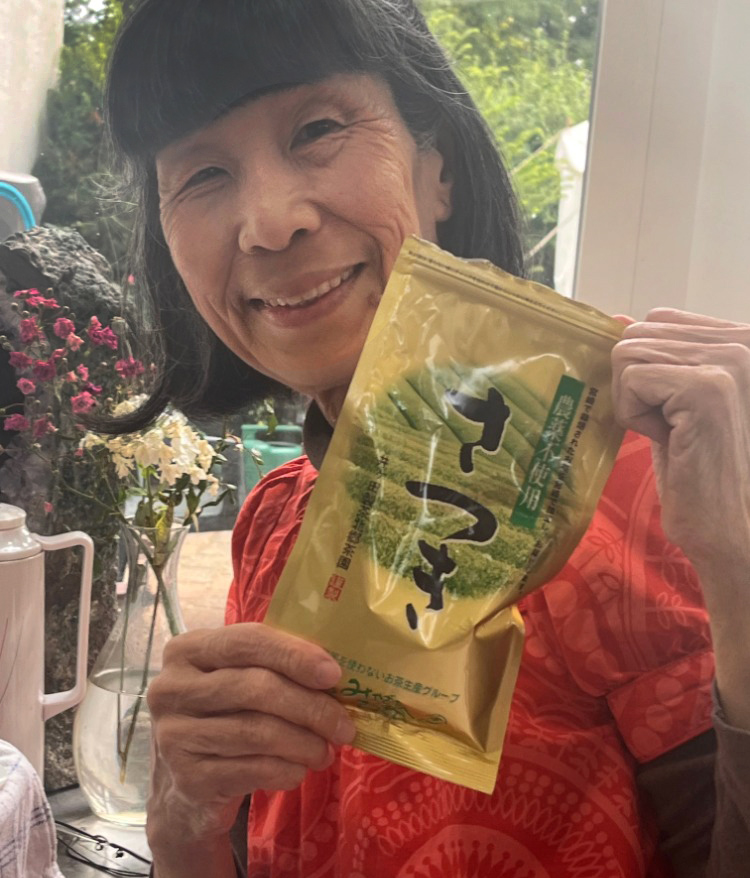 Yoko, who is a qualified Japanese tea ceremony master, started us off with the Green Sencha tea. Moumina proposed that we close our eyes, taste the tea in silence and see what taste or aroma or memory might be induced. Getting the water to the right temperature was a bit of a guessing game, as we didn’t have a proper temperature-controlled kettle. So we guessed when we had reached the required and recommended 80 degrees Celsius. Yoko knows how to make tea so it was easy for her to do it professionally.
We all had slight variations on the flavour, whether it was like peat, boggy, chocolate, friendly, or just gently coming and embracing with a kind of inner warmth. It was coincidentally a very windy afternoon outside in the garden, with leaves and flowers dancing with abandon.
We also talked about the tradition of green tea in Japan more generally, and the notable fact that people in the Kagoshima and Shizuoka prefectures – the main producers of Sencha tea – have fewer dental problems than those in other parts of Japan. Apparently, some constituent of Sencha tea is particularly good for the teeth and gums, and this is said to be one of the reasons it is considered a healthy tea to drink.
I imagine it is also a matter of conviction and habit, in the way that Europeans eat bread and cheese, or pastries for breakfast, while in Asia people tend to eat vegetables or soup. We also talked about other possible health benefits associated with green tea, including its antioxidant properties.
Then Moumina rinsed the cups, and after changing to another teapot, we moved on to the tea leaves from China. Of course we didn’t have all the right equipment, as prescribed by Lu Yu. It was not exactly in the classical style – more a European attempt – and nowhere near the refined way in which a proper Chinese tea master could have done justice to those precious leaves. But the woody, slightly smoky, almost mountainy flavour of the tea filtered through, a kind of alkaline feel, giving a strong sense of health and earthiness.
These are all subjective matters, but we had a lively exchange about our individual experiences. Again, it is also a matter of habit, and Moumina, for example, loved the tea, which she drinks on a fairly regular basis, whereas for me it was more challenging. It reminded me of the first time I drank Guinness.
Then came the moment for the Kenyan tea and finally the Barry’s. There, some of us were on more familiar ground. There followed a short discussion of tea-bag culture in England generally, comparing Yorkshire to Devon or Harrods to Fortnum & Mason, and hearing that if newcomers move into a new area, neighbours might put a tea bag on their door handle as a welcoming signal.
What I really wanted to share with these reflections on a tea afternoon is how diverse and wealthy the world of tea is, and how loaded a cup of tea is in terms of culture and history. I re-read The Book of Tea, which I had read a couple of times more than twenty-five years ago. Even today, I find the book fascinating and can happily add that I now understand more easily what the author was actually saying. Back then, the book felt more opaque, and I found it harder to appreciate the nuance of his cultural interpretations. Today, and especially in the world situation we are in at this moment, I find this book a gem of informativeness, as well as an expression of bafflement at the global polarisation we are witnessing today in so many forms.
Drinking tea with friends as well as strangers can be a high art or at the same time a normal daily activity, a valuable friendly activity.
I will here conclude with a piece about George Orwell, who wrote that “tea is one of the mainstays of civilisation in this country (meaning Britain) and causes violent disputes over how it should be made.” He proposed rules to cover such matters as the best shape for a teacup, water temperature, as well as his own preference for very strong tea. He also spoke of what he calls “one of the most controversial points of all” – whether to put tea in the cup first and add the milk after, or the other way around, stating that “in every family in Britain there are probably two schools of thought on the subject.” Orwell says tea should be poured first because “one can exactly regulate the amount of milk whereas one is liable to put in too much milk if one does it the other way round.” Life is obviously much easier if you are in a milk-free tea zone.
Perhaps that is one of the quiet gifts of tea. However we make it, wherever we come from, and whatever our preferences, a cup of tea gives us an opportunity to stop, pay attention and share a moment with another person. The tea may be ordinary or even special. The moment, if unhurried, can nourish us on many unspoken levels.
Photos submitted by the author – featured image credit Timothy Newman via unsplash.com
Related articles
- More by Sudas on Osho News


Comments are closed.