

Introduction from the book, Living with the Inescapable: Consciously Accepting Death, by Alfredo (Sanjiva) Ovalle
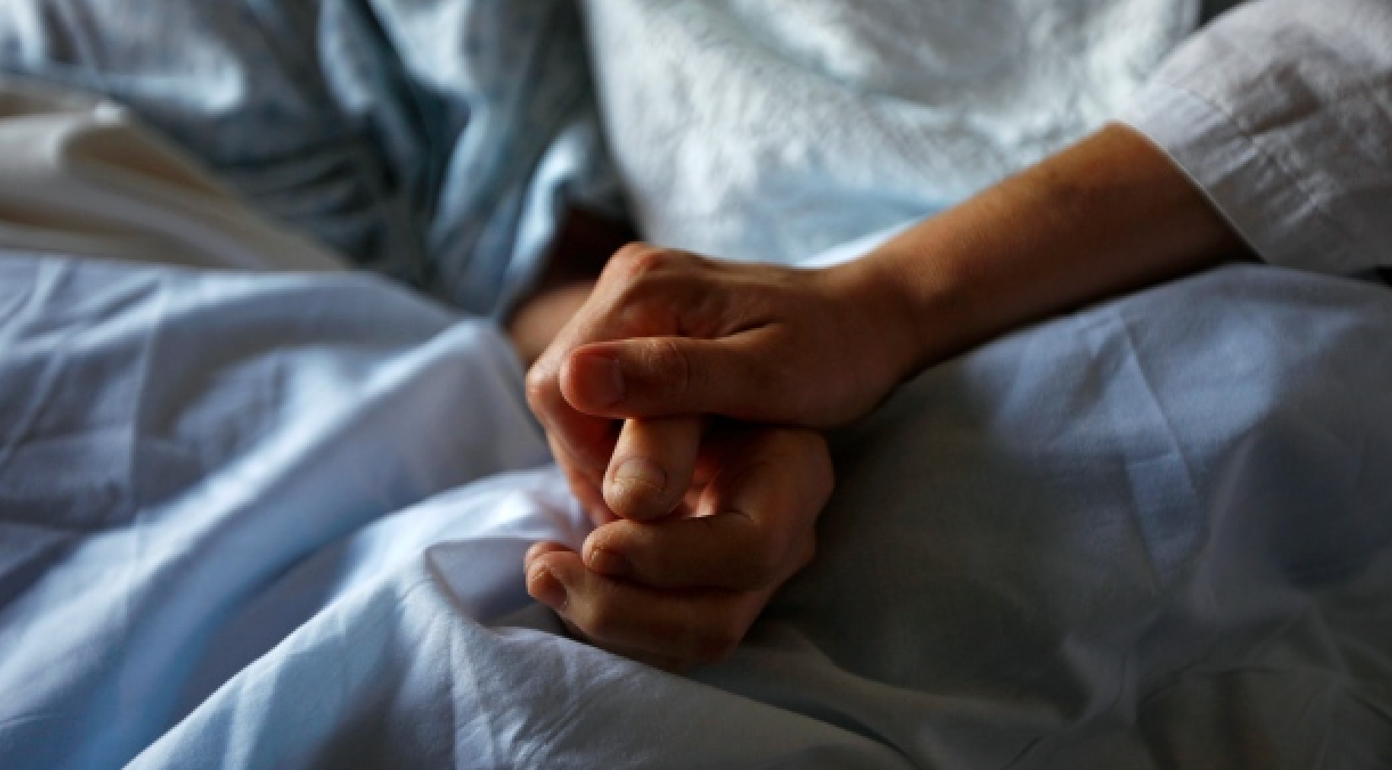
For a long time now, I have been struck by how little we know about the process of death in our daily lives. There is a lot of ignorance at different levels about an issue that should be the highest priority. Our society does not provide any tools to prepare us! It is the job of each one of us to be clear about it and handle it when the moment comes.
At this point in our history, death is still not accepted. It is incredible how little is known in the West about the subject… Very few of us have delved into the matter, but generally, understanding comes very late.
“Death certain… hour uncertain,” goes the old saying, which also does not provoke any reaction or change in our daily lives… a complete mystery!
The Greek philosopher Pythagoras taught: “People run in all directions, encountering pain after pain. Why?… It is simply because they are disconnected from themselves.” This is the common story of almost all of us… Our life focuses on thinking about the past and the future. This is how the mind works in us, in a rudimentary way.
Only recently has science begun to accept that what remains after death is consciousness: this is a fundamental piece for understanding the Universe. Some scientists are taking concrete steps in this direction. We will see over time whether progress is being made… and if the famous ‘scientific certainty’ is at all possible.
Life is like an iceberg… a small part is consciousness, and most of it is unconsciousness. Then death happens and everything melts away, as death finally makes us wake up to who we are, beyond the body and the mind, which have their days numbered. Most of us would like to end our existence sleeping in peace… I want it to be more special!
Some sociologists say that death has been and is, today more than ever, a taboo subject because societies are more affluent and people do not want to lose everything they have accumulated. The ego reaches its limit and prefers to avoid this transcendental thing. It cannot face it… It collapses. It is that simple.
Yes, death is experienced socially as an ignored topic, which is not naturally discussed, even with those who are about to die. Such is the case with terminally ill patients, who go to hospitals, are eager to fight until the last day, no matter how adverse it may be. This is a tremendous mistake: it is necessary for society to understand the process better so that people can make a change like that of the caterpillar. In its final moment, when everything seems to be over, it becomes a butterfly, taking off its body and transforming itself, thus flying to the highest point in the dimension of love.
In poorer societies, such as India, death is not questioned. Moreover, it is desired because they hope reincarnation will improve their status.
Small deaths happen in us every day, thousands of deaths… cells are constantly renewing themselves; it is an obvious case… We go from being children to young people; the child in us dies, from adolescent to adult, the adolescent dies, and so on. It happens in the cells inside our body, which very few consider. Every moment one changes, one dies to what one was a minute ago… we are all, permanently, going through this dynamic of life and death. Inhalation is life; exhalation is death. It is happening at this very moment as I am writing these lines.
Intellectually, we understand that we are going to die, but not emotionally. The latter matters because it is not enough to know that death will come one day in the distant future; the mind can relate to something that will happen tomorrow, but not to something so distant. But if that phenomenon forces you to connect with being present here and now, the mind does not work. The game of calculating and measuring what may or may not happen is over.
It is all very well to think about the matter; that is the most comfortable thing and does not cause a fundamental change. It is only when the matter shakes you to the core that there is a before and after. There is no possibility of everything remaining the same in one’s life.
Remembering that one is going to die is necessary every day.
It is not enough unless it changes our attitude and behavior.
If there is no inner transformation, if it was only an intellectual exercise, that is where the mind loves to ‘participate’ on a regular, day-to-day basis.
Buddha would not be Buddha if he had only thought about death. He used death as a tool to become enlightened, understanding what dies and what does not. Now, one has the possibility of doing the same thing in life.
As the Armenian mystic G.I. Gurdjieff said, it seems that there is a mechanism implanted in us not to be conscious of death. The ego, the mind, always avoids connecting with it. And the reason is simple: it happens because we are in permanent connection with the outside world, and what dominates life is the future and the regrets or achievements of the past. The subject appears in consciousness at this moment and is automatically eliminated, remaining in some kind of forgotten file. The wonderful thing is that it is always there with us.
Human nature does not seem to want most of the human population to have a deep understanding of this reality. Is it a self-defense mechanism? Most likely… It is as if the river does not want to know about the ocean, which is its inevitable destination.
History teaches us that when generations of our ancestors lived under the same family roof, there was a more daily approach to death. When the doctor arrived, he would usually indicate that it was better not to move the terminally ill patient, that they should stay with their loved ones, that someone should make sure they were comfortable and free from pain, and that the doctor should only be called in an emergency. It’s all straightforward… this dying process was normal and accepted by a large part of society.
For different reasons and situations, families today are more distant. That attitude does not exist, nor does the mentality that existed in rural, peasant areas, where life was more natural. One author said that we have lost ‘the art of dying’. Now everything revolves around a complex, stressful, and, why not say it, traumatic urban life. All of this makes it more challenging to accept an imminent death.
The process of dying has moved from the home to the hospital. In most of them, there is no specific area where a person in the terminal stage is treated with the respect and spiritual care that they require.
A materialistic culture like ours will always avoid death… Moreover, all kinds of subterfuges are used. Bodies are arranged (especially in the US) to make them look alive, and all sorts of coffins and flowers are selected to disguise the main issue: death goes as unnoticed as possible.
People do not want to see the face of a person who is no longer alive… and then, when saying goodbye, they embellish themselves saying that this respectable person has gone to heaven, to the kingdom of God, that he is in Paradise and very happy. So, from the moment of death until the person is buried or cremated, it is one continuous staged performance.
I recently watched a documentary that claimed that the human species is the only one that does not live in harmony with nature… the same thing happens with death. Everything is so close, but the tendency to distance ourselves from the most essential things in our lives is becoming stronger.
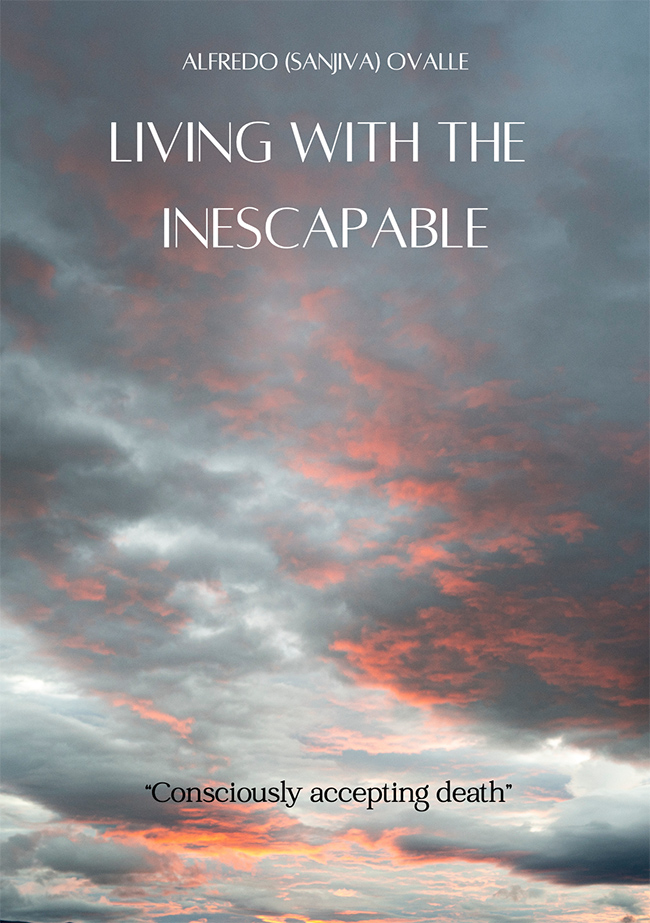 Living with the Inescapable:
Consciously Accepting Death
by Alfredo (Sanjiva) Ovalle
BookBaby, November 2025, 196 pages
Available as Kindle and paperback from Amazon *, Barnes and Noble, books a million, Bookbaby store, Apple book
ISBN-13: 979-8-31781-582-0
ASIN: B0FX3KLFK6
This books is also available in Spanish (original) from Amazon * under the title, Viviendo Con Lo Ineludible: Aceptar la muerte en forma consciente
Related articles
- The fear of death – Chapter one
- Reviews about Sanjiva’s book, Living with the Inescapable: Consciously Accepting Death
- Osho speaks on Death

Comments are closed.