

The authors of this month’s book reviews by Madhuri are: Catherine Cookson, Joanna Hodgin, Jonathan Kellerman, Sylvia Townsend Warner

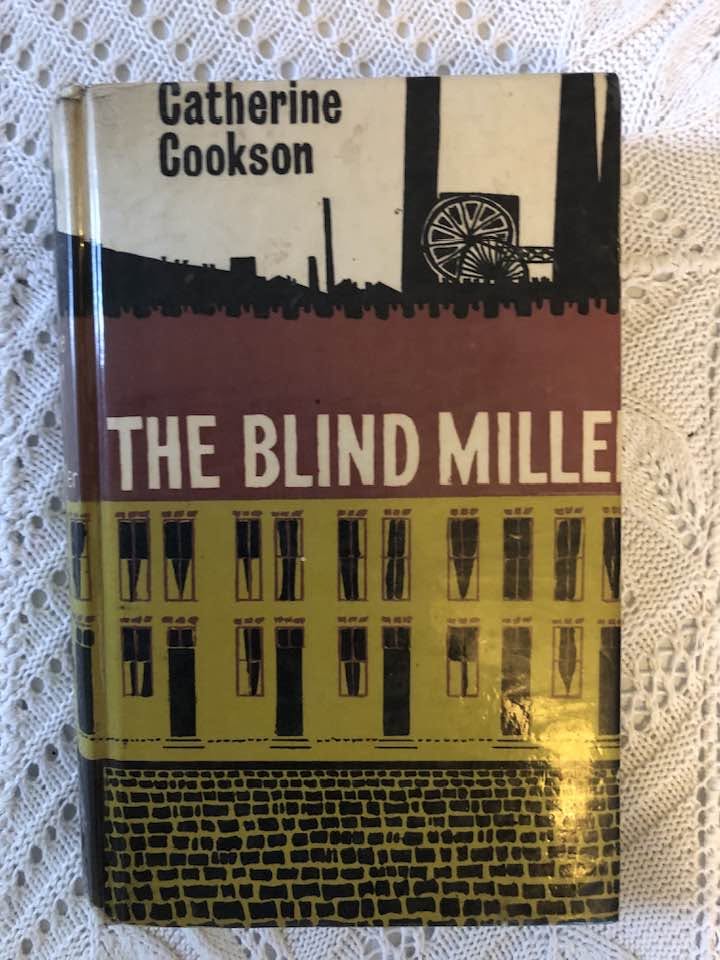 The Blind Miller
by Catherine Cookson
This badly-bound edition is from 1963, and seems to be the author’s 15th book. A big-boned, curvy young beauty with a good heart and an evil stepdad ‘marries up’ into a wealthier family where all the men are ‘in work’ – it’s a time when shipyards are closing and people are hungry and men stand morosely on street corners hoping something will turn up.
The young marrieds live next door to the husband’s family, and soon all the menfolk like to hang out and stare at the fire and discuss things while the bride does her baking. They are all in love with her simplicity and her good heart, and soon her brother-in-law falls hard for her, which starts a dramatic mess (into which the evil stepdad greasily insinuates himself) that goes on and on.
The story moves fast and intensely, the characters feel real, you can feel and smell the grey streets and grey weather, and there are enough loving people in the book that it is nourishing to read. It covers quite a few years, starting in 1929 and ending after the second war. I did pretty much figure out who the heroine would end up with, but the circumstances of it were all surprising. The beautiful way with words this writer has made the trip both gripping and lyrical.
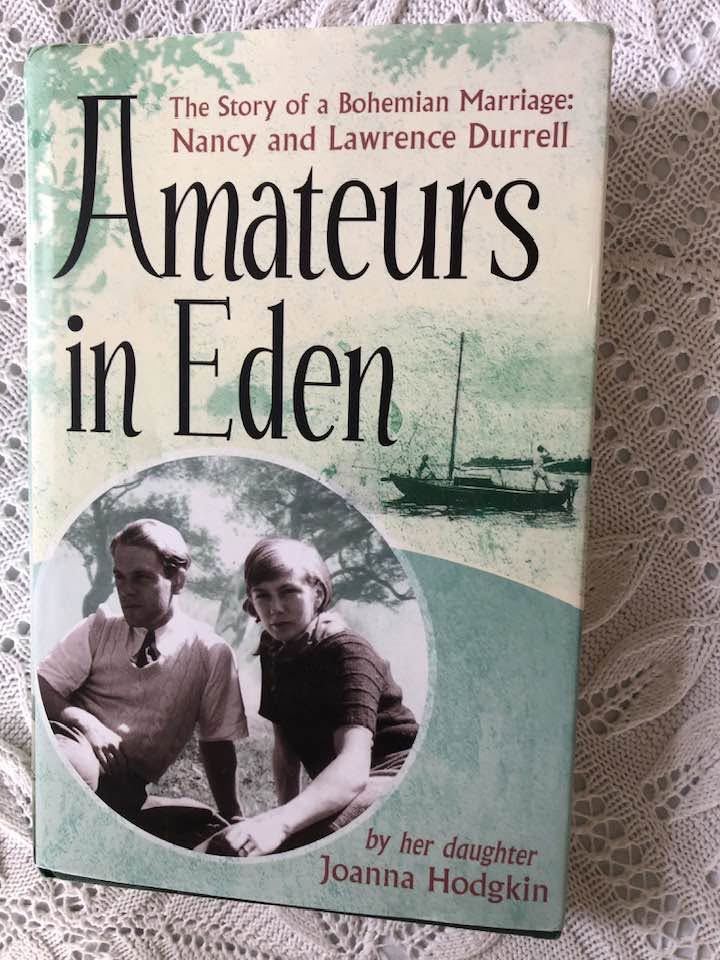 Amateurs in Eden
A Story of a Bohemian Marriage
Nancy and Lawrence Durrel
by her daughter Joanna Hodgin
A fascinating look at a few writers, a gorgeous island, a scary and electrifying time in history, and a lovely woman trying to find her way in all this.
I had much enjoyed Gerald Durrell’s books about Corfu and his family life and passion for animals. His older brother Lawrence is described in them with wry humour. I’d never read any of Lawrence’s books, having not felt attracted; and after reading this I feel doubly not attracted!
Gerald left the wives and girlfriends of his brother out of his books, but in fact Lawrence was married all that time, to Nancy, a shy beauty much taller than he was (he was 5’4”). He was often bullying and abusive. Much later she wrote to a daughter Larry had with his next wife, what it was like to be on the receiving end of one of Larry’s diatribes: “Scorched with words, muddled with words, bewildered with words and his ever-changing expectations.”
The book takes us to Paris before the war, to meet Henry Miller and Anais Nin and their cohort – an enthusiastic and libidinous bunch which seems to me kind of teenage now. Henry was warm and friendly and joyous, but I still don’t like the casual misogyny in his writing. In person he seemed to be much nicer than that. I could relate to their creed of making beauty before all… This, apparently, was bohemianism.
But the raptures in the book are reserved for Corfu – idyllic times for all expats concerned, until the war came and hundreds of thousands of people starved to death. Larry and Nancy and their toddler escaped in a hair-raising fashion and went to Cairo, where Nancy finally came to her senses and left him.
The author is Nancy’s daughter from her second, happy marriage, and her writing is capable and compassionate, intelligent and wise.
 Twisted
by Jonathan Kellerman
I somehow like this author, even though I don’t like his usual hero, Alex Delaware (or his girlfriend – both seem to me overly taciturn and defended). But this is one of his rare non-Delaware whodunnits, and all the better for it.
A young genius, Isaac Gomez, doing a statistical study for his dissertation, discovers a probable serial homicide situation, and his mentor, Detective Petra Connor, gets caught up in the search for the perp before he strikes again. Isaac is an immensely endearing character, and his family too are lovingly drawn. Petra has a special-forces boyfriend, Isaac has a plump, randy librarian after him, and all sorts of interesting side-stories come into play.
The book is only occasionally gruesome, most of that towards the end. It’s a police procedural with enough compassion to make it engaging, and a good balance of suspense and downtime. We are surprised by whodunnit, without being insulted by too much gimmickry. And nothing terrible befalls the brilliant, vulnerable young protagonist, for which we are grateful.
The scene is Greater LA, smog and all. We can feel the freeways ruling the land, while not losing touch with imperfect humanity.
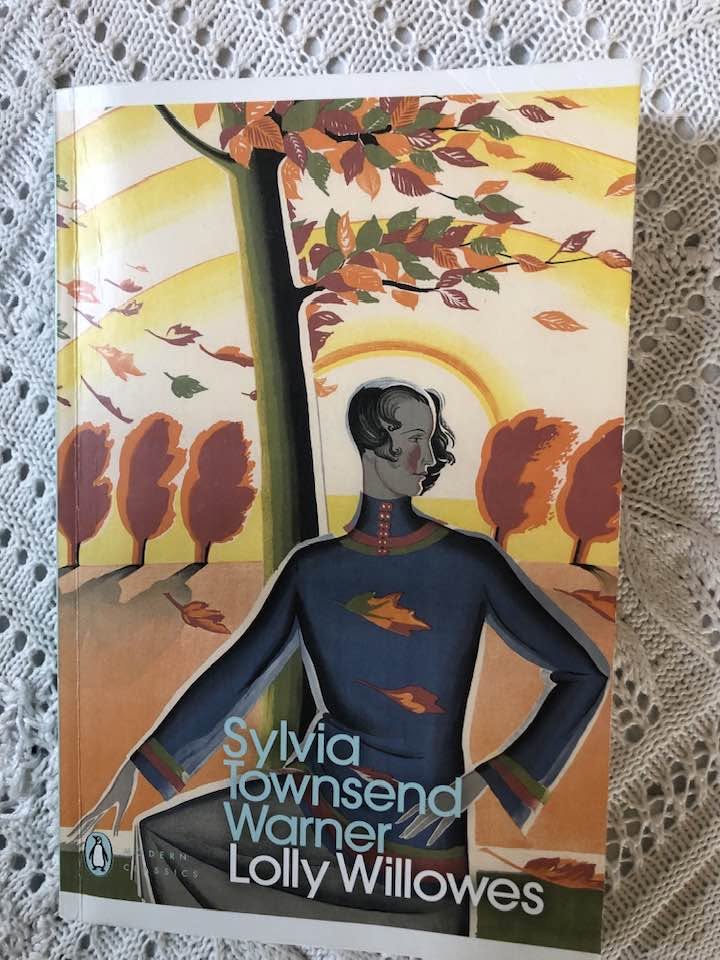 Lolly Willowes
by Sylvia Townsend Warner
This book was published in 1926, to great acclaim. The writing is beautiful, original, and poetic.
A spinster lives with her posh family in the countryside in a huge house called Lady Place. The father dies and she moves to London to live with a brother’s family. At age 47 she abruptly decides to move alone to a remote village in the Chilterns, as she pines for the countryside and solitude. The family tries to discourage her, but to no avail. She moves to Great Mop, pop. 227.
A nephew whom she loves decides to move there too. The passages where she goes through horrible mourning at the loss of her solitude are the most beautiful in the book… And no doubt revolutionary at the time.
But then things take a very strange turn. The whole village turns out to be devil-worshippers who go out on a hillside at night to dance. The heroine goes with them, and has conversations with the devil, who is apparently a very mild fellow.
I did not like this development; it seemed to me that the ‘devil’ was really the god Pan, bringing people out into nature to celebrate. Nobody was doing evil, they were just dancing. The introduction of the anti-Christ felt to me conventional; acknowledging that this was Pan would have been more revolutionary. Indeed, a young woman introduced towards the end is called Pandora, so the author obviously was up to scratch on her Greek mythology. This leads me to think it might all have been deliberate and she really did mean Pan. Maybe in 1926 this all worked artistically. But I lost faith with the author when the supposed devil came in.
The book is only 161 pages, and she’s written 6 others. I think I’d give them a chance, as she’s unlikely to bring that fellow in again in just the same way, and the writing is really special.
These reviews were previously posted on Facebook by the author, reproduced here with permission.
Featured image: Photo by Matias North on Unsplash
Related articles
- Madhuri’s collection of short reviews: Late Evening Reading



Comments are closed.