

“That’s what enlightenment is all about: to be unself-conscious.”
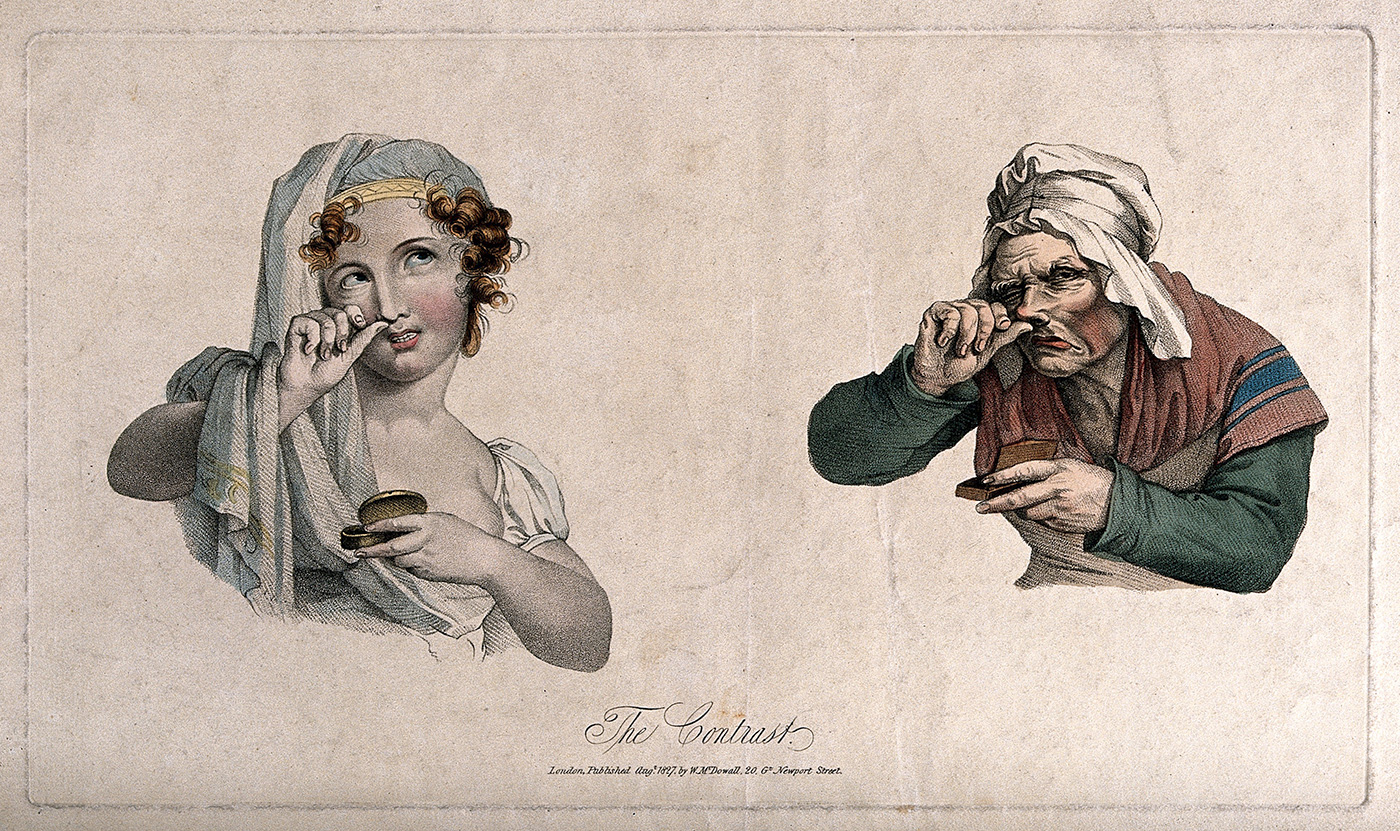
The world will be beautiful when people have forgotten about beauty, because then there will be no ugliness. The world will be moral when people have completely forgotten the word “moral,” because then there will be no immorality. The world will be in order when there is nobody to enforce it, nobody who is trying to create order. All those who try to create order are the mischief-makers – they create disorder. But it is difficult to understand. It is difficult because our whole mind has been trained, trained by these schizophrenic thinkers. They say: Choose God and reject the devil; be good, don’t be bad. And the more you try to be good the more you feel your badness inside. […]
Drop the dichotomy. Drop the schizophrenic attitude. Be simple. And when you are simple you don’t know who you are – beautiful or ugly.
There is a Sufi story:
A Master was traveling, and he came to an inn for an overnight stay with his disciples. The innkeeper told him that he had two wives, one beautiful, another ugly.
“But the problem is,” said the innkeeper, “that I love the ugly one and I hate the beautiful one.”
The Master asked, “What is the matter? What is the reason for it?”
The man said, “The beautiful one is too conscious of her beauty; that makes her ugly…” when you are too conscious of beauty certainly you will become ugly “…and the other is too conscious of her ugliness. That makes her beautiful.”
The one who was beautiful thought continuously that she was beautiful – she had become arrogant, very proud. How can you be beautiful with arrogance? Arrogance is ugliness. She had become very egoistic. And have you ever come across any ego which is beautiful? How can the ego be beautiful? The other, who was ugly and was conscious of her ugliness, had become humble, and humility has a beauty of its own. Humbleness, without any pride, without any ego, creates beauty.
So the man said, “I am puzzled. I love the ugly one and I hate the beautiful one. And I am asking you to solve the puzzle. What is the matter? Why is it happening?”
The Master called all his disciples and said, “You also come, because this is really something to be understood.”
And he said exactly what Lao Tzu is saying. To his disciples he also said, “Don’t be proud that you know. If you know that you know, you are ignorant. If you know that you don’t know, you are wise. An absolutely simple man does not know either way, whether he knows or doesn’t know. He lives completely unself-consciously.”
Now, I would like to prolong the story a little longer. It stops there. As Sufis have told it, it stops there, but I would like to give it a deeper turn. I would like to tell you that after this Master’s visit, I also visited the inn, after many years, of course. And the man, the innkeeper, came to me and said, “There is a puzzle. Once a Sufi Master visited me and I put this problem before him and he solved it. But since then everything has turned. The ugly woman has become proud about her humbleness, and now I don’t love her. Not only is her body ugly, now her being, her whole being, has become ugly. And the beautiful woman, knowing that the consciousness that she is beautiful was destroying her beauty, has dropped that consciousness. Now I love her. Not only is her body beautiful, her being has become beautiful as well.” So he said to me, “Now you tell me what the matter is.”
But I told him, “You please keep quiet. If I say something, then again, the story will take a turn. Keep quiet!”
Self-consciousness is the disease; in fact, to be unself-conscious is to become realized. That’s what enlightenment is all about: to be unself-conscious.
Osho, Tao: The Three Treasures, Vol 1, Ch 1 (excerpt)
Series compiled by Shanti
All excerpts of this series can be found in: 1001 Tales
Featured image: commons.wikimedia.org



Comments are closed.