

Community musician Marion Atmo reflects on the skills behind leading music sessions in dementia care – where presence, flexibility, and relationship matter as much as the music itself


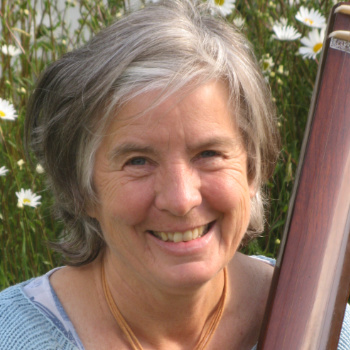
Marion Atmo is a community musician working in care homes across West Wales, where she leads sing-along sessions for older people, including those living with dementia. Drawing on a lifetime of musical experience, she creates flexible, responsive sessions that mix familiar songs, live piano or concertina, gentle movement, and shared moments of reflection. Alongside the music, her work centres on attentiveness, empathy, and creating a safe space where residents, carers, and unexpected moments can naturally shape what unfolds. Here she speaks about her work.
How to get trained as a community musician?
There are courses available for community musicians that focus on skills such as connection, relationship-building, sharing, and collaborative working. In the UK, organisations like Sound Sense offer professional development in this field. Much of this learning is personal rather than technical – getting to know one’s strengths, recognising areas for growth, and becoming comfortable with not-knowing and with vulnerability. Being a performer is one thing; being a facilitator is another.
I have developed these skills over many years and in very different settings. In the 1980s, I worked in Osho communes, and in the 1990s I taught Business English to adult groups. Making music in a wide range of group situations has sharpened my listening skills, while my personal and spiritual journey has given me compassion for people in vulnerable or challenging circumstances.
Here, I draw on my experience working with residents in an Elderly Mentally Infirm (EMI) ward at a nursing home in Pembrokeshire, Wales. For over four years, I ran hour-long sessions twice a week. This continuity helped build trust and familiarity with many of the residents. I got to know their musical preferences, how they showed participation – however subtly – and how changes in mood or sudden disruption in the room required an immediate shift in musical approach.
This kind of work demands presence and awareness of the whole group, including how the behaviour of one person can quickly affect everyone else. It requires thinking on your feet and responding intuitively, as well as being willing to let go of plans and agendas at a moment’s notice. Good preparation alone is not enough if you cannot cope when the unexpected happens. Maintaining a calm, steady presence is essential, even in unsettling situations. In my own work, for example, switching from an upbeat song to playing Bach’s Prelude in C has often had a deeply calming effect on both residents and carers when things became disruptive.
Honouring the process: what wants to happen – or not!
Alongside my lifelong musical skills, I’ve learned a great deal through group work, particularly through Process Work, a methodology developed by Arnold Mindell. This approach can be applied across many areas of life – from conflict resolution and personal development to creativity and music-making.
The following quotation comes from an introduction to a one-year training course in Community Facilitation and Conflict Resolution:
“Not only are you sorely needed, you are your only chance. The keys to facilitation lie within your own practice of awareness. That may sound like a truism, but it’s worth saying. Ultimately, we can each only work at honing our own awareness in order to facilitate others – and to discover our own nature, what is cooking inside of us and calling us to make our unique contribution.” 1
This way of working places deep respect on the individual. It is easy to arrive with a clear agenda of what should happen in a group. While structure is important, it should not come at the expense of blocking the unique contributions of those present. Often, the most confident singers naturally dominate, and it is easy to be carried along by them. Yet there are often hidden gems among quieter participants. Noticing subtle signs of musical engagement – a foot tapping, a slight movement, a sideways glance – can signal a breakthrough.
‘Allowing’ is a key word here: allowing what wants to happen, or what doesn’t want to happen, in a group setting. One example comes from sessions in an EMI ward. John, who has advanced dementia and is often very quiet, would always say, “Oh, I can’t sing!”
Yet he could – and did – in every session, once he found his own way in. Sometimes he would leave the room for a while and later return. I might offer him my arm; he might take it, and we would stroll around the room singing Oh Boy by Buddy Holly, one of his favourites. Or he might not. What mattered was that his presence and moments of aliveness often shifted the mood of the whole room, encouraging others to express themselves too.
On another occasion, John’s humour surfaced. His family were visiting and had given him a chocolate bar while we were singing She’ll Be Coming Round the Mountain. I often invite residents to suggest the next line of a song, and this time it was, “What’s she doing now, coming round the mountain?” John immediately piped up: “She’ll be eating my chocolate when she bloody well comes!”
Moments like these remind me that presence, flexibility, and not-knowing have become the backbone of my musical sessions.
I think that recognition, respect, and trust are central to the needs of people living with dementia – no different, in fact, from the needs of us all. Fixed agendas, musical or otherwise, can be limiting. Awakening memories may not always be helpful, or not at a particular moment. Sensing that a song is creating discomfort in the room should prompt a change. At other times, allowing space for grief may be the most appropriate response, especially when support from a carer or visitor is available. Being musically “upbeat” at all times is simply another agenda – one that leaves little room for reflection or the ‘innerness’ of experience.
“Relationship is the most important thing in performing.”
Jazz pianist Andy Novak opened my eyes in a single lesson. At one of his gigs, I was struck by how present he was while improvising – it felt as though he had a direct link with the audience. He shared practical tips on new ways of approaching the keyboard and improvising around scales, and then offered a simple but lasting insight: “Relationship is the most important thing in performing.”
That idea has stayed with me. Music, in any setting, is a vehicle for connection. Relationship comes first – the listening, the attentiveness, the shared moment – and from that, the music emerges.
Contact Marion Atmo at marion.carlisle58@gmail.com
Photos: author in action
Source


Comments are closed.