

Books by Ronnie Wood, Barbara Kingsolver, Merridy Eastman, Andrew Lownie, Rob Parsons, Rosamond Lehmann, James Cracknell and Beverly Turner, Helen Dunmore – reviewed by Madhuri

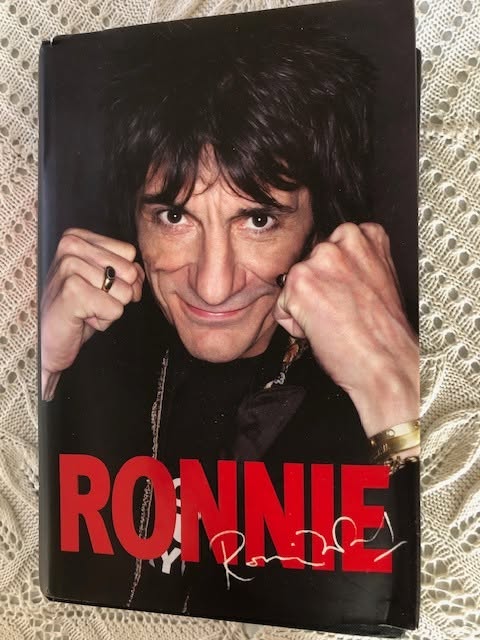 Ronnie
by Ronnie Wood
An exuberant memoir by a man born talented and lucky into a happy, secure, musical and artistic household at the right time in history. Early exposure to the Blues, jazz, soul and R&B shaped his tastes and running into the right people meant he enjoyed his gifts from the start and explored them with endless interest. The book reminds me of Rod Stewart’s, another lucky and talented guy with whom Ronnie often played.
Of course there were difficulties: getting busted in Jamaica, his first wife trying to keep the kid away from him, alcohol dependency and getting sober. But early ascension to Rock royalty via the Stones meant he always had the means to confront them.
A dizzying array of musicians sings and strums and pipes through the pages: Dylan, Aretha, Muddy Waters, Hendrix, Clapton, etc etc. Some of the musicianly details I skipped as incomprehensible to a laywoman, but wow, the endless parade of performances… and in the photographs you can see the joy. I kept thinking of the Dire Straits song, Money for Nothin’, chicks for free.
Alongside the musical career he has an artistic one, fully fledged, and often exhibited in the same cities he was playing, for convenience. Lots of paintings shown in the book. Fun!
The last chapter is an amazing chronicle of concerts – hundreds of them all over the world, with an army of helpers, and with domestic bliss built in to the touring as his wife and kids and grandkids come along, and the wife brings a cooker in order to feed everybody properly.
The book is from 2007. As far as I know he is still enjoying life in a Manor House in the countryside, surrounded by a teeming tribe.
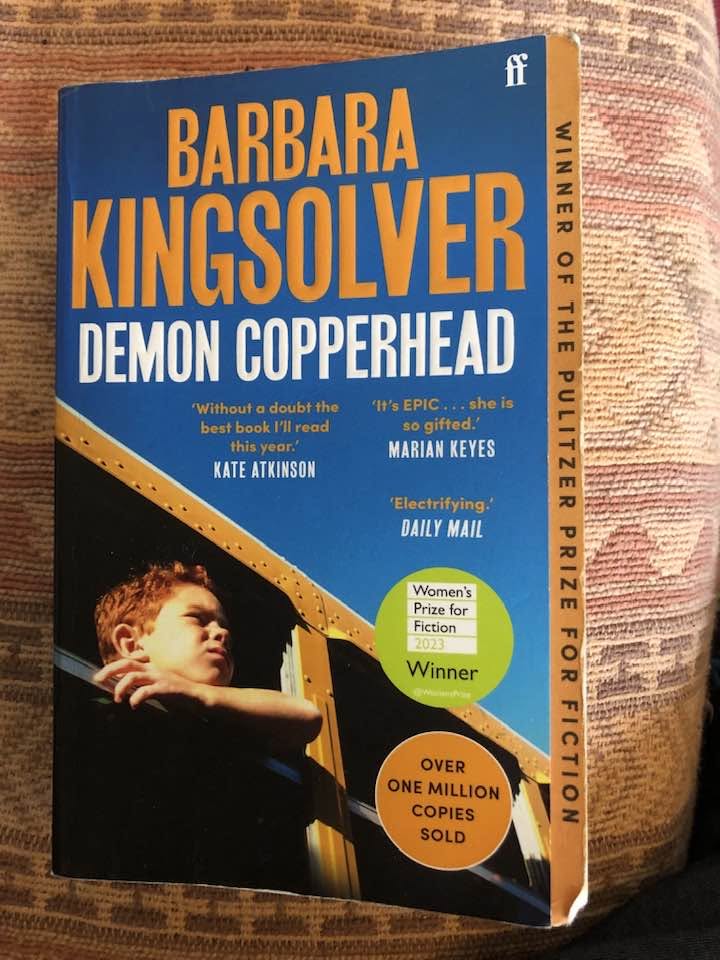 Demon Copperhead
by Barbara Kingsolver
This prodigiously talented, capable, and original writer is here taking on Big Coal, Big Pharma, and the DDS – Department of Social Services – in a passionately loving and meticulously poetic elegy for her homeland, Appalachia.
A child from a teenage romance between a Melungeon and a blonde is orphaned young, turned over to the hellish fostering system, bounces around amongst family friends, runs away, finds his Melungeon granny… and ends up in an excellent home becoming a football star. BUT! A bad knee injury on the field puts him in the ‘care’ of a glib and unscrupulous doctor, and he begins to drown in the opioid epidemic.
This part of the tale is so scary, so beautifully written, so knowledgeable… how Big Coal bought up whole counties, preventing other industries taking hold; dumbed down the school systems on purpose; blew the tops off mountains… and when the coal was gone moved out, leaving uneducated, sick, in pain from job-related cancers and injuries, unemployed people, ripe for the opioid peddlers with their promises that the meds were not addictive. Result: fatalities and human wrecks in superabundance. Very rich pharmaceutical company. Orphans galore. The DSS part: terribly underpaid workers trying any old somehow to get through the day, turning a blind eye to abuse and filth and exploitation of the kids.
The characters are firmly and humanely drawn, the story epic, the ending hopeful… the education conclusive. A companion piece, I think, to Dopesick, a journalistic account of the opioid mess, and also Gray Mountain by Grisham takes on the coal-mining industry. A very moving and beautifully-written book, where Kingsolver easily inhabits the mind and heart and soul of a young boy in modern days.
And, I was amazed to learn that the word ‘redneck’ is from a band of brave men who went on strike against the coalmasters early in the 20th century. They all wore red bandanas around their necks to signal solidarity.
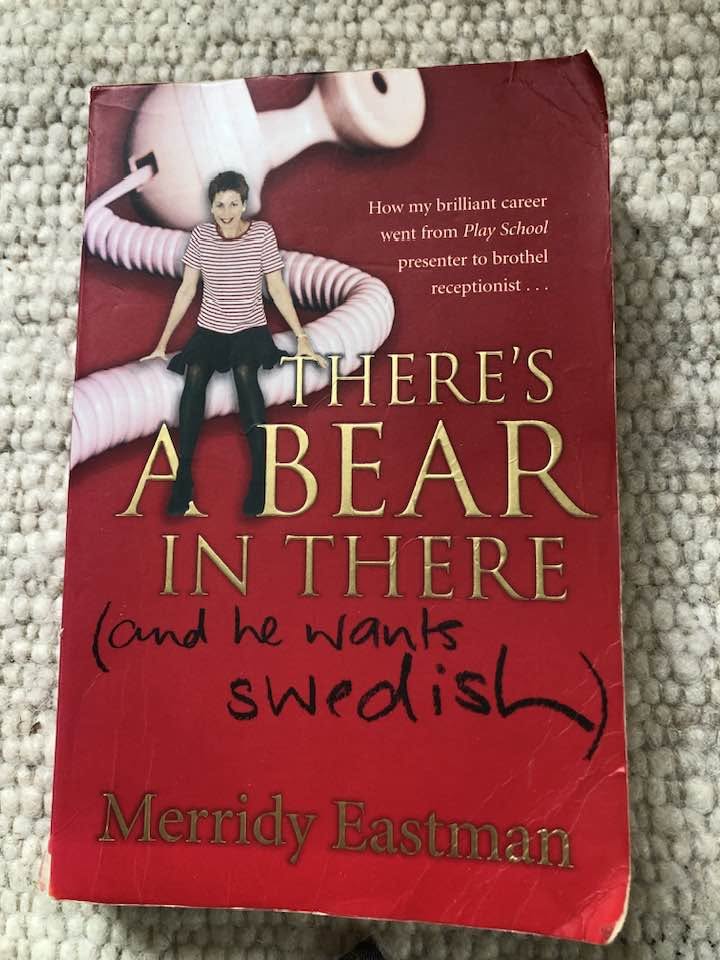 There’s a Bear in There
(and he wants swedish)
by Merridy Eastman
A Sydney actress between jobs takes a night shift post as a receptionist in a brothel. There’s plenty of pathos, tons of drama, masses of peculiar and eccentric characters – including the Bavarian owner and his cold-hearted wife, whom he’s fleecing in order to feed his gambling habit. But the real heroes are the girls, and the author falls in love with the whole crazy scene, especially the kitchen gatherings where everyone lets her hair down and articles of apparel are cast about and the air is thick with smoke and sharing… and hissy-fits.
I’ve never read a book where the word ‘shouted’ was used so often. Nor have I ever read a book where there are so many and varied descriptions of howling, giggling, shrieking, foetal-position-on-the-floor, losing-it, laughter attacks, often several girls strong.
It was very funny, if rather dire, to read the requests clients phone in; they order girls like takeout, specifying the characteristics they want. Here’s Mr Kurasaki barking from the Furama Hotel: “Girl must have two feeh!”
“Girl must have TWO FEET, Mr Kurasaki?” I repeated calmly, just to be sure.
“TWO FEEH!” he barked again. Then he added that she must also have two toes.
“One toe per foot, Mr Kurasaki?” I enquired calmly, “or two on each?”
Meanwhile the other receptionists are writhing about in hilarity.
Eventually it is ascertained that the client wants a girl with TATTOOS on her feet and toes! …And one is found.
The story also includes a dubious romance with the brothel’s insouciant Irish driver, and wonderful commentary by this first-time author, who as an actress is classically-trained, so that we get uplifting and apposite Shakespearean references.
I was laughing and fascinated and horrified throughout… but mostly laughing.
 Entitled
by Andrew Lownie
A sorry tale of, I would say, Soul Sleep or Soul Displacement: greed, hustling, avarice, lust and quasi-lust (lots of the latter), boundless excess… often at the expense of the British taxpayer. Weirdly innocent and protected, boundlessly mercenary, these two frolic heavily across the world, consorting with dubious potentates. I have read that “the British aristocracy is like a bordello in an embassy.” And so it is shown.
I was impressed by the meticulous research and the calm and thorough tone of the book. We are meant, I think, to question privilege itself… and we do. Some of the most, I’m sorry to say entertaining quotes are from household help, boarding school cohorts, family members of the two, business acquaintances – homely observations.
Prince Harry says his uncle is a “pooftah, tosser,” others say he’s sleazy, “a deeply unpleasant man.” On a first class flight he complains his bottle of water is too cold. The stewardess says all the bottles are the same temperature. Andrew says, “This’ll warm it up, then,” unzips his trousers and shoves the bottle in. Etc. The dude is always on the joke and the make. Fergie by contrast just looks for love in all the wrong places, serially (one gets the feeling there can’t be any right places as things are). And the two are cynically exploited by foreign powers that want an in… for example Fergie is gifted a brand new computer by some mid-eastern Mr Nasty, and it includes a nice little bug so that her life can be listened to.
All quite revolting. And of course the whole Epstein mess is in here. I was sitting on the edge of my seat throughout the book, but I’m glad it’s over and I can put it down! The natural excesses and experimentation and revolutions of youth here never end, they just get more and bigger and tireder.
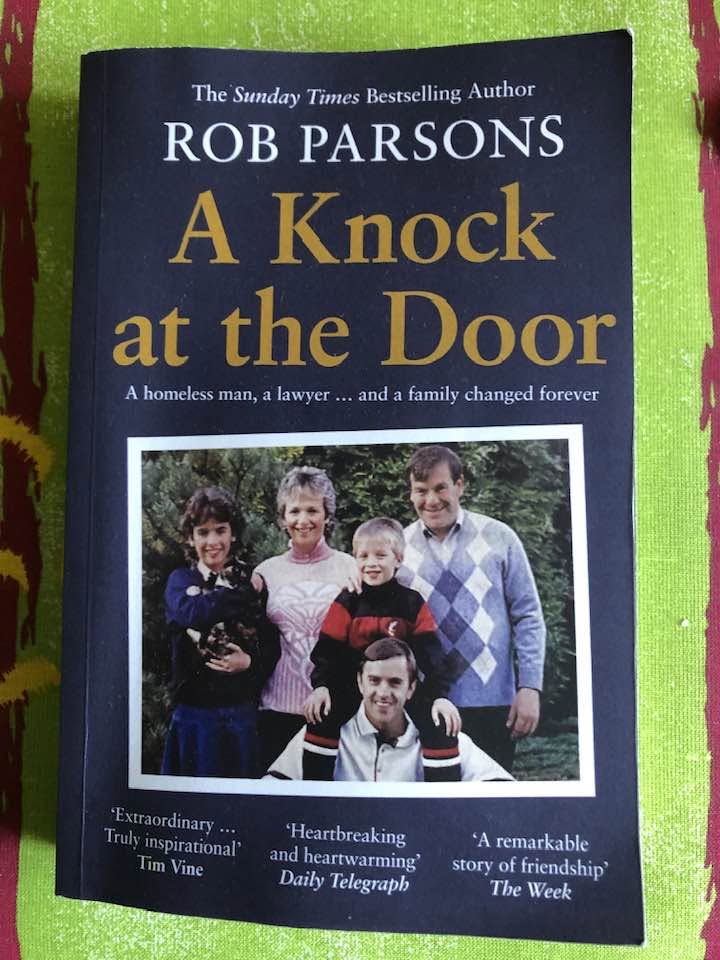 A Knock at the Door
bu Rob Parsons
An amazing and touching story: a homeless man knocks on a young lawyer’s door carrying a frozen chicken. The householder and his wife invite him in, cook the chicken for him, invite him to stay the night… and he stays for 45 years.
He has had a hard life ‘in care’ – and was then dumped out as a teen and expected to cope. He’s ‘behindered’ as the Germans say, has learning disabilities, but is an extraordinary soul. The couple get him a job as a dustman (rubbish collector) and he stays with that the rest of his working life, also volunteering in church and community.
The author too knows what it’s like to have difficulties in school, so he has sympathy with that. It’s beautiful to see how everyone ends up helping everyone else in various ways.
A clear and easy read.
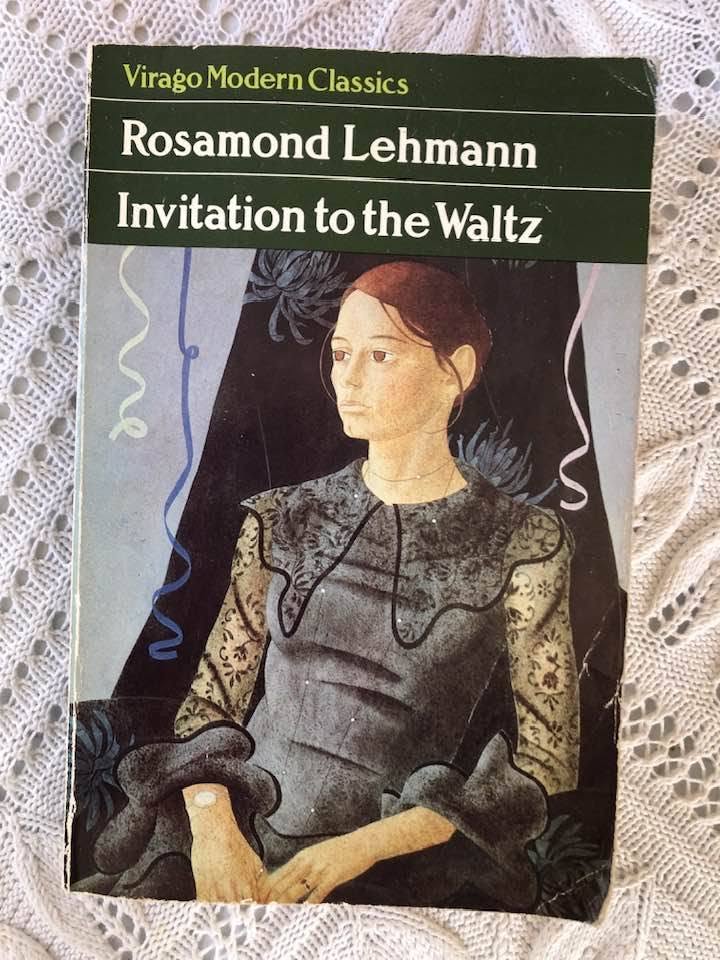 Invitation to Waltz
by Rosamond Lehmann
This delightful novel was written in 1932. Every page is savourable: the writing is unusual, perceptive, graceful, penetrating. It concerns two teenage sisters in a privileged house who are going to their first dance, at the Big House where live a Lord and Lady and their two adult children, who are friends of a sort with the two sisters.
In a way, not much happens – the youngest girl has a dress made that turns out all wrong, they go to the dance and meet, and dance with, all sorts of men, and socialise with various women. But the observation and detail and originality are so marked that we thoroughly enjoy every minute.
The youngest girl, Olivia, out on a solitary walk, comes home through the veggie garden:
“She admired the cabbage bed – its frosty sea-blues and greens, the modelling of the huge compact rosettes with their strong swelling curves and crisp-cut edges. The looser outer leaves held sparkling drops and violet shadows. She shook one, listening to its silky creak, watching the transparent water-beads slip and race like quicksilver. And these proud vital shapes were doomed to be chopped up, boiled, swallowed by humans with the utmost boredom and contempt. The very word cabbage was a joke, a term of ridicule… “ She goes on to mourn thin and homeless cats and dogs, thin horses, flowers cut from their companions…
Here, she has been obliged, as she felt, to dance with a paunchy old lech who is clasping young girls to himself and trying to invite them to tea: “Her senses shrank away from him. They seemed to shout their frantic distaste into his heedless, his leathery ear. I don’t like you. I don’t like touching you. I hate dancing with you. I can’t bear you. She gave up smiling; almost gave up answering. Her face set stiffly, in utter dejection. Next dance I’ll say I’m booked and go and hide in the cloakroom. But he’ll know it’s an excuse. It’ll hurt his feelings. He’ll go away and think, I’m a lonely old man. Oh, help, help! Will no one help?”
The writing changes tense and person sometimes in the same sentence also, and it totally works. I was filled with admiration. The book made quite a sensation when it came out, I think.
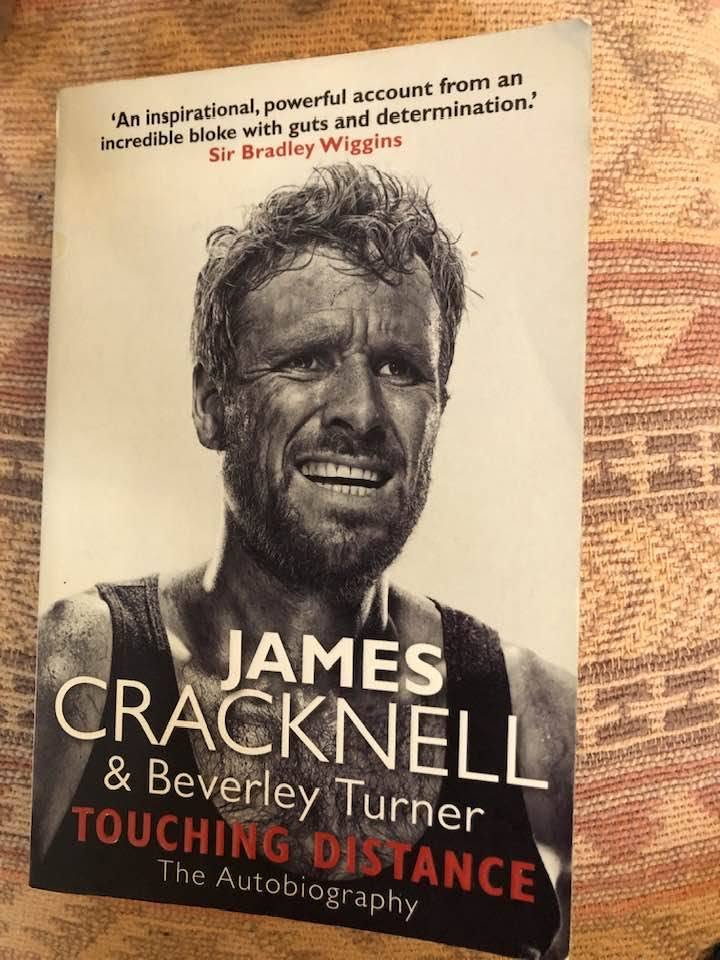 Touching Distance
by James Cracknell and Beverly Turner
If I don’t have a true adventure book to read I’ll sometimes settle for an extreme sports memoir. But this one turned out to be much more than that.
A double gold medalist in rowing switches careers to become an all-round endurance athlete “on the telly”, making documentaries with Discovery Channel where he runs the Marathon des Sables in the desert, treks to the South Pole, rows across the Atlantic, and then… was biking across the USA (combined with running and rowing) when he was whacked on the back of the (helmeted) head by a truck’s wing mirror at 70 mph.
We have also heard about his courtship and marriage to a very intelligent and lively woman, a journalist and presenter, and she was pregnant with their third baby when this happened. She writes a good chunk of the book. Both of them are very honest, and he, in all his athletic glory, and his various physical fallings-apart, manages to be so self-deprecating that the Brits surely approve – heroes here have to take the mickey out of themselves or they aren’t forgiven.
The injury was the kind where an impact on the back of the head shoves the frontal lobes very hard into the front of the skull. Personality changes result: a kind, smart, sweet, genial guy becomes an irritable, explosive, self-absorbed arsehole. And this is what happened. It is really a tragic story. The couple’s little boy became his dad’s irritability target. Eventually James managed to continue in his extreme sports documentary life, though much muted athletically. Most couples divorce after one has suffered this sort of injury. This one hung on, at least for the duration of this book… We really feel for the family, and there is valuable information here about this sort of injury – there’s a charity devoted to it as it’s not all that uncommon (in men, mostly). A touching read, and I appreciated and was impressed by the honesty in both of them.
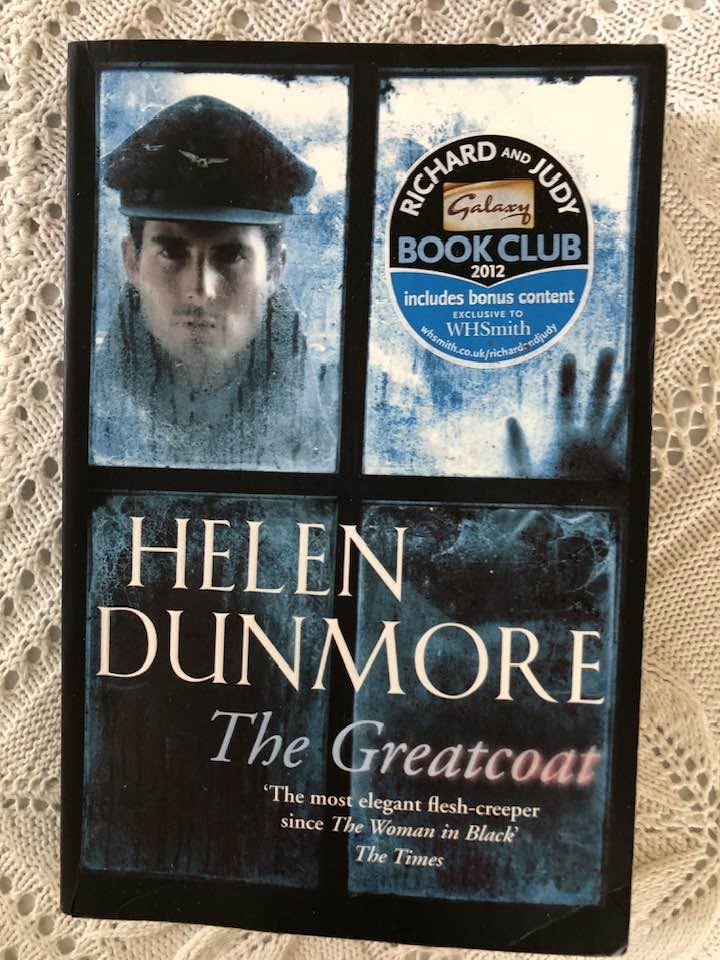 The Greatcoat
by Helen Dunmore
A superb ghost story. I was drawn in immediately by the writing: short words, short sentences, great adeptness, a sense of atmosphere.
A young wife in 1952 postwar Britain, in a gloomy and creepy flat with an unpleasant landlady who treads about overhead night and day… The girl is always cold, her doctor husband is out all day and often at night. She finds an RAF greatcoat in a cupboard and puts it on the bed for warmth. And then comes the knocking at the window…
There is a derelict airfield nearby, time becomes fluid, she seems to inhabit a different life when the ghost comes knocking. It seems they are in a very compelling love affair…
I read it in two sittings (or rather lyings-down) and thought it was really well done. The ending was really good! Scary and sad, but good. Then there was an Afterword where the author explains what inspired the story and how she drew the characters. This was interesting because the book was so good, but the story’s impact would have been more poignant without it.
These reviews were previously posted on Facebook by the author, reproduced here with permission.
Featured image by the author
Related articles
- Madhuri’s collection of short reviews: Late Evening Reading


Comments are closed.