

Part 1 of How Satya Puja’s life unfolded… [Long Read]


(click on images to read captions and see fullscreen)
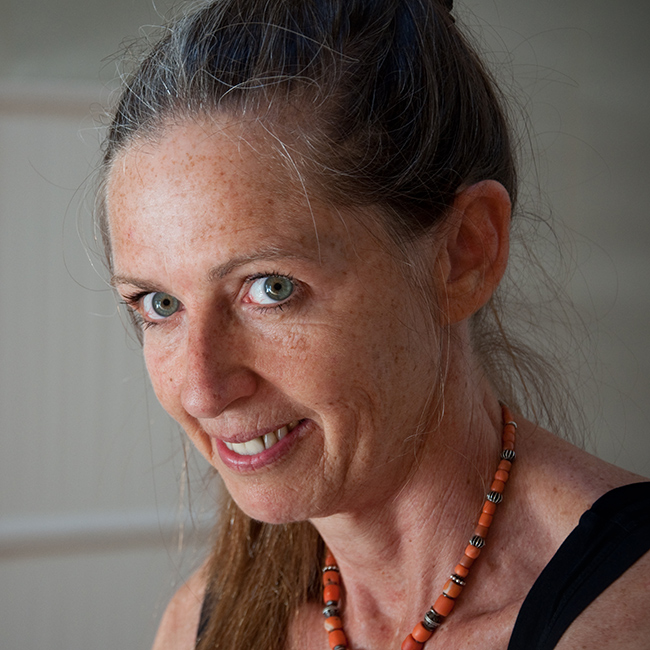
I was born in 1954 on a remote farm in South Africa, in an area called Zululand, not far from the borders of Swaziland and Mozambique. It was – and still is – a famous region for beaches, fishing, wildlife and four of the Big Five – lion, buffalo, leopard, rhino. The habitat of elephants was further inland. To grow up immersed in pure nature was a great blessing.
My earliest experience of life was deeply connected with the African people around me. Because we lived on a farm during the apartheid era, I was surrounded by the many African people who worked on my father’s sugar, beef and timber farm, as well as in our household as cooks, cleaners and drivers. As a child, I knew nothing about apartheid. I simply experienced these people as radiant, embodied, warm, open and loving. In many ways, I was raised by African people.
My mother had five children in five and a half years, so we were a very compact family – I was wedged between 2 sisters and 2 brothers. When each of us reached ten, we were shipped off to boarding school, five hours away. There was therefore not a great deal of everyday contact with our parents. But our family holidays were legendary. Four times a year we would disappear into the wilderness – sometimes spending weeks in game parks, becoming intensely alert to the slightest movement of an animal in the undergrowth, or travelling to Mozambique on fishing expeditions.
One of my father’s great passions was fishing, and he had a group of friends who were equally enthusiastic. They would bring their wives, children and often a few extra people, and we would travel in a convoy of twenty-five vehicles, trailed by a two-ton truck with food and supplies. Often we were over forty people, heading off into the wilds, forging roads to uninhabited beaches, hundreds of miles from civilization, living together in one enormous circus tent. We slept like sardines. These trips could last up to six weeks. I noticed my parents, and the other adults too, regularly slipping off into the sand dunes to have sex!
So there were always many people around me, but there wasn’t necessarily much time with my parents. Yet I never experienced this as a lack of love or care, because there was so much affection and attention from the African people around us. I do remember, though, being strangely pleased when I got a thorn in my foot or a boil on my bottom, because suddenly I had my wonderful mother’s undivided attention – to treat me, she needed to poke around a bit with a needle!
Looking back, I can see that three very different layers of conditioning came into my life.

The first was the African layer: the body, nature, earthiness, spontaneity and direct contact with life.
Then came the British layer. My family was of Irish, Scottish and Welsh stock, and that heritage brought with it a very different kind of conditioning: good manners, restraint, politeness and control. Say please. Say thank you. Don’t eat with your mouth open. Don’t speak with your mouth full. Don’t put your elbows on the table. Don’t interrupt adults. Use your knife and fork properly. Be quiet. Behave yourself.
So there was this rather prim and proper British veneer laid down in me over something much more wild, organic and embodied.
And then came the third layer: apartheid.
As I grew older, like a light on the horizon slowly dawning, I began to understand what this society actually was. I had to live within a system based on the separation of the races, while something in every cell of my body rebelled against it. The people I knew and loved were being regarded and treated as inferior.
There was another conditioning developing at the same time: my awareness of being a woman.
From a surprisingly early age, I knew certain things very clearly: I wanted never to be financially dependent on a man. I wanted never to get married. And I wanted never to have children.
The wish not to marry was connected with freedom. I always had the feeling that if I wanted to leave a relationship, I should be able to leave – and if a man wanted to leave, he should also be free to leave. I did not want to create unnecessary legal complications around something as fundamental as love.
And I genuinely did not want children. I could scarcely imagine looking after myself, let alone taking responsibility for another human being.
So freedom and independence were already very strong themes in me.

After boarding school, I went to university. I had decided to become a lawyer. On the surface, this was partly about becoming financially independent. But underneath that was something more idealistic: I was living in a profoundly unjust society, and I wanted to do something for people who were less privileged than I was.
I studied law for six years and eventually found myself in the courts as a public prosecutor. In my pursuit of financial independence, I had taken out a government loan to fund my studies, and I was required to repay it through a period of public service.
I soon found myself in a truly invidious situation. Most of the accused were ‘non-white’ (as they comprised 90% of the population), and the magistrate routinely made decisions coloured by racial prejudice. White people were treated far more lightly than African or Indian people.
I had spoken Zulu from an early age, which was a great advantage in one sense, but it also got me into trouble. I could understand what was actually being said in court, and I became increasingly aware of the countless inaccuracies being passed on to the magistrate by the translators. We often had three different languages operating in the courtroom, and what reached the magistrate was not necessarily what had been said.
After just three months, a particular incident brought everything to a head, and I was summarily dismissed.
I was given a criminal case where the accused had already pleaded guilty. During the hearing, he claimed his confession had been obtained under torture. Because I understood the different translations, I could hear that something was wrong.
Instead of pushing for a conviction, I ‘stood up’ for the accused, referring the court to a procedure that allowed the evidence to be re-examined. Technically, this was not my role, but he had no defence support and was being mistranslated. Morally, I could not stand by and send him to prison when I believed the process was unjust.
My intervention, and my increasingly evident non-racist stance, made it clear that I was not going to fit comfortably into a role in public service. I could not use the law to imprison someone when my conscience told me it was wrong.
And so, after only three months, my career as a prosecutor came to an abrupt end.
Ironically, the government loan still had to be repaid – and my father was required to pay it back.
So much for financial independence…

At the time, this might have seemed like a failure. Looking back, it was the very best thing that could have happened to me.
Because something inside me was already beginning to understand that the life of the mind was not the life I wanted.
I had always had an instinctive relationship with touch. As a child, I would stroke my sister’s back or legs, massage her feet so that she could sleep, or rub my father’s back when he was lying on the beach. There was something about touch that felt completely natural to me.
While I was still studying law, I bought a book called The Massage Book by George Downing. I can still see it in my mind’s eye. I simply began practising on friends and following the instructions, learning the different strokes, and something remarkable became evident: my hands seemed to know what to do.
I felt wonderful while I was doing it, and wonderful afterwards.
So when I was thrown out of public service in the courts, the next step suddenly became obvious.
I did not want a life centred around the mind, argument and legal manoeuvring. I wanted a life of the heart and the hands.
That was a profound shift.
I eventually followed a boyfriend to Norwich in England. He had left South Africa partly to avoid compulsory military service, and I went over to visit him. Somehow, I simply never went back. I moved on from the man, began to work as a waitress and a cook, crafted macrame pot plant holders on order, and offered massage for one British Pound per back!
And somewhere around this time, Osho entered my life, although I did not know it yet. I had some health issues and a friend told me about a woman called Priya who was a healer working in a healing centre in Suffolk, the next county.
I clearly remember hearing Osho say something like, “You don’t find me, I find you.” He said this in response to a disciple who was expressing how thankful they were that ‘they had found’ him. I have never forgotten that response, because that is exactly how, in retrospect, it felt. I had not set out consciously to find a spiritual teacher. Something seemed to be finding me.
My path then led me to Suffolk, to the Natural Therapeutic Research Trust clinic run by Dr Shyam Singha. It was an old rectory that he had bought and transformed into a healing centre. I hitch-hiked 30 miles and walked the last five, and there I met Priya, a Scottish acupuncturist. Almost immediately upon my being seated, she said something that completely surprised me.
Even before I had a moment to tell her why I was there, she looked at me and said, “I don’t know why I’m saying this, or what’s making me say it, but I want you to come and live and work here. And I want to teach you massage.”
I was blown away!
And then a bit later during the consultation she asked me, “What are you searching for?”
And, without any intervening thought, I heard myself say:
“I’m looking for spiritual guidance.”
This was extraordinary to me. I had never thought of myself as a spiritual person. I had come from South Africa, where my attention had been directed so much towards the outer world – people, politics, society and injustice. Now something was turning me towards the inner world.
That was the beginning of a completely new chapter.
I returned to the clinic two weeks later, replacing a lovely woman, Ma Prem Geeta, who was leaving for a place called Pune in India. During my first visit I had glimpsed through the window some orange-clad people working in a large vegetable garden – little did I know that these were the supposedly strange ‘orange people’ I had heard others speaking about.
And so I joined the team of workers and became the cook and the masseuse.

Cooking was easy for me. I had grown up around Indian families on the farm, many of them descendants of Indians who had originally come to South Africa as indentured labourers to work in the sugar fields. Indian people and Indian food had always been part of my world. I vividly remember, when I was thirteen being wrapped in a sari for the first time. I can still remember the feeling of it around my body.
As a teenager, I spent many magical hours in the kitchens of neighbouring Indian women, watching them prepare meals, relishing the fragrances, and absorbing their methods and flair almost without realising that I was learning. Cooking with spices and creating curries became second nature to me.
So it was as cook and masseuse that I was at Suryodaya – the healing centre – as a voluntary worker for close to two years.
My very first massage session was actually with Dr Shyam Singha himself. Afterwards he said, “You can start,” and I told him, “But I’m not trained.”
He simply said, “You know everything you need to know. You go down there and do it.”
“Down there” meant the cellar, where some treatment rooms were located.
And that was it. I began giving massages to people coming with all kinds of ailments, and very quickly I discovered that the hands – that had always instinctively known how to touch – were becoming a genuine healing instrument.
Within three months, on 20 August 1979, Dr Shyam Singha gave me a mala, a new name and I became a sannyasin dressed in orange! At that time, he was one of the very few people permitted to initiate people into sannyas. He was a wild character, amazing osteopath, naturopath, acupucturist and chef, one of Osho’s first disciples and bridges to the West.
There was even a strange, yet understandable, consequence of apartheid that followed me into this new life: as a white South African, I was not permitted to enter India. According to apartheid laws, Indian people (and African people, and any mixed-blood people) were all considered second-class citizens; they were segregated into different living areas, beaches, buses and benches, and labelled as ‘non-white’. And thus it turned out I could not visit my Master.
So even as I was being drawn deeper into Osho’s world, the political system I had grown up in was still determining where I could and could not go.
After Suryodaya, I spent almost two years working with Swami Somendra. I had participated in a group with him in London; it was my very first ‘personal growth’ group ever. Afterwards he invited me to join his team. At that time he was one of the leading therapists and group leaders in Pune.
I lived with him in London, travelled with him as his ‘body’ person – looking after him, running his baths, giving him massages, lighting his beedies, and assisting in his groups. There was never anything intimate between us; that was always a clear boundary for me.
Eventually, after a stint living in Brussels with Somendra, I returned to London and enrolled in a four-year course at the British College of Naturopathy and Osteopathy.
But then another unexpected turn came.
One year into this training I received a phone call from Ma Poonam at the Commune in Suffolk called Medina. They were looking for a lawyer to help with the legal affairs of the community, including research into its possible charitable status.
And suddenly, almost without realising it, I was back in the world of law.
So my training in London fell away, and I joined this large commune in the countryside of Suffolk, where I spent quite a while. Inevitably, quite soon I began doing massage trainings, moving from law to working in the healing centre.


The journey continued… through each of the Osho festivals at the Ranch in the USA, through a Rebalancing training shortly before the sudden closure of the Ranch. I was soon after invited to Italy by Satyarthi and Anubuddha to support their Rebalancing trainings there. Finally, I travelled to Pune in 1986 – by then I had been able to sort out my Indian visa situation. Once in the ashram I was invited to lead massage trainings and also became one of the teachers in the Rebalancing trainings.
Looking back, I can see that none of these experiences were isolated.
The African people had given me my first experience of the body – of warmth, spontaneity, presence and direct contact.
The British conditioning introduced restraint and control.
Apartheid awakened a deep sense of injustice.
Law gave me the mind and the tools of intellectual argument, but eventually showed me that this was not where I wanted to live.
My hands led me back to the body.
Touch opened the door to healing.
And healing, almost inevitably, opened the door to spirituality.
Then it was in the extraordinary environment of Osho, India, the ashram, that body, sexuality, meditation, healing and consciousness could begin to come together.
I could not have known it at the time, but all these apparently separate strands were gradually preparing me for the work I would eventually become known for.
Because then, in late 1989, like a coin spinning in mid-air – one chance, spontaneous casual call over my shoulder changed the course of my life.
It was one of those seemingly insignificant moments that, without warning, divide a life into before and after.
To be continued…
Related articles
- Rekindle Love: The Making Love retreat at home – Tantra teacher Satya Puja’s signature retreat is now available as a full online course, opening 17 September 2026
- Tantric Orgasm for Women / The Heart of Tantric Sex – Two Tantra books by Satya Puja (Diana Richardson) reviewed by Madhuri
- The power of mindful sex – Satya Puja aka Diana Richardson appears on TEDx in Linz, Austria, giving a warm and captivating talk how sex can bring healing and connection to one’s relationship (June 2018)

Comments are closed.