

Arpita’s creativity flowers in the sewing room – as told to Punya (Part 2)
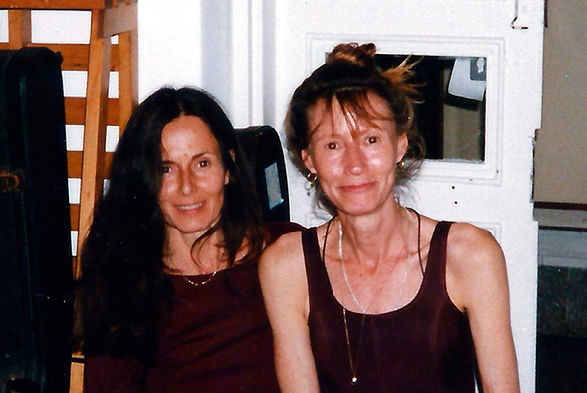
Were you also at the Castle in New Jersey, where Osho was staying when he first arrived in the States?
I was up in Saswad where the mala shop – plus shoes – had moved to. Indian Mukta, who was in charge, asked me one day around lunchtime to go to the office in Pune. That afternoon I went, and was asked if I wanted to go to America. Within a week I was at the Castle. I was overjoyed to be invited. Osho must have thought, “Oh, I am going to need different shoes here. Where is my shoemaker?”
These were sandals or also closed shoes?
Osho requested different types of shoes and we tried out various models. We tried something like Tai Chi-styled shoes. But they did not have the same height as the sandals with the thick sole. And Osho had worn open shoes his whole life, so it was difficult. Basically, his toes were not willing to go into anything that was not allowing full freedom. I made various models, trying this, trying that. An idea came, then another; Osho also put in what he thought should be tried out. We did them together.
Did you also sew Osho’s robes?
Already at the Castle I had started making robes for him, together with Gayan and Asheesh. Gayan and I were experimenting with new fabrics and also created new styles, while Asheesh was experimenting with the knitting machine.
Sometimes I went shopping in New York, for fabrics and other items. We would experiment with new fabrics that could suit him; we found one that was without wool but warm, because the climate was colder in New Jersey than in Pune. We started adding a lining to the robes to make them warmer. The material we had found was a nifty cotton velour fabric, a stretchy velvety cloth.
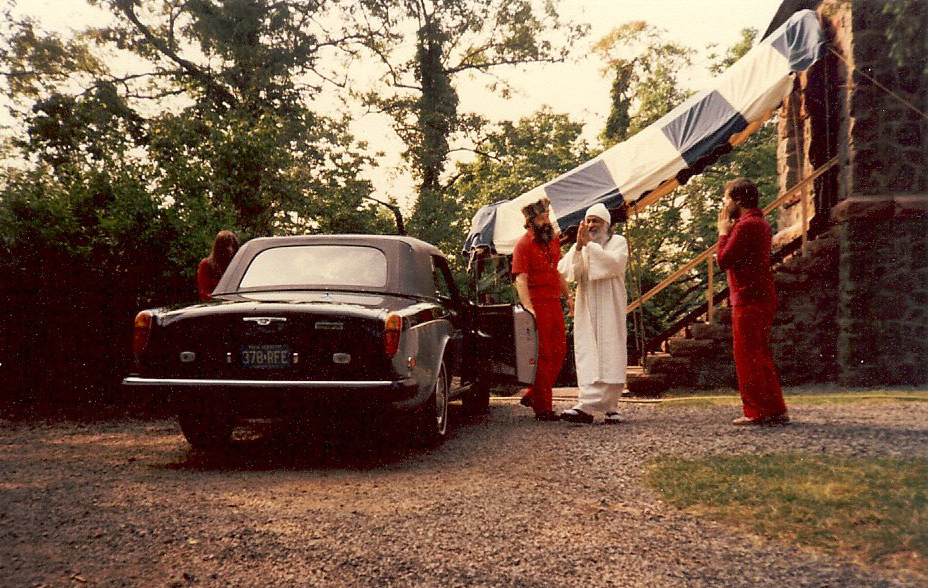
Now here is an unrelated question. Did you have one of those notorious car rides with Osho?
Yes, I was once invited to have a ride. And it was quite a ride. It was also on a particular day… There were people who did not want to have Osho in their neighbourhood and found various ways of showing that although, I think, they didn’t really know who Osho was. That day, there was clearly a car following us.
The property that belonged to the Castle started at the bottom of the hill. So, on the way back, that car should have stopped there and not followed us into the driveway that leads up to the Castle. But the car tailed us right into the driveway. Osho stopped suddenly, put the car in reverse and drove backwards towards the car. I remember that I yelled – I was in the back seat. The car drove away as fast as it could – they definitely understood that he meant it! And they did get the message! Osho was driving fast, pheew. Well, backwards… and forwards.
And then from the Castle you went to the Ranch?
We went, I think, one or two days before Osho came, and I was invited to stay in Lao Tzu House.
Many new fabrics came our way, and many robes needed to be made. Now Osho wanted for every new dress two pairs of shoes in that same colour. One indoor shoe, one outdoor shoe. They looked the same, but one would be worn only indoors and the other was for the drive.
Is there some other highlight in your life as a seamstress?
The other highlight in my life as a seamstress was that for the festivals we had the freedom to experiment with Osho’s robes. Gayan was very good at drawing. She would draw the ideas that came to her or what the material we had bought inspired for her. She then handed the drawings in to Osho, from which he would choose what he liked and wanted us to make. There was a lot of space for creativity during those festivals. By that time Veena, who had been in charge of the sewing room in Pune, had also joined us. We really went wild with some of the robes…
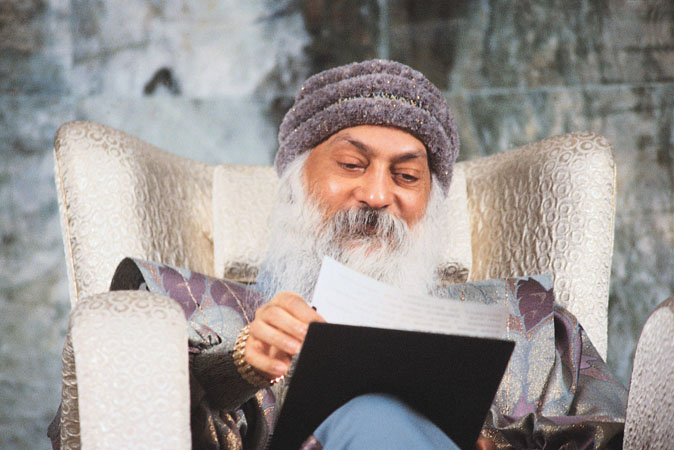
One day I had a fabric in my hand and was just playing with it. I then came up with a design that had something like a little coat over it, not loose but sewed on; we later called it ‘wings’. We immediately made a robe in this new style, sent it in for him to try on. Osho liked it so much that when shortly afterwards Nirvano came back, she said, “He wants all his robes like this – from now on. This is the style.” And this was the style that he wore till he left his body.
These ‘wings’ were two side panels that ran all the way from the bottom of the dress, up over the shoulders and down the other side. I had made these wings in three layers, actually just pleats. As these panels were made from a different material, we could use fabric of a different colour and texture from the rest of the robe. We used stiffeners to make the shoulders stick. That made the shoulders look wider. I think that’s what Osho really liked – it made him look more imposing.
That he liked my design so much was definitely a highlight for me!
Of course he wanted all robes done in that fashion from ‘tomorrow onwards’. That was another highlight because that meant that there was a crunch in the sewing room. What he was basically saying was: “I’m not going to walk out with another dress like that – THE OLD ONE – so how fast can you have them ready?”
When I hear you talk, while you are remembering, so much energy and enthusiasm comes across. It feels like we never dreaded crunches, but rather thought, “Oh, wow, yes, a crunch is coming. Great!” There was maybe a little bit of panic. But still…
We just had to go with it. There was not much time for panic. That was what we brought to the project, that’s how we worked, and I suppose that’s why we were there also. That was our way of saying Yes, just being ready for that transformation, whatever it would do to us.
And of course Osho also made requests. Nirvano would come back and say, “He wants it like this.” “But that is not possible.” “Okay, sit down, girls, and let’s see what we can do.” We knew it wouldn’t work but we still did it. And then Nirvano would come back with a message that said, “No, no. Not so good. Not so good. Try this.” He was never short of ideas to keep us busy.
When Osho left the Ranch there were still some robes which were packed ready, but there was no ‘shipping to’ at that point. He had a few robes with him on the plane, the ones that were easy to wash.
I remained on the Ranch until December 1985, and Gayan and I packed up robes for what was later called the ‘World Tour’. We always got the news of where he was and the difficulties there.
Gayan managed to join Osho in Greece, but I did not make it. We then were both called to go to Uruguay. After three months of helping friends in the disco and doing odd little jobs I had finally found a real job in Munich. But after the first day working there I received a call, “Are you ready to come?” (At that time it was highly secretive where Osho was; nobody was supposed to know where he was.) I was asked to buy a few fabrics, bring one of the sewing machines, and off I went to Uruguay, maybe a week later.
We stayed in Uruguay almost three months; after a few stop-overs we arrived in Portugal. There we were maybe six weeks, until I saw Osho off for his flight back to India. I still remember being at the airport, a line of 10-12 people waiting for him to board the plane. I was actually in the car that Milarepa drove, with Neelam, who needed to get on the flight with Osho; Milarepa “got lost in a confusing network of small roads of Lisbon city-center,” as he writes in the story A Great Affair. Luckily the gate was still open and Osho was ushered in with Neelam just in time.


And then came Pune 2?
Yes, the sewing room was up on the 1st-floor terrace in Lao Tzu house as before. It had mosquito netting all the way around and was quite nicely sheltered. We had big cupboards for all the cloths. This time Sandhya joined the sewing room, then Suniti, Japanese Geeta, Veena, Gayan, Asheesh and me. Later also Ambu for a while.
There was also a lot of upholstering going on as new chairs for Osho were being made. The chairs were made in the carpentry shop, and then upholstered in our workshop. Then came the clipboards for the jokes or sutras which Osho used during discourse; I covered them with cloth in different colours to match the robe he was wearing that day. I was the prop person, so to say. I also added the velvet band inside Osho’s watches, so that the metal would not touch his skin. I did jobs like that.
Anything else you would like to say?
Just sitting here on this terrace in Corfu overlooking the beautiful silent sea and remembering so many details brings up a lot gratefulness. It touches me deeply and I am feeling the grace and the blessings of the Master to this day. And I wouldn’t be the same one sitting here without him.
I wouldn’t be who I am. And I am who I am more than ever. It’s Osho. This gratefulness in my heart for these travels together on that journey.
Yeah. Yes. Yes. It’s still yes, yes, yes!
Thank you, Arpita.
Interview from 12th October 2015, at Gravia Café, Arillas, Corfu, Greece.
Related articles
- Making shoes for Osho – Part 1 of this interview
- ‘My Story’ – Interview in 4 Parts with Gayan
- An Extraordinarily Ordinary Man – Veena is asked to take the measurements to sew the curtains for Osho’s room
- A Great Affair – Milarepa’s visit to the Osho Heart Festival in Portugal triggered quite some memories… (August 2014)


Comments are closed.