

“Mind has a stupidity: to complete things. Mind is a perfectionist. Ninety-nine? The obsession is created: they must be a hundred.”
A poor barber was very happy, tremendously happy, as sometimes only poor people can be. He had nothing to worry about. He was the barber to the royal king; he used to massage him, to trim his hair, to serve him every day.
Even the king was jealous and he always asked him, “What is the secret of your happiness? You are always bubbling. You seem not to be walking on the earth, you are simply moving on the wing. What secret is there?”
The poor barber said, “I don’t know. In fact I have never heard the word `secret’ before. What do you mean? I am simply happy. I earn my bread and that’s all… and then I retire.”
He must have been a Lao-Tzuan.
Then the king asked his vizier, his prime minister – and he was a man of knowledge, a very very knowledgeable man. He asked him, “You must know the secret of this barber. I am a great king. I am not so happy, but this poor man, having nothing, is so happy.”
The prime minister said, “He does not know anything about the vicious circle of ninety-nine.”
The king said, “What is this?”
The vizier laughed and said, “You are in it but you don’t know it. We will do one thing. Tonight we will throw a bag containing ninety-nine rupee coins into the barber’s house, and then see what happens.”
They threw a bag containing ninety-nine rupees into the house.
The next day the barber was in hell. He became very sad and worried; in fact, he didn’t sleep the whole night. He counted the rupees in the bag again and again — ninety-nine. And he was so excited – how to sleep when you are excited? The heart was throbbing, the blood was circulating; there must have been a high blood pressure, an excitement. And he tossed and turned, and he could not sleep.
He would get up again, touch those golden rupees, count again… he had never had the experience of counting rupees and ninety-nine was the trouble – because when you have ninety-nine you want them to be a hundred. So he was planning what to do the next day to get one rupee.
One golden rupee was a difficult thing to get. He was getting only a few paisa, and they were enough in those days. How to get one rupee? – because one rupee, one golden rupee meant almost one month’s earning. What to do?
He planned many ways – a poor man, not knowing much about money, he got into trouble. He could think of only one thing: that he would fast for one day and eat for one day. This way, by and by, he could accumulate one rupee. And a hundred rupees would be good…
Mind has a stupidity: to complete things. Mind is a perfectionist. Ninety-nine? The obsession is created: they must be a hundred.
He was sad. Next day he came – he was not flying in the sky, he was deeply on the earth… not only deeply on the earth, but a great burden, a stone-like thing hanging around his neck.
The king asked, “What is the matter with you? You look too worried.”
He said nothing, because he didn’t want to talk about the bag. But every day the situation grew worse and worse. He could not massage well – he had no energy, fasting.
So the king said, “What are you doing? Now you don’t seem to have any energy. And you look so sad and miserable. What has happened?”
So one day he had to tell the king; the king insisted: “You tell me, I can be of help. You just tell me what is the matter.”
He said, “I am now a victim of the vicious circle of ninety-nine.”
When you have ninety-nine there is a vicious circle – you want them to be a hundred. […] And don’t think that when they are a hundred, things will stop. Things never stop. Mind does not know where to stop. It knows no stopping.
That’s why it falls. It goes without stopping anywhere, from A to B, from B to C, and goes on and on until at Z it falls into hell.
Osho, Tao: The Three Treasures, Talks on Fragments from Lao Tzu’s Tao Te Ching, Vol 1, Ch 5
Series compiled by Shanti
All excerpts of this series can be found in: 1001 Tales
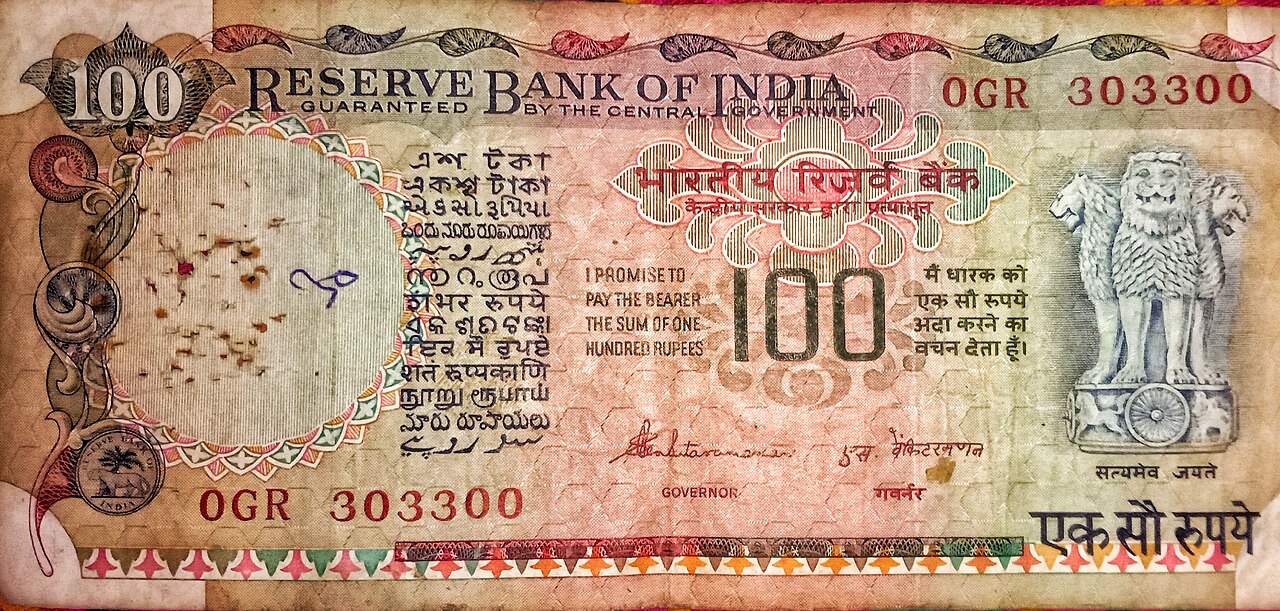
Featured image: 100 Rupees old series banknote of India, signed by RBI governor S. Venkitaramanan, credit to commons.wikimedia.org


Comments are closed.