

Chapter 3 from Satya Niranjan’s memoir, I Leave You My Dream
The higher values of life
have to be protected.
The lower values have
certain protection for themselves.
The is no lock
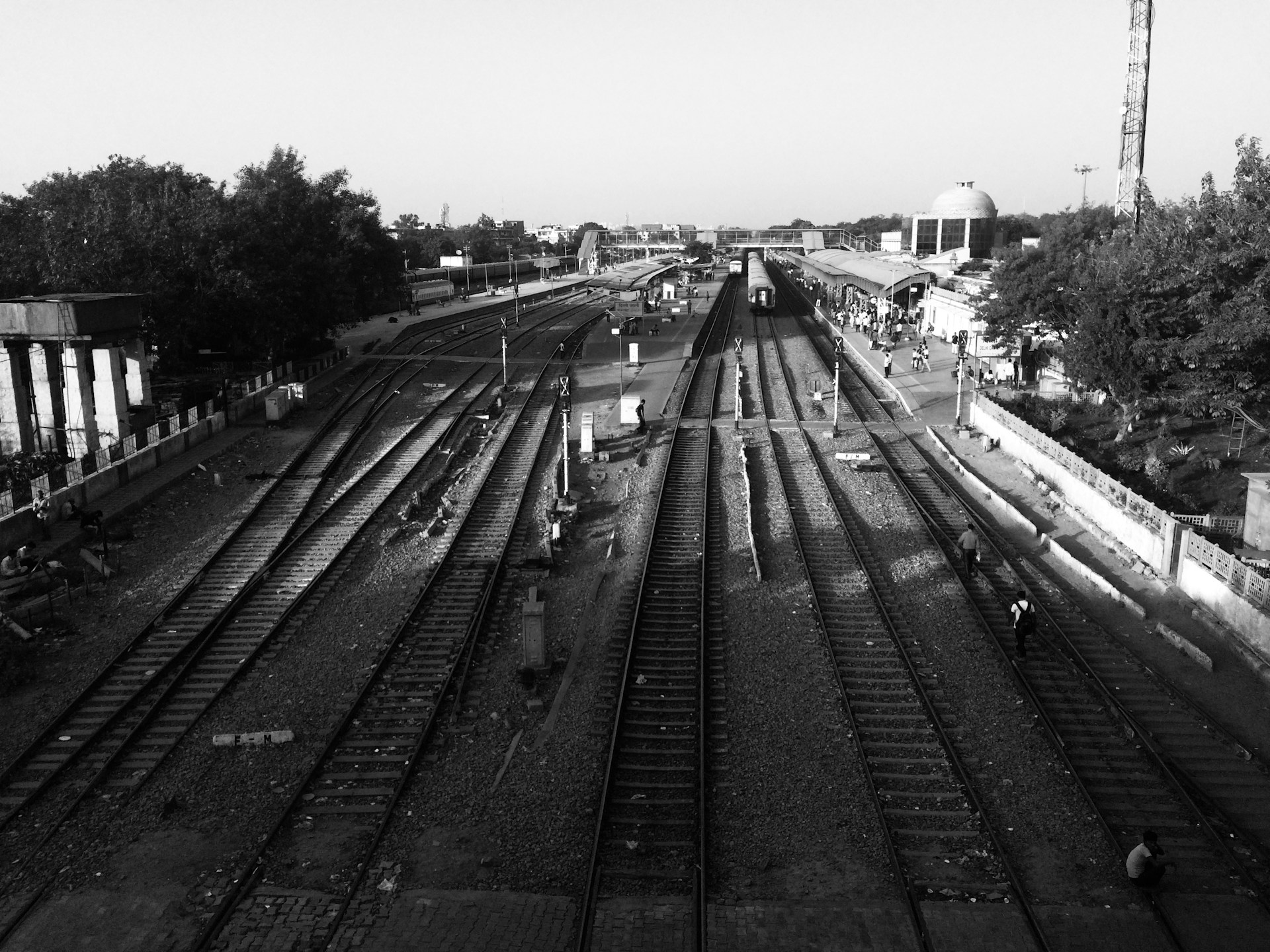
By 1966, Osho had visited Pune five or six times and had become well-known amongst Puneites. This time he was arriving from Kolkata in a train which was to arrive at 8.00 p.m. I was one amongst the twenty-five people gathered at the railway station to receive him. The train was on time. Osho descended onto the platform from the first-class bogey. I, along with two other youths, was assigned the job of fetching his luggage from the bogey and putting it on the platform.
In those days very few people travelled first class, so the ticket checker would check first-class passengers’ tickets standing on the platform in front of the compartment. The T. C. asked us to get Osho’s ticket for verification.
Osho was surrounded by many people who had come to greet him. Without taking note of the fact that he was engrossed in talking to those people, I abruptly interrupted him and in a very casual manner told him that the T. C. wanted to verify his ticket.
Osho turned his face towards me and gave a sharp look. This immediately made me aware of my foolishness in disturbing him in such a rude manner. My eyes automatically turned towards the ground and shades of guilt reflected on my face. Maybe because of that, Osho changed his gesture and smilingly told me that the ticket was in the bag.
Now I was uncertain as to which bag of the four would contain the ticket, and how to open them without keys. So again I went to him with some hesitation, and in a low voice asked for the keys to unlock the suitcases. At this he again smiled, and said there was no lock on any bag.
Of course I did not have the courage to disturb him further, and thought it wiser to search all the bags for the ticket. So I pressed the lock-strips of the first bag and it opened! I placed the palm of my right hand in the front right corner of the bag and to my great surprise the ticket was in my hand.
I gave a brief glance inside the suitcase and noticed that a few books and some essential things required for the journey were neatly packed inside it.
I handed the ticket to the T. C. who was patiently waiting and, after verifying the ticket, he looked at Osho and remarked, ‘Today I have had the opportunity to come across a unique person.’
About five or six of us proceeded to Bafnaji’s house, where Osho was going to stay. After putting the bags in his room I asked Osho with a childlike curiosity, ‘How many things are you carrying for the journey in these four suitcases?’ To which Osho replied. ‘There is no lock on any bag. Look for yourself.’
Hearing this, I actually opened the remaining three suitcases I had not yet seen into. In one bag there were two big sleeping pillows, in the second there was a blanket and bedsheets, and the last one contained his clothes. I noticed that all the things were tidily placed in the bags.
No need for tea
Here I recollect one more instance that happened around this time.
When Osho once visited Pune, around 1966, his four talks were arranged for different places. He had suggested that he would like to go to different colleges and address young students. He was of the view that if he could share his insights with youngsters, there would be the possibility that some transformation might happen in their lives. There were a few friends in Pune who were very dedicated to his work and always responded positively to whatever he suggested. Accordingly, arrangements were made for talks at four different colleges.
All these talks were very impressive. In each college the lecture halls were full of students and professors. One of these discourses took place in an amphitheatre at Fergusson College. The lecture was scheduled for 4.00 p.m. For one hour the huge gathering of students and professors listened very attentively and in complete silence. I sat amongst the students to sense their response.
After the talk, Osho proceeded towards the car with a few friends. Besides me, four more friends were walking with Osho as his bodyguards, because many students were trying to come near to talk to him in person. Just as Osho was about to sit down in the car, a professor of that college came and requested Osho to accompany him to the library for five to ten minutes.
Osho asked, ‘What can I do in the library for such a short time?’ The professor responded, ‘You did not get me. I am asking you to come there for tea.’ Osho replied, ‘There is no need for it.’
The professor reacted sharply and with a raised voice said, ‘But we have arranged it for you!’
Hearing this, Osho, with a smile on his face, put his hand around the professor’s shoulder and said, ‘You enjoy it. I am fine without it.’
With this, he immediately sat back in the car and left. I was standing with the professor, who was looking towards the car, and heard him remark, ‘Quite a different man!’
City Hall in Jabalpur
The following incident was narrated to me by Mr Ajit Jain, an advocate from Jabalpur who was also a friend of Osho’s and had known him since his college days. Osho had completed his post-graduation studies at Jabalpur University, and had become professor of philosophy at the same university.
It must have been 1963 when this incident took place. Osho had asked Mr Ajit and a few of his friends to arrange a public meeting in Jabalpur. Accordingly a meeting was organized in the City Hall. This meeting was a great success. Osho asked those friends to make arrangements for such meetings to happen every month. Mr Ajit told me that it was not possible to ignore when Osho asked them to do something! But to arrange the sum of one hundred and fifty to two hundred rupees every month for organizing such meetings was a big problem, as such a sum was quite substantial in those days and even more difficult for students.
Just a few days after this, a renowned personality, Seth Govind Das, visited Osho at his residence. And Mr Ajit happened to be there at the same time. Mr Ajit observed that Mr Govind Das was very much impressed by Osho. The next day Ajit, with a few more friends, went to meet Mr Govind Das, who was the main trustee of City Hall. When they met him and requested reduced charges for the Hall, Mr Govind Das readily accepted this and reduced the hiring charges of the hall from Rs 30 to Rs 10 per meeting. Mr Ajit then made known that five such meetings were organized according to this arrangement.
One day, after the fifth meeting, the secretary of Mr Govind Das met Mr Ajit and said that Mr Govind Das had summoned the secretary to his office at 8.00 a.m. the following morning. When Mr Ajit inquired about the purpose of the meeting, the secretary said that some prominent people of Jabalpur had met Seth Govind Das and complained that whenever they held meetings for religious purposes they were charged Rs 30, whereas Osho, who speaks against religion, was given a concession, which was very unfair. The secretary said that Seth Govind Das was annoyed by this, and therefore had called Mr Ajit to tell him that now they would be charged Rs 30 for each of Osho’s meetings.
Ajit and his friends reported this matter to Osho and asked for his advice. Osho said, ‘Mr Govind Das is very particular about the time of his appointments. So you all reach his office before 8.00 a.m., and as soon as Govind Das enters his office, you go to him at the entrance door and bow down before him (as is the common practice in India in greeting an elderly person) and before he speaks, put a request to reduce the charges of the hall from Rs 10 to Rs 5.’
Ajit told me that he was shocked at this suggestion as he was not sure how Mr Govind Das, a short-tempered man, would react. But at the same time it was not possible for him to disregard Osho’s advice. So they decided to do as Osho had suggested without bothering about the consequences. Accordingly, they reached Govind Das’s office before his arrival. At 8.00 a.m. Mr Govind Das entered the office premises. Ajit and his friends immediately rushed towards him and, bowing down before him, said, ‘Babuji (Sir), it is difficult for us to pay Rs. 10 for the hall so we request you to reduce the charges to Rs. 5.’
Seth Govind Das was taken aback by this request and with some anger and surprise said, ‘What type of people you are! I had called you for something else but before I could say anything to you, you people have put in your request. I tell you that it is not possible for me to reduce the charges any further and you will have to continue paying Rs 10 as decided earlier.’ He did not even take his seat in his office but left the premises immediately.
Surprised by this unexpected result, Ajit and his friends later asked Osho how this miracle happened. Osho replied, ‘There is no miracle in it. This is simply psychological. Whenever such a situation arises, try to attack rather than defend. Because in attack, even if you don’t win, nothing is lost. But if you happen to win you gain everything. Whereas in defence, even if you win, you gain nothing; but if you lose, everything is lost.’
Meeting Mahama Gandhi
Another incident was narrated to me by one of Osho’s childhood friends. This one is also mentioned in the book, Glimpses of a Golden Childhood.
Osho was about fourteen years old. He was staying with his parents at Gadarwada, Madhya Pradesh. He learnt that a great Indian freedom fighter, leader and politician-cum-saint, Mahatma Gandhi, was going to pass through by train. The train was to halt at the nearby Pipariya railway station. Osho had great respect for Mahatma Gandhi so he decided to go to Pipariya and get a glimpse of him at the railway station. Osho wore a long malmal kurta and pyjamas. Before he left for Pipariya, his mother placed a two-rupee note in the left chest pocket of the kurta. The two-rupee note was clearly visible through the transparent white muslin.
As Osho reached Pipariya Station he saw that hundreds of people had gathered on the platform to get a glimpse of the Mahatma. As Gandhiji was not going to alight from the train, it was possible to see him only through the open window of the compartment he was occupying.
There must have been a great urge in Osho to meet Mahatma Gandhi, so, just as the train was to arrive at the platform he quickly jumped to the other side of the track. As the train came to a halt, he entered the compartment of Gandhiji from the opposite door, where there was nobody else.
Osho went straight up to Mahatma Gandhi and sat in front of him. While Osho was looking eagerly and deeply into Gandhiji’s eyes, the Mahatma spotted the two-rupee note in the see-through pocket of Osho’s kurta and, pulling it out of the pocket, said that he would take it for the charitable fund of the harijans.
Observing this act, Osho instantly rose from his seat and said, ‘I was looking deep into your eyes with such eagerness but you did not even bother to look at me. Instead, your whole attention was on the two-rupee note. I had come to meet a Mahatma but found a baniya, a businessman.’ Having said this, he immediately jumped back out of the train onto the platform.
Ban of cow slaughter
I would also like to share one more incident which I read in the monthly magazine, Yukrand. ‘Yukrand’ means ‘youth’s rebellious force’. One of Osho’s close friends, Ageh Bharti, had written the article.
Osho was on a tour in Punjab, when a press conference was organized there. In those days there was a great movement going on in India against cow slaughter. A reporter raised a question on this issue. Osho gave his views, which did not support the movement, and they were reported in the newspaper. This was a very sensitive issue for Hindus, a major community in India.
After concluding his tour, Osho returned to Delhi by train. As he disembarked, about a hundred Hindu activists surrounded him and started shouting slogans against him and in support of a ban on cow slaughter. Osho responded by calmly telling those agitated activists that shouting slogans would be of no use, rather they could have a dialogue with him on this issue. Soon the slogans faded away and a young activist put a direct question to Osho, ‘Are you in favour of cow slaughter?’
Osho replied, ‘I am not in favour of anybody’s killing and that includes cows too. But if a situation arises where between a young buffalo and an old cow, one has to die, I will say let the old cow die to save the young buffalo.’
Hearing this statement, another activist angrily commented, ‘Likewise, if your old mother is killed will it be okay for you?’
And Osho responded, ‘Friend, whenever one is angry one tends to react like this. I never said that you must kill the old cow. But I repeat, if there is only one option given, either to save the young buffalo or the old cow, then save the buffalo and let the cow die. And as far as the question of killing one’s mother is concerned, let me tell you that you have already started the process of killing your old mother. When you ask a person of fifty-five or sixty to compulsorily retire from his job irrespective of his ability to work, what does it mean? When in fact he is capable of working more efficiently because of his experience and has become more capable to perform his job. But he is forcefully retired to make way for the younger generation.
‘The youth do not have enough jobs, so you compel the older people to retire. Today the problem is of making enough jobs available for the young people. But at the rate the population is multiplying, soon a day will come when there will not be enough space to accommodate everyone. In that case you will have to retire old people compulsorily from their life itself. And remember, I am not responsible for this situation. You are! I am not going to get married and produce children. But you all are rapidly adding to this growing population.’
All those present were lost in deep introspection and dispersed silently.
Glossary
malmal (thin snow-white muslin)
kurta (long shirt)
harijans (untouchables)
Mahatma (a great saint)
baniya (businessman)
Chapter 3, titled There Is No Lock (edited and subheadings by Osho News), from Niranjan’s memoir, I Leave You My Dream
Photo by Shivam Gosain on Unsplash
Related articles
- More excerpts on Osho News from I Leave You My Dream
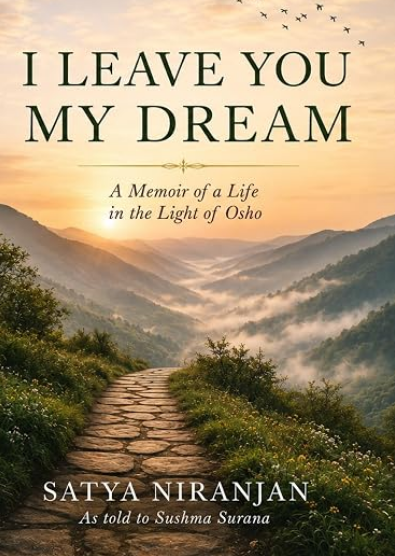 I Leave You My Dream
A Memoir of a Life in the Light of Osho
by Satya Niranjan, ed. Sushma Bharti
Self-published, second, revised edition, 3 September 2026
Format: Kindle edition (paperback out of print)
ASIN : B0HHNYMY7M
amazon.in – Amazon *
Comments are closed.