

In part 2 of her new series, Phoebe examines Osho’s Glimpses of a Golden Childhood from another aspect, and we meet his Nani, Pagal Baba, Magga Baba, Masto and Prof. S.S. Roy as his mentors
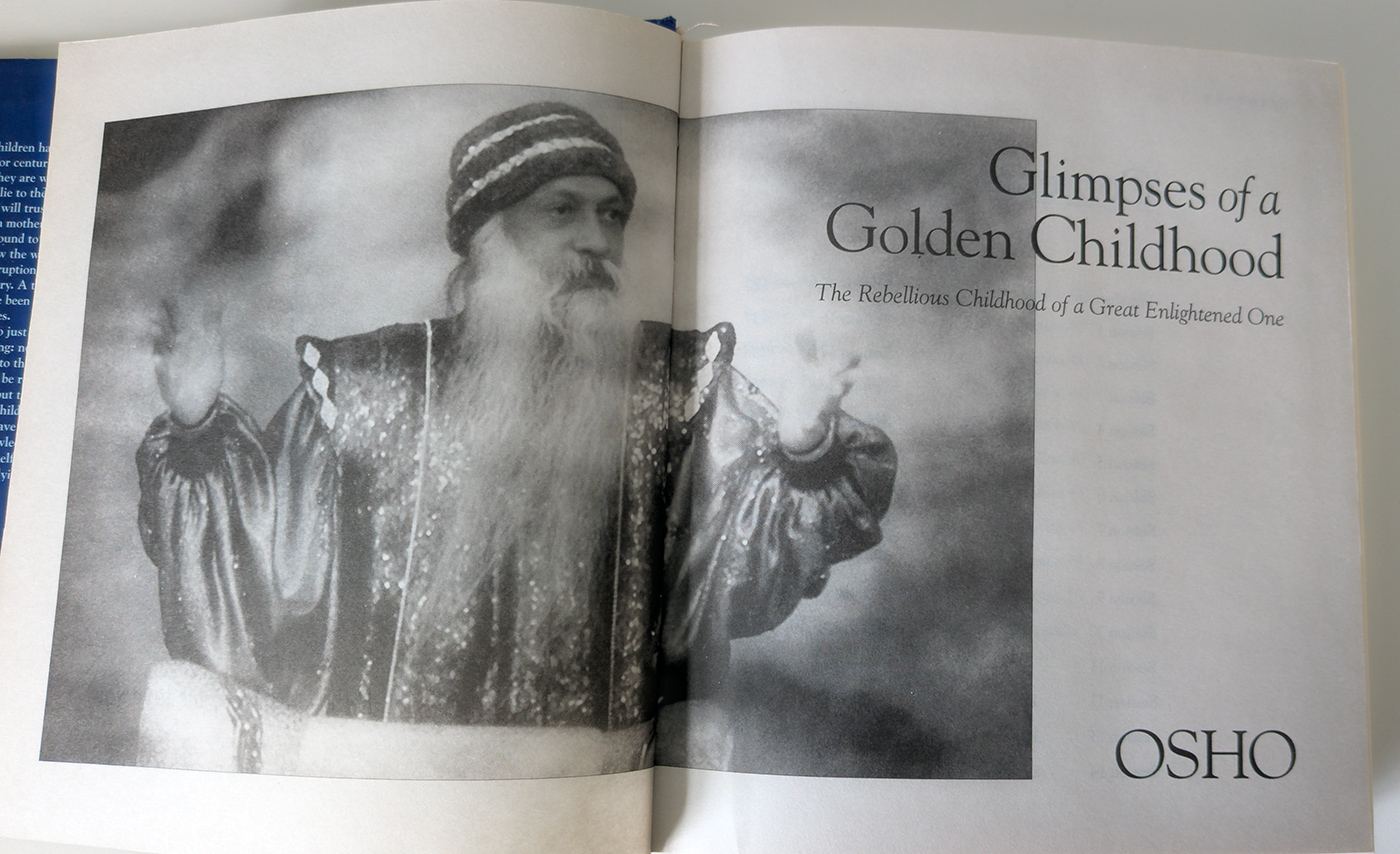
After Osho was born, his parents consulted an astrologer who predicted that every seven years he would face death. This prophecy came true when at the age of seven he experienced the death of his grandfather and consequently, when his fourteenth birthday was approaching, Osho’s family was in a state of fear. But he said coolly, “If I’m going to die I must be prepared,” and announced that he would depart on a seven-day retreat in a lonely, unvisited temple where he would await death alone.
Death did not come. Instead, as Osho tells us, those days of retreat became a meaningful experience for understanding life!
“On my part I tried in every way to be dead. Strange, weird feelings happened. Many things happened but the basic note was this – that if you are feeling you are going to die you become calm and silent. Nothing creates any worry then, because all worries are concerned with life. Life is the base of all worries! When you are going to die anyway one day, why worry?” 1
He describes how during those seven days in the temple he was visited by a snake. As he watched it approaching, he wondered if death would be coming to him through this creature. When it reached him it slid over his body and then disappeared, and he felt no fear!
The experience, Osho tells us, helped him recognise how basic our fear of death is, and therefore, how natural it is for us to cling to life. However, only when our meditation is deeper than our fear will we taste samadhi!
While he was growing up, Osho had several mentors who were of service to him on his path.
Osho’s Nani
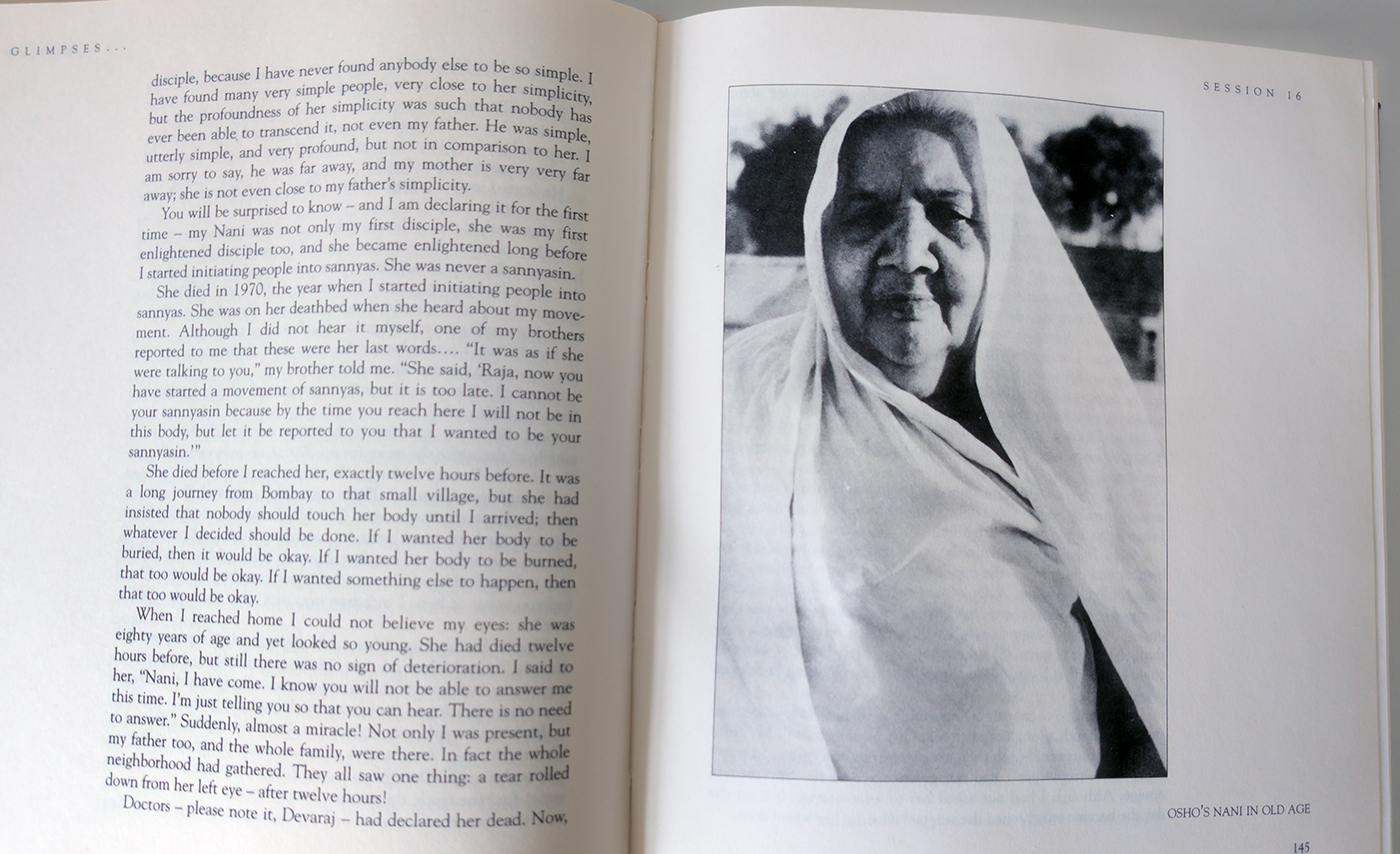
The first was his maternal grandmother, his Nani. Sitting in the dental chair, he recalls an occasion when he asked her which religion they belonged to – he’d been questioned about this at school. Although Osho’s family were Jains, she told him that she herself didn’t belong to any religion.
‘But I love this Jain mantra,’ she said. ‘It has always given me a deep peace.’ And she taught it to him.
Osho chants it for us in the dental chair, adding the comment that its final line should be carved on all churches and places of worship in the world, irrespective of which religion they belong to, and also emphasised that the word ‘themselves’ should be added at the end of the line to indicate the mantra’s essential meaning:
“I touch the feet of all those who have known themselves!” 2
Pagal Baba
The second mentor who entered Osho’s life in his early childhood was Pagal Baba. He was a local guru revered by Osho’s father, who attended his audiences. When he took Osho with him and introduced him to Pagal, he couldn’t believe his eyes when he saw the venerable man touching the little boy’s feet. Osho describes the scene as follows:
“It was really hilarious. And just to make the circle whole I would touch my father’s feet. Pagal Baba would start laughing so loudly that everybody became silent as if something really great was happening, and my father would look embarrassed. […]
“Seeing Pagal Baba, a man who was known to be enlightened, I recognised that he was unique even in those days. I did not know anything of what enlightenment is. I was in just the same position as I am now again – utterly unknowing. But his presence was luminous!” 3
Magga Baba
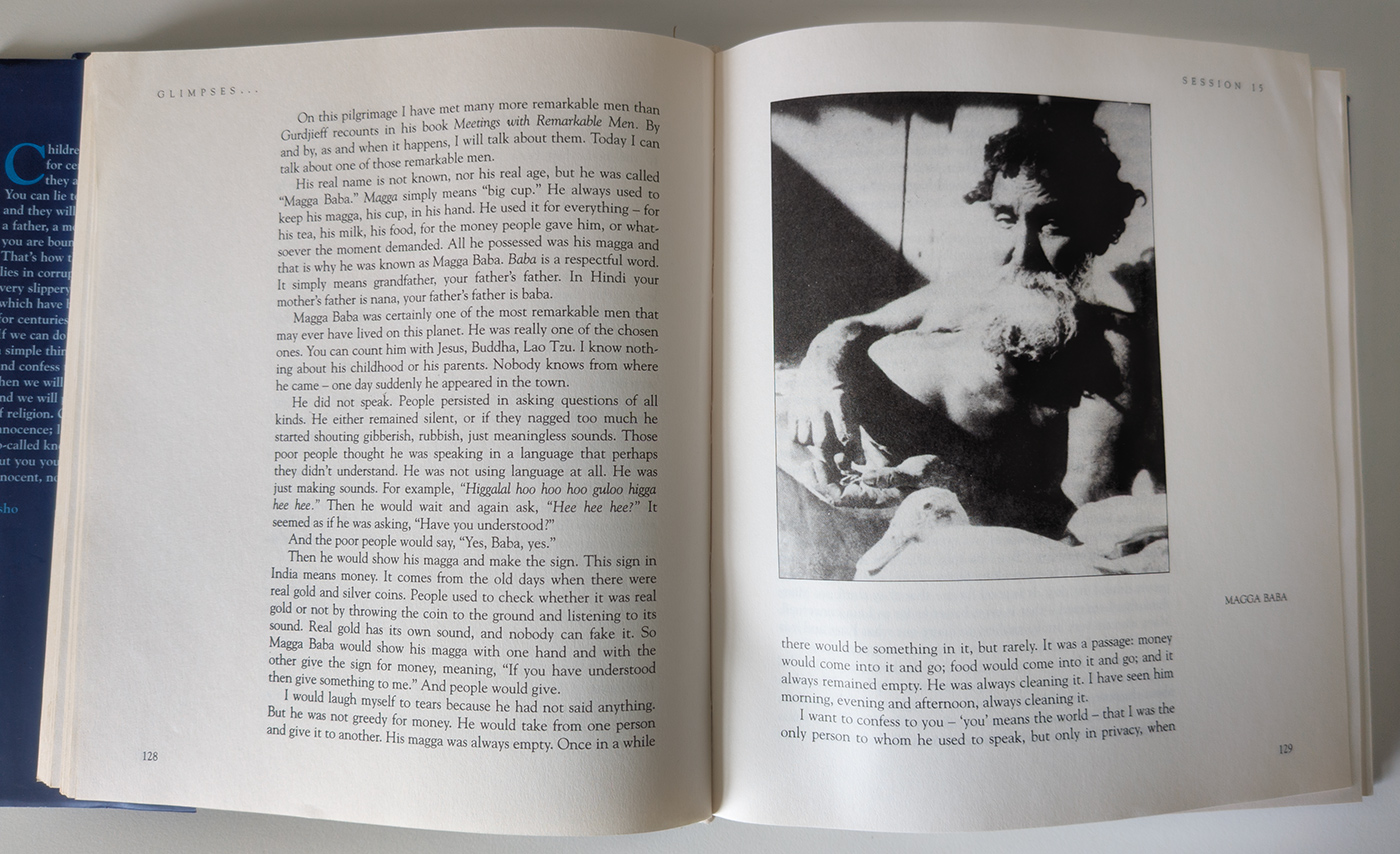
Another mentor who entered Osho’s life during his childhood was Magga Baba, who Osho calls one of the most remarkable of sages, counting him together with Jesus, Buddha and Lao Tzu. Although he was nearly ninety, Magga lived a hermit’s reclusive life in the wild, his only possessions being a begging cup and a blanket to sleep under on cold winter nights.
He was visited in his solitude by many curious people who would put food into the cup and wait there hoping he’d speak some words to them, but Magga Baba refused any intelligible communication. Osho, however, was not deterred by this, and started slipping away at night when everyone was asleep, to go to the neem tree where he sat.
He’d find Magga Baba huddled in his old blanket beside a fire and seat himself quietly beside him. At some point, Magga would turn over, open his eyes and, seeing Osho there, start talking to him of his own accord:
“It was such a blessing to hear his few words… He was the first man who told me, ‘Life is more than what it appears to be. Don’t judge by its appearances but go deep down into the valleys where the roots of life are…’
“His words were pure honey, so sweet and nourishing and so pregnant with meaning… For some reason, or maybe for no reason at all, he loved me. I have had the fortune to be loved by many strange people, Magga Baba is the first on my list!” 4
Masto
The next mentor to enter Osho’s life was Masto, a friend of Pagal Baba’s who’d passed on to him what he saw as his duty of care for Osho. Masto was the opposite of Magga, the ancient recluse – a handsome young man in his prime who was leading an active life in the world. In spite of their age difference, they became close friends.
Masto was just the right mentor for Osho during his teenage years while his mental horizons were expanding, as he was an anomaly in being at the same time both an intellectual and a mystic. With his wide knowledge, he was able to inform Osho about many things he wanted to know, and Osho, who always loved debating, could enjoy exploring a wide range of social and philosophical ideas with him.
Now that he was growing up, Osho could no longer be held back by his parents and would leave home to go travelling. He visited some of India’s famous sites such as the Taj Mahal and the caves of Ajanta and Ellora, and he also travelled to Khajuraho, the birthplace of his Nani. She’d insisted he go there to experience the pagan temples with their wonderful tantric sculptures.
Osho was therefore now in need of money which Masto was happy to provide. Every time they met, we’re told, he would slip a handful of coins into Osho’s pocket. But Masto was also thinking further ahead and planned to introduce Osho to some of his rich and powerful contacts in the hope that they would be of assistance to him in his life ahead. As Osho tells us:
“Masto introduced me to many people. He thought perhaps I might need them, and I certainly did need them not for myself but for my work!” 5
Was the teenage Osho already foreseeing the future and aware of the work he had come into this world to carry out?
The biggest name on Masto’s contact list was that of Jawaharlal Nehru who’d been elected prime minister of the newly-united India in 1949. Masto was able to arrange an invitation to Nehru’s private home in order to introduce him to Osho. And, although Osho had a low opinion of politicians in general, he tells us that he made an exception in Nehru’s case, because Nehru chose to discuss subjects that mattered with him – namely freedom and truth!
On the same occasion, Osho met Nehru’s daughter Indira who happened to come into the room. Some years later, after she’d achieved a high post in the Indian government, she invited Osho to the house again, which is when his friendship with Indira began. She was to succeed her father as prime minister of India, but, it seems, could not support Osho’s work as much as Masto had hoped, telling him this was too difficult for her to do publicly.
After Osho finished school, Masto urged him to apply for university. Maybe he thought academic credentials would help smooth Osho’s path during the years ahead of travelling and public speaking that he foresaw. Osho complied and gained a place to study philosophy at the university. He tells us:
“As a student I was a nuisance. Every professor who taught me looked on me as a punishment that God had sent for him… Only a few have met me lately. Their first question was, ’We cannot yet believe you could have become enlightened. You were such a troublemaker. We have forgotten all the students who studied with you, but even now we see you once in a while in our nightmares!” 6
Professor S.S. Roy
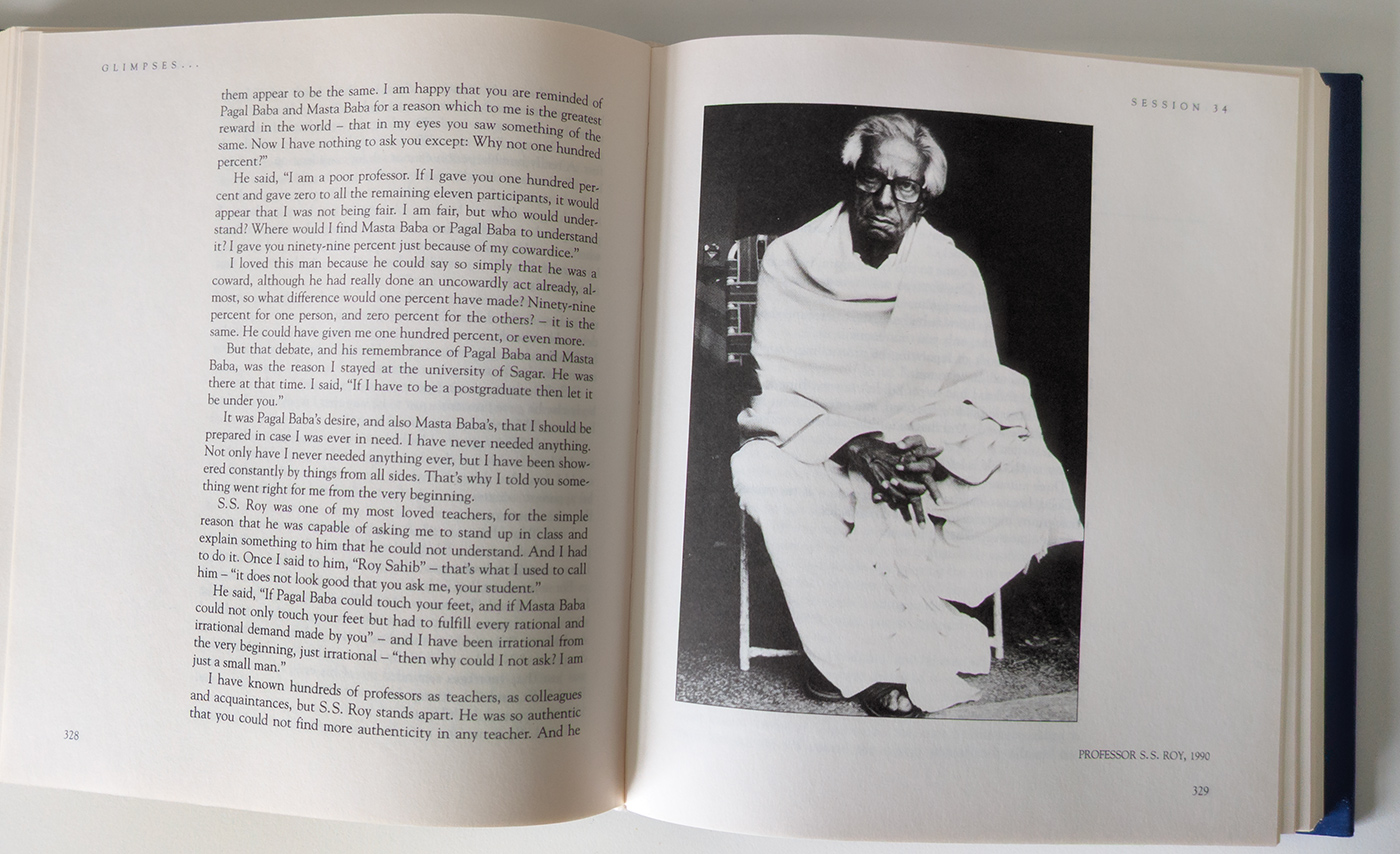
Masto had wanted Osho to stay on at university after his B.A. and Osho reluctantly agreed to study for a Master’s degree but refused to do a Ph.D. During this time the head of the philosophy department, Professor S.S. Roy, secretly became Osho’s friend and mentor. He revealed to Osho that he’d been a devotee of Masto who had spoken of Osho to him and told him, ‘Once you see this man you’ll not need me!’
It was through Roy’s backing that the university awarded him a scholarship for further studies, and in the following years, Roy ensured that he was free of the usual departmental obligations, enabling him to come and go as he liked.
When Osho reached the age of twenty-one, he encountered death for the third time as enlightenment – his old self died and something new replaced it. This, he tells us, happened on the twenty-first of March 1953, and the first thing he did was rush to Magga Baba to get him to confirm it.
Magga was there still sitting under his neem tree and recognised his enlightenment by touching his feet and weeping. Then he spoke aloud for the first time to confirm what had happened to the people who were gathered there. 7
Osho then hurried to his Nani’s house. She was waiting at the door, and asked, ‘What has happened to you? You’re no longer the same!’ And, when he explained to her that he’d become enlightened, she asked him to teach her the way too. Osho, who counted her as his first disciple, taught her the way with the following words:
“My way is simple – to be silent, to experience in one’s self that which is always the observer and never the observed, to know the knower and forget the known.” 8
After recognising Osho’s enlightenment, Masto announced that his responsibility had now been fulfilled – his promise to Pagal Baba had been kept. He told Osho, ‘Now you are what you potentially were. Now I am no longer needed,’ and the very next day he disappeared. He had gone to the Himalayas never to return! 9
Sources
- Osho, Glimpses of a Golden Childhood, Appendix, p. 489
- Osho, Glimpses of a Golden Childhood, Session 5, p. 42
- Osho, Glimpses of a Golden Childhood, Session 29, p. 272
- Osho, Glimpses of a Golden Childhood, Session 15, p. 130
- Osho, Glimpses of a Golden Childhood, Session 3, p. 371
- Osho, Glimpses of a Golden Childhood, Session 26, p. 244
- Osho, Glimpses of a Golden Childhood, Session 16, p. 142-3
- Osho, Glimpses of a Golden Childhood, Session 16, p. 143
- Osho, Glimpses of a Golden Childhood, Session 32, p. 308
Related articles
- Glimpses of a Golden Childhood – Phoebe’s new series, Nuggets, will be a reminder of the wisdom found in Osho’s books, so needed in our digital age
- All articles in this series: Nuggets
- Osho Speaks on Magga Baba – Osho, Glimpses of a Golden Childhood, Session 15 (excerpt)


Comments are closed.