

The video from a 1978 BBC/ITV programme surfaced recently on social media, here with a short introduction by Subhuti who was also seen at the British tea party, and transcription of KP’s interview thanks to Nirbija
BBC’s Whicker’s World
by Subhuti
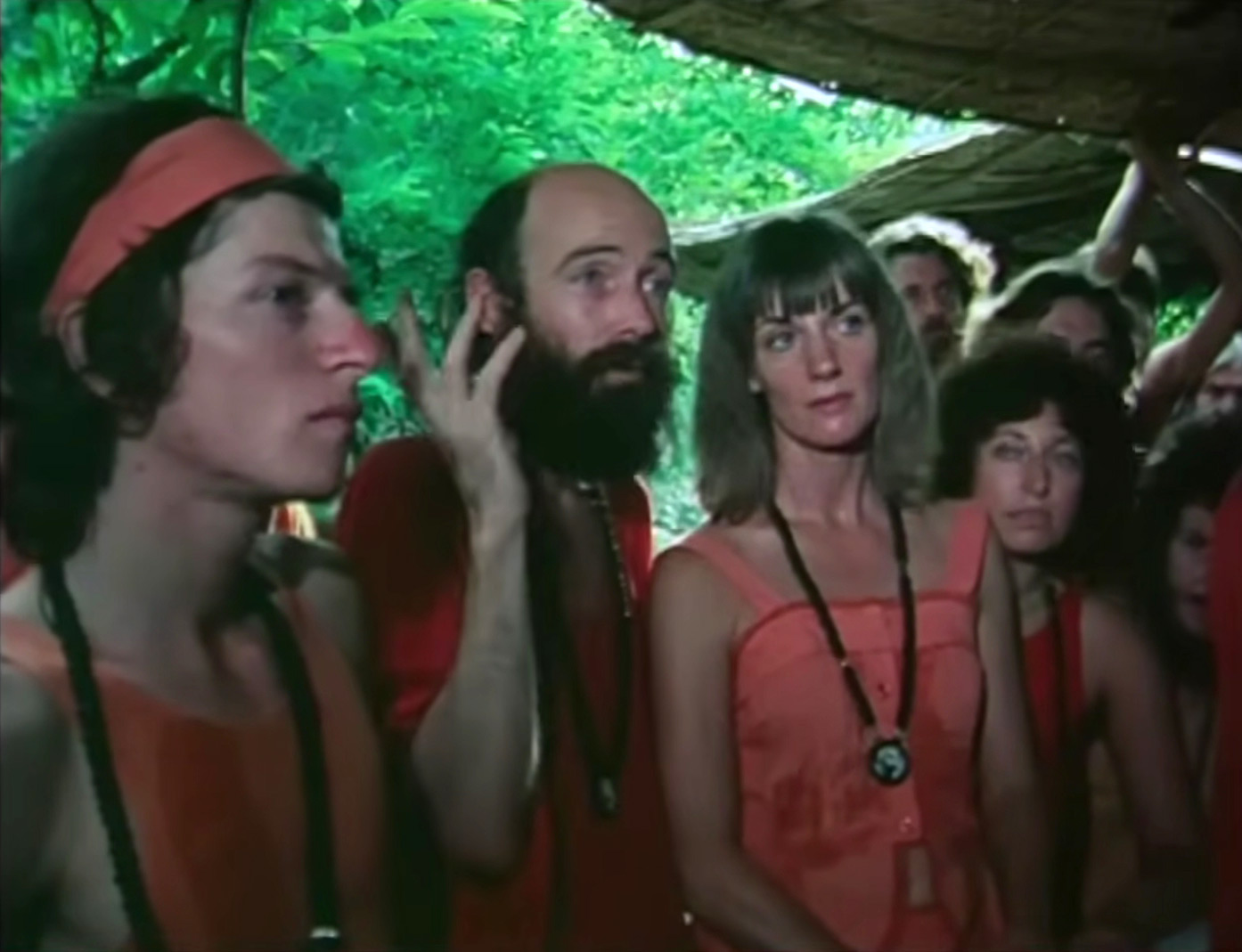 Whicker’s World was a hugely popular television show in the United Kingdom, in which journalist and broadcaster Alan Whicker travelled the world, reporting on interesting or unusual people in different countries. Alan Whicker had the knack of presenting each programme from the perspective of someone living in the United Kingdom, rather than just as sightseeing or tourism.
The show ran from for over thirty years, from 1959 until 1994, in an era before air travel became deregulated and cheap, so Whicker was seen as “the ordinary British guy” who found himself curiously investigating exotic situations.
He came to the Shree Rajneesh Ashram in 1978, as part of a six-episode series about India. As you can see, there was a lot of laughter when he interviewed British sannyasins living and working in the ashram, in a group setting rather than one-on-one. He was a bit irritated by being “sniffed out” at Lao Tzu Gate, when going to darshan with Osho, and having to wear a scarf on his head to cover a smell of perfume.
For me, the best moment in the programme happened when, during an interview with Canadian Krishna Prem, Alan Whicker commented on the atmosphere of “suppressed hysteria” in the ashram, to which Krishna Prem smiled and replied, “Oh no, Alan, it’s called love.”
Rashid’s family in darshan with Osho
From the darshan diary: The Madman’s Guide to Enlightenment, Ch 1, with comments by Maneesha
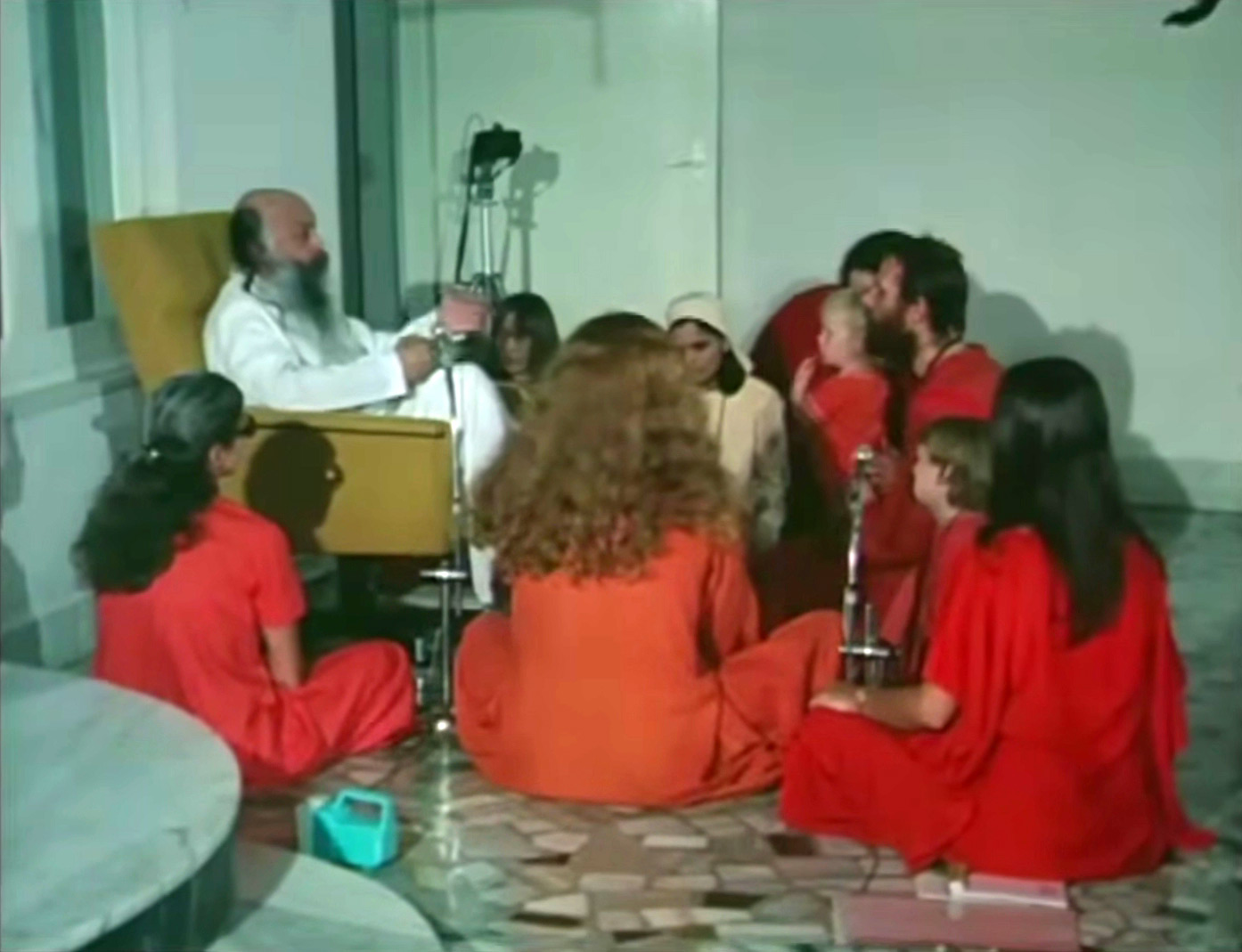 [Rashid and his wife, Rashida, have just sold up – finished everything in England (including parting company with their farm in Wales) – to be here with their children as part of the commune (‘the family’ as you call us).
The expressions on their faces are a mixture of a whole lot of things – like relief and happiness, and love for you. That’s almost tangible. Rashida is nursing their youngest child, Sagar; Rashid is flanked by Rupam who is probably about six years old. Rashid gazes at you as if he can’t believe it. (I’ve been here with you for almost four years now and I still can’t believe it either.) He seems totally oblivious of the fact that he’s surrounded by the cameras and bright lights of the seven-man crew (which actually has two women in it) of the BBC.
They’re here to film darshan as part of the documentary series, ‘Whicker’s World’. Mr. Whicker himself is sitting in the front row (Scarf and all! They all passed through the pre-darshan ritual of being checked for overly strong shampoo smells.) Right now the spotlights are on you and already beads of perspiration gather in protest on your face. You are total relaxation, imperturbable graciousness (my favourite TV non-personality). And you call the family closer to you to bless them.
Rashid and Rashida bend their heads. Rupam hangs back, uncertain, on the fringe, and I gently push him closer so that your hands now move to his lowered head, while the infant, Sagar, offers his downy pate to be patted.]
Now become part of the family and forget everything else! Remember only one thing: the past is a hindrance, the greatest hindrance. It has to be completely dropped, utterly dropped. To be with me is to be in the now – no past, no future. This moment is all there is and just this moment is god. Everything else is just the mind dreaming, desiring, imagining.
[Sagar disengages himself from his mum and as if he’s been rehearsed for the part takes a few tentative steps towards your chair and, somehow maintaining his precarious balance, ogles you, finger in mouth.]
Once the past and future have dropped – and they are always dropped together; if you drop one, the other disappears of its own accord. They are two aspects of the same game. The past projects itself into the future. It wants to repeat itself – in a little more modified way, but still the same. Between the two is the moment. The moment, this moment, is the only reality, and the door to reality.
So let this moment become your whole life. Live moment to moment, with no ideology, with no desire for any kind of future, with no goal. And then you need not go to god – god comes to you.
Just become part of the family and forget everything else….
[Peep peep … peep peep … announces one of the birds who live in your ‘garden’, the jungle that surrounds us in darshan. Koo oo … koo oo … comments his neighbour. (I love the sounds around us here, and particularly now, in the evenings, with you.)]
Interview with Krishna Prem from the Press Office
starts 13:26 – transcribed by Nirbija
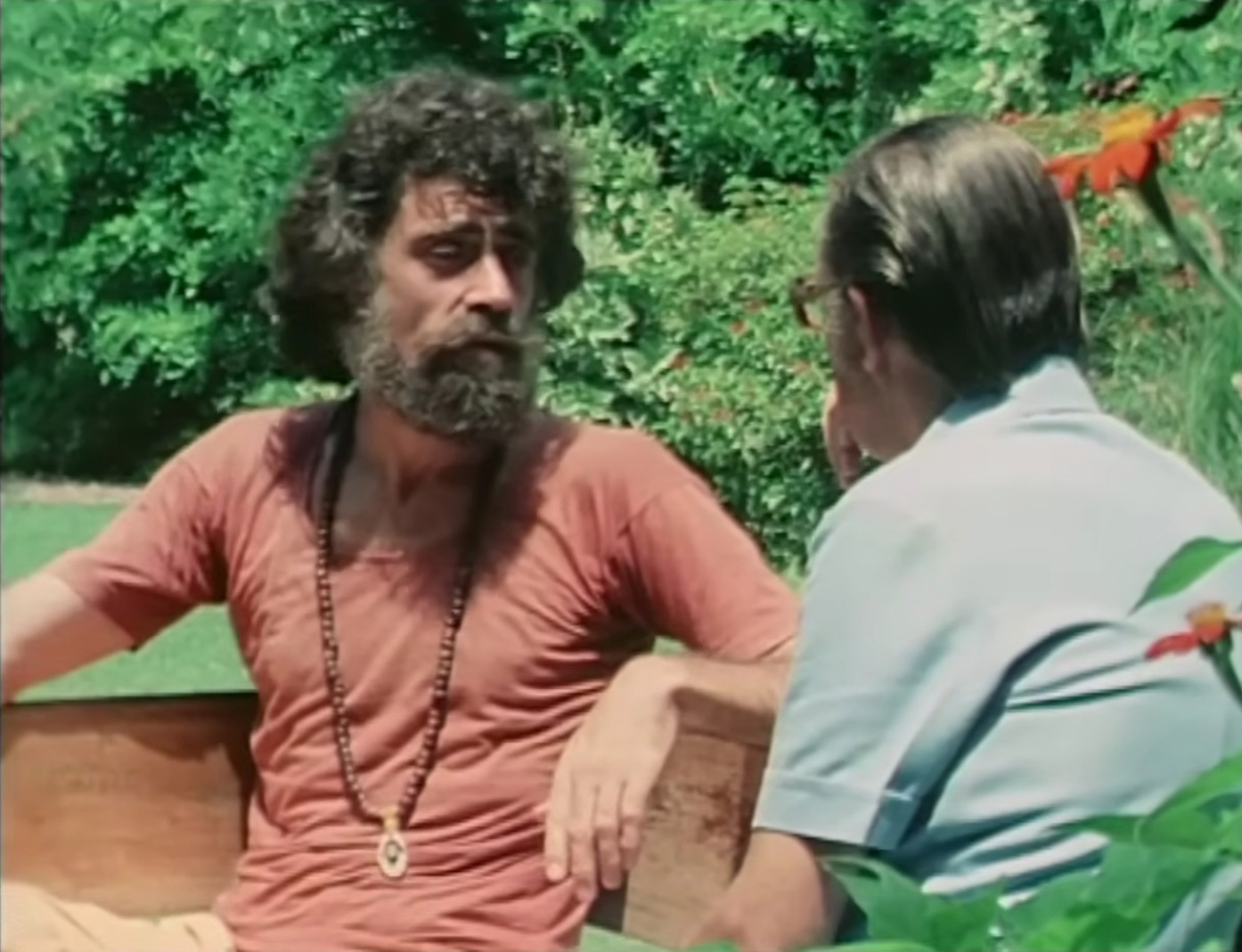 Q: What are all these young people seeking when they come here?
A: Themselves, like what they really are. Does that make sense?
Q: Nay, it makes about as much sense as most of the things I hear here.
A: Ah, okay. Well, what seems to happen to people when they come here is that in the West the kind of way people live, people are multi-faced, multifaceted, you know. You have one face that comes up in anger, one that comes up in greed, one that comes up in lust, one that comes up in jealousy and so you’re never really one solid person.
And it’s hard to live that way, it’s not satisfying at all to live that way. So people come here through the association with Bhagwan. Through living with us here, through meditation techniques, group therapies and stuff, all those sort of false personalities start to go away – until you’re left with one. Until you’re just the same all the time, wherever you are. So that you’re it and it’s really… it frees you. You’re no longer… your identity no longer depends on what’s being fed into you by the outside world or by the person you’re talking to.
Bhagwan once said that religion was the last luxury. And for us in the West; we’ve had the fridges, we’ve had the cars, we’ve had the television sets, and we’ve seen that they don’t have anything to do with making you happy. But the Indians, at least the middle class Indians in this country, still haven’t come to that yet. They still want them, and they don’t know yet that they don’t make you happy.
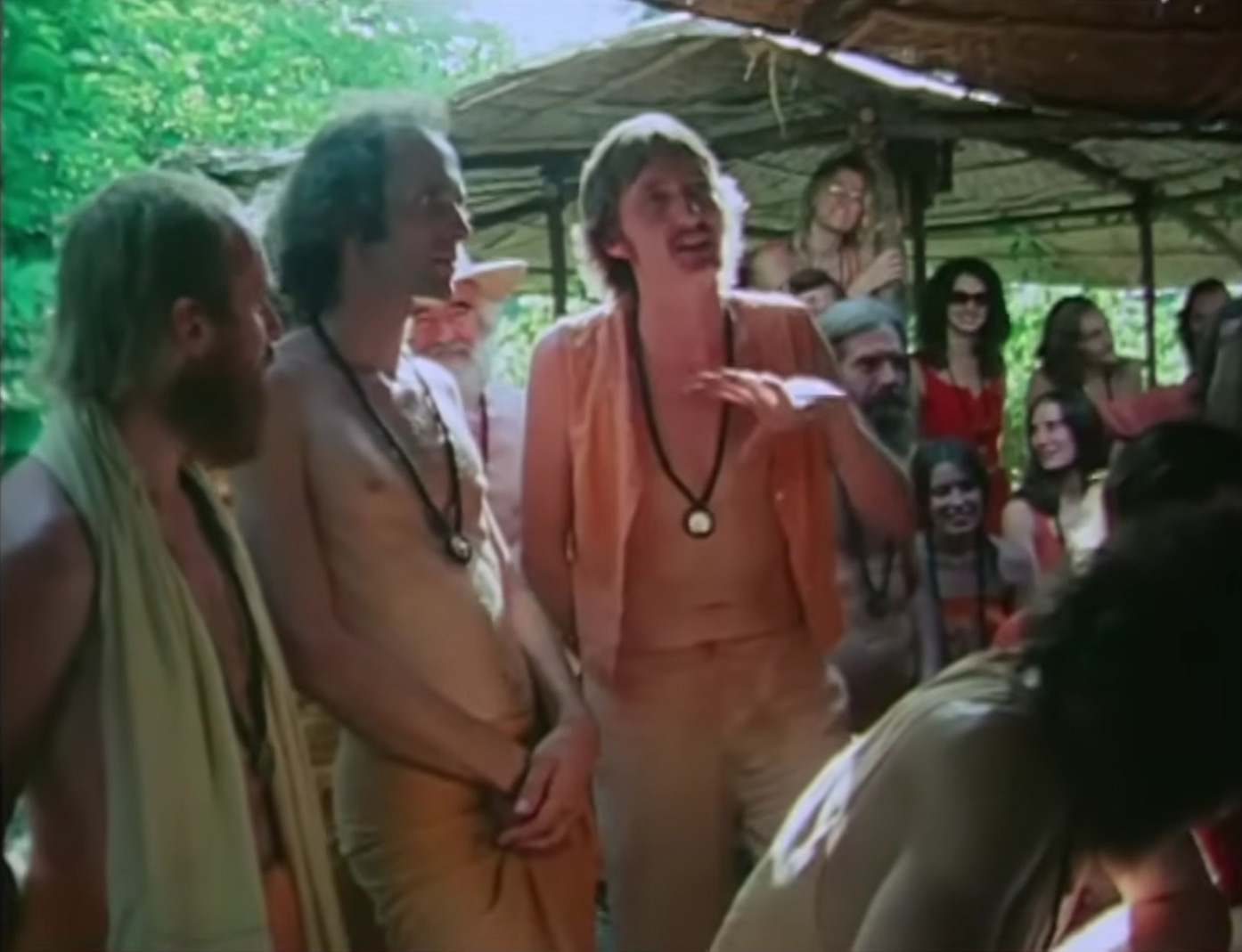 Q: How do you hardcore permanent staff react to the suggestion that the ashram is just a bunch of
affluent Western kids looking for a packaged Madison-Avenue-style Guru or Master?
A: Obviously that’s an outside opinion. When you come here it’s hard to see what’s going on. It kind of… I suppose it can kind of look like a holiday camp or something like that, or a summer Resort. But there’s a lot of work going on inside, but it doesn’t show on the outside. People think we’ve dropped out and stuff like that and it’s not that at all. It’s just – with most of the people here – it is just a very aware, conscious decision that what they saw ahead of them in the West was leading them nowhere.
Q: A lot of the people I was speaking to yesterday were very spaced out, I thought.
A: The ‘spaced out’, that’s not drugs. The people who live and work in here… It’s meditation! I mean, you get very stoned when you meditate.
Q: I can understand that the Bhagwan likes people to freshen up before his audiences, but what is the reason for this sniffing routine? [This question refers to a previous scene showing the interviewer being sniffed for disturbing scents before being admitted to a darshan with Osho, ed.]
A: Oh, his allergies!
Q: With the best will in the world, it’s hard to take seriously being sniffed at by a couple of girls, one of them with a distinct bad breath.
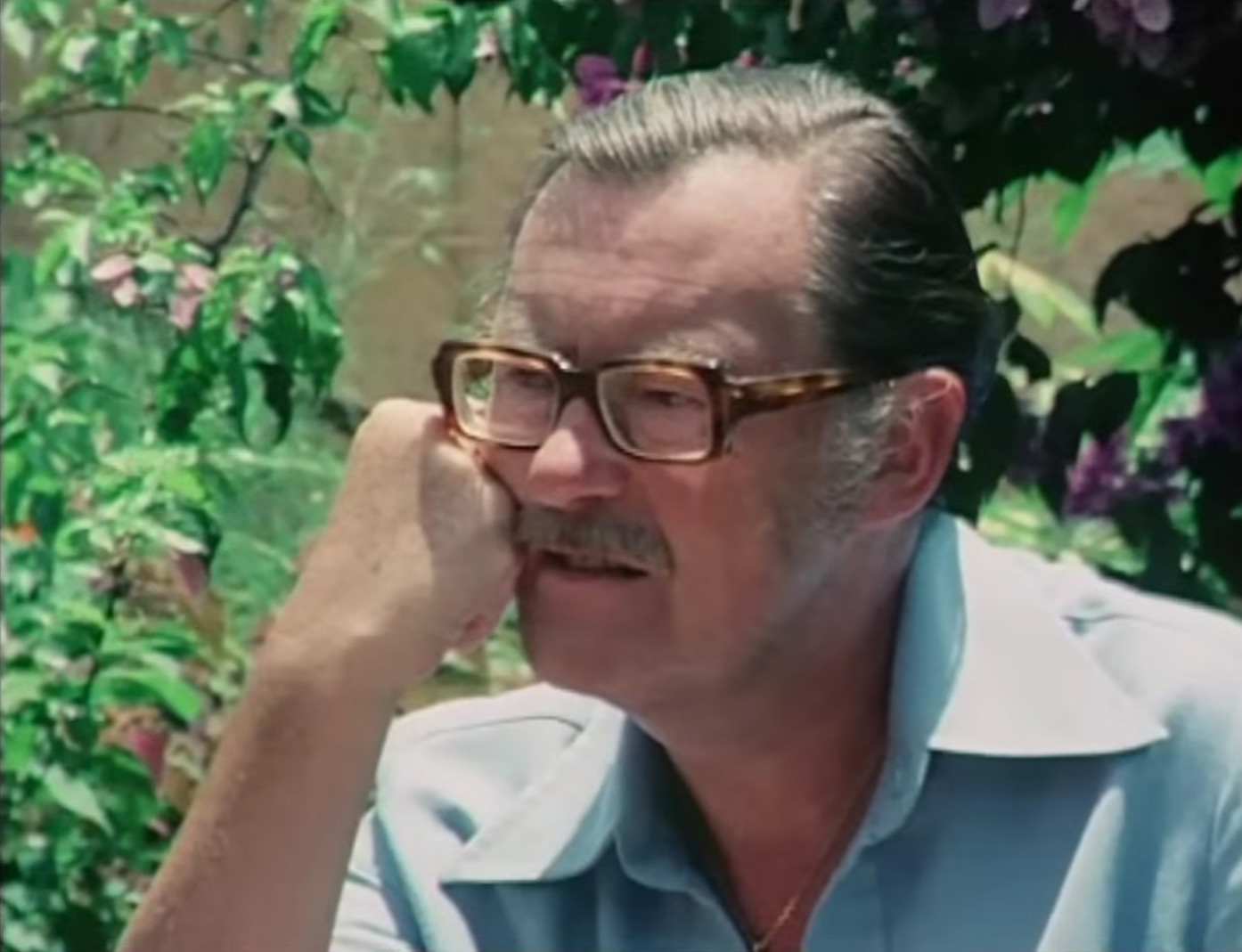 A: Yeah, oh, the Italian lady [laughs]! But this… we don’t take anything much seriously here.
Q: What are the cough sweets for?
A: Well, coughing disturbs the microphones, the tapes. Because all the lectures are taped. And it’s also… it really makes you stay aware.
Q: See, after that ridiculous charade about the aftershave lotion, the headscarf and the sweeties, it becomes even harder to accept his statement that he’s God.
A: His statement that he’s God? Well, that’s a loaded thing to put on television in the West. But then again, so are you, and so am I, and so is he, and so is this bench. The only basic difference between you, me, and the bench and him is that he knows it – and just lives it.
Q: He knows he’s God and we’re God, too? Is that what you’re saying?
A: Hmm, that’s what they all say. That’s what all the Buddhas down the ages have said.
Q: See, as I recall, Jesus was rather more concerned with sinners than with coughers.
A: [Laughs] Maybe people didn’t smoke cigarettes and beedies in those days?
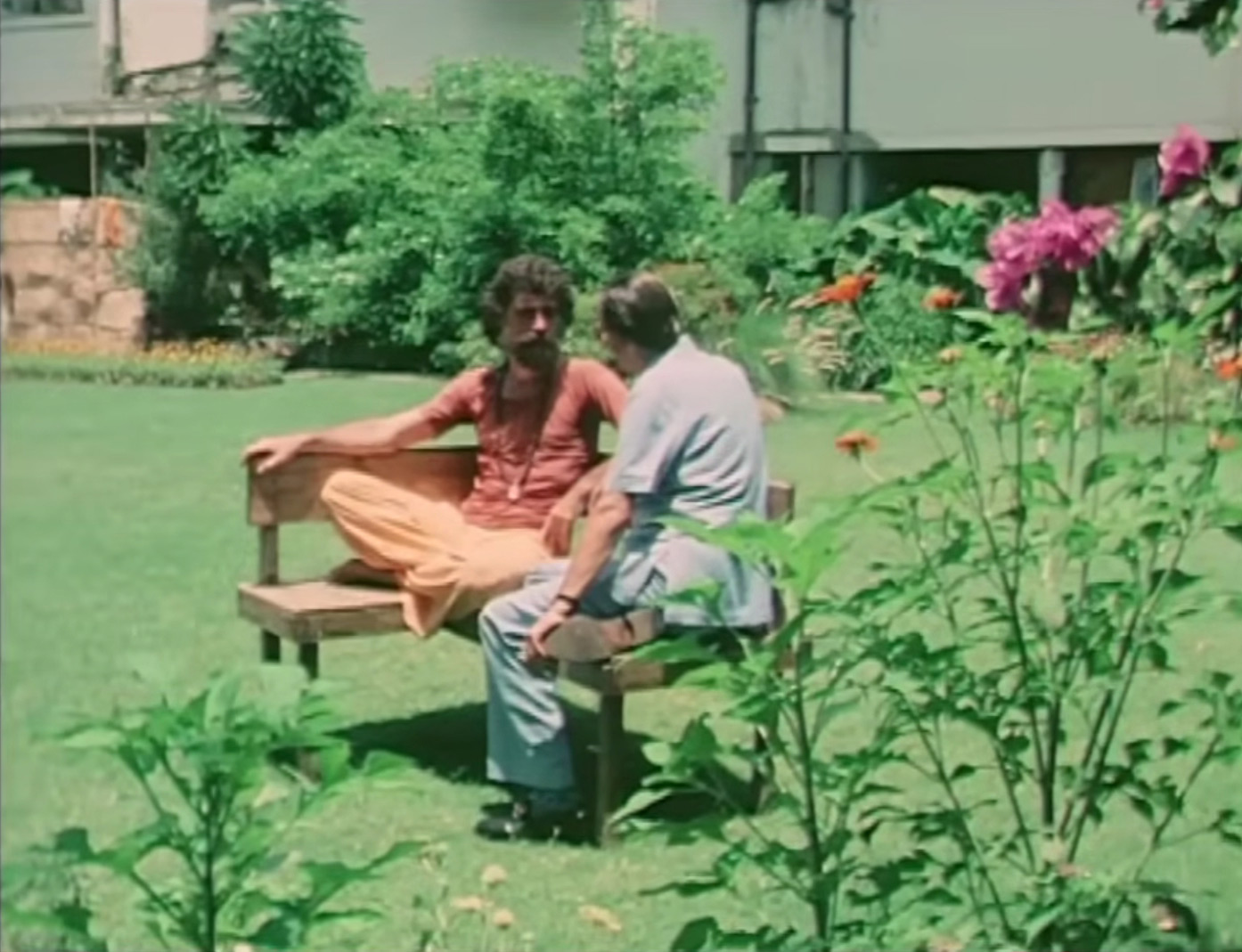 Q: See, he is known – I read – as India’s sex guru. How is this title earned?
A: Because people… we used to meditate with our clothes off. And if you take your clothes off in India it’s a sexual act. I mean, Indians don’t even take their clothes off when they bathe. Have you ever seen Indians bathe?
Q: Yes, indeed…
A: They don’t take their clothes off. So when you take your clothes off it’s sexual.
Q: Your publications are excellent and beautifully done. But you package him rather like a beauty
product.
A: Well, it is for the West. I mean, why not package religion that way? Everything else is packaged that way.
Q: So, I do detect here an air of suppressed hysteria…
A: Of suppressed hysteria? Oh no, it’s called love!
More on sannyas.wiki and wikipedia.org
Related article
- Osho, India and Me by KP – Reviews of Krishna Prem’s (Jack Allanach) memoir

Comments are closed.