

While researching dates in Osho’s life for sannyas.wiki, Swami Shailendra came across a poignant passage in a Hindi discourse – one that, as the family later realised, coincided precisely with the evening their grandmother passed away
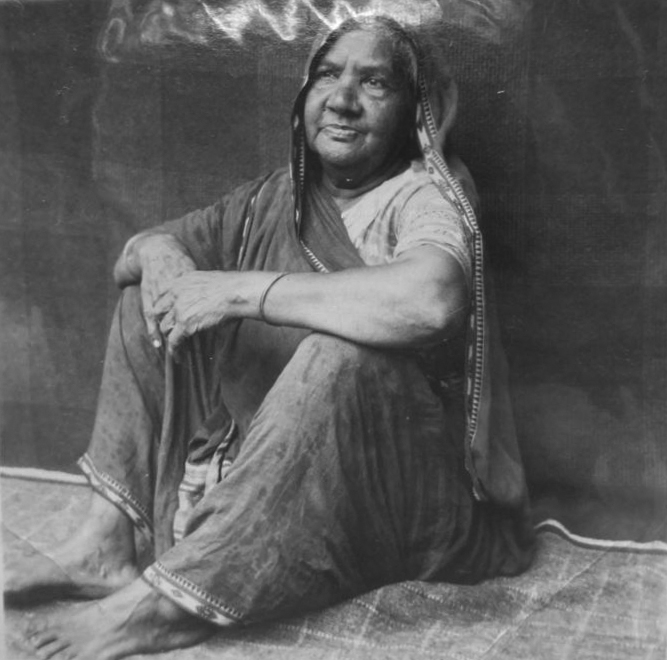
On 22 June 1971 – the evening Osho gave the fourth discourse on Lao Tzu in the first series of Tao Upanishad at Palm Beach High School in Mumbai – our grandmother, our dear Nani, passed away in Gadarwara.
Our brother, Swami Niklank Bharti, was also in the audience, deeply absorbed in the discourse. Suddenly, large tears began to roll down his cheeks. He was completely at a loss to understand the phenomenon; there was not an iota of sadness or any external cause that could have triggered such a reaction. His tears kept flowing incessantly. Realising that he might distract those sitting nearby, he quietly stood up and slipped out of the auditorium to find some air in the garden. After about five minutes, the tears stopped as abruptly as they had begun.
When he returned from the garden to the auditorium, Osho was narrating a mysterious incident in the life of a friend – a poet.
Below is an English translation of an excerpt of the discourse in Mumbai:
Lao Tzu says: When the sense of mystery becomes profound, the door to the subtle opens.
When the awareness of the mystery deepens and the ego falls away, we no longer need the senses. This is a very remarkable thing. The moment the ego disappears, the senses become unnecessary. In reality, it is the ego that functions through the senses. If the ego dissolves, the senses are no longer required. Then experiences beyond the senses – non-sensory experiences – begin. And whenever an experience occurs without the mediation of the senses, it belongs to the subtle realm.
Sometimes such experiences also happen to you. At certain moments, on certain occasions, in particular states, your ego becomes thin and transparent, and suddenly these experiences flash before you – unexpectedly. But soon the ego gathers itself again, and the experience is lost. Then no matter how hard you try to understand it, you cannot. The ego cannot understand it.
You may have heard voices which you later dismissed as false, saying, “No, I couldn’t possibly have heard them. How could I? There was no one there.” At times you may have seen forms which you later rejected, saying, “How could I have seen them? There was nobody present.”
Many times you have come close to such possibilities – accidentally – and later even you yourself cannot believe them. When the experience is gone and the ego is once again strong, it refuses to believe in the validity of such experiences for they are beyond its grasp. “How can this be possible? How can anything happen without the senses?”
One of my friends lost his father. On the day his father died, my friend – who is a poet – was travelling on the six o’clock evening bus to another village to participate in a poetry gathering. His father was perfectly healthy; there seemed to be nothing wrong. As he sat in the bus, he became absorbed in the world of poetry, immersed in composing verses.
Whenever someone becomes deeply absorbed in poetry, the ego becomes thin. He becomes childlike again. He regresses into the old, innocent world. He flies with butterflies, laughs with flowers, and sings with the birds. He descends into a different dimension. Waterfalls begin to converse with him, trees begin to discuss things, clouds in the sky begin to carry messages. His ego becomes transparent.
He was immersed in his poetry when suddenly, at about nine o’clock at night, an overwhelming sadness descended upon him while he was still on the bus. It was beyond his understanding. A moment earlier he had been joyful; songs had been flowing through him. Then suddenly it felt as though a dark cloud had settled over him. There was no apparent cause; it was causeless. That made him even more restless. The flow of poetry stopped, and his mind sank into profound anxiety and sorrow.
This state continued for three hours until he reached the other village at midnight. He went to bed, but sleep would not come.
At two o’clock in the morning, someone knocked at the door, and a voice called, “Munna!” He was astonished because only his father used to call him by that name. He opened the door. There was no one. There was no question of his father being there. No other person called him “Munna”. He again opened the door, and the wind rushed in. The night was dark and there was no one about. Everyone in the hotel was fast asleep; there was complete silence. The street below was empty. He was staying on the second floor. No one could have suddenly appeared up there. He closed the door and thought, “It must have been my imagination.”
He went back to sleep. But after five minutes or so, he heard another knock, and again the same voice – this time so clear that he became wide awake. The tone was so familiar that it could belong to no one except his father. Again he opened the door but there was no one. Once again the cold wind rushed in.
Unable to sleep, he became increasingly restless. At three o’clock in the morning he went downstairs and telephoned home. He learned that his father had died. His last breath had left him exactly at two o’clock in the morning – the very moment of the first knock and the first call of “Munna!”
Yet even now he continues to deny the experience. He says, “I don’t know – it must have been some illusion.” He is an intelligent man, a thoughtful man, and still he says, “Something certainly happened, but I cannot accept that it was my father. It must have been some mistake, or perhaps only a trick of my own mind, some coincidence that he died at two o’clock and at two o’clock I happened to imagine something.”
Such glimpses of the subtle come into all our lives from time to time. But we keep denying them. If the awareness of mystery becomes deep, then the subtle no longer merely gives us fleeting glimpses – we ourselves enter into the subtle. Then we begin to live in that dimension. Then it surrounds us twenty-four hours a day, everywhere.
Lao Tzu says: The door of the subtle opens and of the wonderful and the miraculous!
What is the miraculous? Let us understand. In ordinary language, whatever we call a miracle contains something unknown. We simply do not know what that “something” is.
When do we say a miracle has occurred?
A man dies, and then Jesus Christ places his hand upon the man’s head, and the man comes back to life. We say, “A miracle has happened!” Why? A sick man bows at someone’s feet and becomes healthy. We say, “A miracle has happened!” Why? Gautama Buddha walks past a tree that has long been dry, and fresh shoots suddenly appear. We say, “A miracle has happened!” But why do we call it a miracle? What is the reason?
There is only one reason. Ordinarily we call something a miracle whenever an event appears to occur outside the chain of cause and effect. The trees sprout new shoots in their proper season, according to the natural laws. There is a cause. But here is a dried tree that has not produced leaves for years; there seems to be no reason for new shoots to appear. Yet they appear as Buddha passes by. Buddha’s passing does not seem to be the cause. There appears to be no connection. What relationship is there between Buddha walking by and leaves appearing on a tree?
If a dead man is revived through medicine, we say perhaps his heartbeat had merely slowed and then resumed. If a sick man is cured by medicine, we do not call it a miracle. Why? Because medicine is the cause and recovery is the effect. There is causality. But if someone merely places his head at a saint’s feet and is healed, then there seems to be no causality. We call it a miracle.
A miracle, then, simply means that the ordinary law of cause and effect appears to be broken – that we cannot discover any connection between cause and effect. If Jesus places his hand on someone’s head and the dead man lives again, what obvious relationship is there between Jesus’ hand and the man’s return to life? Since we cannot understand the causal connection, we call it a miracle.
Yet even there, cause and effect may exist – and in fact they do exist. Therefore, what we call miracles today may tomorrow be explained by science. It is only a matter of discovering the hidden cause. Once the cause is understood, the miracle disappears.
Osho, Tao Upanishad, Vol 1, Ch 4 (ताओ उपनिषद, भाग एक)
Translated from Hindi by Shailendra, with edits from Osho News
First English translation: The Way of Tao, Vol 1, Ch 4 (1978)
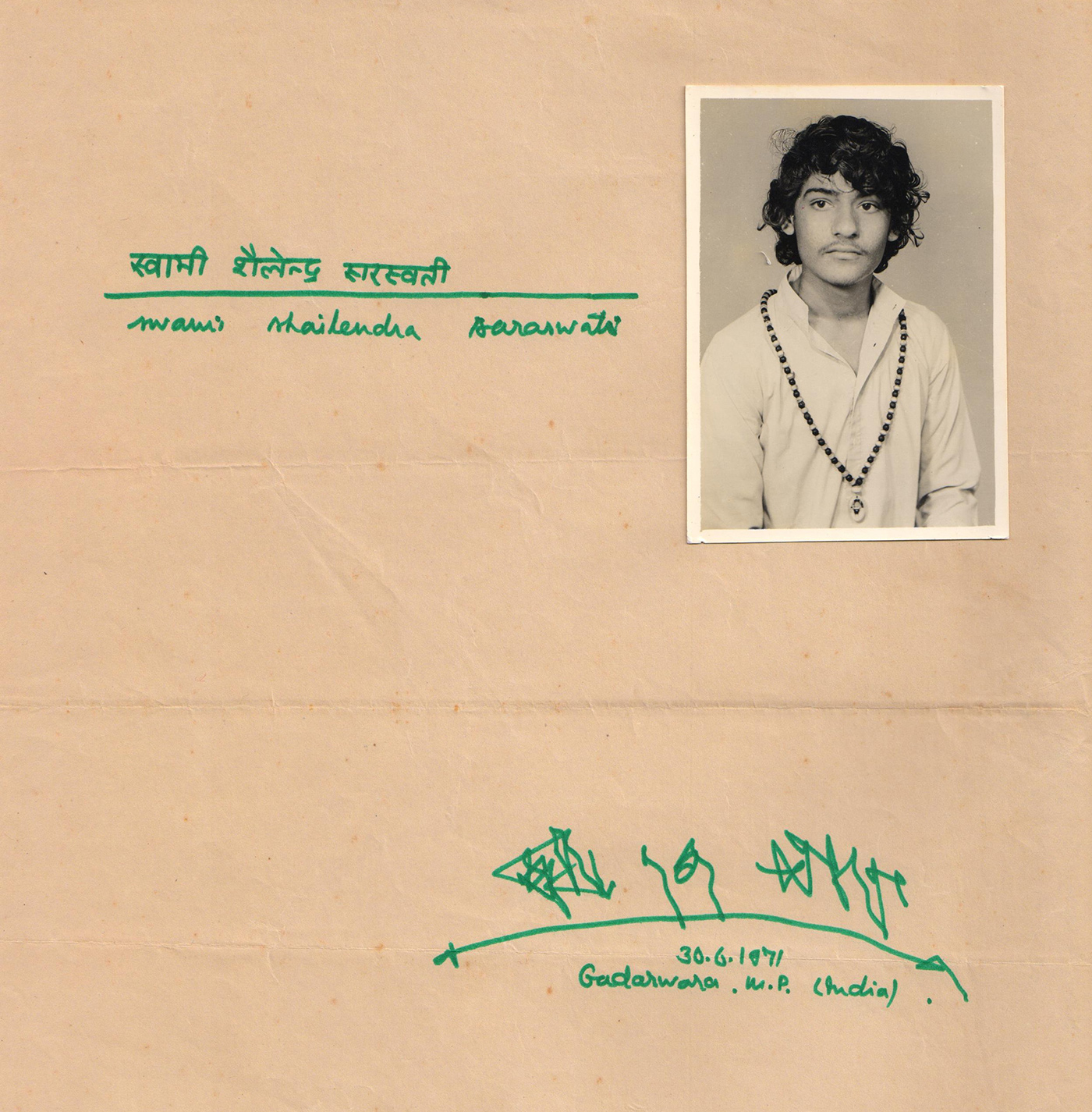
Four days later, on 26 June, Osho received a letter from our father informing him of our grandmother’s passing. The following day, he boarded a train for Gadarwara, where he stayed until 30 June. I remember this date vividly, as it was the day I took sannyas along with many others. It was the final day of my summer holidays; the next morning, I would return to school wearing orange clothes – lungi, kurta, a head covering, and a mala. I still have the sannyas certificate, signed by Osho, with the date and place recorded.
Naani left her body in Gadarwara at 8 o’clock – the precise moment tears began to flow from Niklank’s eyes. In retrospect, he realised his eyes had only been an instrument, and those tears were Osho’s loving tribute to his beloved Nani.



Comments are closed.