

Back from her travels, Madhuri writes about books by Andy Cave, Doris Lessing, Dodie Smith, Joe Biel and Elly Blue, Walt Larimore, Karolina Ramqvist, Charlotte Bingham, Heather McDonald, Dave Barry, June Tate

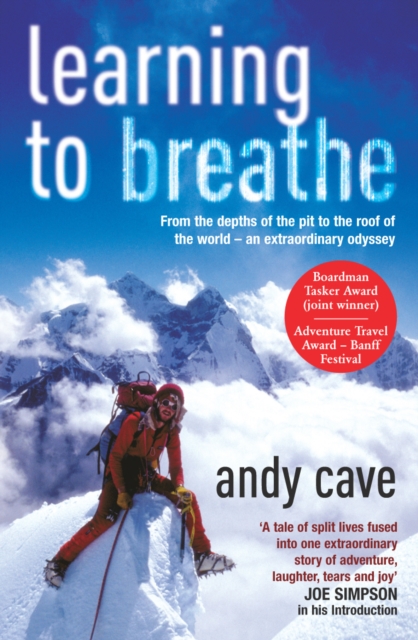 Learning to Breathe
by Andy Cave
Cornerstone, 2006, 320 pages
ISBN 9780099472667
tgjonesonline.co.uk
This is a mountaineering book with a difference – it includes gritty, evocative chapters about working in a coal mine. These contrast interestingly with the scenes on mountainsides and summits out in the cold fresh air, the characters often in very hazardous positions – just like the coal miners are. In one habitat, you might fall down the mountain. In the other, the mountain might fall down on you.
The author went ‘down the pit’ as soon as he finished secondary school. Like his grandfather and uncles (his dad worked in the mining company office). It’s some of the most detailed description of mining I’ve ever read. When a major strike came he managed to get a scholarship to college, where he eventually got a PhD in sociolinguistics, focusing on coal-mining communities. But climbing was his great love, and quite soon he’s all over the Alps and Himalayas, with recognisable names in the mountaineering world going by: Joe Simpson, Peter Boardman, Joe Tasker, Chris Bonington. And, as always in such tales, avalanches arrive, and storms, and there are missteps, and equipment failures, and somebody ends up shooting off where gravity takes him… and everybody is very, very sad.
The last part deals with the first ascent of the North Face of Changabang, and harrowing it is, too. I had to keep trying to imagine why anybody would want to climb a vertical granite sheet 5,000 feet high, with ice in the cracks. Sleeping suspended from a couple of ice screws high, high above a glacier, while spindrift invades clothing and wild storms come and go.
An excellent view of both worlds: 3,000 feet underground in the blackness, and way up high in the frigid-yet-burning light. The author is natural, honest, unaffected, and amazingly precise.
I copied out an excerpt from a poem included in one of the chapter headings:
But the coals were murmuring of their mine,
And moans down there
of boys that slept wry sleep, and men
Writhing for air.
And I saw white bones in the cinder-shard,
Bones without number;
For many hearts with coal are charred
And few remember.
– Wilfrid Owen,
The Miners
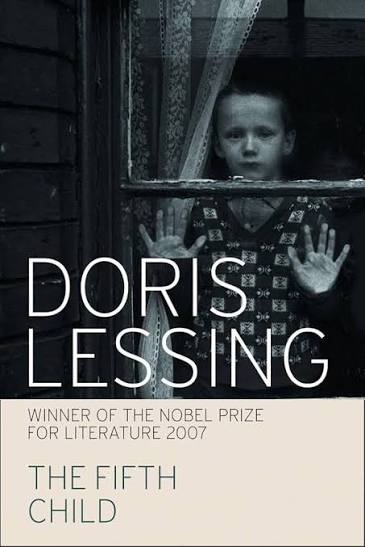 The Fifth Child
by Doris Lessing
Flamingo, 2001
ISBN-10 9780586089033
ISBN-13 978-0586089033
ASIN 0586089039
amazon.co.uk
133 pages of calm, spare pleasantness-turning-to-burgeoning-horror…
A young middle-class couple in the 1960s wants an old-fashioned family – big house, lots of kids, long dining table, sumptuous extended-family holiday celebrations. After four children in six years they badly need a break – but fall pregnant anyway.
The foetus in utero is already completely different from any of the others… aggressive, angry, demanding, bruising his mother from within. The infant-in-arms is cold-eyed, yellow-skinned, low-browed, squat – in fact, a goblin; a throwback, perhaps, to some pre-human primate form. The way it destroys the family, what the family does, what the mother does, how the growing and grown goblin gravitates to gangs of criminal youths… is all told deftly, with a chilling glance into an institution for the monster children of the wealthy. It’s all believable… I read it in one go, and was kept spellbound.
It’s a meditation on the helplessness of motherly love, and the helplessness too of parents in the birth lottery. I once heard Osho tell a young mother grieving for a dead, disabled baby, “I tell you not to have children, and you don’t listen! You don’t know whom you are inviting!”
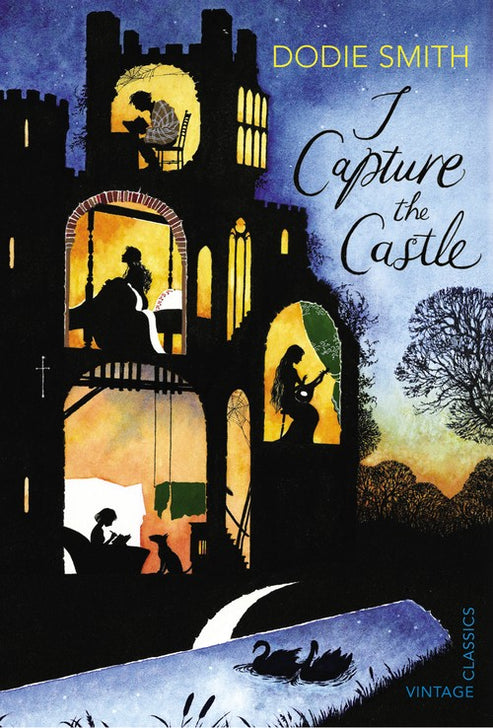 I Capture the Castle
by Dodie Smith
Vintage Publishing, 407 pages
ISBN 13 9780099572886
ISBN 10 0099572885
SKU NGR9780099572886
worldofbooks.com
This eccentric classic, from 1949, is a first novel by a once-famous playwright I’d never heard of. It’s in the form of a diary by a seventeen-year-old girl, Cassandra, who lives with her bohemian family (dad, one-time hit author who’s had writer’s block ever since; ex-artist’s model stepmother, Topaz; beautiful elder sister, Rose; and younger brother Thomas) in an ancient castle, somewhat refurbished, out in the country somewhere in southern England. They are woefully poor.
The American heirs to the castle come to see it, and all sorts of dramas ensue, mostly romantic. The book is so quirky, and the heroine so honest and engaging, it is quite a fun read. People tend to love someone who doesn’t love them back because they love some other person instead… and the dad’s writer’s block is attacked on all sides by well-meaning fans and family. The writing is lovely – courageous in its refusal to have the plot follow a pattern, poetic as to sunrises and sunsets.
Excerpt, Cassandra quoting the American heir after the blocked writer dad starts writing again, prose inexplicable and strange indeed:
“Then he said that art could state very little – that its whole business was to evoke responses. And that without innovations and experiments, such as my father’s, all art would stagnate.”
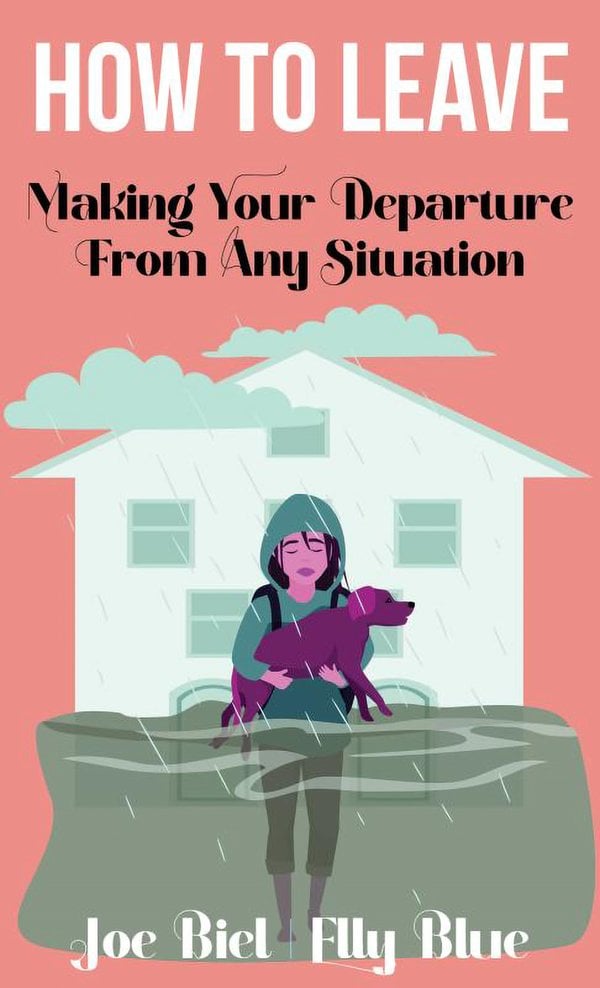 How to Leave
Making Your Departure from Any Situation (or stay if you decide to)
by Joe Biel and Elly Blue
Microcosm Publishing, 2025, 28 pages
EAN/UPC 9781648412714
bookshop.org
The product of an idealistic – and award-winning – little publishing house in Portland, Oregon, Microcosm Publishing, this nifty little handbook sets out simple ways – mostly the making of lists – to know whether it’s time to leave, or to stay, in a relationship, job, or what-have-you.
It breaks things down into clear components, so that instead of being in a muddle, you might be able to see what’s really going on in yourself. Seems to me a handy little tome to have around.
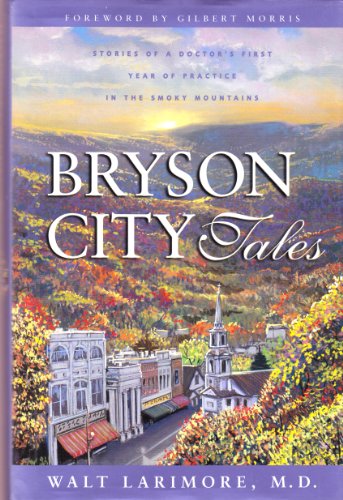 Bryson City Tales
by Walt Larimore, MD
Zondervan, 2002
ISBN 13 9780310241003
ISBN 10 0310241006
worldofbooks.com
This medical memoir was published by Guideposts, a Positive-Thinking-and-Faith-based publishing house started by the famous Norman Vincent Peale and his wife. I found it in a book-trading cupboard on a residential street in Portland, and chose it because a) it had mountains and medicine in it and b) there was hardly anything else.
It’s the story of a young doctor’s first year in a small town in the Smokey Mountains, North Carolina, in about 1975. The book is a strange combination of gritty (medical emergencies, and precisely how they are handled), hokey (people say “that thar patch a woods over thar”), sentimental (anniversaries, Christmases, newborns), self-deprecating (new doctor makes political faux pas in new town), and extremely bragging (new doctor saves lives adroitly – usually after praying to the Lord, a thing the patients always welcome and get teary-eyed over). (I’m not complaining – studies show people praying during someone’s medical procedure really helps; and I’d say from my own experience that meditating for someone in surgery really helps too.) In the introduction the author admits that he’s combined characters, changed names, and added a bit of fiction. So who knows, but the stories were interesting and the mountain scenery added grace.
Some details were fascinating – it seems that people do much better when treated in their own homes, even when treatment demands surgery… which doctors used to do on the kitchen table. The patients didn’t trust hospitals, associating them with dying.
And, who knew that vaginal oestrogen cream applied to the inside of the nostrils was great for post-menopausal nosebleeds?
And, the toxic hairs of stinging caterpillars can be lifted from the skin with a strip of scotch tape.
I was not so impressed that the doctors gave penicillin injections to patients with viruses who demanded the shots, even though antibiotics don’t work on viruses. The patients would just take their cold off to another doctor, and then gossip about the first one. That way lies herd antibiotic resistance…
A goopy, somewhat silly, scientifically-interesting book in which nobody is Black, many nice things are said about female nurses and vivacious and capable wives, but not feminist medical students; and the Old Boy network is laid out on the pages for us to, presumably, chuckle at.
The author has since become famous on TV, as a sports medicine consultant (there is a lot of sentimental football stuff in the book) and a writer of 12 Inspirational books.
Very Reader’s Digest.
The White City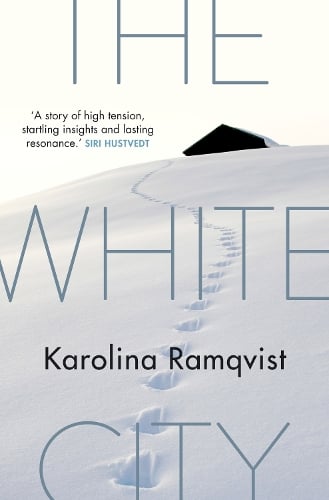
by Karolina Ramqvist
Grove Press / Atlantic Monthly Press, 176 pages
ISBN 9781611855197
waterstones.com
Of all the dark Scandinavian novels I’ve read, this might be the darkest – I’d pretty much steered clear of the genre by and by, but this 160-page volume is spare and quick, and I kept reading. I only got started on it because the author’s bio said “One of the most influential feminists and writers of her generation in Sweden.”
A young new mother has lost her beloved gangster-boss man, either to prison, or death; we don’t know which. The huge house he’d bought for her is being seized by the government, as is the car. The action takes place over a couple of days as she breastfeeds and cares for her daughter, called Dream, tries to get money from her lost man’s cold-hearted gang, has ambivalent sex with the pizza-delivery guy, and smokes a lot of cigarettes.
It’s late winter – thus the book’s title – the heating in the house has been turned off, outside is all slush and ice and traffic, and it’s a dismal series of traipses she makes to the dwellings of the gang, including one Council flat where her erstwhile best friend is shacked up with an associate gangster. The men we meet along the way are obviously more threat than reassurance. Their presences are evoked convincingly, as a young woman might feel them – elemental, bulging, forceful, whimsical in their violence, scented of male.
The ending is optimistic, but foolhardy – we doubt if the main character, and her best friend, will get away with it, though we hope they do. A scary story, about a particular underbelly of a scrubbed-clean country.
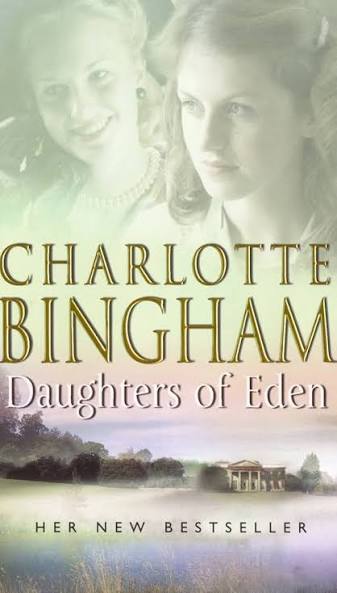 Daughters of Eden
by Charlotte Bingham
Bantam Books (Transworld Publishers a division of the Random House Group), 2004, 538 pages
ISBN-10 0553815911
ISBN-13 978-0553815917
amazon.co.uk
This doesn’t come across as sophisticated as the author’s other books I’ve read – although the weaving of the story is deft, the ending artistic, in its way. Somehow the prose is simpler, the effect more teenage – and it does in fact deal with four late-teenage girls, coming from different backgrounds, caught up in war.
They all end up doing top-secret work at a government installation in an enormous and palatial estate called Eden, out in the countryside not terribly far away from London. And they all fall in love, and three of them are fallen in love with. One, an upper-class American wallflower, fleeing a rotten aristo husband, is groomed as an undercover agent, embedded in a high-society circle of fascists who have hatched a murderous plot that they hope will initiate a truce with Hitler. (They think he’d make a good leader for England.)
Readable, flowing, sometimes suspenseful, and as un-gory as a book set in wartime can hope to be… and possibly even educational.
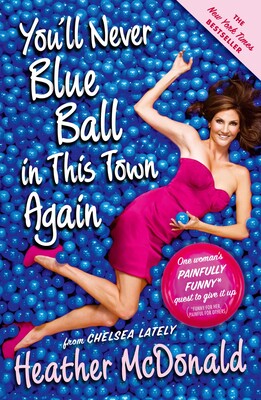 You’ll Never Blue Ball in this Town Again
by Heather McDonald
Atria Books, 2010, 272 pages
ISBN13 9781439176306
simonandschuster.co.uk
I had never heard of this stand-up comic and actress, who also writes TV shows. She grew up in, and writes about, the San Fernando Valley, part of the sprawl of Greater LA, so she’s what’s known as a Valley Girl – a cultural phenomenon popularised in the ‘90s. Valley Girls are fairly privileged, outspoken in a particular patois (“Gag me with a spoon!”), obsessed with hair, nails, makeup, and outfits (and, of course, shopping), and with particular role models, musics, and the like. It’s very much a teenage thing. Anyway, I grew up 70 miles away in a different era and a totally different milieu, but can enjoy the humour of it all from afar.
This is a funny, frank book about a young woman who remains a virgin until she’s 27, whilst enjoying, or not, a vast number of dates and short relationships with a vast number of men: frat boys, doctors, a con man, a celebrity (Vince Vaughan), a real estate guy, etc etc. She loved making out, but wanted to go the final mile with a man she wanted to stay with. (The term ‘dry humping’ recurs with disconcerting frequency.) She comes across as extremely confident and secure in herself (she had a happy childhood with loving parents) and is seemingly delighted to take the mickey out of herself and anybody else who crosses her path. I read it while travelling, and it was much nicer to sit crammed into an airplane seat chortling to myself than reading something demanding, grey and grim.
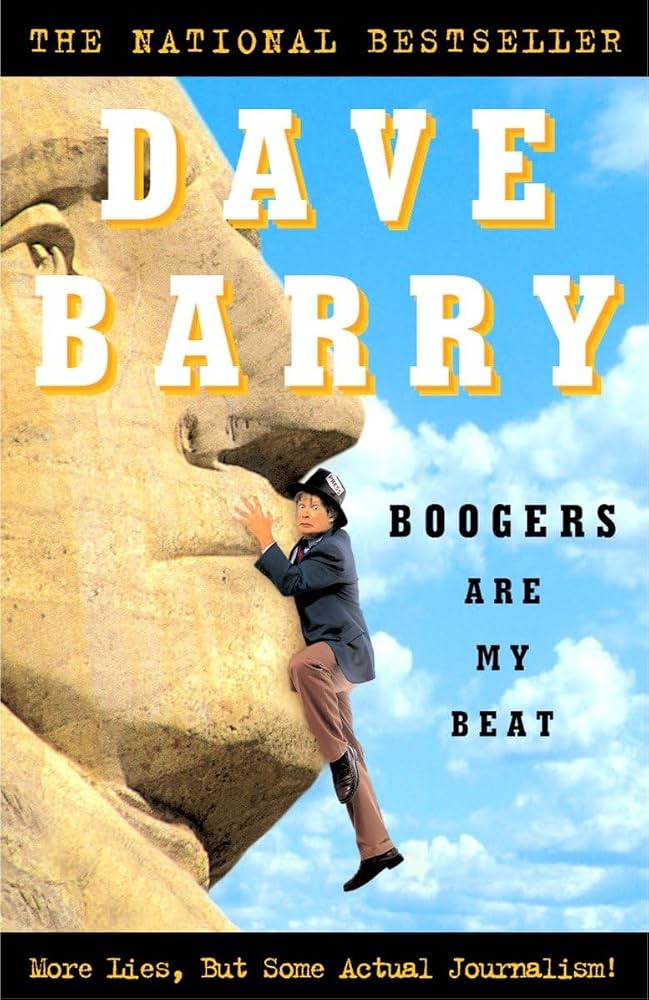 Boogers Are My Beat
More Lies, But Some Actual Journalism!
by Dave Barry
Crown Publishing Group (NY), 2004, 256 pages
ISBN-10 1400080762
ISBN-13 978-1400080762
amazon.co.uk
This humourist, who lives in Florida, is often extremely funny, and this book had me laughing out loud many times. It comprises columns from the Miami Herald, where he writes about pretty much anything: the Olympics, user manuals that accompany appliances, cloning, computers, North Dakota, the Academy Awards, his infant daughter’s eating habits, Humvees (very funny). Be warned though: the first chapter has columns about the 2000 elections, which I skipped… much worse things have happened since then! And the very end is about 9-1-1. All the stuff in between, though, is pretty funny.
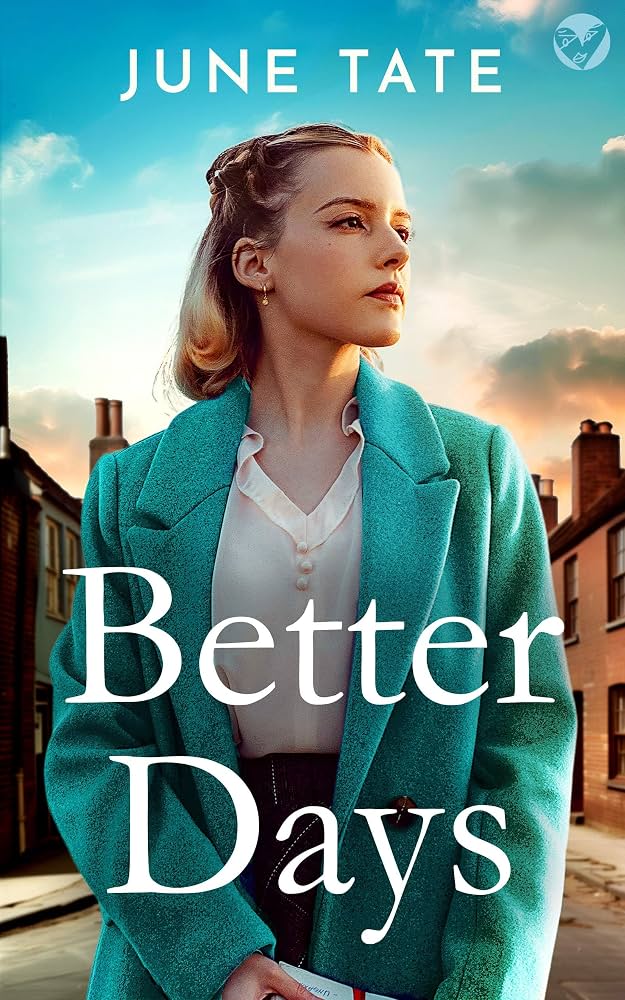 Better Days
by June Tate
Joffe Books, 2024
ISBN-10 1835267807
ISBN-13 978-1835267806
ASIN B0DG5PH79P
amazon.co.uk
343 quick-reading pages. I didn’t expect much from this – the cover looks rather like pulp chick-lit – but I was pleasantly surprised. The story pulls you right in, and proceeds with verve and panache through a good brisk march of interesting plot. What really lifts this book up above its type though is that the author herself worked on the Queen Mary during the 1950s, so her descriptions of onboard life really have the ring of authority.
It’s 1954. A feisty young blonde with a faraway sailor dad and a stay-at-home alcoholic complaining mum ends up as a chambermaid on the Queen Mary, steaming back and forth between Southampton and New York. Two men are interested in her – the First Officer of the ship, and a good-looking young gangster who’s also a boss on the docks in New York (she doesn’t know he’s a gangster).
What comes across is the joy of travel, the intrinsic emotional health of the young woman even as her mum guilts and manipulates her, and a basic love of life that permeates the book. Published in 2001, its details of 50’s life are authentic and real – the clothes, food, city ways. I was only a little disappointed at the end, when we finally get steamy – a writer this vivacious could have been a bit more original with the precise details…
Featured image: Getty Images via unsplash.com


Comments are closed.