

Together with Sarita, Antar Rahi organises another trekking holiday in the Himalayas – a pilgrimage around the holy mountain Kailash (1–14 September 2026)

When Sarita asked Rahi to organise a pilgrimage to Mount Kailash, it was not a sudden idea. As Rahi explains, she had been encouraging him to do this journey for the past three years. The timing now feels right – both outwardly and inwardly.
Swami Antar Rahi grew up in Gujarat, on the western coast of India, and speaks Gujarati, Hindi, and English. From a young age, his life has been shaped by two strong currents – meditation and nature. He has been an Osho sannyasin since the age of 13, and over the years, trekking in the Himalayas has become a natural extension of his meditative life.
“Rahi Adventure is my dream project,” he says. “I am an adventurer and a deep lover of nature. I regularly go on treks in the Himalayas and other remote places, often alone or with close friends. Through these experiences, I felt a natural urge to share this possibility with others.”
What makes him well suited for organising such journeys is not only experience, but attitude. He does far more treks privately than the ones he organises. For him, guiding is not about volume or profit, but about sharing spaces that support inner growth.
“For me, meditation is not limited to one hour a day,” he says. “As Osho suggests, meditation should spread into the remaining 23 hours. Work itself becomes meditation. Whatever I do, I do it with awareness, joy, and love.”
As an organiser, his main concern is safety and comfort. This is why he personally visits places in advance, checks details carefully, and prepares clear itineraries and responsibility-sharing lists with the local teams. Having grown up in India and lived in Osho communes and ashrams from a young age, he naturally bridges cultures.
“I become a smooth bridge between the local team and western participants,” he explains. “My aim is that people do not have to worry about accommodation, food, travel, or what comes next. They can simply relax and enjoy the journey.”
Adventure, he says, always includes unpredictability – and fear. But this is not something to avoid.
Quoting Osho, he points out that when we are surrounded by danger, the mind stops its usual chatter. Awareness sharpens. Each step becomes conscious. “That,” he says, “is what meditation is all about.”
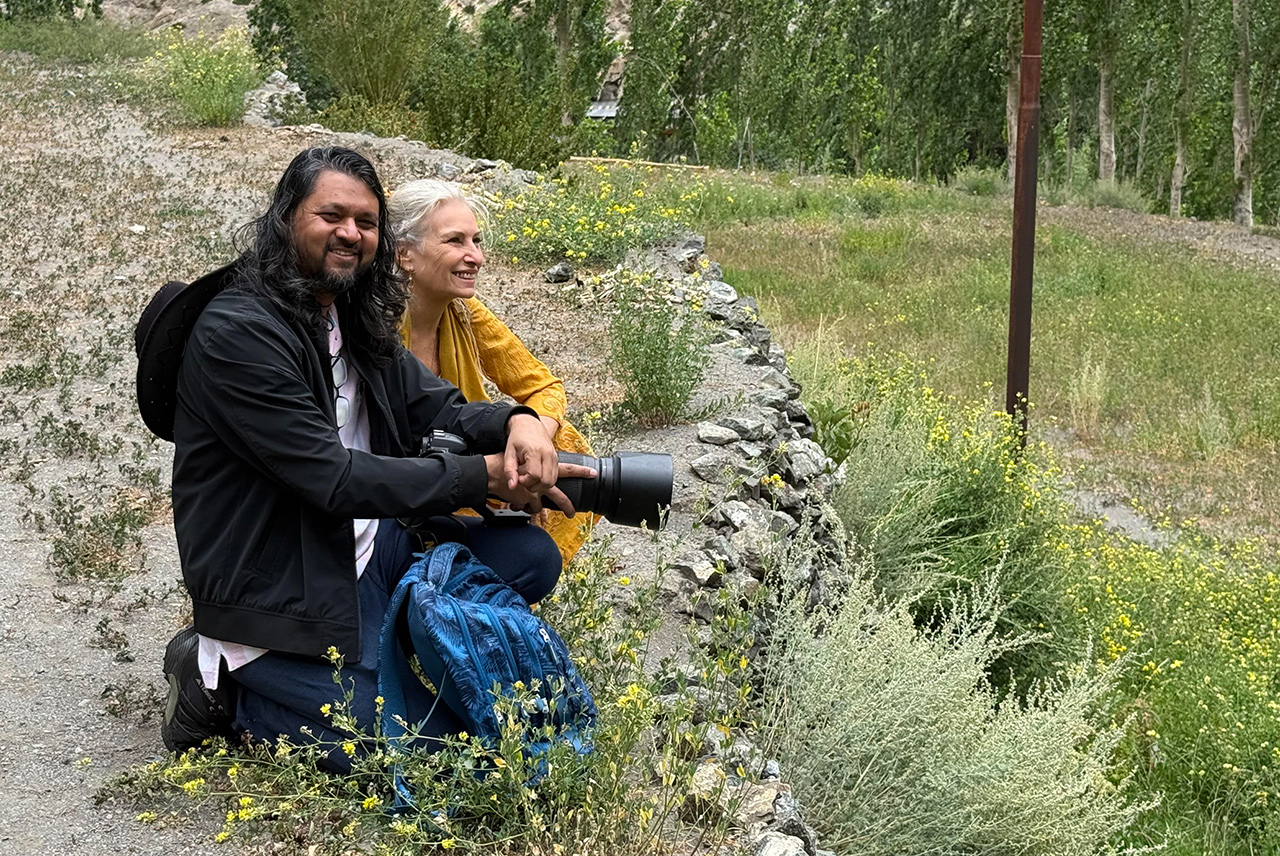
His long collaboration with Sarita is another key element. They have been working together since 2010, organising sacred tours and treks.
“She is easy, joyful, and never complains,” he says. “That makes me want to do even more to ensure her comfort and happiness. Because of her loving presence, special arrangements have often become possible – even in very remote Himalayan areas.”
Kailash – the mountain at the centre of many traditions
Rising to 6,638 metres (21,778 feet), Mount Kailash is unlike any other mountain in the Himalayas. For thousands of years, seekers from different traditions have travelled to this remote region, drawn by something that cannot be explained only in words.
In early yogic understanding, Shiva is described not as a mythological god, but as an awakened human being who lived in the Himalayan regions long before written history. The area around Kailash is identified as the place where this awakening became complete and stable. In this sense, Kailash is often called the birthplace of what later came to be known as Shiva consciousness – the foundation of Yoga, Meditation, and Tantra.


What is remarkable is that four ancient traditions – Hindu, Buddhist, Jain, and Bon (Tibet’s indigenous religion) – each arrived independently at the conclusion that Kailash is their central sacred mountain. Developed in different centuries and cultural contexts, all of them nevertheless sent their most devoted practitioners to this same place.
The mountain has never been climbed. It is treated as a living sacred being, protected from commercial intrusion. Physically, it is also unusual. Its four faces align closely with the four cardinal directions, its shape resembles a near-perfect pyramid, and it stands at the source of four major rivers that nourished entire civilisations.


In Tantric understanding, landscape matters. Certain environments affect consciousness directly. Kailash is considered one of the most powerful places where the mind’s patterns – strengths as well as limitations – become visible with unusual clarity.
Kora – circumambulation as inner practice
The Kailash Kora, or Parikrama, is a three-day circumambulation of the mountain, covering in total approximately 52 kilometres (32 miles). For centuries, pilgrims have walked this path, step by step, in silence, prayer, or awareness.
The Kora is not simply a long trek. The altitude is high, the terrain demanding, and the conditions leave little space for mental distraction. In this environment, unnecessary layers of thought fall away naturally.


By walking around the mountain, the pilgrims enter a strong field of energy and awareness. Many describe the experience as shedding old karmic weight, awakening deep inner clarity, and feeling inwardly cleansed and renewed.
For Tantra practitioners and Osho sannyasins, the Kora reflects Osho’s vision of meditation in movement – awareness through activity, stillness within effort. Walking becomes meditation. Breath becomes prayer. Silence becomes the teacher.
Different traditions walk in different directions – Hindu and Buddhist pilgrims clockwise, Bon practitioners counter-clockwise – yet all share the same intention: to dissolve the ego and touch something essential.
The journey – from Kathmandu to Kailash and back
The pilgrimage begins in Kathmandu, a city that has been a centre of Shiva and Tantric worship for centuries. Before entering Tibet, participants visit sacred sites such as Pashupatinath, where life, death, and spirituality are still seen together, as well as temples connected to the feminine Tantric current and to Buddhist lineages.


From Kathmandu, the group will travel toward the Nepal–China border and cross into Tibet via the Kerung route, if approved by the Chinese Authorities, otherwise another route will be chosen. In any case, several days are dedicated to rest and acclimatisation – essential for adjusting safely to higher altitude.
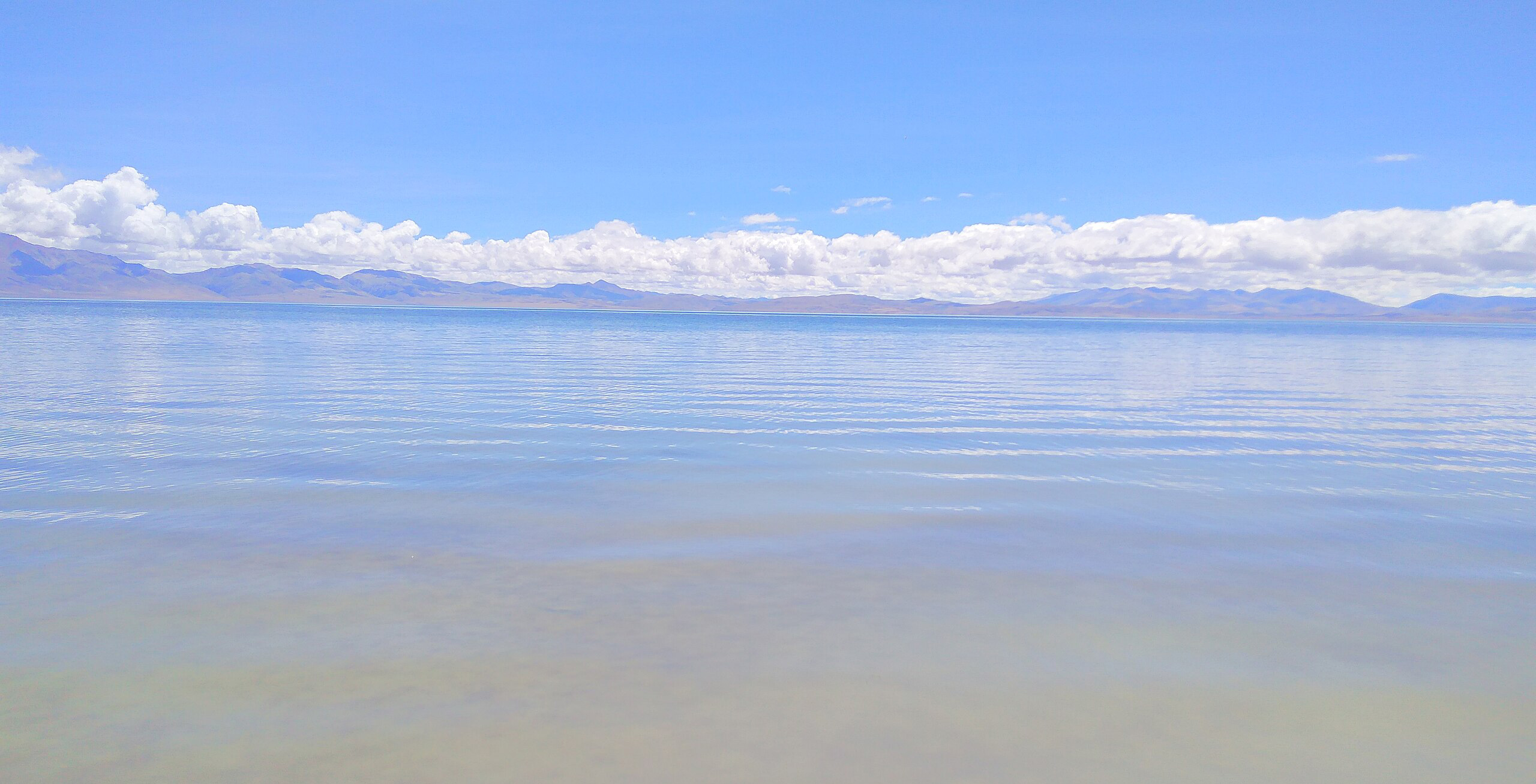
As the journey continues through Saga and the wide Tibetan plains, the landscape itself begins to prepare the inner space. Lake Manasarovar, one of the most sacred sites in the region, offers a place for quiet reflection before reaching Darchen, the base town for the Kora.
The circumambulation begins at Yama Dwara and continues via Dirapuk, across the Dolma-La Pass – the highest and most demanding section – and finally to Zuthulpuk, completing the full circle. After the Kora, the group returns to Kathmandu, closing the pilgrimage loop.


Throughout the journey, the meals will be prepared by the kitchen team, supervised by Arnava, a holistic chef and expert in vegan and vegetarian ingredients that are suited for high-altitude travel – simple, nourishing, and stabilising.
The team
Alongside Rahi, the journey is guided by Ma Ananda Sarita, who has been immersed in meditation and Tantra since 1973 and spent many years with Osho in his physical presence. She has been teaching Tantra, meditation, and healing internationally since 1990.


Swami Amandeep, a Tantra teacher and Sarita’s long-time co-facilitator, will also be part of the journey, bringing his experience in meditation, healing, and group facilitation. Being a gifted musician, he will also be offering kirtan singing circles as an integral part of the tour.
Swami Arnava will guide the kitchen, offering mindful nourishment where food becomes part of the meditative field rather than a distraction from it.
Getting ready
Three or four months before the tour, Rahi will travel the entire route on his own and check out all the finer points.
“I will take detailed notes and check the route carefully,” he says, “so that the group’s journey is as smooth, comfortable, and meditative as possible, in particular because of the remoteness and the high-altitude conditions.”
A fitting way to prepare for this new adventure – by walking the path first, step by step.
Osho speaks on tirthas and Mt. Kailash
Kailash has been a holy place for Hindus as well as for Tibetan Buddhists. But Kailash is absolutely desolate, it has no houses and no human population – no worshipers, no priests…. But whoever sits in meditation in Kailash will find it fully inhabited.
From the moment you reach Kailash, if you are capable of going into meditation you will say that it is inhabited by many souls, and wonderful ones too. But if you go there and cannot meditate, then Kailash is empty for you. […]
On Kailash there is some form of unearthly habitation. It is more or less certain that about five hundred Buddhist siddhas regularly stay there; five hundred individuals who are enlightened Buddhas will always remain on Kailash. If one of them wants to go on some other mission, he will not go until some other Buddha arrives to take his place. But a minimum of five hundred enlightened Buddhas must always stay there to make Kailash a tirtha [a place of pilgrimage].
Only when one reaches such a tirtha does one meet disembodied souls, but it is not possible to meet them unless there is some fixed physical location; otherwise where would you meet disembodied souls, which cannot be seen? […]
A tirtha cannot be understood intellectually, because it has nothing to do with the intellect. The real tirtha is hidden somewhere near the physical indication of it…
Osho, Hidden Mysteries, Ch 2 (Read whole excerpt on Osho News)
Tibetan year of the horse
2026 marks the onset of the most favourable time, ushering in the ‘Tibetan year of the horse’, believed to be highly rewarding for the Kailash Mansarovar Yatra.
For Hindus, the horse year can be linked to the ‘Mahakumbh of Kailash’, as it occurs every 12 years, according to the Tibetan and Chinese calendars based on the animal cycle, symbolizing qualities that impact human life.
The rare occurrence of the Fire Horse Year happens only once every 60 years, beginning on 15 February 2026. Promisingly, one parikrama performed during the horse year equals 13 koras at any other time.
Related articles
- Sacred Tour in Ladakh with Sarita and Team (Summer 2025)
- There are a few tirthas that are eternal – “The final thing to be understood about the tirtha is the value of symbolic acts,” explains Osho. From ‘Hidden Mysteries’, Ch 2, Part 8 of 9
- Magic Moments – A Pilgrimage to Mt. Kailash – Mahendra’s video of a pilgrimage to Mt. Kailash, info about the area and Milarepa’s poem (March 2015)
More information and booking (1–14 September 2026): rahiadventure.com – anandasarita.com
Compiled by Punya and Rahi
Update 12.2.2026: added info on Fire Horse Year
Image credits: Sarita’s Tour Team, Nepal Agency, Pixabay (Atstock, Nasib Pandey, Kalhh, Vu Pham Minh, Manusama, Simon, Herbert Bieser, Tenzin Norbu, WikiCommons


Comments are closed.