

Books by Rebecca Dean, Griff Rhys Jones, Jo Wheeler, Vikram Seth, Francis Pryor, Sheila O’Flanagan, Rebecca Shaw, reviewed by Madhuri
 The Shadow Queen
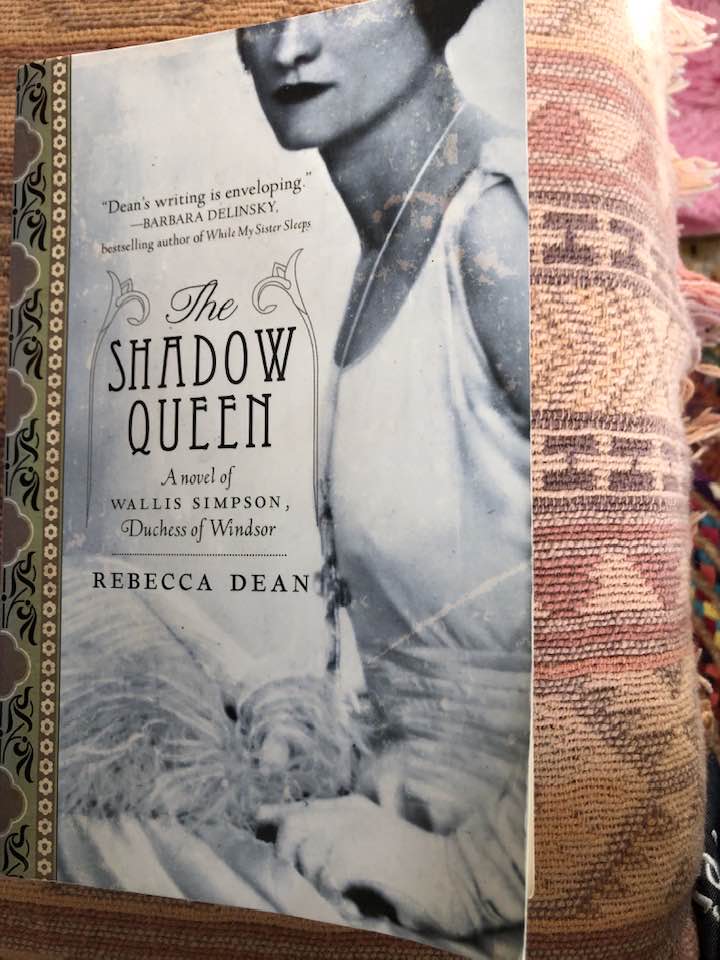
by Rebecca Dean
This is a novelised biography of the Duchess of Windsor, up to the point where she and Prince Edward fell in love. I’ve just had a look at a lot of photos of them, and wished I’d looked at them before reading; it would have added much depth. Some of the photos were beautiful – two human beings, side by side, with their winsomeness and vulnerability.
I did find the book fascinating, though – partly as a glimpse of a slice of American life in the early 1900’s, a sort of life far removed from the one I knew: Wallis (known in childhood as Bessiewallis, so she lost the cow-like ‘Bessie’) grew up amongst rich relations, who were full of status and self-importance – though her own dad had died, leaving her mother struggling. The scenes in the Pensacola military installation where she spent part of her first, disastrous marriage, were enviably lush, colourful, and leisured, at least for the wives.
There is much about her mysterious sexuality, and the author adopts the theory that Wallis suffered from a disability that made her impenetrable and barren. She seems, however, very feminine, loving clothes and luxury. I remember a very diverting book I once read by an ex-GI who, after WW2, became a gas station attendant in Hollywood, which led to gigolo activities and pimping for the stars. He said whenever the duke and duchess visited LA they would request a show: he liked to watch boys having sex and she liked to watch girls.
I felt generally a bit suspicious of the novel form for a bio. Some characters are historical, some invented. But it was an engaging read altogether, straightforward and very girly with fashion detail. It’s also an illustration of how unpredictable are our fates (though there’s a gratifying scene with a psychic in China, very well done).
 Mountain
Exploring Britain’s High Places
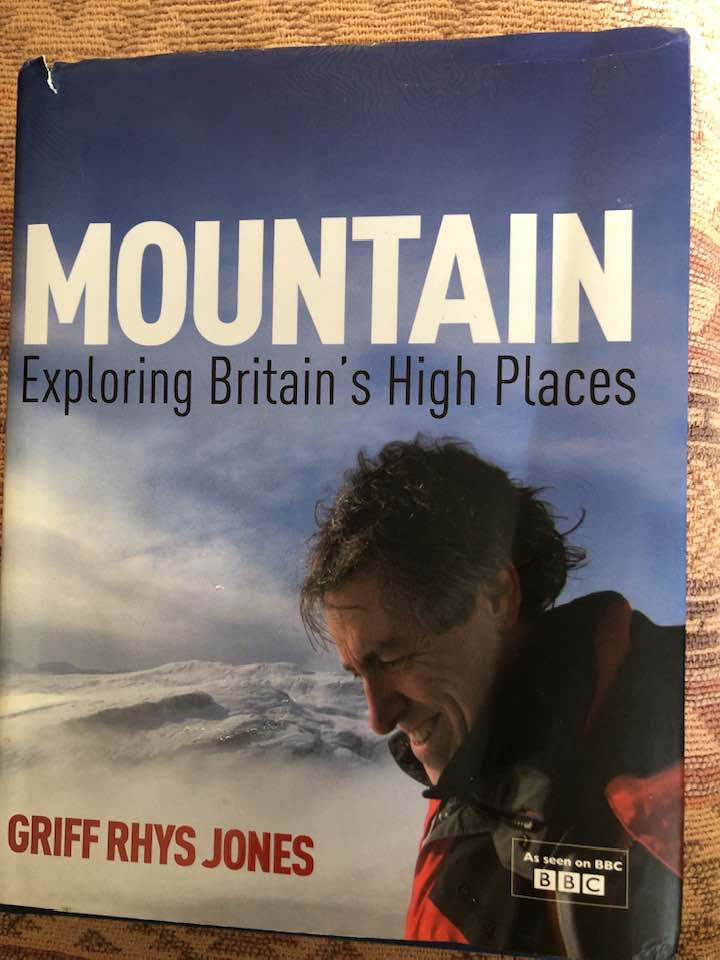
by Griff Rhys Jones
A handsome Welshman, “off the telly”, whom I’d never heard if, is asked by his BBC bosses to climb mountains (such as they are) all over Britain, and be filmed doing it, and write about it. He had not climbed any before, and the bosses said that was good. He climbed during most of a year, in five areas. I did like imagining what a pleasant assignment that would be – full crew, food, lodging, gear, all you had to do was stomp about, and up, and down, and be yourself.
Loving mountains as I do, I found the book very agreeable light reading at supper time. It’s full of gorgeous photos, of course, and the text is funny, self-deprecating, erudite, and surprising. (And the Welshman is easy on the eyes.) There are bits of history (including one Viking story about a marauder who cut off his liege lord’s head and tied it to his saddle, where it bounced a lot as he rode and bit his leg, which went septic and he died. He was buried nearby. Most of the stories weren’t that gruesome) and he visits interesting people scattered throughout the hills, and describes various climbs with candid detail.
252 pages, and now I’ll take it back to the book-trading booth from whence it came.
 The Hurricane Girls
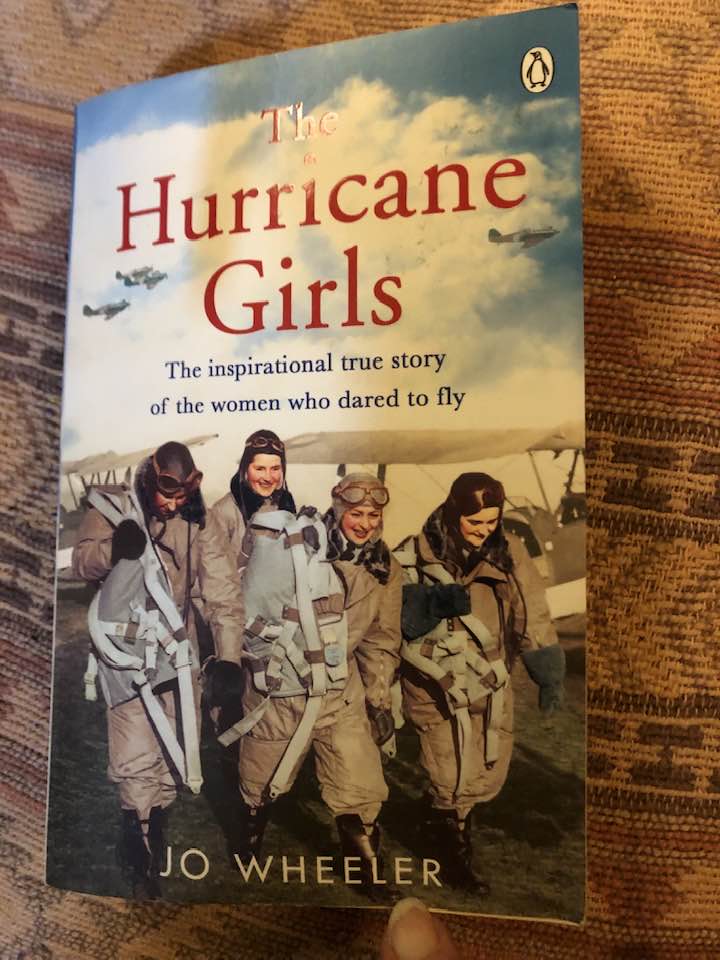
by Jo Wheeler
“In 1903, nineteen-year-old American Aida de Acosta became the first woman to fly solo in a motorised airship.” This was six months before the Wright Brothers did their thing. But for the rest of history, people have been trying to prevent women from being pilots. During WW2 though, the Air Transport Auxiliary, which ferried planes and equipment around the British isles and later to Europe, was created by a very determined woman and manned by many female pilots (also from South America, the USA, Poland, and France). This is the history of the ATA, told in brisk, economical prose, and including mini-bios of some of the pilots. A few of them came to grief… as did lovers or husbands. One survived the whole scary time (navigating by sight, dodging barrage balloons, and learning to pilot an enormous number of different planes: it wasn’t unusual to fly 100 types over the years of the war) only to die after giving birth to twins.
There’s one story where the big boss of them all, the Air Minister, needs a ride somewhere and only realises the pilot is female when it’s too late to open the door and escape. He’s very upset, so the pilot observes casually, “I never flew one of these before.” Just to rub it in.
An educational and touching book. Who knew? I’d never heard of these pilots, in all my reading.
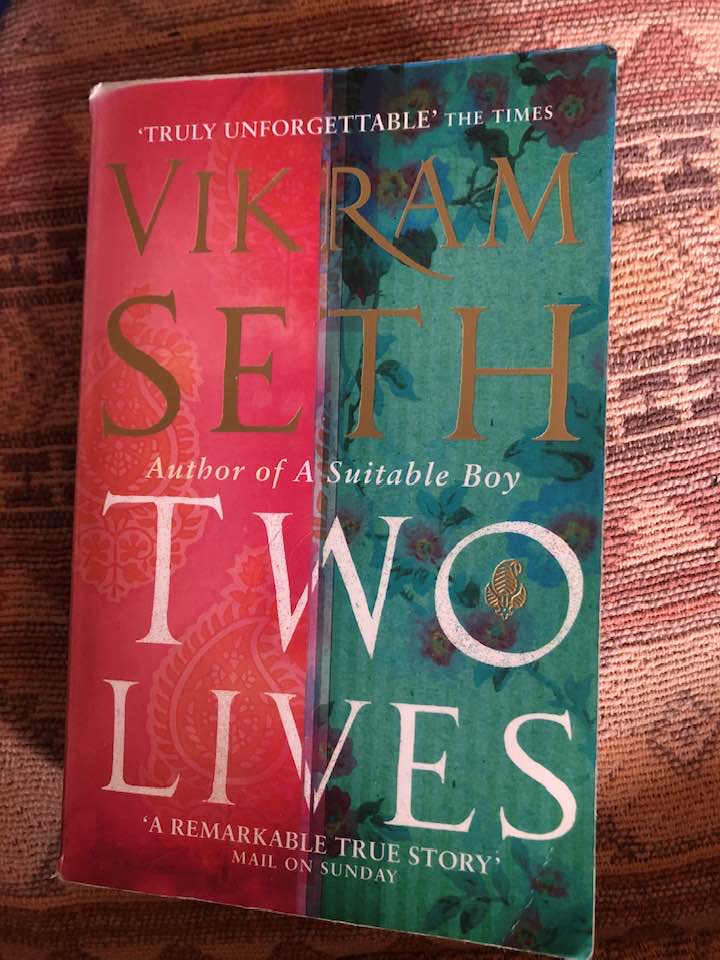 Two Lives
by Vikram Seth
This is the first book I’ve read by this author, and it is so good I’ll look out for more. It’s a thorough, loving, heartbreaking, and beautifully-woven biography/memoir, swinging back and forth between India, Berlin, and London.
When the author was a young student he lived for a few years with his uncle, a short stocky dentist with one arm, and his aunty, a tall slim German Jewish beauty. The story of how this unlikely couple met and eventually married and spent the rest of their lives together spans more than fifty years and some of the most harrowing times of the twentieth century.
I was particularly struck by the intelligence of the author; by the amazing supportiveness of a (wealthy) Indian family who visited their relative frequently, though it meant a long journey from India; by the loving honesty of the many letters between members of a cadre of friends in Berlin before the war, where there’d been a halcyon time; by the perspicacity shown by two Indian students, the uncle and the nephew, in learning German quickly and then speaking it lifelong; and by the unspeakable cruelty of the Gestapo: there are papers detailing the precise goods and their value confiscated from Jewish women before those women are carted off and murdered. A radio, silver dishes, furniture…
The author’s photo in the inside back cover is so agreeable I had to keep looking at it. At 503 pages, this is a hefty book, with many photos. I was enrapt for the duration.
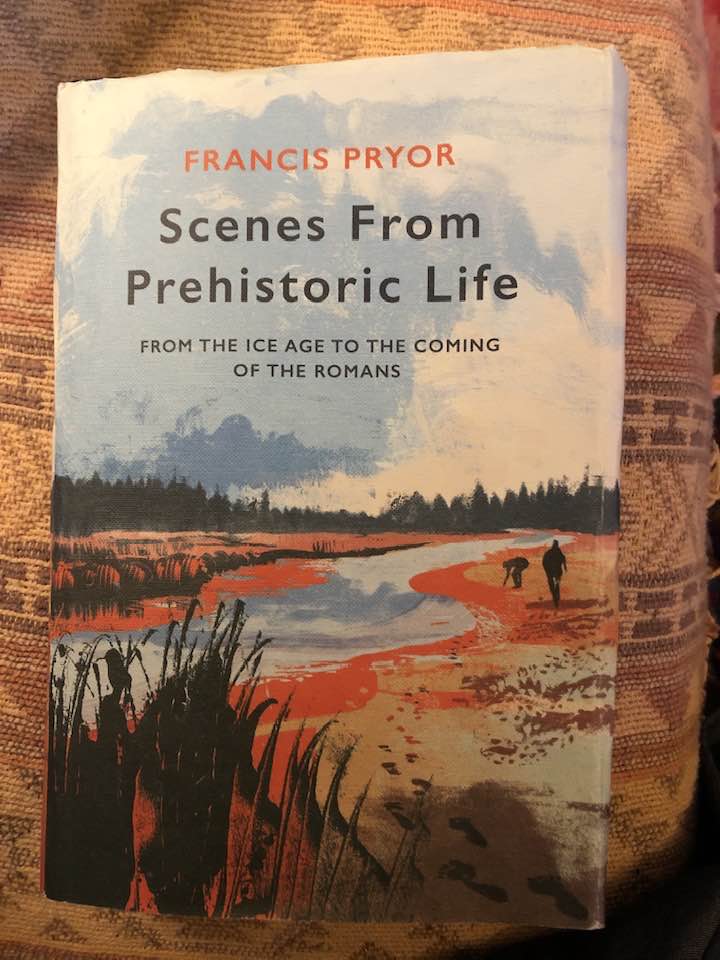 Scenes from Prehistoric Life
From the Ice Age to the Coming of the Romans
by Francis Pryor
The author, a famous archaeologist, takes 15 prehistoric scenes around the British Isles: a hill fort, a settlement in the Fens, Stonehenge, an Irish cave, a wooden henge on a beach, a lakeside house, and more – and examines them in the light of the ancient inhabitants’ daily lives. Since archaeology is a patient discipline, the book is careful, relaxed, and lavish: it doesn’t matter how long it takes to read it, because time is long.
I particularly appreciated that the author is not impressed by the sensationalism of history: wars, kings, betrayals, and so on; the repeating refrain of the written record. Pre-writing? The evidence speaks for itself. According to this book, prehistoric life tended to be orderly, spiritually rich, and prosperous; and quite peaceful by and large. Certainly people had plenty to eat, and gave feasts, and created beautiful woodwork, and made tracks and roads and thus communicated with other. They travelled, too.
And there were amazing creatures everywhere: one excavation came up with bones of red deer, horse, bison, and rhino. Rhino! In the back garden!
The excavation of the wooden henge at the beach revealed a sky burial rite I found beautiful: a mature oak tree was dug up, brought to the centre of the henge, upended; the branches had been removed so that the trunk could be buried in the sand, leaving the roots to form a kind of cradle in the air. The body was placed in the cradle and people feasted; then they left the body to be picked clean by birds. The bones were then put into a nearby barrow.
I found the book restful and reassuring. People have been creative for a very long time; not everything is about the strongman du jour. Daily life has had pleasure in it from the beginning; in everyday activities. If you lived in the fens, for example, and farmed a bit you had an amazing variety of foods available right outside, in your garden and the swamps and woods. If you lived in a house on a lake you had a gorgeous building, and fish and waterfowl, and gosh knows what-all. I always thought the lack of bathrooms and obstetricians would have been dreadful (in a museum of prehistory in Denmark I read that death in childbirth around the age of fifteen was common). But this book transmits a calm and friendly view of things, equable and practical, and I liked the sense that maybe we all inherited some peace in ourselves as well as the ruckus history describes.
There’s a fair bit of technical detail about archaeological methods, which you might or might not find interesting.
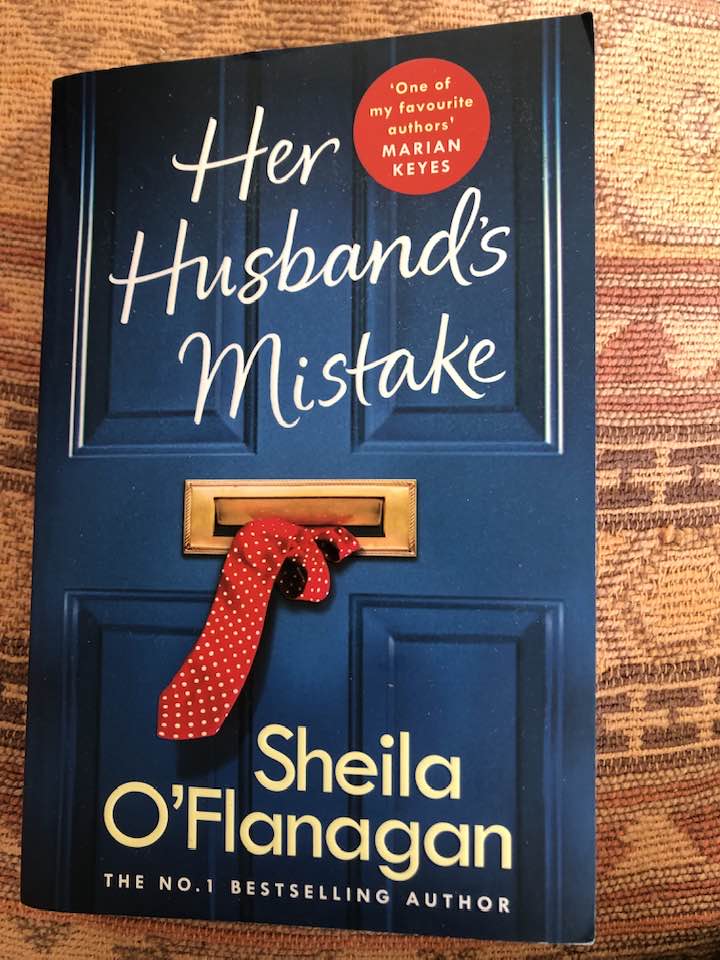 Her Husband’s Mistake
by Sheila O’Flanagan
An Irish wife, in very modern times, loses her dad and takes the kids and goes to stay with her mother for a couple of weeks. One early morning she drives home to visit her husband, and finds him in bed with the neighbour.
She has also inherited a Mercedes and a chauffeuring business from her dad, with wealthy and sometimes famous clients. The husband – to whom she eventually returns – is very much opposed to her working like that. But she loves the job.
So we have some nice quandaries set up. What I liked about the book was its practical and even tone; it does not have a gimmicky ending, either, though it looked for a bit as if it might – but the author then swerved back to the practical and the likely, for which I was grateful. It’s a good calm read about the natural beginnings and ends of relationships, and how that’s just the way it is. It’s a nice thing to underline, perhaps, in a country that until fairly recently was ruled by priests and bishops, and divorce was heavily discouraged.
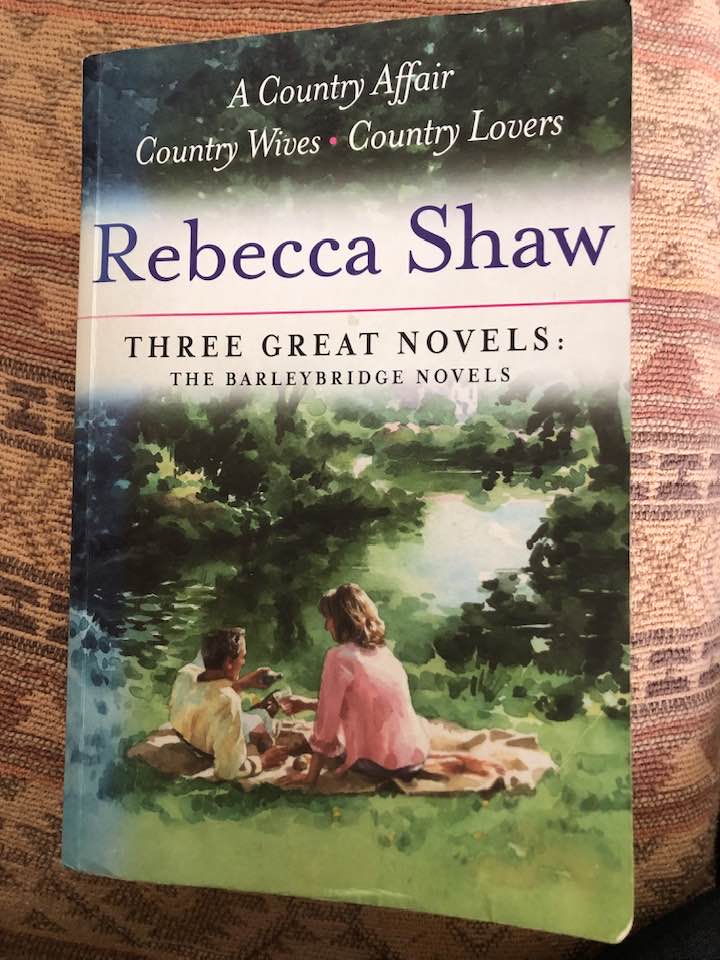 The Barleybridge Novels
A Country Affair
Country Wives
Country Lovers
by Rebecca Shaw
This 600-page book is really one long novel, separated into three. The setting is an English village, and the action happens in and around a veterinary clinic. I’d read the middle book earlier and liked it, so had ordered this omnibus – vet books are so agreeable, with those animal characters and all the fields and woods and farms. The writing is clear and effortless-feeling; the dramas are of love and babies and rivalries and funny human characters too. It is a good book to sink down into and feel soothed and yet kept awake by what is going on. We’ve got a bright young woman who wants to be a vet, and a dashing and sexy Aussie vet, a brooding Welsh one with a pet ferret, a mature English one; there are female vets and the office crew and the nurses. And all of their attachments and family doings.
It’s not wildly sophisticated, yet nor is it country dull at all. I’d say Wholesome and Interesting, and sometimes even funny. Lots of people being in love with someone other than who is in love with them; but some satisfying matches too. It’s probably chick-lit, but not vapid or speedy or silly. Rather, nourishing.
Featured image by Aliis Sinisalu on Unsplash
Related articles
- Madhuri’s collection of short reviews: Late Evening Reading


Comments are closed.