

Amido (text) and Purushottama (photos) visit Manali, Naggar, Sangla, Kalpa and Reckong Peo
From September 2006 to March 2007 Amido and Purushottama taught English as a Foreign Language in Chiang Mai, Thailand. Then they both felt that it was time to return to the United States, and fortunately they both had an urge to visit India once more. Purushottama, travel agent par excellence, located tickets for them with Air India: Chiang Mai to Delhi; Delhi to London; and London to New York. (Click on images to see full screen.)
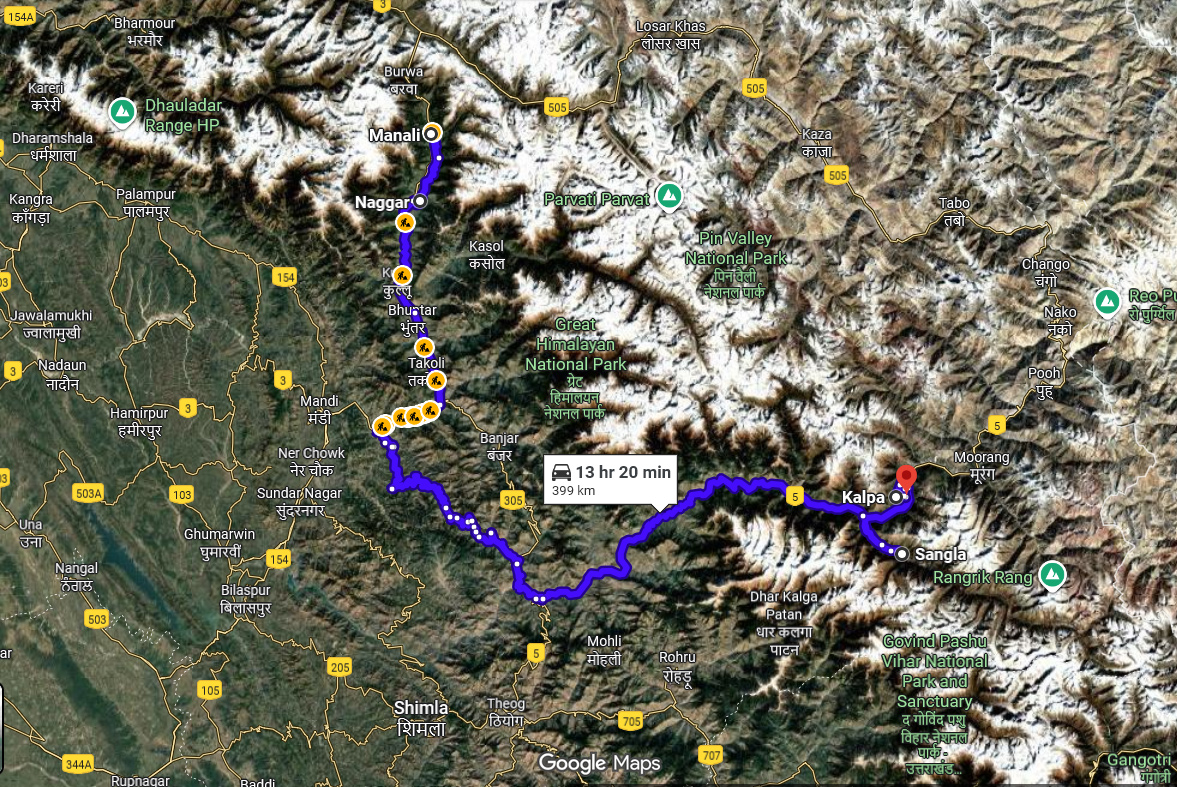
We had just spent a month in Leh, Ladakh, in the north of India, bordering Tibet, having traveled there from Srinagar, Kashmir. Just as soon as the road had shaken off its winter snows. Our plan was to return south by the Manali Road which, we discovered, would take a month to clear. We managed to get on the first bus of the season.
Manali
We found a lovely place to stay in Old Manali (Kullu district, Himachal Pradesh) on the top floor of a small guest house with windows on three sides and a small balcony overlooking an apple orchard.
We spent our days exploring Old Manali: checking out the local architecture; observing the integration of animal husbandry within this semi-urban setting; answering the summons of the turbulent Manalsu River; discovering a small wood that linked old Manali to New Manali, providing that lovely silent space huddled trees create; and of course, many delightful moments of simply sitting and Being in one of the vast array of eateries Old Manali had to offer. We visited the picturesque village of Khaknal, a rickshaw ride away, and enjoyed hiking the well-trodden trails that surround it.
We had a ticket from Delhi to London so the end date of our stay in India was set. We still had enough time to explore the Spiti Circuit in Himachal Pradesh (HP). The Spiti Circuit consists of two very different types of terrain: the high fertile valleys and mountain ranges of the Kinnaur district with its fusion of Hinduism and Buddhism; and the Lahaul and Spiti district, a more arid, rugged region that is primarily Tibetan Buddhist and borders Tibet.
Naggar
The first stop was Naggar, just a few miles south of Manali. Naggar nestles comfortably on the River Beas in a high-altitude valley with an elevation of 6,167 feet (1,800 meters). The valley was so green when we were there in June.
Two highlights stand out from Naggar. The first, a hike through the surrounding area, passing ancient villages, traditional farmhouses, people living so close to the land they are a veritable part of it; the freshness of the air, the beauty and magnificence of the distant Himalayan peaks… the silence without and within. And the people we met as we walked, so graciously permitted us to photograph them.
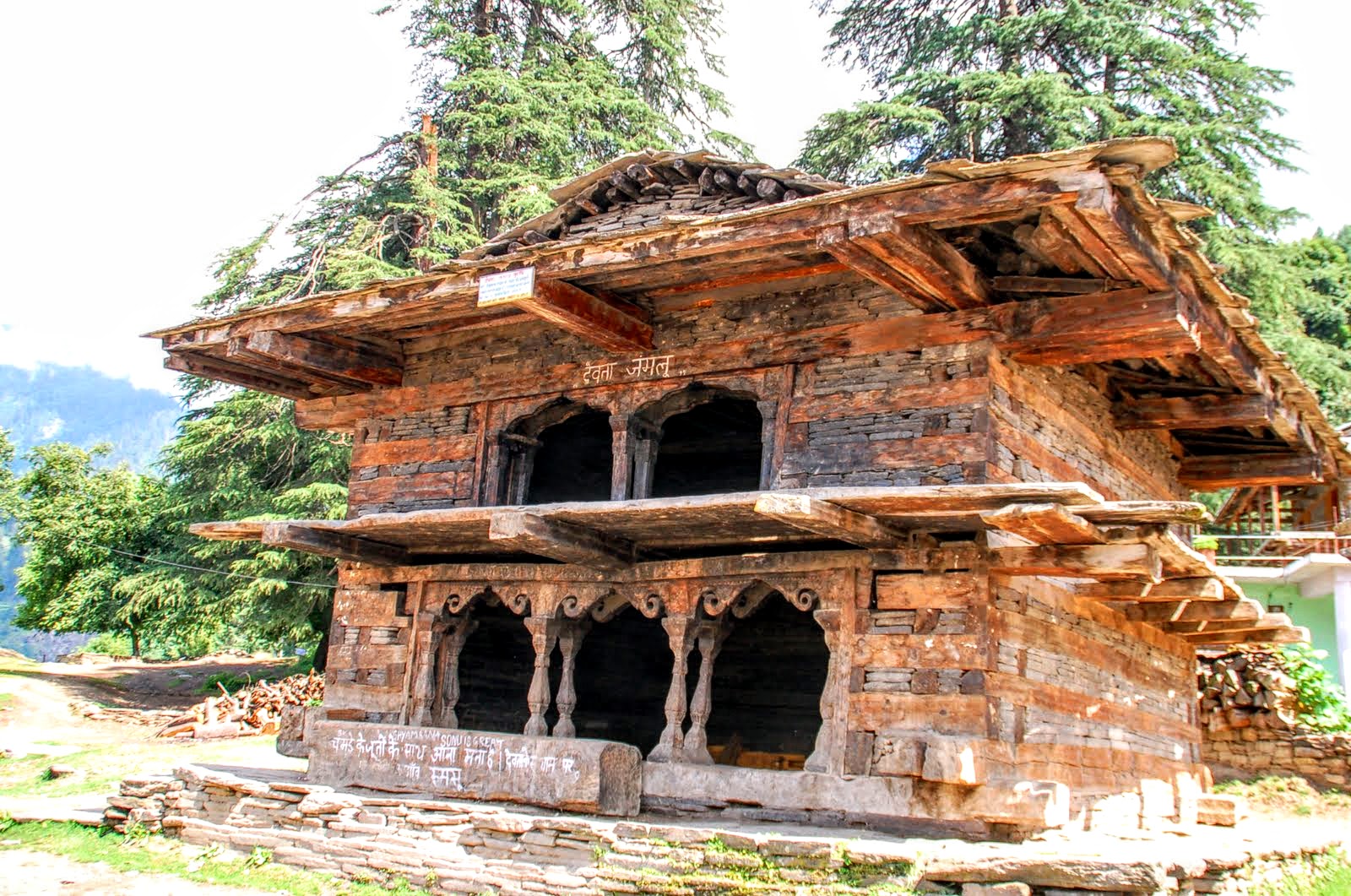
Ramsu, an ancient village 2.5 miles (4 kilometers) from Naggar. This is an old temple and illustrates the stone and wood construction technique (kath kuni) common in this area; it is earthquake resistant.
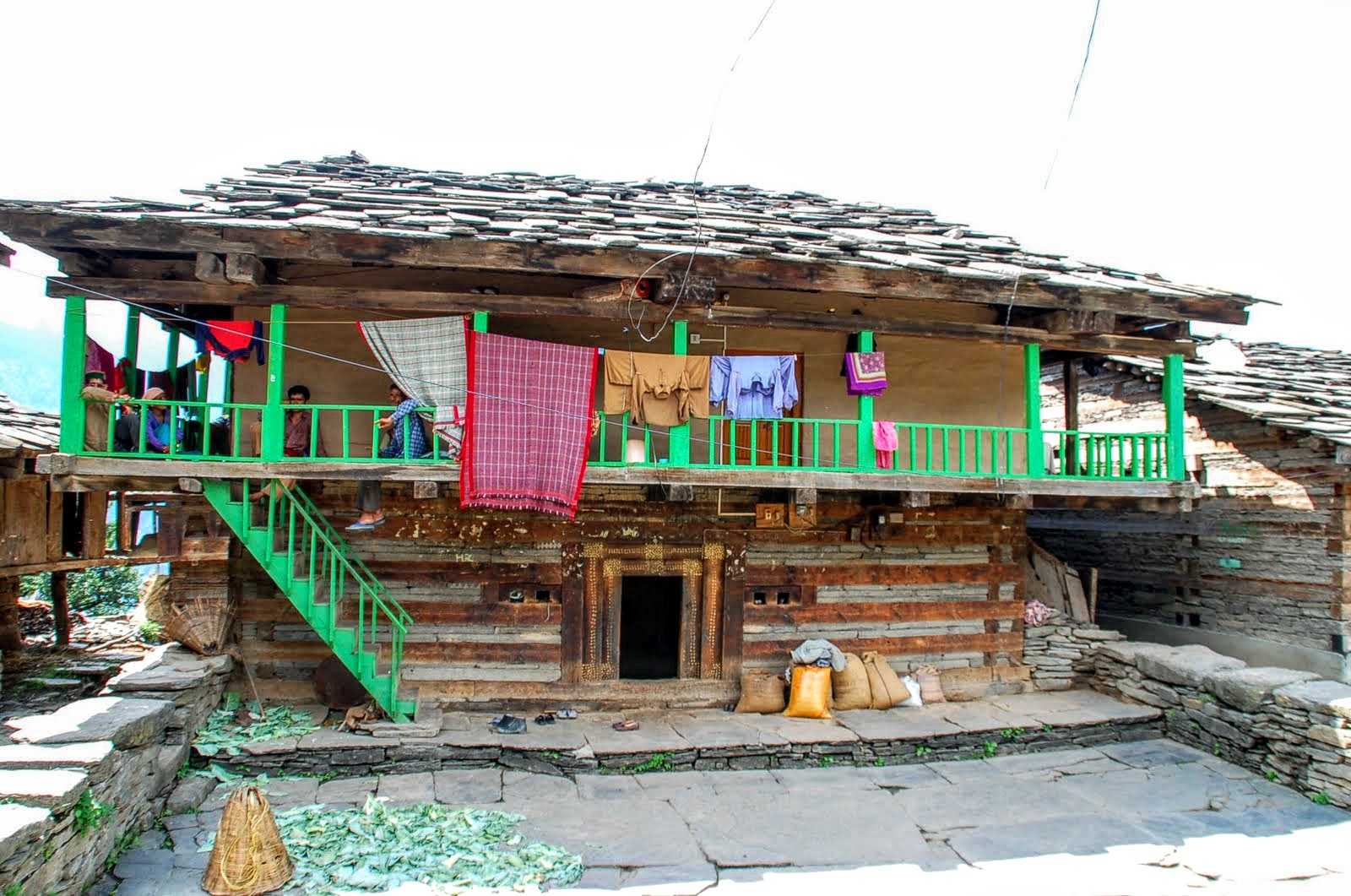
We were in Naggar at the end of June. It must have been harvesting time. Turnips, carrots, beets, potatoes, peas, radishes and cabbage grow in this area because of its temperate climate. Himachal Pradesh is known as the “apple state of India.”
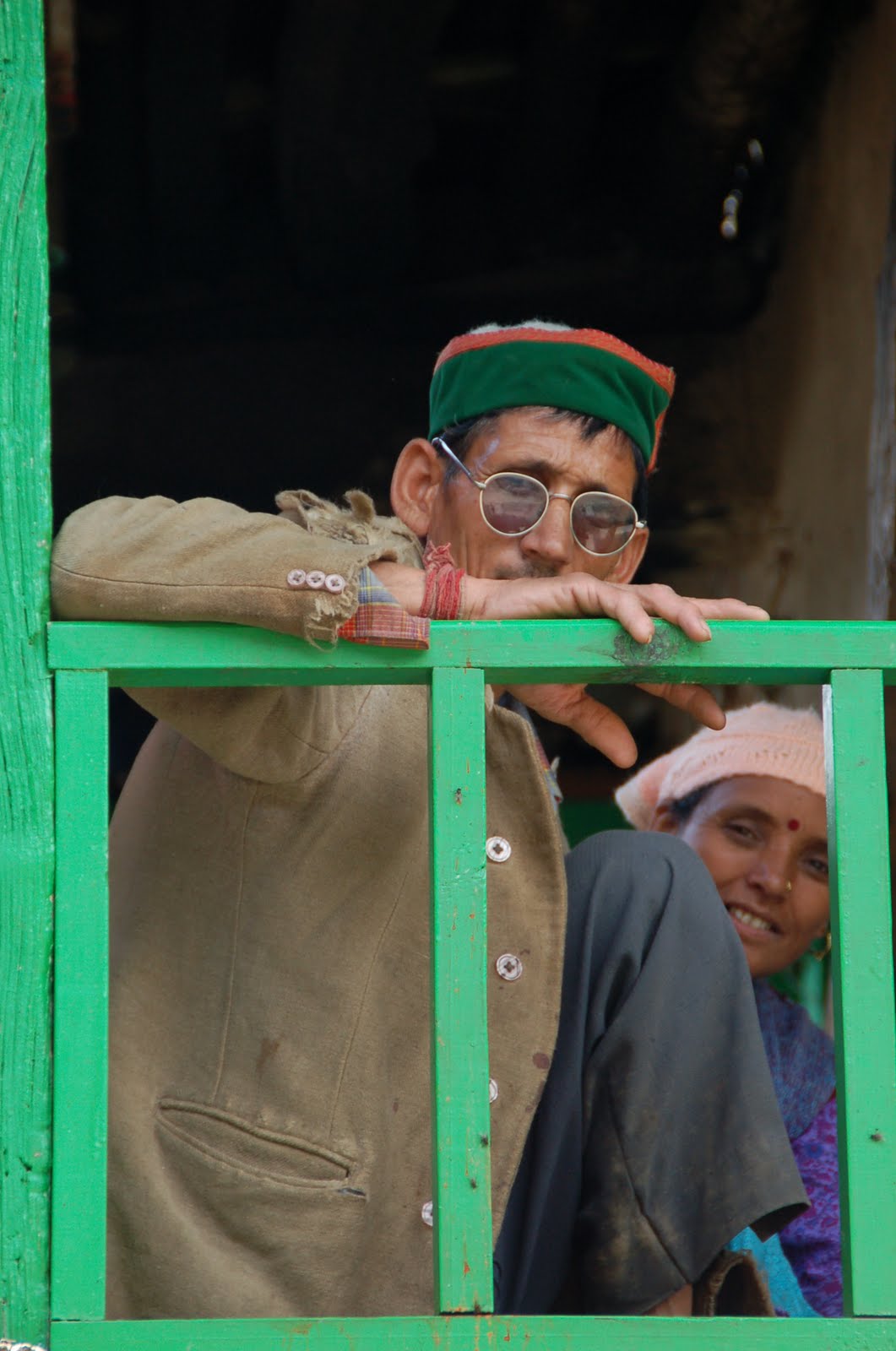 Hats/caps (topis) are ubiquitous in HP. The design originated in Kinnaur but spread throughout the state, since formerly Kinnaur was a part of the Bushehr Kingdom, and it traded with many neighboring areas including Tibet. The Himachal hat is also known as a Bushehri topi. They are made of wool and different areas have different weaving styles and use distinct colors. The band of color on the cap can indicate which political party you support. This fellow is a supporter of the Congress Party.


L: A child’s slightly wary fascination with a couple of funny-looking foreigners. R: Somehow, Amido connected with this beautiful strong woman.
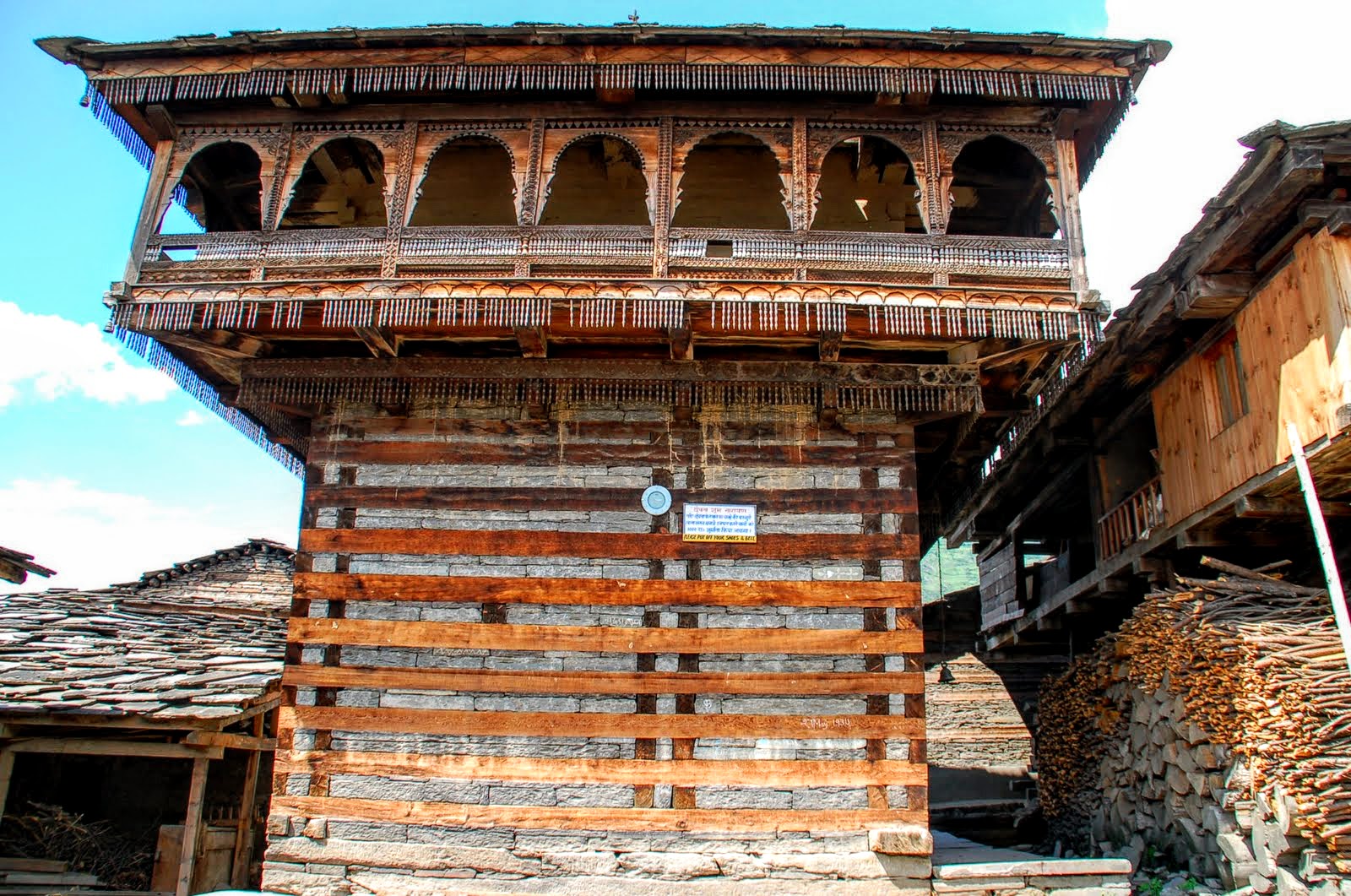
Another example of the traditional architecture of the region.


Is she picking out stones and bits of debris that have fallen into the drying grain?
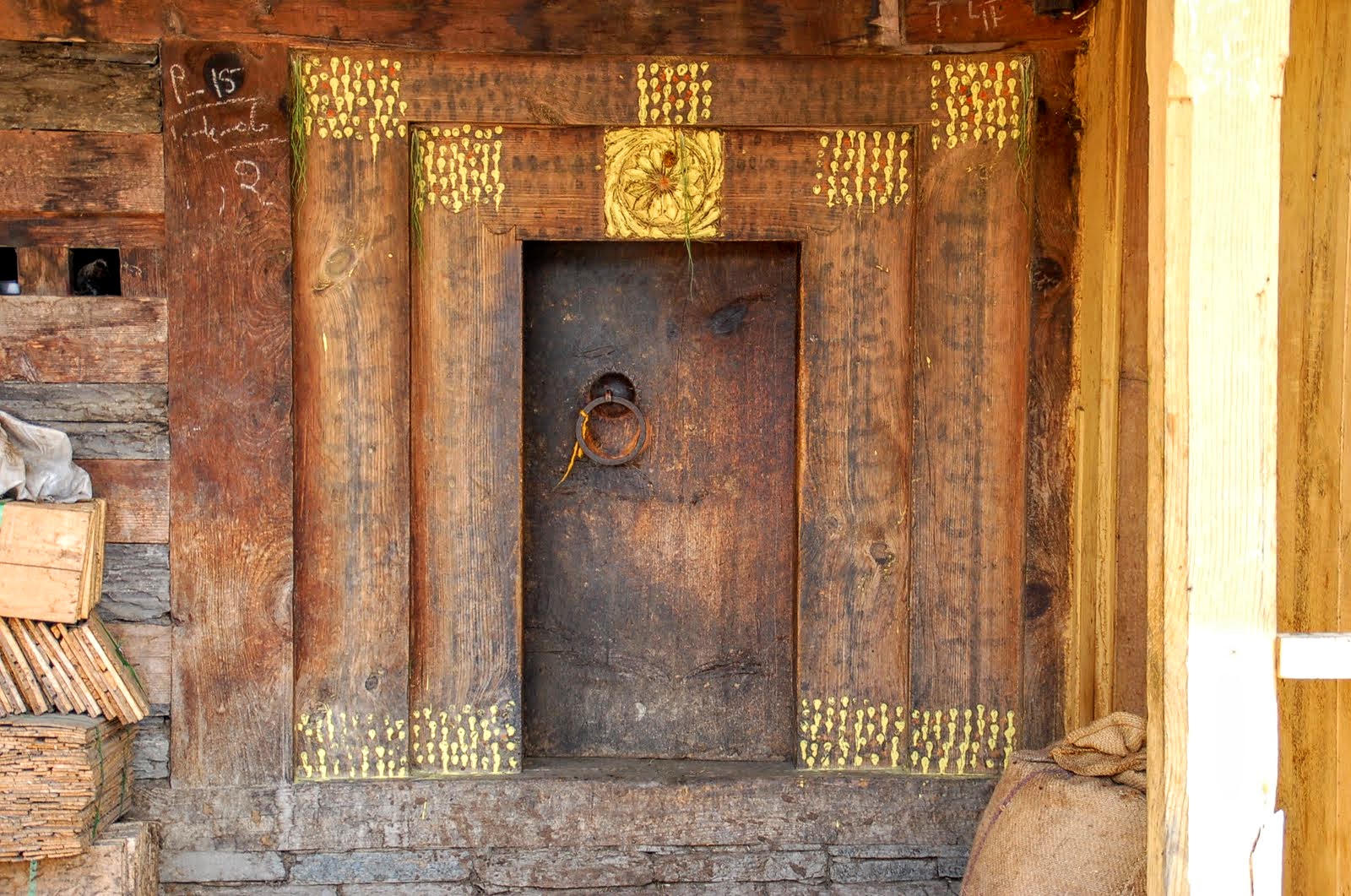
A temple door.


L: The child’s smile is a little uncertain; he leans into his father (who is sitting next to him on a rock) seeking reassurance. R: The beauty, the color, and the confidence!
When we were in Leh, I read Douglas Harding’s On Having No Head: Zen and the Rediscovery of the Obvious. He writes about his experience of walking in the Himalayas and realizing he had no head; in place of it was the enormity of nothingness: “It was a vast emptiness vastly filled, a nothing that found room for everything – room for grass, trees, shadowy distant hills, and far above them snow peaks like a row of angular clouds riding the blue sky. I had lost a head and gained a world.” A captivating description of his experience.
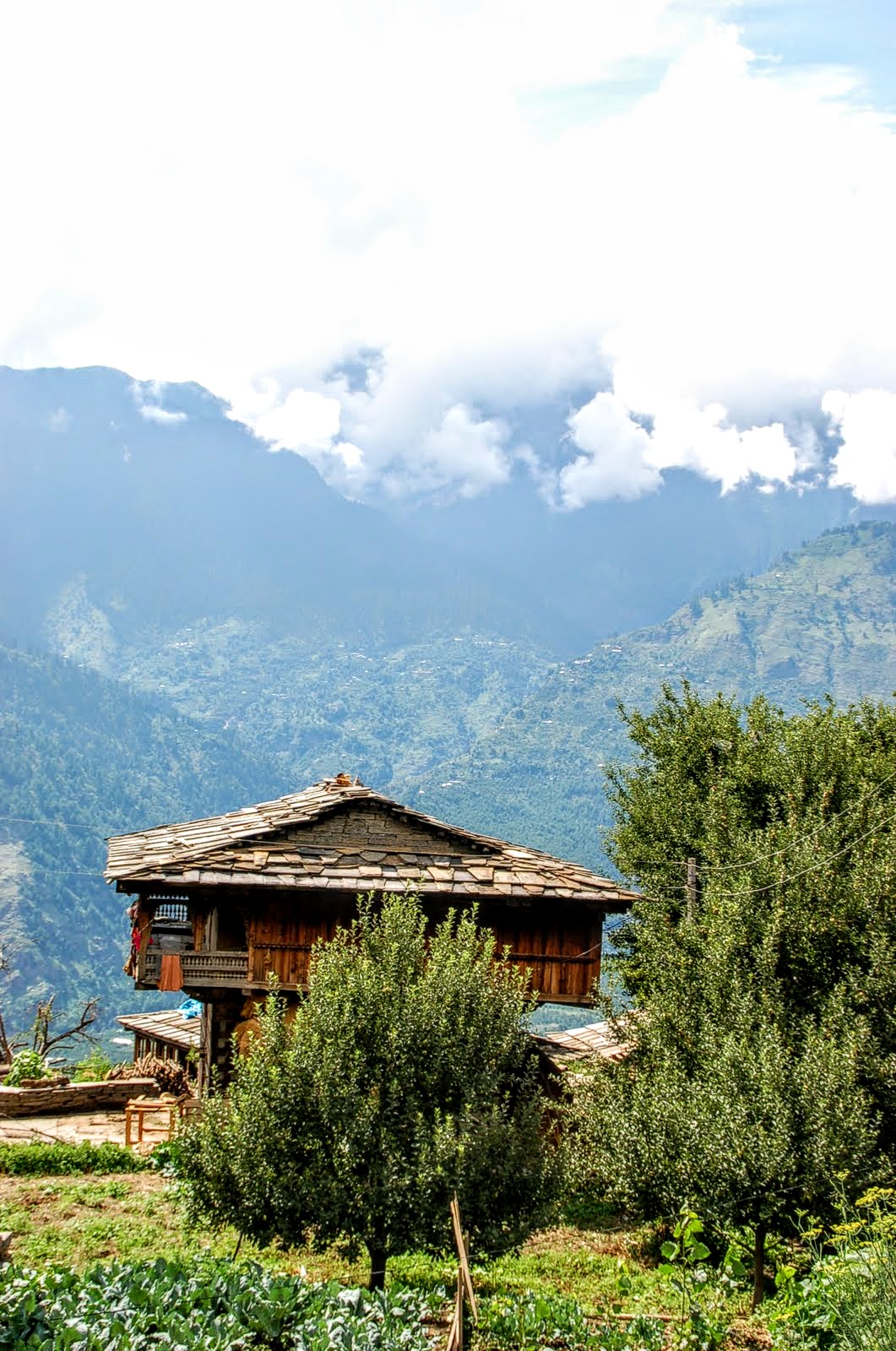 The sense of space… stretching in every direction above into the vastness of the deep blue sky and on to the distant Himalayan mountains and beyond.
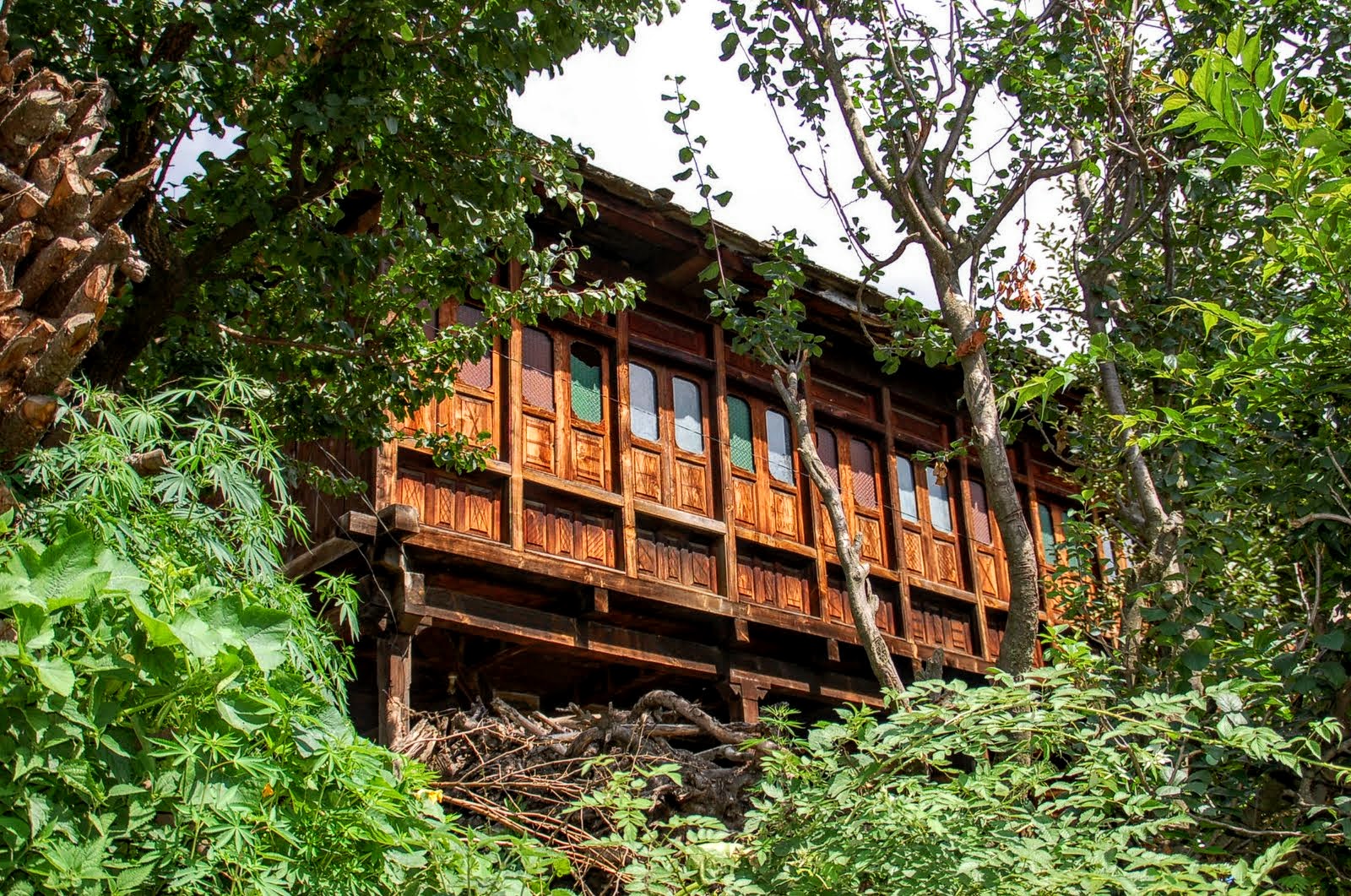
And a home that has a sense of coziness… snuggled into the trees rather than open to nothingness.


A thresher, a weaver, and their setting.
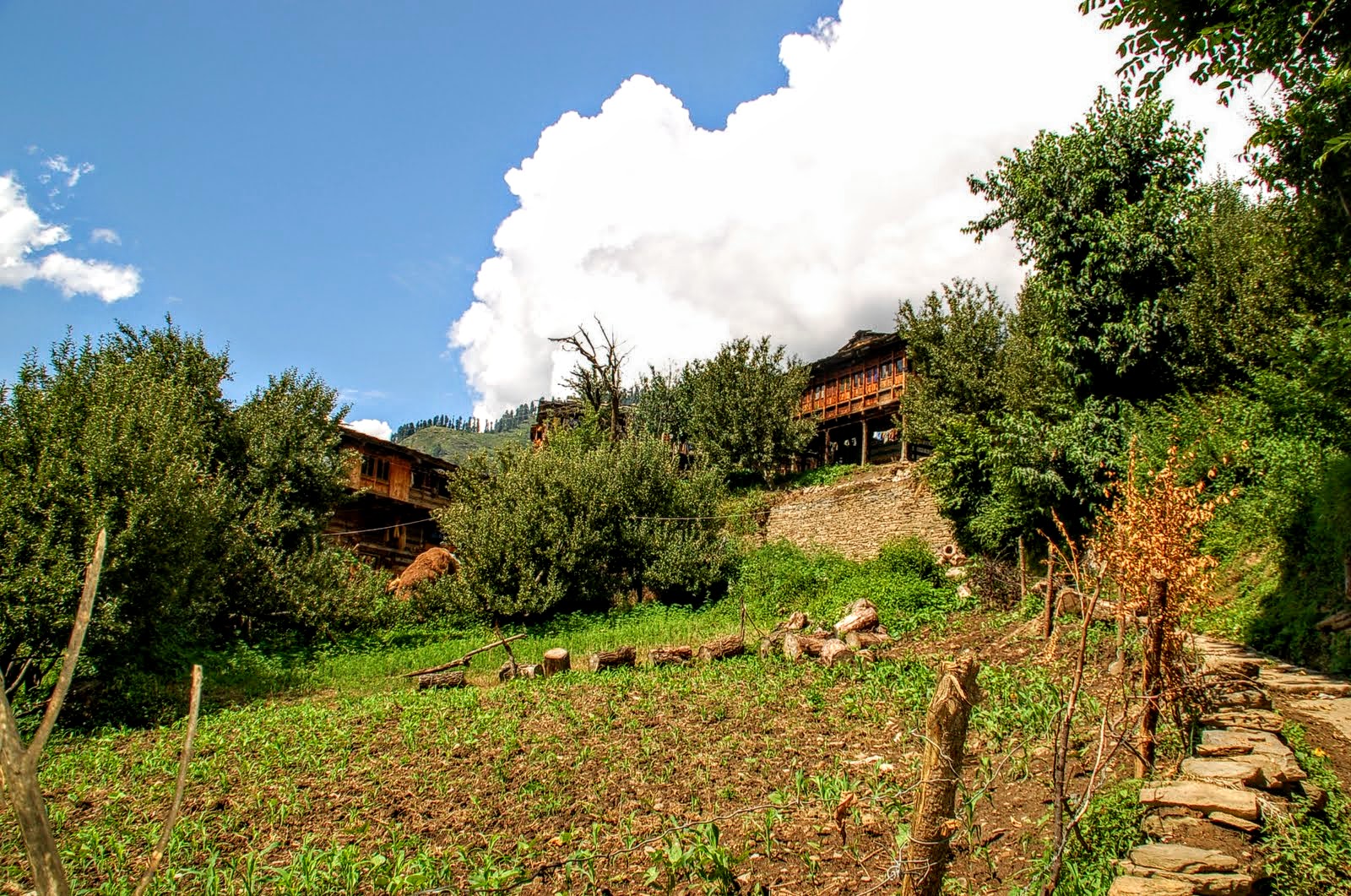
Many houses are perched on bamboo stilts to avoid floods and pests, and to better manage the heavy rainfall. Having space under the living quarters also improves ventilation.
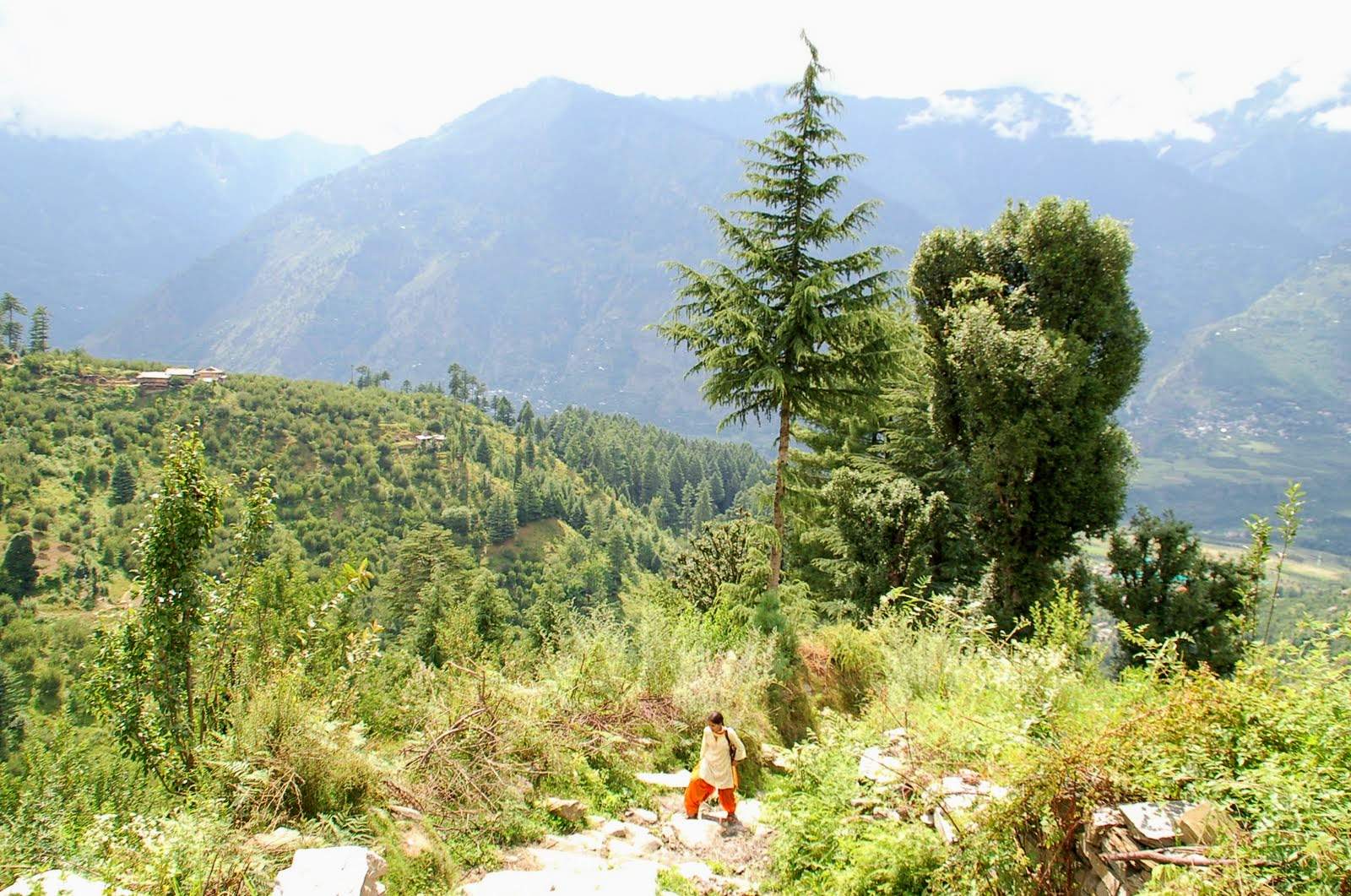
Walking through this land is such a joy – immersed in immensity and overwhelming openness.
And the second highlight of our stay in Naggar was discovering the Nicholas Roerich Art Gallery and Museum in a building that was his former home. Roerich was a Russian artist who intermittently lived in Naggar from the 1920s until his death in 1947. He was a prolific artist; a significant percentage of his work depicts the Himalayas – the beauty of the valleys and the spectacular snow-covered mountains – in vibrant colors. There is also a Nicholas Roerich Museum in New York City which has an extensive collection of his paintings.
We stayed in Naggar for three timeless days in a guest house that was a little funky but aesthetic nonetheless! An early-morning ten-minute walk took us to the bus stop. It was a long ride that first day to Karcham, which was more a transit point than a destination. We found a guest house for the night. My strongest memory is that of the raging Sutlej River we could see from our window some distance below. Ironically, our guesthouse had no running water, though when requested, a bucket of hot water was promptly delivered for the morning shower. (The Karcham Wangtoo Dam has since been built in that area to supply hydroelectricity.)
Sangla
And on we went by bus to our second stop, the village of Sangla in the District of Kinnaur. The Sangla Valley is also known as “Green Valley”, where plums, pears, walnuts, and apples are grown. It is accessible almost year-round with snow isolating it only briefly. We arrived mid-afternoon and found a lovely guest house for the night, then explored the terrain.


The early-evening sky was stunning. Neither of us could stop attempting to capture the beauty and grandeur and ever-changing nature of the dramatic clouds against the jaw-dropping Himalayan peaks.
Kalpa
The next day we took a bus to Kalpa, a journey of 25 miles (40 kilometers). Distances can be deceiving here!
Kalpa is stunning: it sits in the Sutlej Valley at an altitude of 9,711 feet (2,960 meters) and faces the Kinnaur Kailash Mountain Range. Mount Jorkanden at 21,237 feet (6,473 meters) is the highest peak in this range and Mount Kinnaur Kailash is a close second at almost 20,000 feet (6,050 meters). A 79-foot rock formation on the peak is recognized as a Shivalinga, a representation of Shiva; it changes color with the variable light of day. Both Buddhists and Hindus consider this a sacred place.
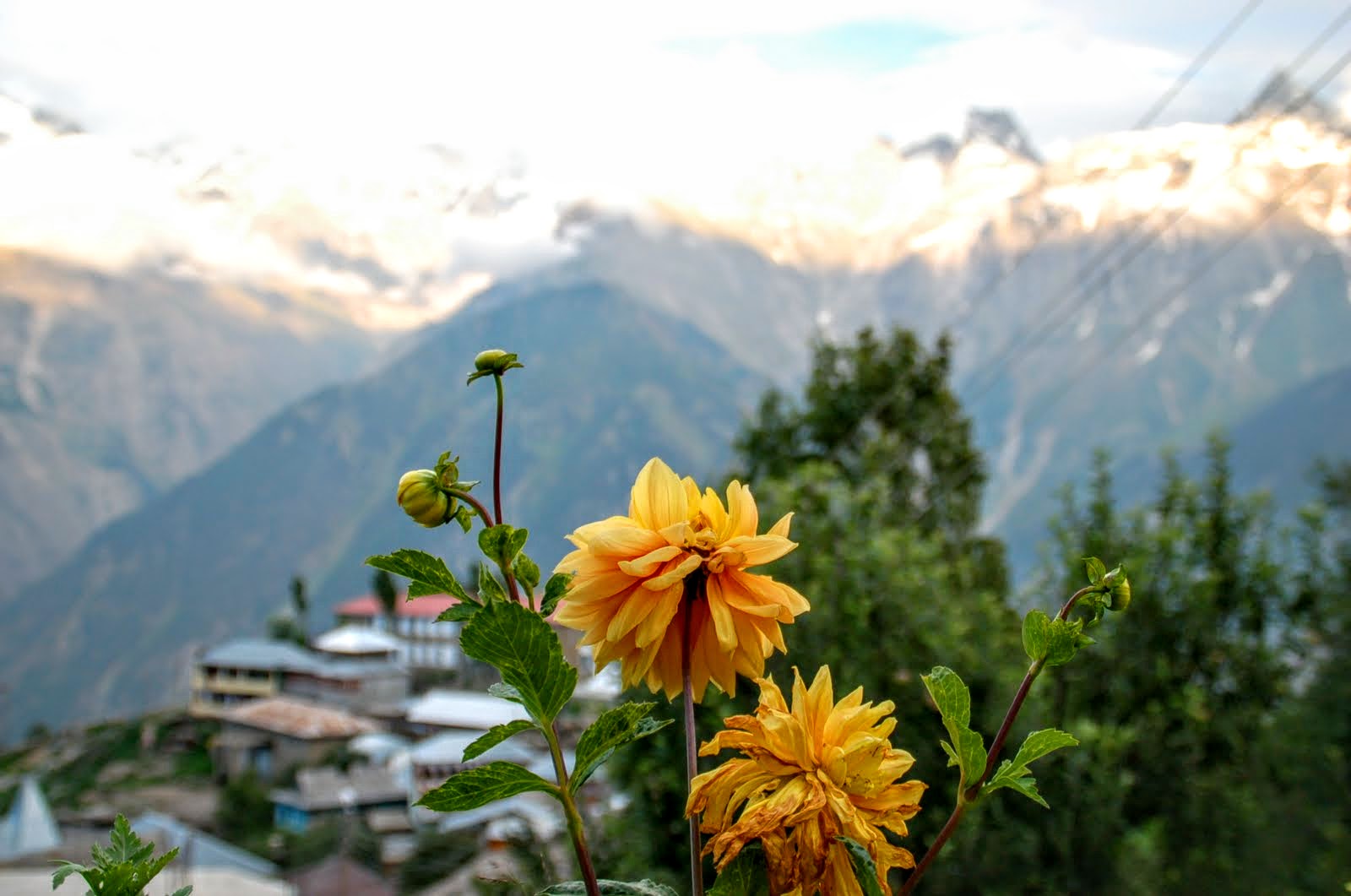
The ineffable beauty of a flower.
One day we walked down the hillside into the town of Reckong Peo, headquarters of the Kinnaur District of HP, to obtain travel documents (an Inner Line Permit) which is required for foreign nationals wanting to travel in the high-altitude areas of Spiti Valley, because of their proximity to the Tibetan border.


Kalpa is one of the mythical winter homes of Lord Shiva. The mountains are particularly spectacular with a view of the peaks of Kinnaur-Kailash and Jorkandan looming on dark days above the valley, but glowing in the evening sun on others.


Every village has a temple. This is a particularly fine example.
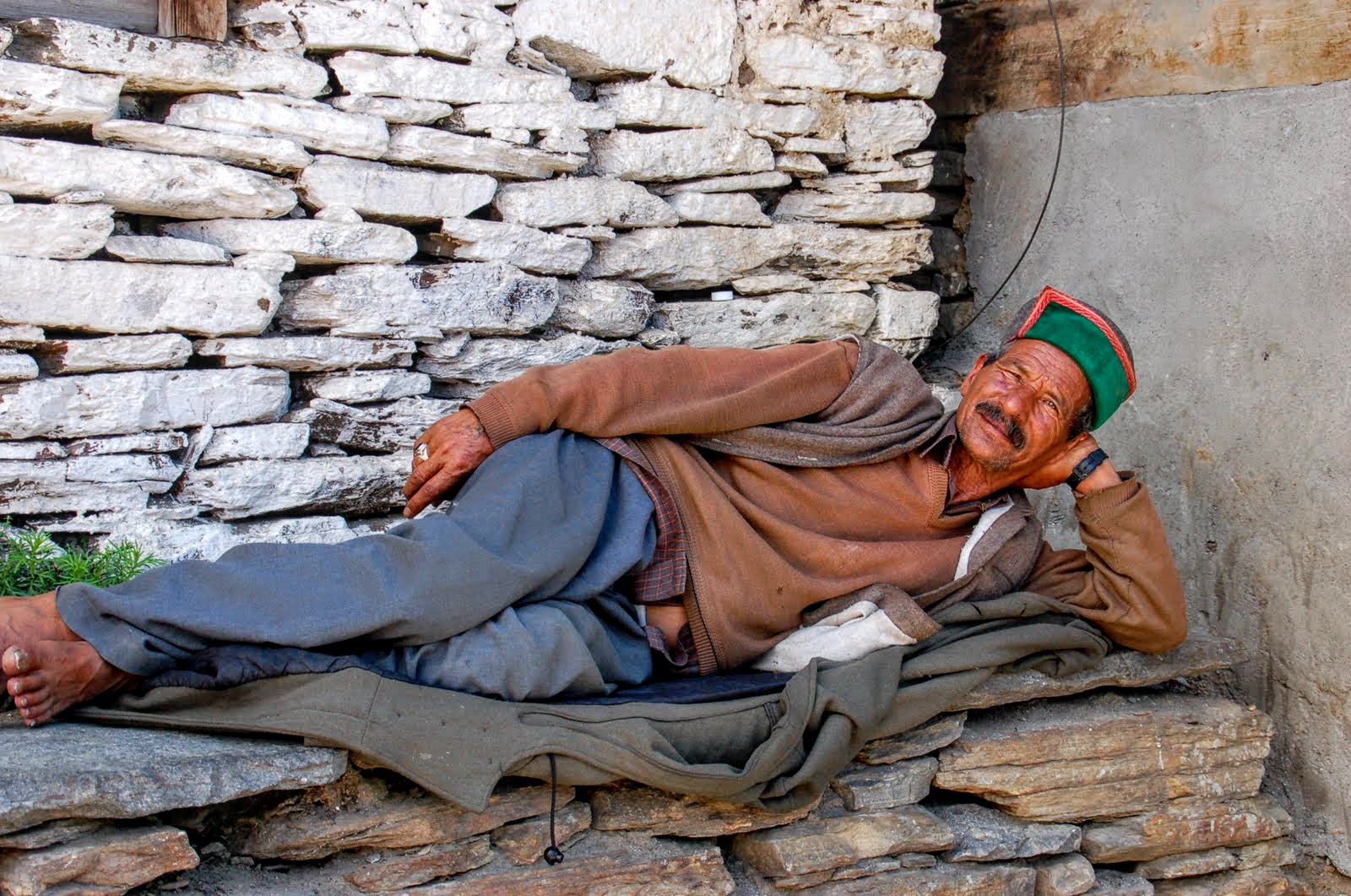
Many a photo has been taken of the reclining man, this one resting in the morning light. It is also a popular position in which to depict the god, Vishnu. One wonders if this is the ideal position from which to sustain the world!
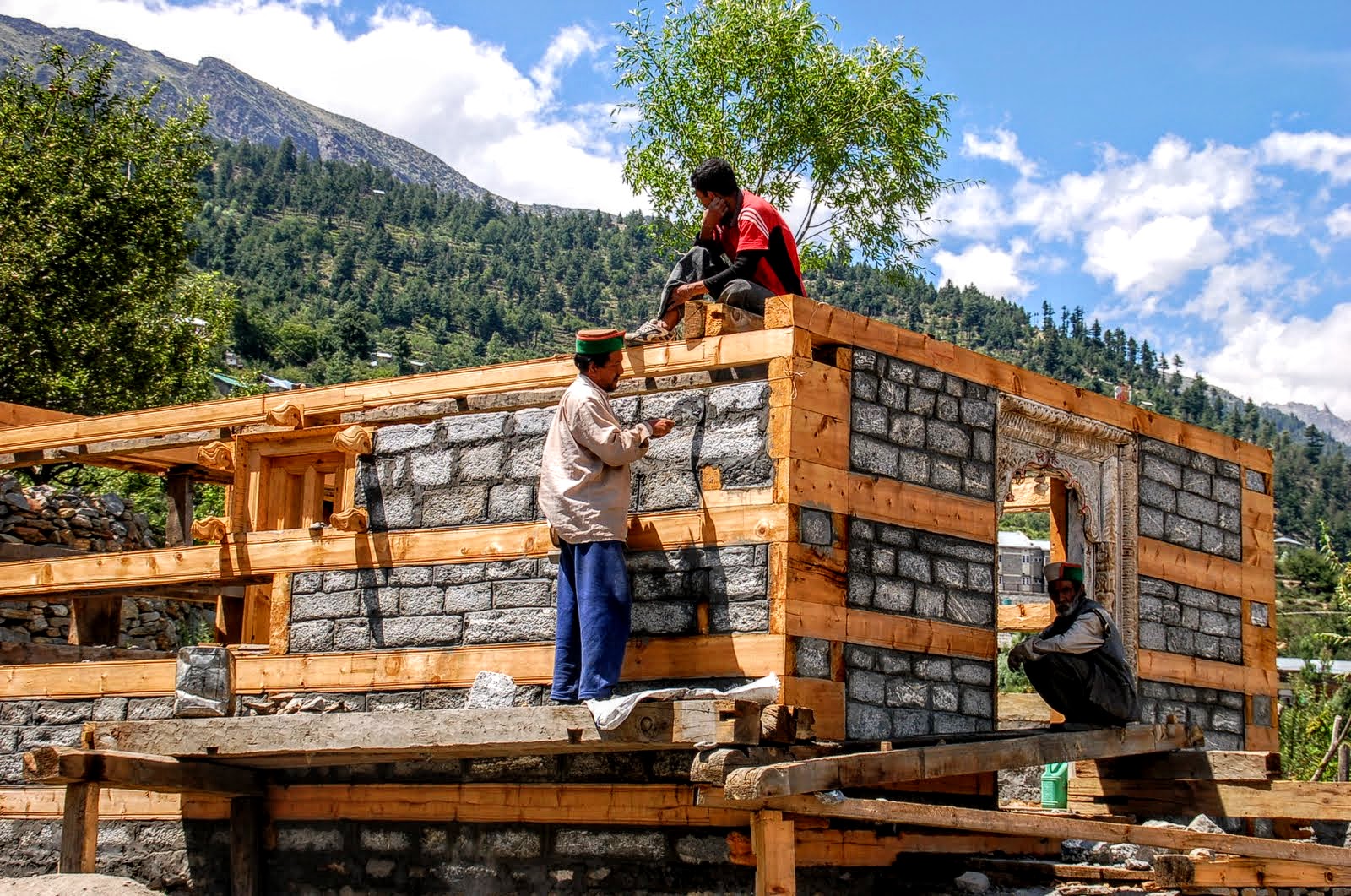
Traditional building styles continue to this day.
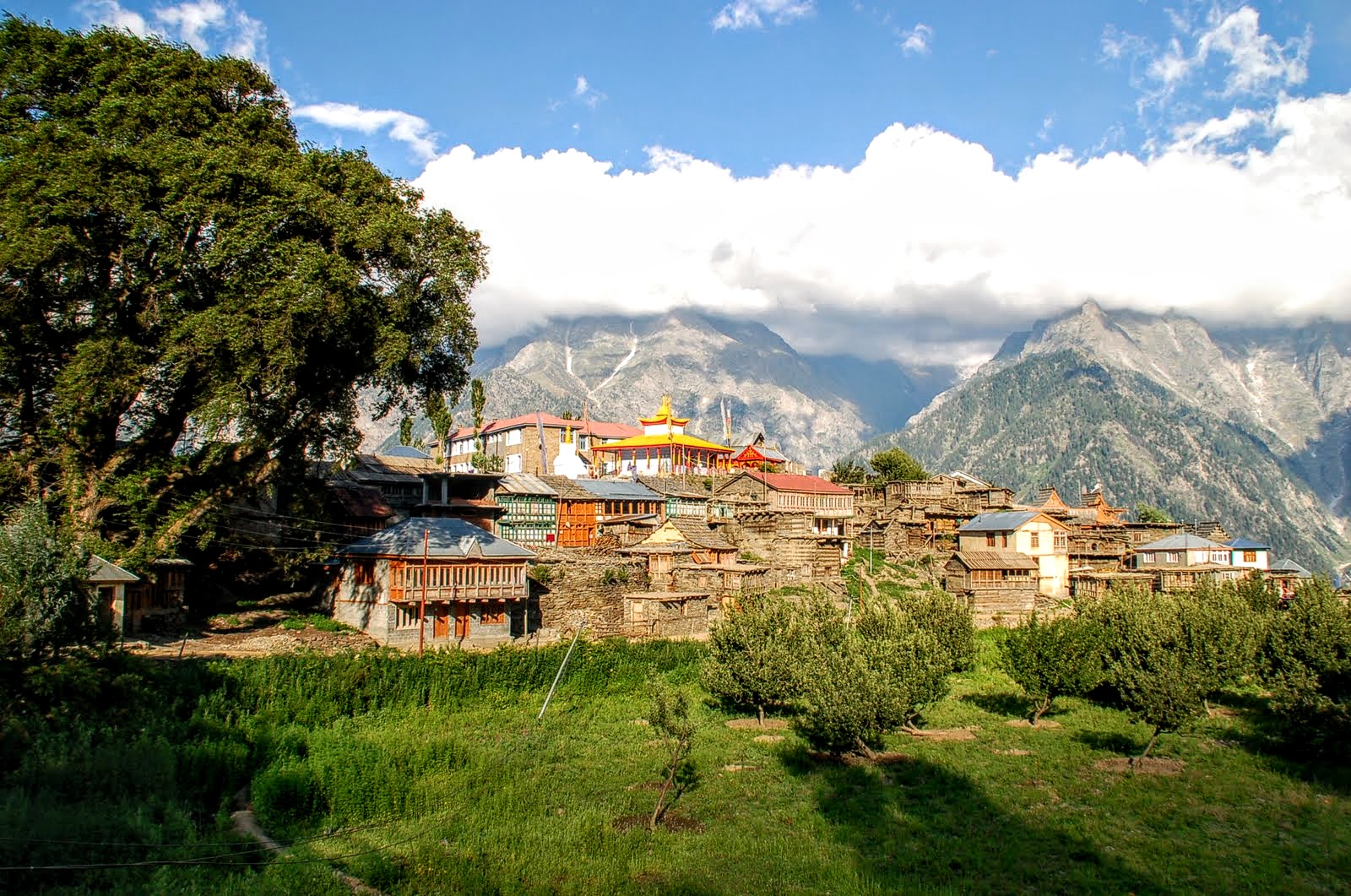
Kalpa – an apple orchard in the foreground and pine trees covering the distant slopes.


L: An intense expression under that Himachal topi. R: Shivalinga is just visible through the clouds.
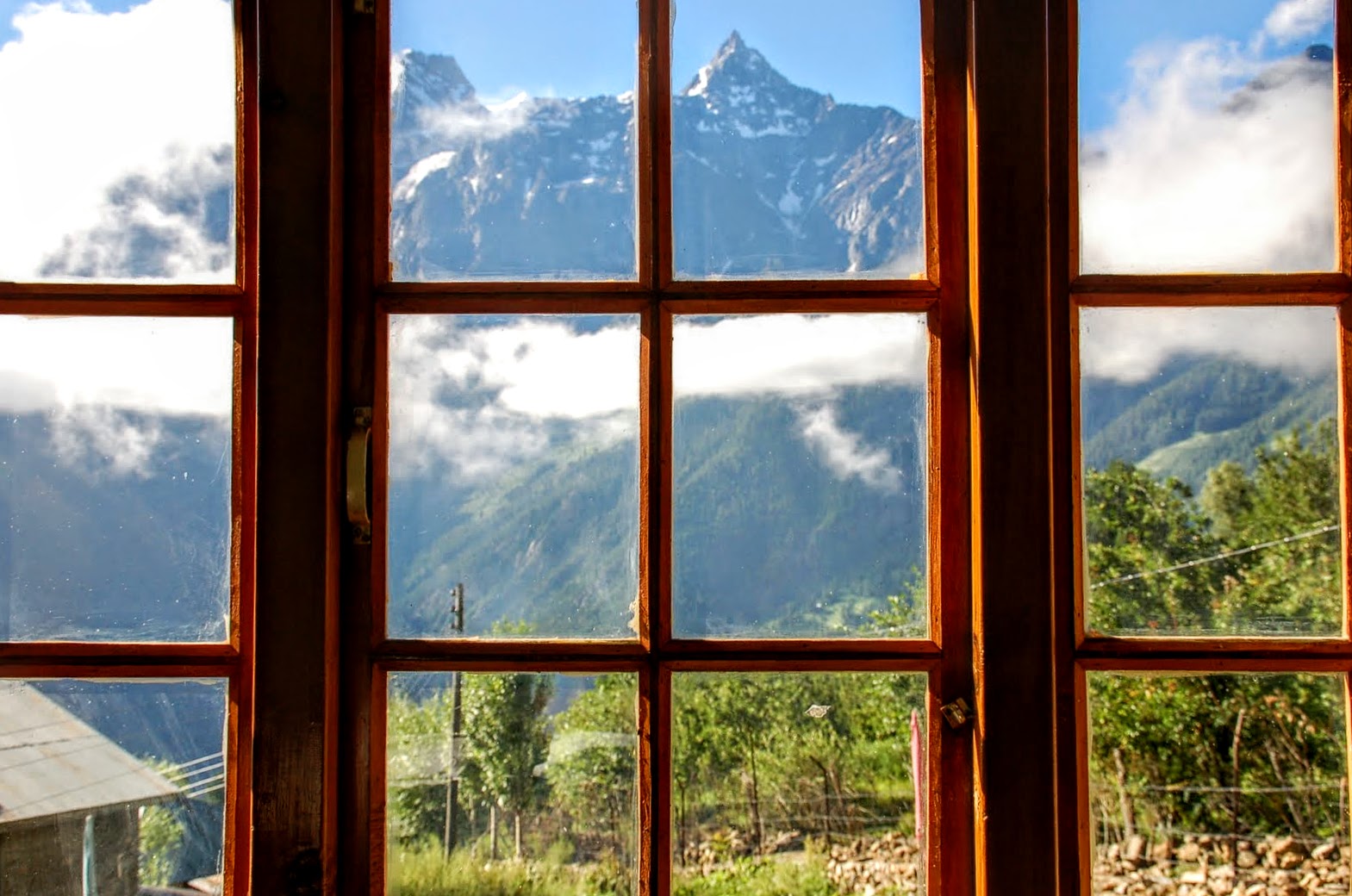
The view from our room. The Shivalinga is to the right in the photograph.
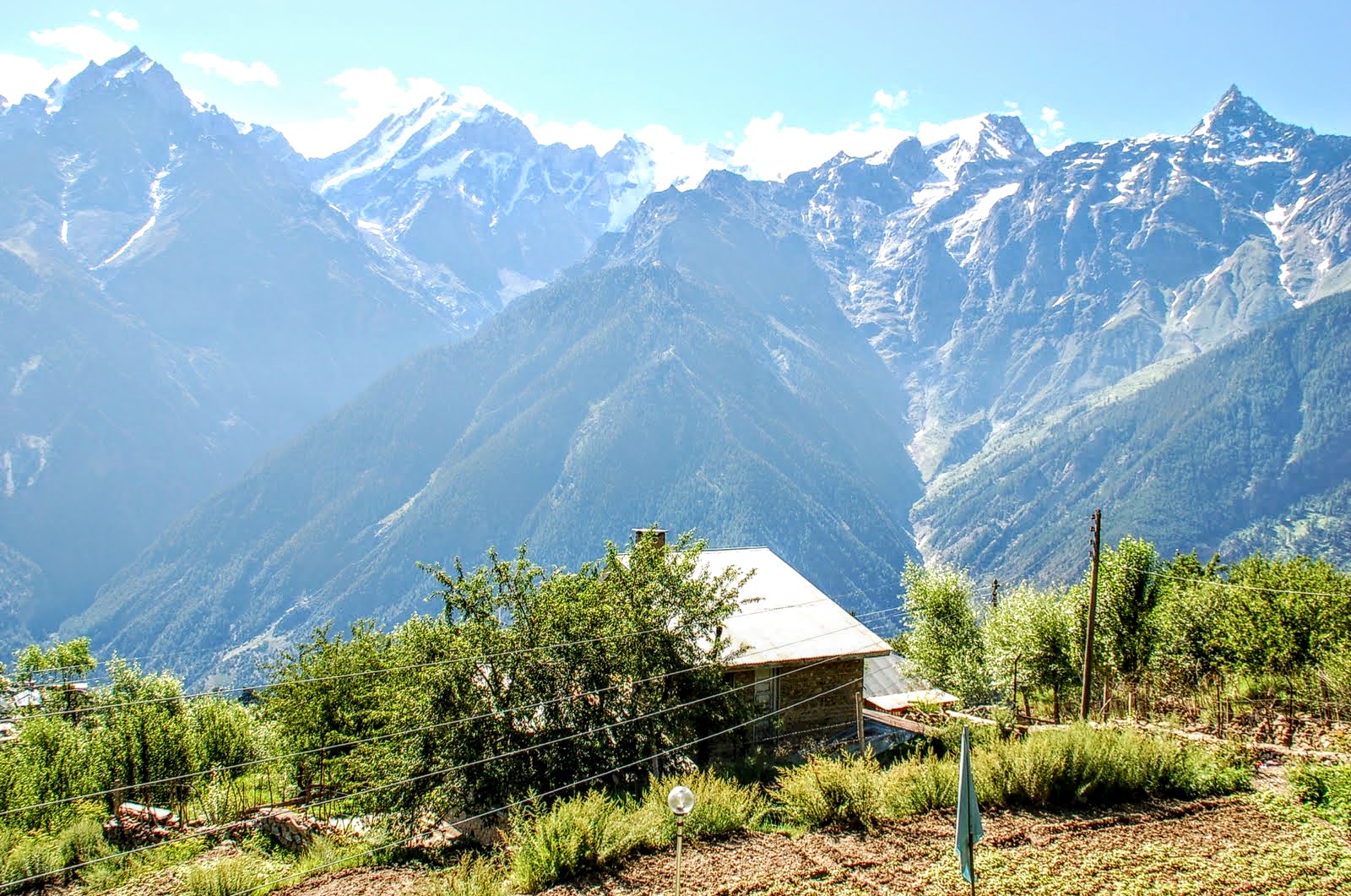
The ever-present backdrop of these magnificent mountains accompanies you everywhere you go throughout the day, a constant presence and a constant surprise.
To be continued in Part 2…
Links
- Nicholas Roerich Art Gallery and Museum Manali – Manali Tourism
- Nicholas Roerich Museum New York
- Naggar, Himachal Pradesh – Wikipedia
- Harding’s Moment of Discovery – extract from Having No Head


Comments are closed.