

Phoebe’s Nuggets continue with her finds from the stories of Zen Masters Nan-in, Hakuin and Doko, as told by Osho in the series Roots and Wings (A Bird on the Wing)
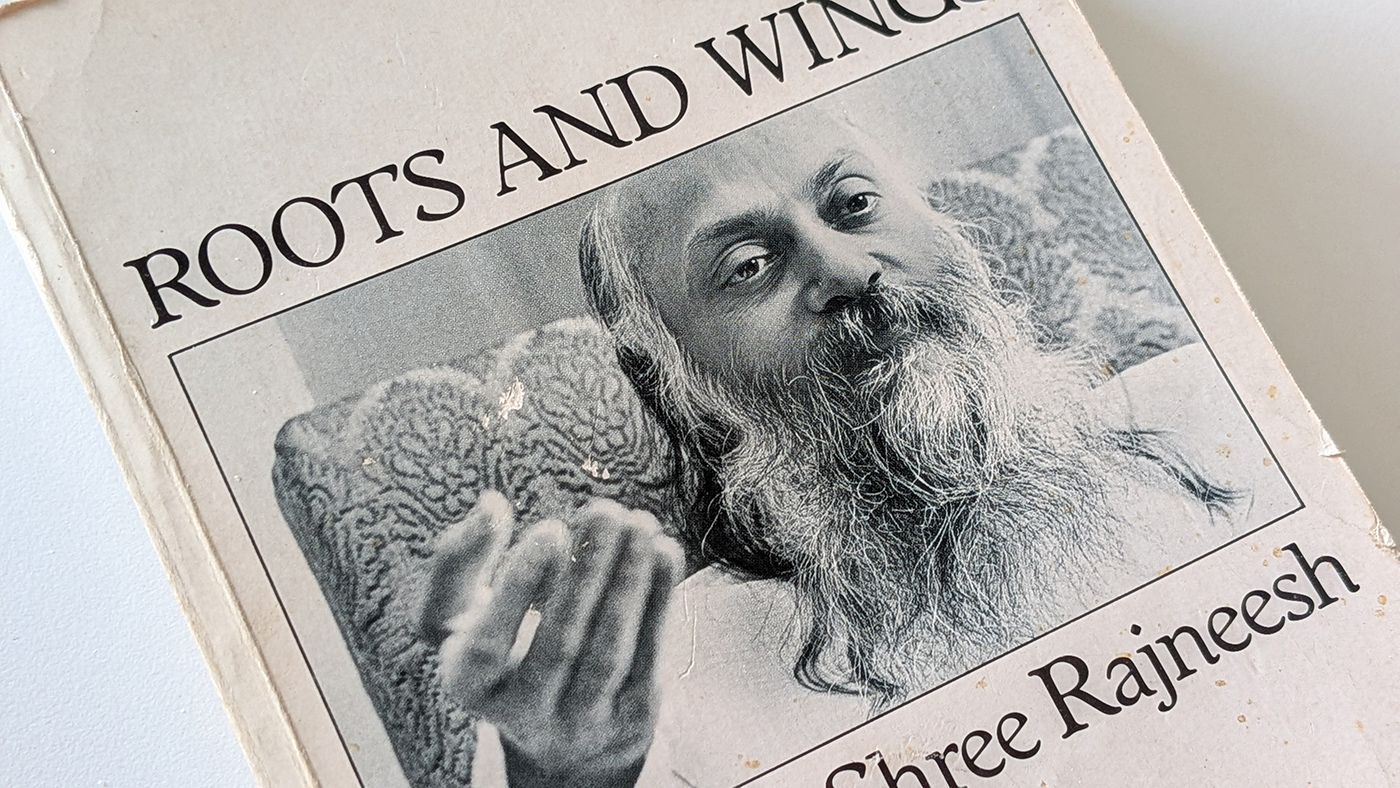
In June 1974 Osho gave a series of discourses on Zen tales, addressed in particular to the participants who had joined the first meditation camp held at the ashram in Pune. These talks were published in the book titled Roots and Wings [in 1975 and as A Bird on the Wing in 1997 and 2013, ed].
Ma Yoga Sudha, who attended the camp, contributed the introduction to this book. I was struck by her comment on how remarkably Zen-like Osho seemed while giving these discourses. Listening to him, she writes, one had the impression that he was just sitting in his chair doing nothing, and the talk was happening on its own accord without preparation.
Roots and Wings became my first introduction to the paradoxical teaching methods of Zen that to Westerners appear alien at first. But, when we get it that the Zen masters we meet in this book are teaching life lessons through experience rather than words, we’ve glimpsed a deeper path to understanding beyond the bounds of rational thought.
On the evening before the camp, Osho announced that this would be the start of a new phase of his work, implying that the meditation camps held previously at such locations as Mt. Abu, would now take place at the new ashram in Pune. Then he goes on to give instructions for the three meditations the group would be doing the next day.
The first that would happen at sunrise was a chaotic meditation, and he describes the cathartic phase of what we know as Dynamic Meditation. Then the afternoon meditation would involve kirtan – dancing and singing – and the evening meditation would involve Sufi whirling.
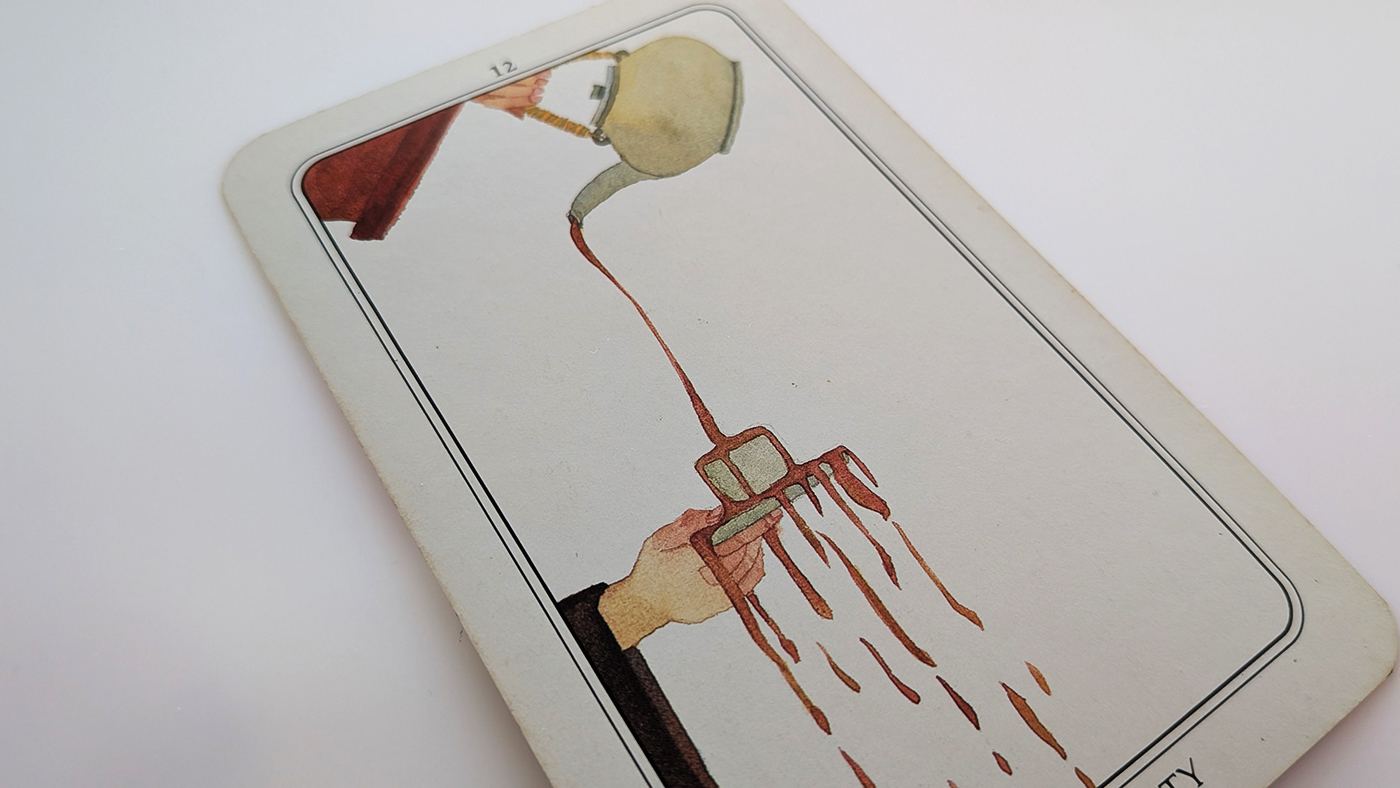
Following this information, the first Zen tale in the book was read aloud. It’s about the Zen master Nan-in who was visited by a professor of philosophy. Nan-in offered him a cup of tea, and the professor watched the tea being poured into the cup. But, when it had reached the brim and started to overflow, the master went on pouring. ‘Stop,’ cried the alarmed professor, ‘no more can go in!’ And Nan-in said quietly: ‘Like this cup, you are full of your own opinions and speculations. How can I show you Zen unless you first empty your cup?’
At the end of these discourses space was made for questions. Osho here answers two of them, however going on to comment:
“Your cup is already full. No need for Nan-in to pour any tea into it, you are already overflowing. I can give you a new existence – that’s why I have invited you here – I will not give you any answers. All questions, all answers, are useless, just a wastage of energy. But I can transform you, and that is the only answer. And that one answer solves all questions.” 1
The following morning, after the Dynamic meditation, the participants gather to listen to Osho’s discourse on the second Zen tale. It’s about a student called Doko who asked his master what is the best state of mind in which to seek truth. The master replied that there is no mind so you can’t put it in any state, and there is no truth so you can’t seek it! Doko, bewildered, exclaimed, ‘I cannot follow you. I cannot understand.’ ‘I don’t understand myself!’ the master replied.
Osho comments on this passage as follows:
“Life is such a mystery, no one can understand it, and one who claims that he understands it is simply ignorant. He is not aware of what he is saying, of what nonsense he is talking. If you are wise this will be the first realisation – that life cannot be understood!” 2
As I ‘understand’ it, the very word ‘understand’ holds a key for us. If we stand under in the sense of taking our awareness deeper than the rational mind, we can also experience a wordless, emotional way of knowing. But nuggets of eternal truth are plumbed from deeper depths. Like prospectors prospecting for gold, we must sieve through the rubbish in the pans of our minds, washing away the dross, before we find nuggets of gold lying on the river bed.
Osho tells us that to go beyond the mind we need to experience silence, because when silence is there the mind disappears. Thus a silent mind is a logical contradiction that doesn’t exist. He tells us that, when we awaken, we don’t achieve an awakened state of mind. We achieve a no-state of mind because mind is nothing more that the process of thinking.
The meditation camp participants were given Dynamic Meditation to practise daily for this purpose and it works. (My first taste of resting in mindless silence was in an Osho meditation group in the 1970s when the shock of the word ‘Stop!’ suddenly interrupted the ‘Hoo’ phase.)
Osho has the following advice for our daily life:
“Between two thoughts try to be alert. Look into the interval, the space in between. You will see no mind. That is your nature, for thoughts come and go, they are accidental, but that inner space always remains. Clouds gather and go, disappear. They are accidental but the sky remains. You are the sky.” 3
Finally, Osho sums up in words that remain relevant to all the question times that were to come:
“It is not a teaching. I am not a teacher. It is not a doctrine. It is just you enjoying with me. I am available here, and if you put your mind aside, we can celebrate… It is a gift. It has always been so. The ultimate bliss is always a gift. That’s why we have been calling it grace – prasad!” 4
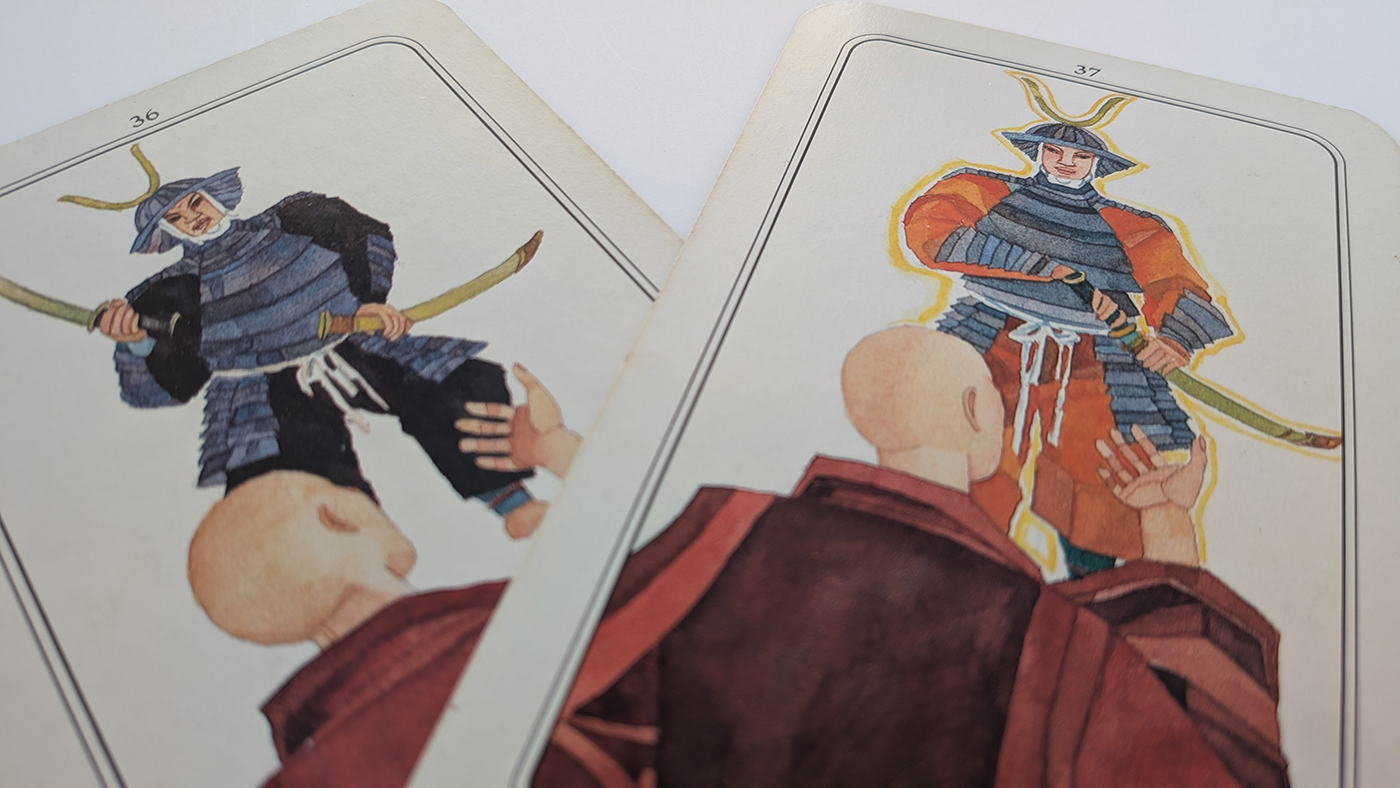
The third talk is about the Zen master Hakuin. One day a samurai warrior visited him with a question. He wanted to know whether there’s such a thing as heaven and hell, and instead of giving him a verbal reply Hakuin gives him a direct, in-the-moment experience. He laughs at him which immediately unleashes the proud samurai’s anger.
‘You say you are a samurai but you look more like a beggar,’ he taunted. The samurai, enraged, drew his sword, and with its sharp blade at his neck the master announced, ‘Here opens the gate of hell!’ In a split second the warrior had sheathed his sword again. He’d understood and the master said, ‘And here open the gates of heaven!’
Osho comments on this story in the following quotations:
“When the ego takes over, you cannot be alert. Ego is the drug, the intoxicant that makes you completely unconscious. You act but the act comes from the unconscious. The door of hell is open.”
“We all have both states of mind available every moment – anger and violence or understanding and compassion. And we’re free in any moment to choose to open one or the other of these doors.”
“If you suddenly awake in the middle of anger, you will feel a peace you have never felt before. Energy was moving, suddenly it stops. You will have silence, immediate silence. You will fall into your inner being… Silence is the door. Inner peace is the door. Non-violence is the door, love and compassion are the doors.” 5
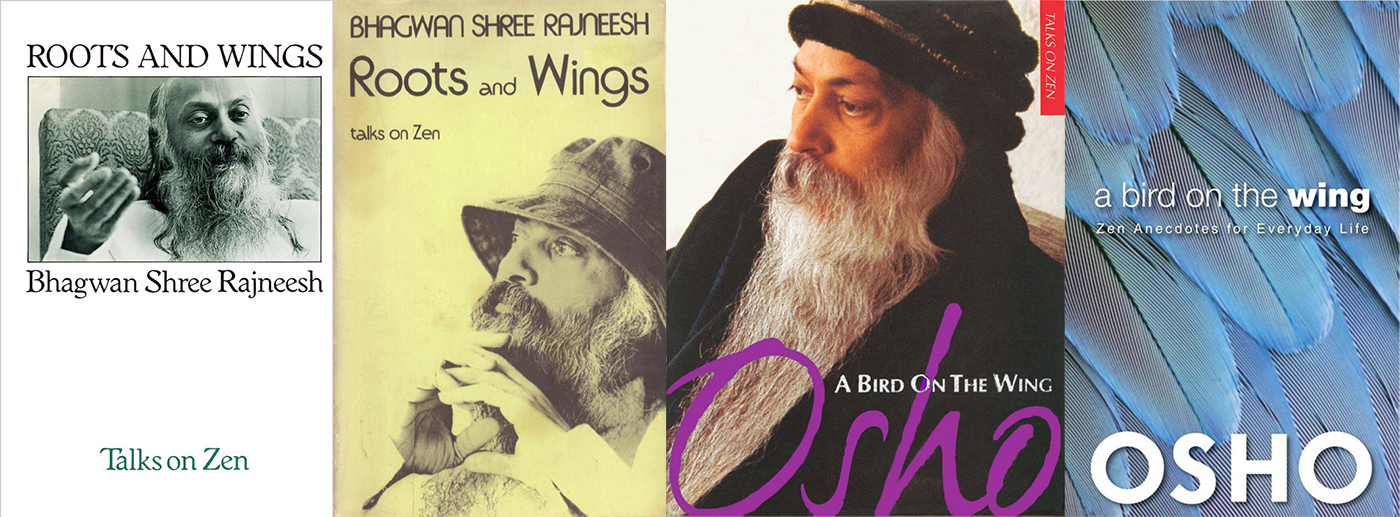
A Bird on the Wing
Osho Media International
Hardcover, 258 pages
ISBN-13: 978-0880502078
Kindle, 746 KB
ASIN: B00BVTW4EY
Sources
- Osho, Roots and Wings (A Bird on the Wing), First Talk (10 Jun 1974 pm)
- Osho, Roots and Wings (A Bird on the Wing), Second Talk (11 Jun 1974 am)
- Osho, Roots and Wings (A Bird on the Wing), Second Talk (11 Jun 1974 am)
- Osho, Roots and Wings (A Bird on the Wing), Second Talk (11 Jun 1974 am)
- Osho, Roots and Wings (A Bird on the Wing), Third Talk (12 Jun 1974 am)
Related discourse excerpt
Related articles
- All articles in this series: Nuggets
- Glimpses of a Golden Childhood – Phoebe’s new series, Nuggets, will be a reminder of the wisdom found in Osho’s books, so needed in our digital age (Part 1)
- Osho’s mentors – In part 2 of her new series, Phoebe examines Osho’s Glimpses of a Golden Childhood from another aspect, and we meet his Nani, Pagal Baba, Magga Baba, Masto and Prof. S.S. Roy as his mentors


Comments are closed.