

From the introduction of the book, Awakening Your Conscious Self, by Gopal (Bahram Moterassed Spitama)
As a psychotherapist with over 30 years of experience, I have come to recognize that beneath every individual’s issues lies the energy they carry. This energy deeply influences their emotional, mental, and physical well-being. For many, this energy becomes frozen or blocked due to traumatic experiences, unresolved grief, depression, obsessive thoughts, or dysfunctional patterns of behavior. These unprocessed emotions and memories can create a sense of stagnation that may freeze a person stuck in the past and unable them to move forward.
On the other hand, some people experience feeling drained of their energy through anxiety, restlessness, excessive worry, and sleep disorders. In these cases, the energy is not blocked but is leaking out that may cause them feeling exhausted and overwhelmed. Both states, whether frozen or restless energy, can severely impact one’s ability to function. A person may experience difficulties connecting with others and live a fulfilling life.
Verbal and Non-Verbal Communication
Although verbal communication is important in therapy, most experts agree that 70 to 90 percent of communication is nonverbal. This nonverbal communication often speaks louder than words. Body language, facial expressions, posture, and even the way someone enters a room can reveal much more than what is said. The energy a person projects through their body language tells a lot about their internal state. From the moment I see a client in the waiting room, I can sense their emotional and mental state just by how they carry themselves, even before they describe their circumstances verbally.
The energy behind their movements, the tension in their shoulders, the way they hold eye contact (or avoid it) – all of these cues provide a window into their inner world. Often, these nonverbal signals reveal truths that words may conceal or struggle to express. In therapy, paying attention to this energetic communication helps me connect with clients at a deeper level. It allows me to guide them toward awareness and healing.
Understanding and working with this energy becomes a key aspect of the therapeutic process. By helping clients become aware of their own energy and how it moves or stagnates, I assist them in releasing frozen energy or stopping the leaks that drain them. This energetic awareness opens the door to healing, enabling clients to move beyond trauma, anxiety, or dysfunctional patterns and step into a state of flow and balance.
Existing vs. Living
It’s important to understand the difference between simply existing and truly living. Everything in the material world exists, but not everything is alive in the same way. Each form of existence carries a different level of energy and life. For example, a rock exists, but it doesn’t live. It has weight and takes up space, but it doesn’t move or grow. In contrast, a flower not only exists – it also lives. It grows, breathes, and responds to sunlight and water. Still, its life is simpler than that of an animal.
However, a horse not only exists, it also lives, and it feels. It has emotions, senses pain and joy, and builds simple relationships. It shows a higher level of awareness than a flower. Human beings go even further. Like animals, we feel and sense the world – but we also have self-awareness. We can think deeply, ask questions about life, make conscious decisions, and reflect on who we are and why we exist. We can shape our own purpose and meaning.
Beyond that, we also have a spiritual dimension. Humans have the unique ability to wonder about existence itself – to explore the mysteries of life, the universe, and our connection to something greater.
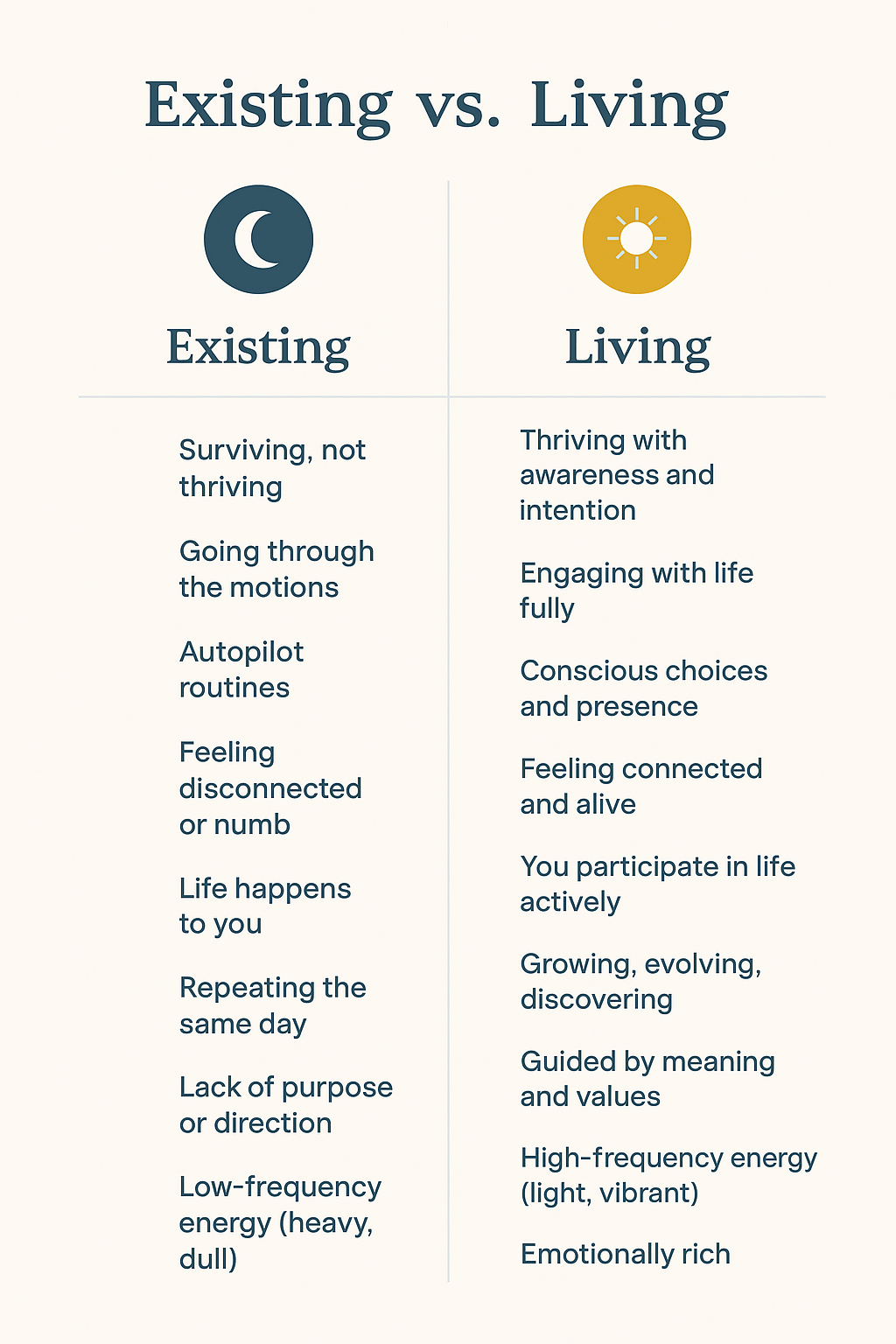
Existing is the most basic form of being. It means getting through the day – eating, working, sleeping – just to survive, but not really living. It’s like running on autopilot. You’re doing what you need to do, but without joy, purpose, or real involvement. When we’re just existing, each day can feel the same. There’s no excitement or deeper connection. Life feels like something that’s happening to us, instead of something we’re actively creating or engaging with. We might wake up, go to work, handle responsibilities – but feel emotionally numb or distant, as if we’re just observing life instead of experiencing it.
This kind of stagnation is often a sign of low-frequency energy. It shows that our inner energy is heavy, slow, and dull. We’re not fully alive – we’re surviving, not thriving. When people experience low energy, they may feel heavy, which keeps them from experiencing joy, passion, and connection. Instead of moving with the flow of life, we get trapped in meaningless patterns that drain our energy and vitality. When we function at a lower energy level, our emotions and thoughts can feel flat. We might feel bored, indifferent, or depressed, as if nothing matters. Without higher energy and vibrancy, life becomes something we just get through instead of something we truly enjoy.
One of the biggest challenges in therapy is when a person starts to lose hope and feels disconnected from their sense of purpose. This loss of purpose can leave them with little energy to truly live. When someone feels hopeless, they can become stuck in a cycle of just existing, going through life without direction or meaning. It is like eating food without any spices. There is no flavor or excitement. The person lives just a bland routine.
In therapy, one main goal is to help people reconnect with their sense of purpose, no matter how small or distant it may feel. Without purpose, we can feel lost and confused about our place in the world. Finding purpose is like discovering vital energy within us. It can come from personal passions, relationships, career goals, or spiritual beliefs, and it often helps restore hope and motivation. Purpose acts like a guiding light. It gives us a sense of direction and meaning to our existence. It shifts our lives from simply existing to truly living.
Living, on the other hand, means fully embracing life with presence and awareness. It is about being engaged with the world around us and connected to our experiences. When we are living, we are not just surviving. We are filled with light and passion. We look for meaning in what we do, feel joy, face challenges directly, and build relationships that nourish our beings. We are aware of both the highs and lows of life but approach them with intention and consciousness.
Elevating this state requires us to raise our vibration by aligning with higher energies such as love, passion, creativity, and consciousness. It means to take charge of our lives and become active participants. This transformation involves reconnecting with our deeper purpose, embracing uplifting experiences, and cultivating practices that help us to gain a higher consciousness. These practices may include mindfulness, personal growth, spiritual exploration, or creative expression.
When we raise our energy to a higher level, we start to feel more connected, alive, and in tune with the world around us. We become like a plant that is truly living, growing, blooming, and reaching its full potential. We can no longer just exist, taking up space. We strive to live fully by embracing our potential and true purpose as a human being on Earth.
From Suppression to Expression
If our energy is not expressed adequately, it will either exhaust us through suppression or manifest in different forms of deviations. Unlike any other being in the universe, humans are the only ones capable of suppressing or transforming energy. When energy flows upward, its direction alone can bring transformation. This ascension liberates us from suffering and misery.
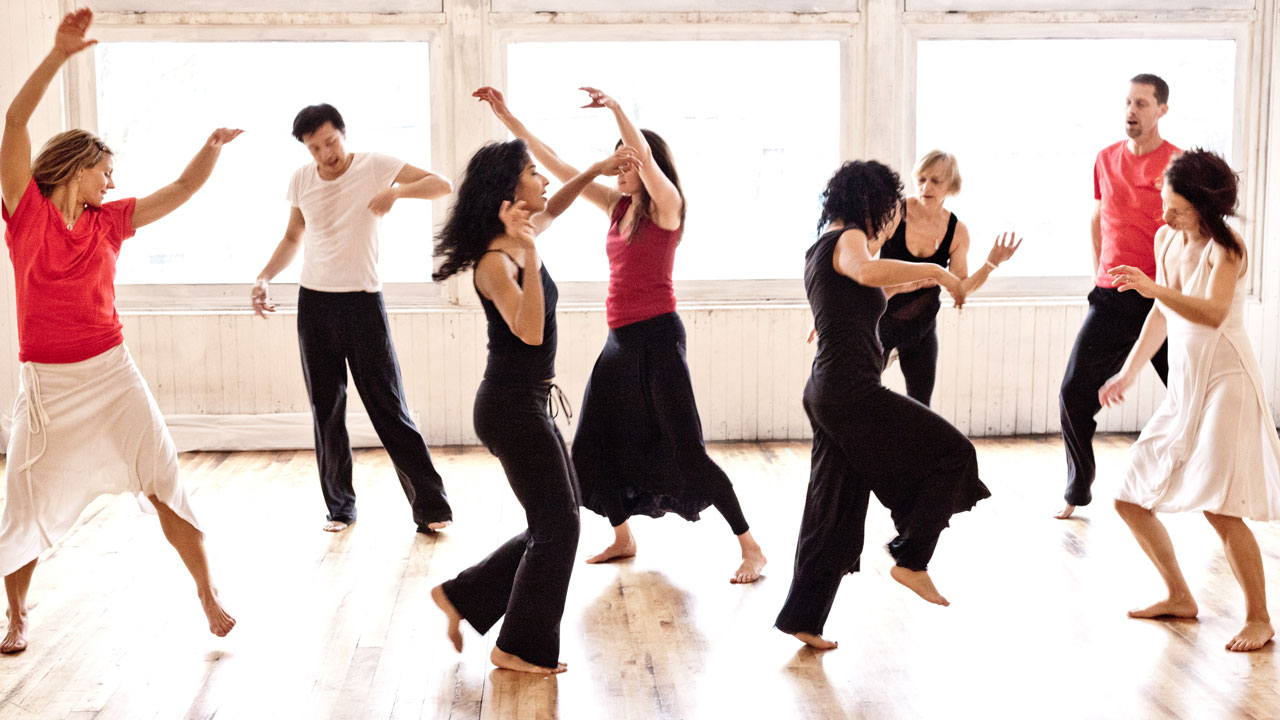
The work of therapy is not just about solving problems on the surface. It is also about understanding the deeper energy patterns that shape our lives. By addressing these patterns at their core, we can help people transform their energy and their lives. I often offer workshops (Osho’s active meditations) that create a safe space for clients to express emotions like sadness, anger, depression, or restlessness. In these nonverbal, therapeutic sessions, participants connect with their bodies and emotions in ways that talking alone can’t always reach. The focus shifts from thinking to fully expressing their unresolved experiences.
Participants are encouraged to express themselves freely through movement, dancing, and physical release. Whether it is screaming out their frustration, shedding tears to release long-held grief, or moving their bodies to shake off the weight of anxiety, these workshops offer a safe space for letting go of what’s been buried within. Every movement and gesture serves as a form of release. It is a way to access and express those deeper, blocked emotions that are often hard to put into words. This process allows them to reconnect with their feelings and find relief in a nonverbal, transformative way.
Through dance and movement, individuals begin to reconnect with parts of themselves that may have been numbed or forgotten. Physical expression often moves past the mind’s defenses, allowing emotions to rise and flow more freely. I have seen that once people let themselves move without self-judgment, it becomes much easier to access the sadness or anger they have suppressed for years. There is a saying, “Our issues are in our tissues,” meaning our emotional burdens are stored in our physical body. By engaging in expressive movement, participants can process and release these emotions in a way that feels both natural and empowering.
I also provide silent meditations into these sessions to help ground participants after intense emotional release. Silent meditation offers a way for them to reconnect with their inner stillness and calm their minds. This is especially important after physically intense activities like dancing or screaming, as it provides a moment to integrate the emotional breakthroughs that often occur. It allows them to sit with their feelings, reflect on what has been released, and find peace in the healing process.
As they release their blockage and tension, they gain greater self-awareness and reconnect with their inner selves. Many participants leave these workshops feeling lighter, more peaceful, and more aligned with who they truly are. True healing is a holistic approach where the mind, body, and spirit come together and work in harmony.
 Awakening Your Conscious Self
The Inner Transformation of Our Lower Nature into the Higher Self
by Bahram Spitama (Sw. Gopal)
ISBN-13: 979-8294417666
Available as hardcover, paperback and Kindle: zpublication.org – Amazon *
Related articles
- Awakening Your Conscious Self – Presentation of a new book by Gopal (Bahram Moterassed Spitama)
- Osho Active Meditation – Instructions


Comments are closed.