

Madhuri’s reviews of books by Lorrie Moore, Christobel Kent, Penelope Fitzgerald, Tracy Chevalier, Soozi Holbeche, Maggie Hartley, Elizabeth Gaskell, Michael Smith and Jonathan Franklin, Ronald E. Gordon, Ph.D. and Joel Brokaw, Michael Connelly, Charlotte Bingham
 A Gate at the Stairs
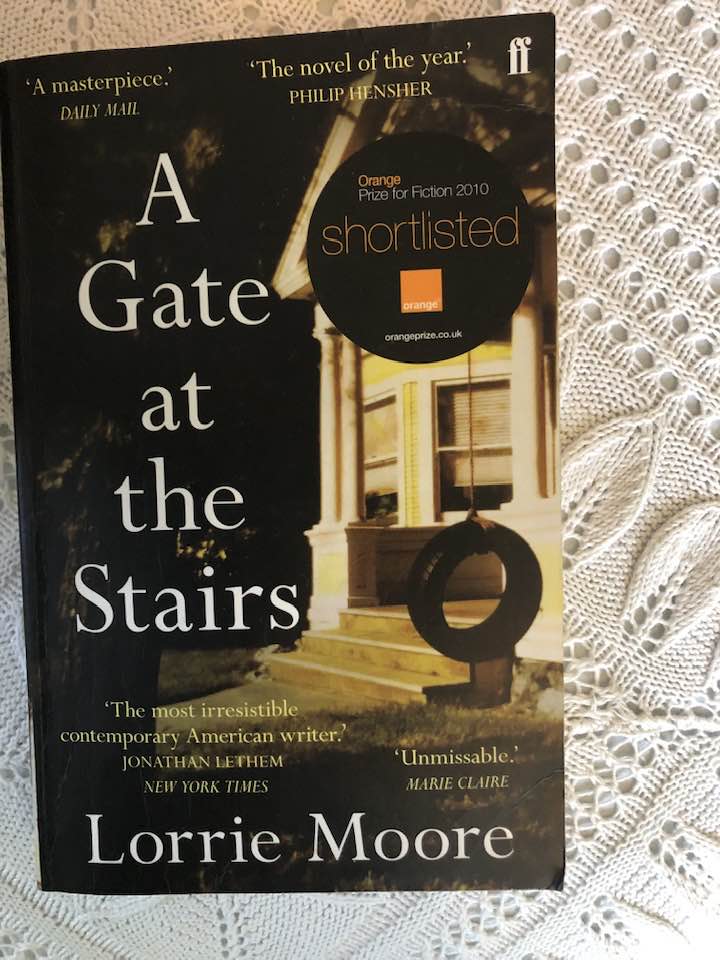
by Lorrie Moore
This novel was so stuffed with genius that it boggled my senses: so much imagery, philosophy-upside-down-and-sideways, peculiar people, one loveable toddler, words alight and sparkling and unlikely and original, packed in and yet very comprehensible if you take the time to read them over slowly… and quite a lot of Rumi.
The setting is a college town in the Midwest, so I was surprised to learn that the author hails from New York State. The book ultimately strikes me as a tragedy, but so chewy and tasty from the extraordinary writing that you almost don’t realise this until late in the story.
A college girl from a small farm takes a job as nanny to a mixed-race toddler being adopted by white parents… who, it turns out, have something to hide. The girl falls in love with a fellow-student, a Brazilian who turns out not to be one. There is an arsehole in the plot but you don’t realise until nearly the end how much effect he’s had on things. And it’s all so believable – just a normal mix of weirdness.
Some of it was so edgy it almost edged me off the page and out of the book. The adopting parents start a weekly group for parents involved in mixed-race adoptions, and the conversation recorded faithfully is squirm-making in its inevitable free-range opinioning all over this fraught subject. I felt sad for everybody in their existential puzzlement too. But above all it’s a work of brilliance by an extraordinary human and writer.
 What We Did
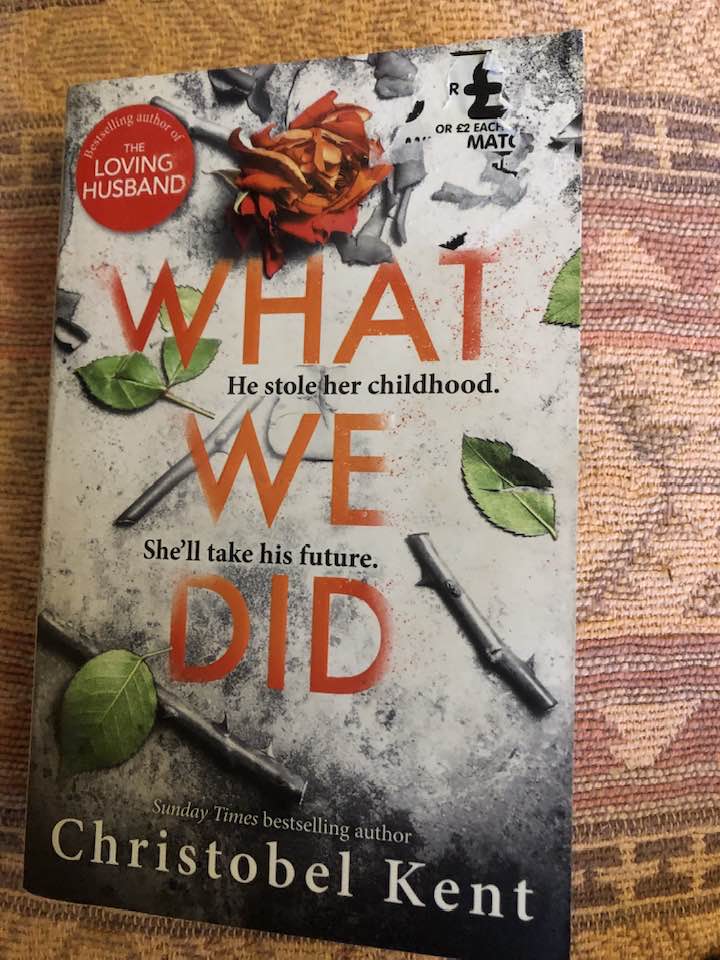
by Christobel Kent
An amazingly good thriller. I was gripped from beginning to end – and I even liked the end, which did not succumb to gimmick. This is the kind of plot that takes place inch by inch over a few days; you’re hanging on the edge with every step, and it’s all so believable.
A middle-aged mother, in happy marriage where much is felt but little is spoken… runs a small dress-shop in a little college town. One day a music professor comes in with his young pupil – and the ghastliness of the past all comes home to roost: our heroine, the quiet, careful wife and mother, had been abused by this sneaky bastard when she herself was a young violin pupil. And she knows he’s grooming this young girl.
What follows is so page-turny that your neck is crawling… a female journalist is also on the guy’s trail, and we know that sooner or later all the paths here will converge, but we don’t know how. What I particularly enjoyed was the portrayal of the husband – a sort of man I myself knew once, and admire greatly: quiet, practical, sensitive, staunch, loyal; and doesn’t miss a thing. Not, in other words, oblivious. In fact I liked all the non-villain characters – a wayward sister, the teenage son, an angry Ukrainian cleaner. And the villain characters are also convincing and we’re rooting for their comeuppance.
I’m going to look for more books from this author. Her photo is in the back and she’s interestingly brilliant-looking.
 The Blue Flower
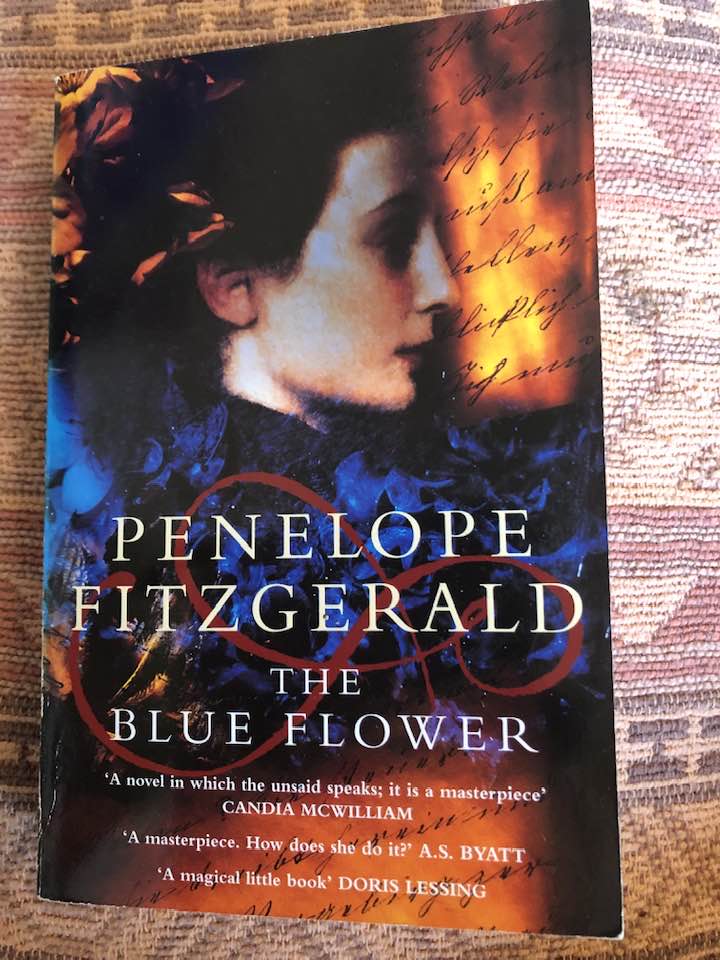
by Penelope Fitzgerald
A famous German poet/philosopher of the last days of the 18th century, pen name Novalis, left enough letters and documents behind when he died young in 1801 that these were later collected into five volumes. The author of this astonishing little novel studied them, and has crafted a thing of beauty from the story of the young man’s wooing of a girl of 12 from a country house… He knew within fifteen minutes of meeting her that he wanted to marry her, and would wait for her till she was fifteen. Meanwhile he was following his father’s lead to become an Inspector of the Salt Mines. Nobody opposed the marriage save the poet’s brother, and a young woman who secretly loved the poet.
At any rate, life had her own trajectory, not wanted by anyone… This is a book that will make you passionately grateful for advances in medical science, whatever ambiguities they might contain.
The gorgeousness of this book is in the writing. I have never read anything quite like it. It’s almost terse, but also tender and funny; original, brilliant, economical, delightful. The author worked in publishing all her career but only began herself to write at age 60. I had never heard of her, but will now look for more. The daily lives of the families involved are laid out so convincingly that you really do feel transported to that other time.
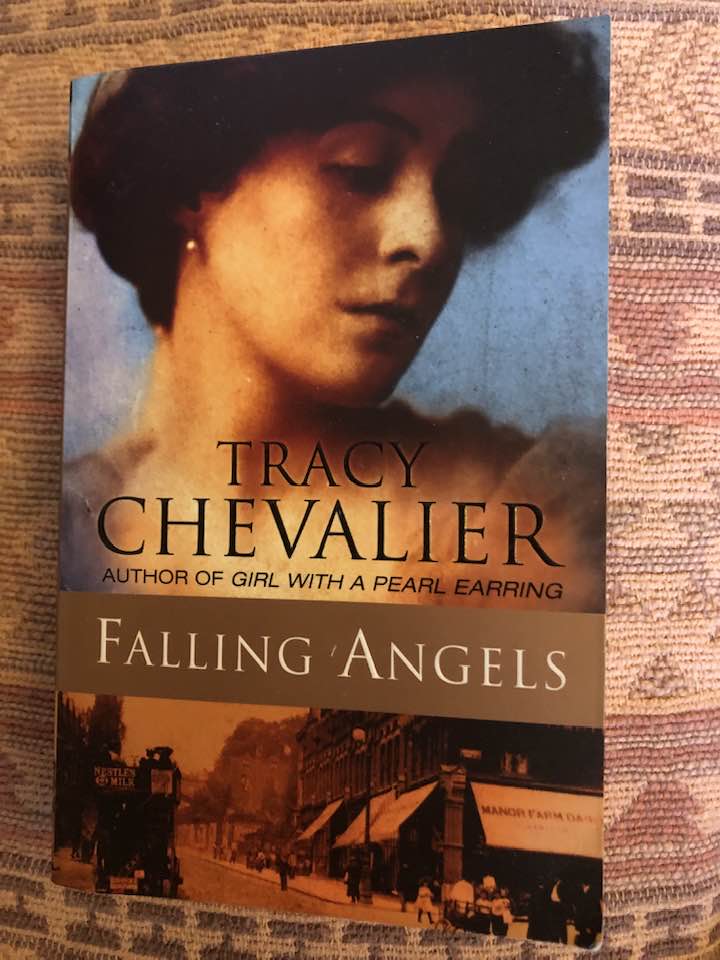 Falling Angels
by Tracy Chevalier
The author, a Yank who’s lived in England since 1984, seems to be playing happily as she constructs this novel – although it’s set halfway in a huge ornate park-like Victorian cemetery (bristling with stone angels), and encompasses tragedies from the Suffragette wars. Each character has a voice, in chapters that are usually short, giving a modern, chipper feel to a historical tale of two families in the early 1900’s, in middle-class houses near Hampstead Heath. One housewife is conventional, the other rebellious, one daughter intelligent, the other, her best friend, vain and silly and entitled. The most moving character is a quiet younger daughter, Ivy May. The servants, a grandmother, the husbands, the cemetery manager, the gravedigger’s son, all have voices.
I was a bit in doubt at the beginning – do I want to read this? – but was soon won over by the author’s engaging freshness. The plot’s sudden turns were deft and convincing, and so I consented to suffer through yet another suffragette scene of awful punishment… meted out to women, including high-born ones, who flouted Tribal Law and insisted that they too had a right to vote. We owe them so much.
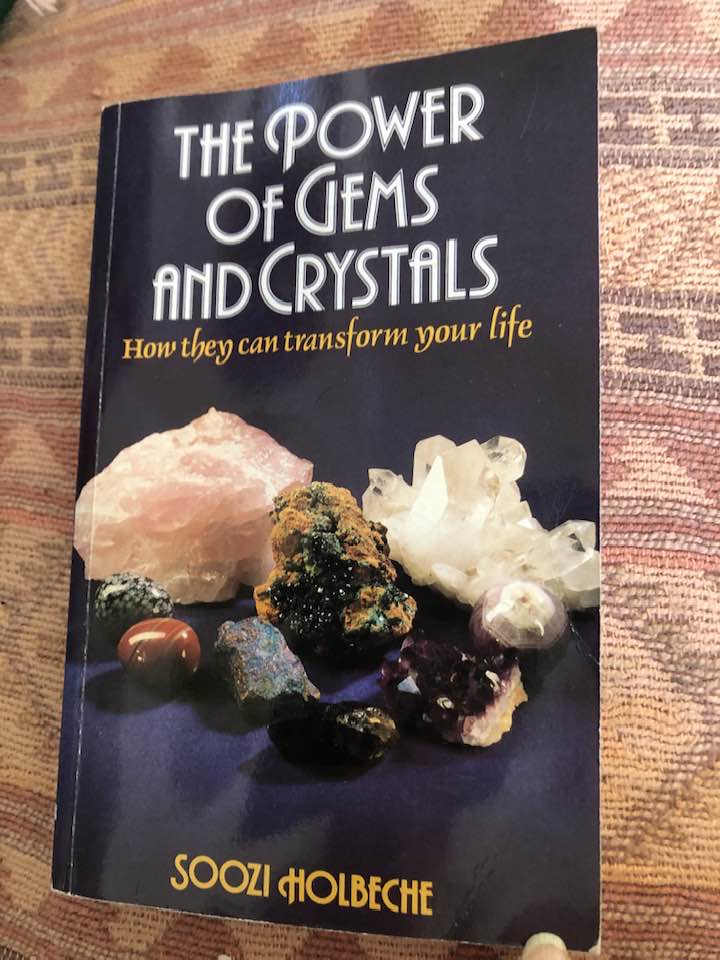 The Power of Gems and Crystals
How they can transform your life
by Soozi Holbeche
amazon.co.uk
It’s unusual for me to keep a book once I’ve read it, but this one stays here. I’ve been into stones since the late 80’s, but clear quartz crystals never took a big part in this – I preferred to design jewellery, as any stones I used in healing tended to get clotted up with the clients’ energies and, even after cleaning, they’d seem to get ‘tired’ soon and need to be retired. But this book inspires me to think of owning a few personal crystals to play with in various ways described here.
I particularly was charmed by the Native American way of welcoming a crystal into your life (or so says the author): talking to it, wrapping it in a soft cloth, cradling it like a baby, sleeping with it all night to merge its energy with yours.
The book is quite woo-woo New Agey, but is I think valuable.
Many methods of relating with your crystal are given – kind of Crystal Tantra, only it’s you meditating with the crystal. She also goes into history and other cultures’ ways of working with crystals. There are healing methods and personal stories. And a bit about other stones too.
The author was born in Sri Lanka and had an awakening experience as a child where she encountered a Buddha statue in a festival procession.
The book has a rough-and-ready quality which makes it feel accessible. I’ve marked many pages with a turned-down edge – so that when and if I ever get my personal crystal(s) (which seem to be more like beings than rocks) I’ll know right where to go!
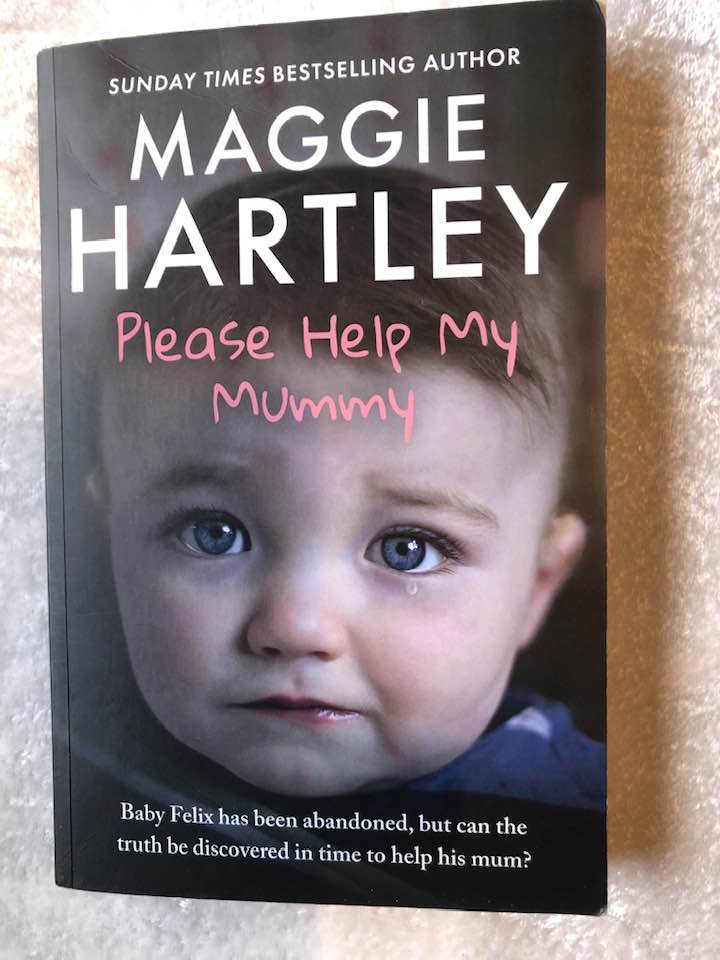 Please Help My Mummy
by Maggie Hartley
An interesting look at post-partum psychosis. A young mother – single, a successful financial analyst – wanted to have a baby so much that she spent £10,000 for IVF – abandons her infant inside a carry-all at a train station. The baby is brought to the author, a foster carer. The police track down the mum, and at first it’s not clear what the mum’s problem is…
Post-partum psychosis is apparently very rare – it’s not ‘baby blues’, or post-partum depression. It’s full-blown batshitness, with hallucinations, paranoia, delusions. It can be fatal to mum and infant if intervention doesn’t happen. And ‘extremely rare’ means 1200 cases per year in UK, which sounds like a lot to me!
It’s a good story; the fosterer works her usual magic with both infant (who actually seems fine throughout) and mum. And I am sure it’s good for people to be educated about this miserable and scary ailment.
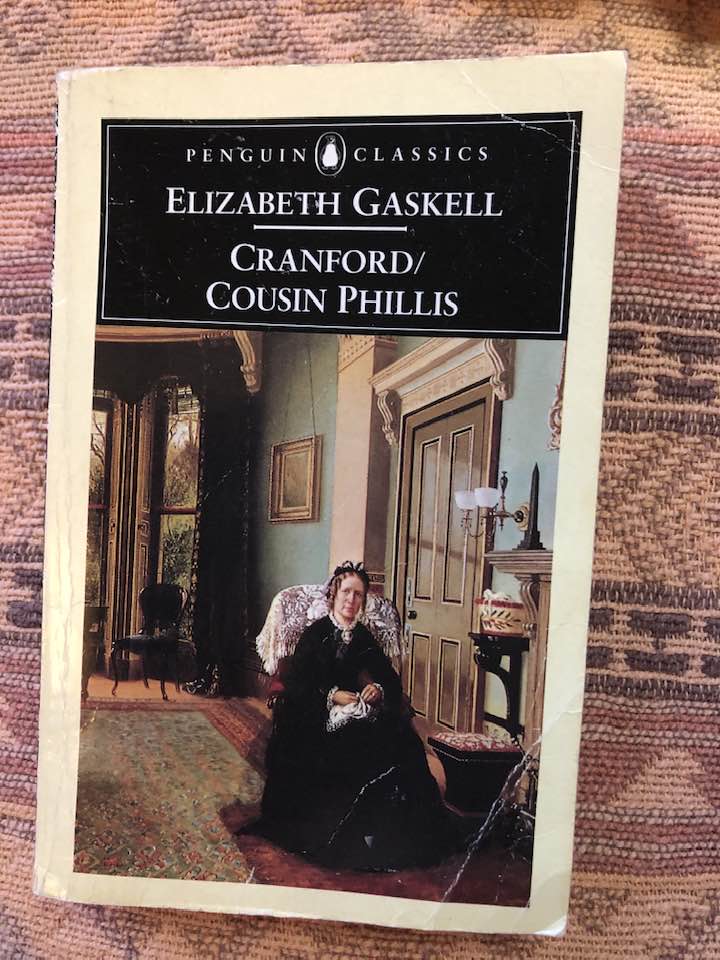 Cranford/Cousin Phillis
by Elizabeth Gaskell
Sometimes it is so lush to sink down into a classical novel and revel in the wonderful writing. Actually, in this case, two novels. In an appendix the author says she’d wanted to record dying customs from the generation previous to her own; so we’re way back in the early 1800’s (and later too) when in some layers of society people eat sweet pudding before the savoury course at dinner, and ladies wear ‘pattens’ over their shoes when they are walking to a nearby house to play cards and want to avoid mud. But the stories told here are so good, so poignant, so tender and beautifully-observed, that it’s not mere history we’re reading, but humans in a slower and maybe deeper time.
Cranford describes a small country town where ‘Society’ is nearly all genteel widows and spinsters, and we focus on the household of the Jenkyns – two spinster sisters, and their serving girl Martha (my favourite character in the book.)
Cousin Phillis is about the railroad in its infancy, and a brilliant, quiet country girl the narrator is related to, and a dashing young railway engineer.
There’s a lengthy introduction to put us in time and place, and an appendix to explain antiquated terms and references. I thoroughly enjoyed the whole book… (including a side-plot involving a colourful story from India) and was particularly impressed with how tender it was. I don’t know if it was really like that, but it’s as though people knew that life is precarious, and we’re all in it together, and yet we have time to really listen to and study each other.
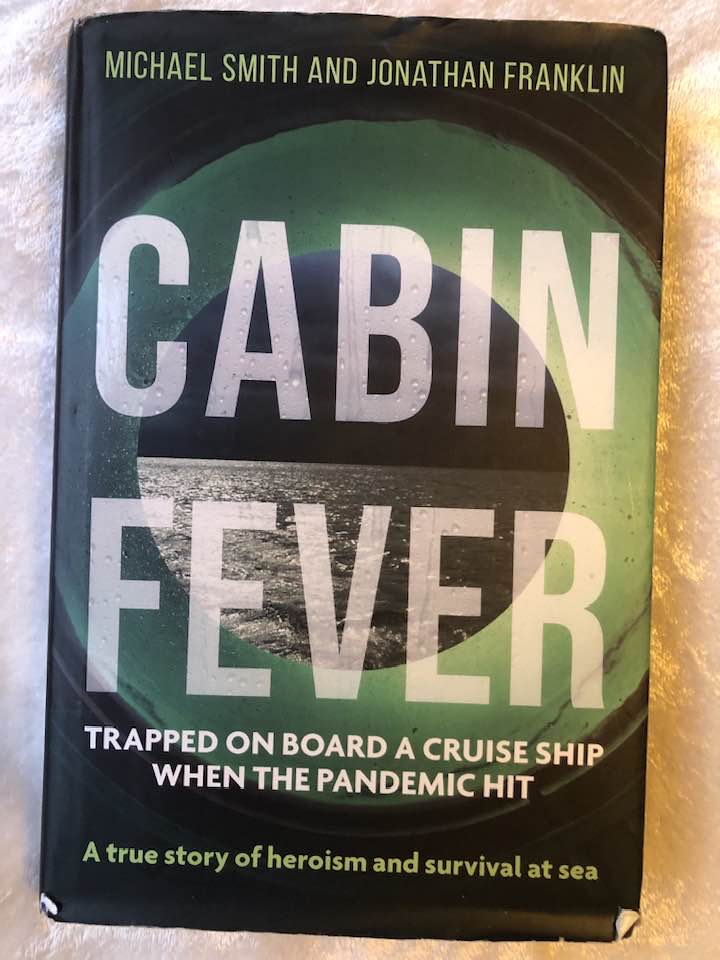 Cabin Fever
Trapped on Board a Cruise Ship when the Pandemic Hit
by Michael Smith and Jonathan Franklin
I’d read two previous books by Jonathan Franklin: 438 Days, about a Mexican fisherman who survived an incredible inadvertent journey in a tiny open boat across a huge swathe of the Pacific; and 33 Men, about Chilean miners trapped in a mine disaster. Both had happy endings and were utterly gripping, and, I felt, loving, respectful, and compassionate. So I ordered this book, published in ’22 – and was then afraid to read it until now!
And I really liked it. A clearly-told story of what happened aboard cruise ships – and behind the scenes, in diplomacy, government, and corporate headquarters – in the early, most-deadly months of the pandemic. We follow certain passengers and certain crew members, the captain of the Zaandaam, family members back home in various countries, as the virus sneaks aboard an enormous cruise ship and then spreads like the proverbial wildfire. It is, of course, pretty awful – and we all remember the confusion of those days: WTF is happening? What IS this?
We are left to draw our own conclusions at the behaviour of Carnival Lines, which owns enormous numbers of cruise ships. Although the virus had already decimated populations in a few ships, they still allowed the Zaandaam to set sail, thus pretty much ensuring mayhem and suffering. And they lobbied the White House to be able to do this, and the business-loving guys in power okay’d it pompously, even as the CDC were demanding a total ban on cruise ship activity.
Particularly touching is the story of the Indonesian man in charge of the laundry – an enormous operation aboard a huge luxury ship. He just kept going and going, trying to keep up with the demands of huge numbers of passengers confined to their (often-windowless) cabins as the fever raged. He fell sick himself, as did so many crew members, and forced himself to continue… until he couldn’t any more.
I was also impressed – though, sadly, not surprised – when passengers who felt unwell and were coughing a lot continued to socialise and go to the dining room for meals. This was before the captain finally announced a lockdown. It seems to be a cultural thing – I notice it here in England – that you keep going when you are unwell. This, of course, deprives your immune system of the energy it needs to heal you. But I suppose it is considered manly or self-sacrificing or something. It also sacrifices others…
As the story progresses, all governments shut their ports and none want any cruise ships to dock. Eventually there are 933 cruise ships circling in the Caribbean all woebegone, most – though not all – passengers having with great difficulty been disembarked, but the crews not allowed to leave. The crews start to party…
The book is a simple, easy-to-read historical document about a recent, perplexing, and scary time. As a cautionary tale, it has great value. And as a sort of medical adventure story, it’s a very good read.
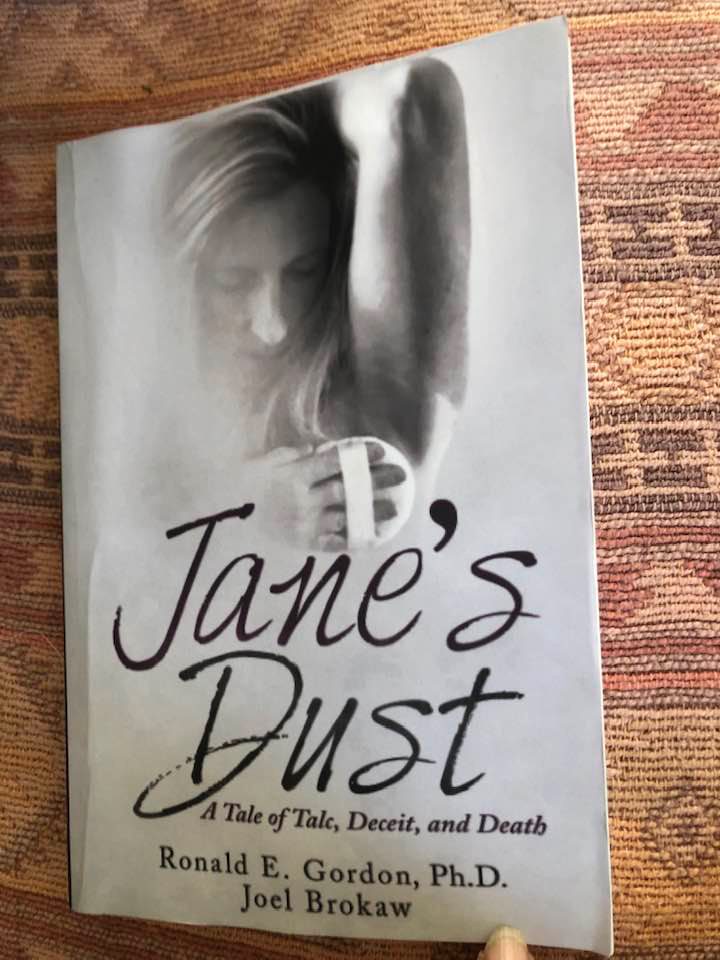 Jane’s Dust
A Tale of Talc, Deceit, and Death
Ronald E. Gordon, Ph.D. and Joel Brokaw
A ghastly tale of corporate deceit and hideous human suffering. The authors have created a single character out of many who got cancer from using talc – an intelligent, calm, and likeable schoolteacher. She has used talcum powder all her life to soothe California sweatiness. Nice clean good-smelling white stuff, right? Like my mother shook onto her babies’ bottoms to combat diaper rash.
We learn that one thimble holds 2 billion asbestos fibres, that talc is often contaminated with asbestos – they form in the earth together. That it’s used in so many things: wall paint, face makeup, eyeshadow, automobile repair, building materials. That the unnamed corporation deliberately used testing methods that would not be able to detect the asbestos. Thus welcoming millions and millions of newborns into cancer-world, right away! For the talc/asbestos somehow works its way deep inside the body – and of course easily into the lungs.
I take a supplement of chlorella powder dissolved in water, and when I’m spooning the powder out of the pouch I wear a mask. This is because I am very impressed at how the powder travels and clings, when it does not appear to be doing so. If I swab down the counter with a wet paper towel it always comes away green. And I don’t want any sort of powder in my lungs. But we all associate talc with cleanliness and comfort and care. And that’s how the corporation wants us to think. And by the way, if your own country gets suspicious of your product, just sell it to the third world!
The book is not brilliantly-written. The prose is somehow clunky. But the story needs telling. There’s a courtroom drama in it too.
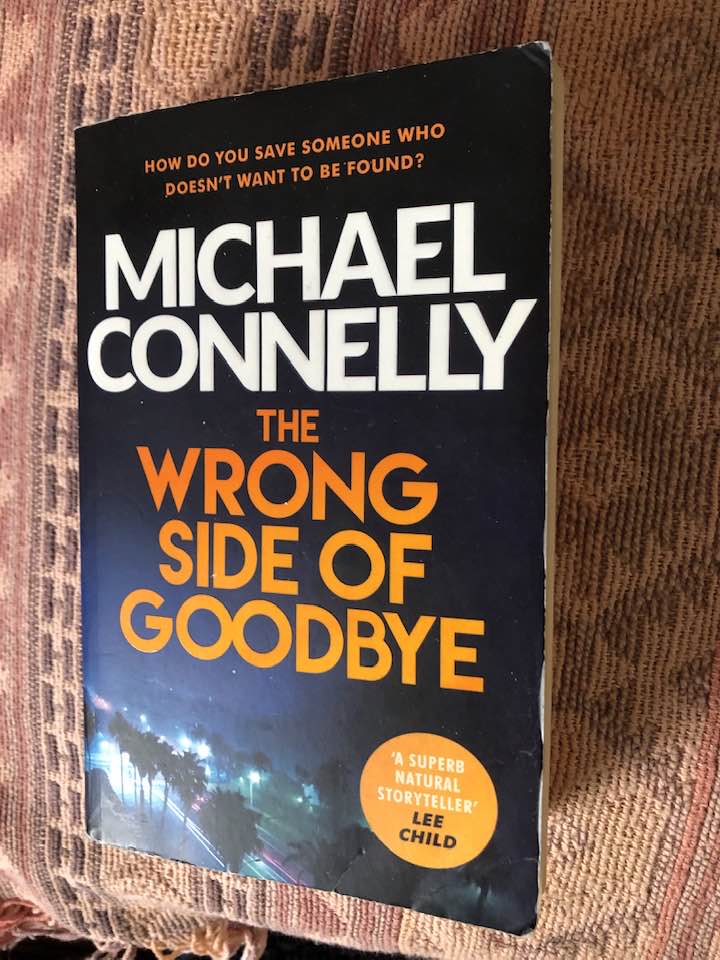 The Wrong Side of Goodbye
How do you save someone who doesn’t want to be found?
by Michael Connelly
I do like this writer, though I get tired of Harry Bosch’s relentless grimness. Recently though I’ve been waiting to stumble across one of these books which has a believable ending. Connelly has been resorting to gimmicky twists to wind things up, and it is disappointing after an otherwise-gripping-and-believable story.
I can almost call this ending acceptable. In fact, I think it is believable; it’s just a little bit too much of a detective-story trope. Whodunnit? Well, be surprised… but not very.
Anyway, it was really a good book otherwise. Less murderous than many, and with a softer slant, which reveals that Connelly is a fan of the arts! Who would have guessed?
A dying billionaire hires Bosch to find an heir he thinks he has. The corporation behind the billionaire doesn’t want that. Meanwhile, a nasty rapist called the Screen Cutter is on the loose, targeting Latinas. (One thing I like about Connelly – and his setting, LA – is all the rich Latin culture going on. He obviously likes it too.) Bosch is juggling these two cases, and the politics in the police station where he volunteers. His own traumatic time in Vietnam comes to the front of his mind as he discovers that the heir to the fortune served there too… and died. But wait! He might himself have left an heir!
The two stories wend along side-by-side even as dramatic events unfold in both… of course! Anyway, I liked it.
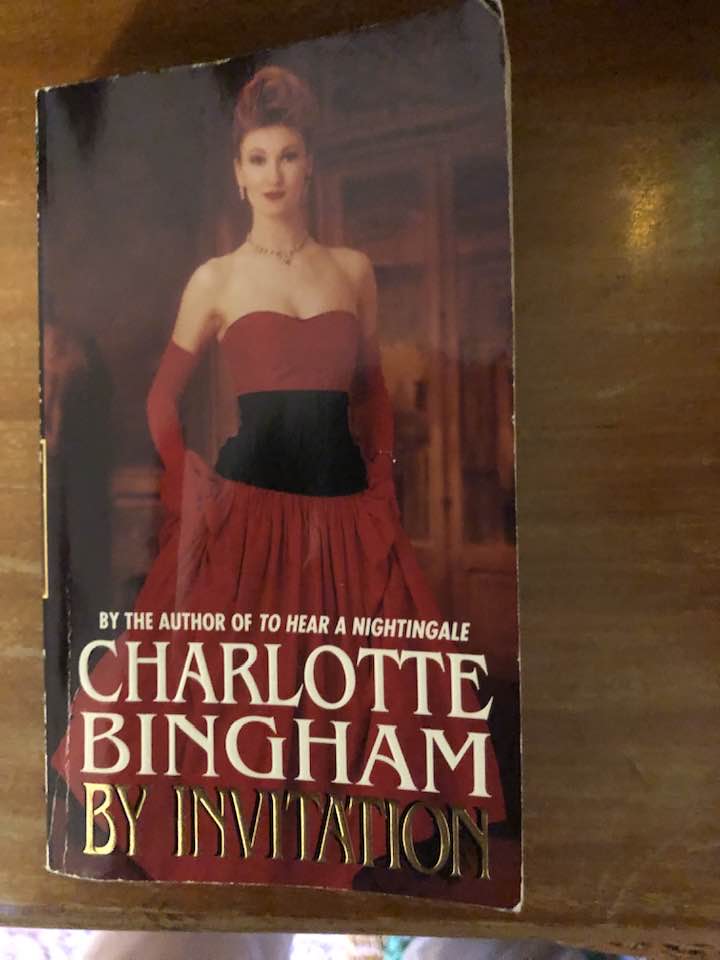 By Invitation
by Charlotte Bingham
Frivolous but intelligent; about upper-crust Brits, and their butlers, behaving mostly badly. We follow two titled women and their daughters and various lovers and a gay couple over a summer in which a ball is being planned. It’s fun to read because the silly goings-on are narrated with such an offhandedly-penetrating eye. And then there are the dresses, the country-house settings, the London and Paris settings, and the inner monologues – which are very lifelike and believable. Nothing heavy about this book; read it for a respectably-smart diversion, with some insight into mental and social workings as the cherry on top.
These reviews were first posted on Facebook by the author
Featured image credit to Christin Hume on Unsplash
Related articles
- Madhuri’s collection of Short Reviews: Late Evening Reading



Comments are closed.