

Reviews by Madhuri of books by Graeme Fife, Yvonne Roberts, Helen M. Stevens, Emma Brockes, Billy Connolly and Colette
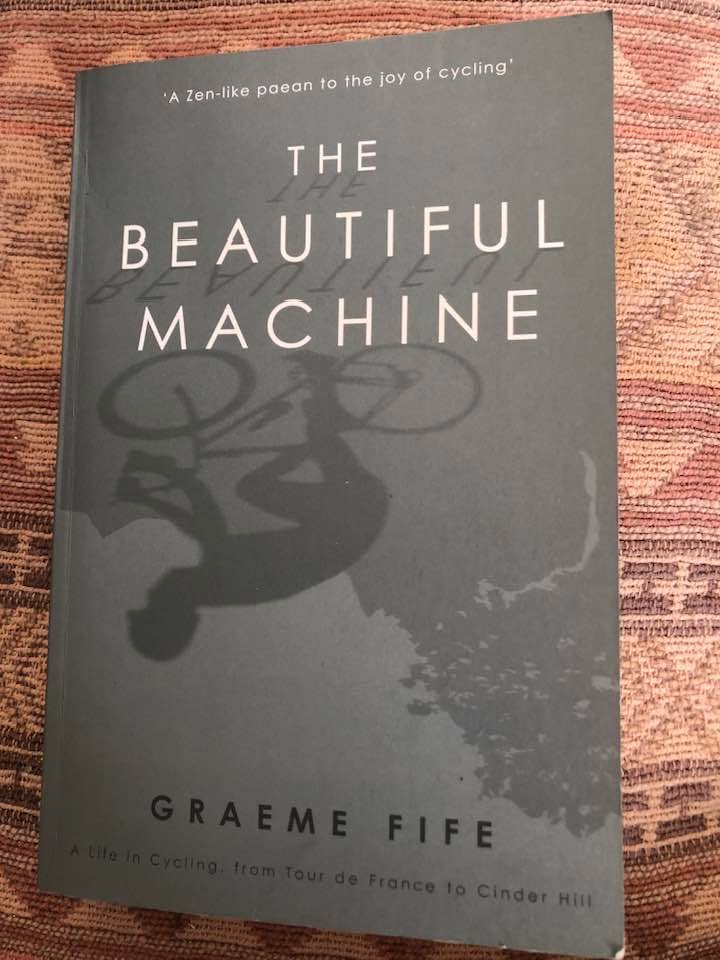 The Beautiful Machine
A Life in Cycling, from Tour De France to Cinder Hill
by Graeme Fife
An extraordinary cycling memoir by a former Classics master at an upscale boys’ boarding school. As a child he escaped an abusive dad and ineffectual mum by getting on his bike and getting out of there. A French girlfriend later gave him reason to flit off to France on his bike. In fact, he seems to have gone nearly everywhere on it, intervening oceans notwithstanding. He fell in love with the Tour de France, wrote a book about it, and cycled up and down the same hills as the competitors.
In fact, much of the last part of the book is minutely-detailed descriptions of the sufferings caused by, and the names of, hills: in England, the Pyrenees, and in New England too. The writing is excellent, but I did finally skip over some of those climbs.
My favourite part was a terrifying journey to Timbuktu, with two friends, by bike – roasting in the sun and sand-eating and godforsaken landscapes and towns; and then a heartwarming meeting with two young men that rescued the whole trip for him.
He seems to have been quite the ladies’ man too, and we hear just a bit about some adventures. Later he cycles with a daughter.
You’d have to want to read lots and lots about cycling to enjoy this book, but the writing is so good it’s also a treat to go with him into both modern quotations and classical allusions. And he praises his friends a lot too. A man who found his heart against the odds.
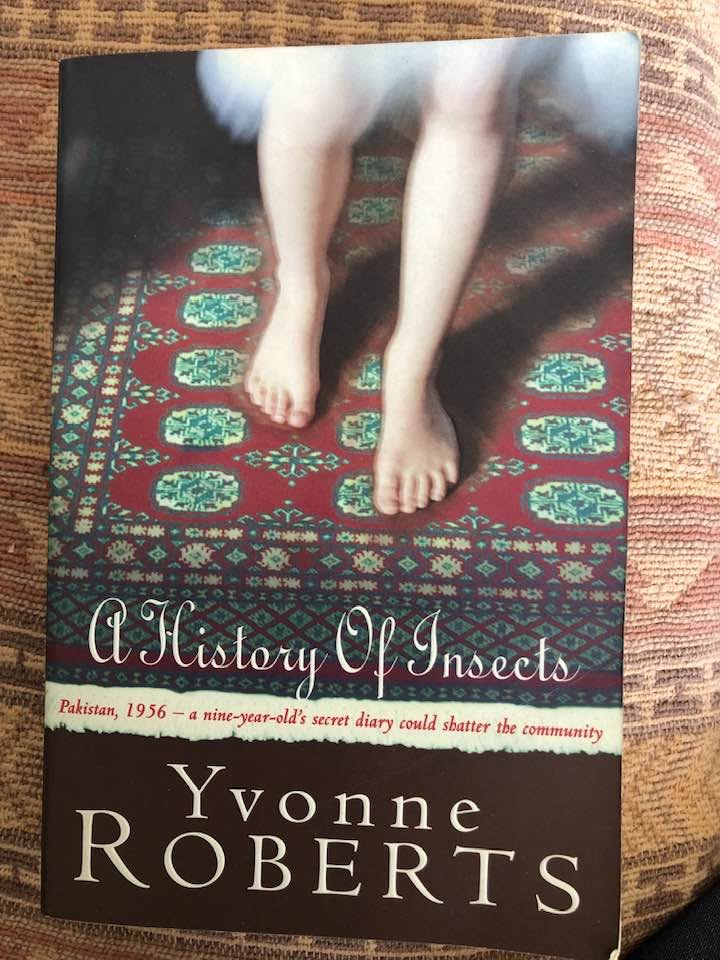 A History of Insects
by Yvonne Roberts
An excellent novel by a journalist who spent her childhood in Pakistan.
Ella, age 9, lives with her loving dad and scolding mom in the compound of the British High Commission, in Peshawar. It’s 1956, and there is political trouble, plus adulterous adults and irritated adults and power hungry ones and privileged ones and a few smart ones. The girl sees something shocking she does not understand. Rather than listen to her, the grownups send her off to a terrible boarding school in the hills (very well drawn – we absolutely shudder).
It’s a book about 50’s child raising, and privilege as opposed to merit, and the vagaries of fate, and in particular how trust can be disrupted in a child (and some of it possibly restored again). The characters are colourful and strongly done, the cultural surroundings, of course, very familiar to anyone who’s been in India, if not Pakistan. I found the book very readable, quite gripping, and distinctly touching. I’ll look for the author’s other books.


The Timeless Art of Embroidery
by Helen M. Stevens
I got this book for a pound in a charity shop, and was then amazed at how beautiful it is. The author is a member of the Society of Women Artists – as of this book’s publication in 1989, only the third textile artist so honoured. Where you or I would click a pic of a beautiful scene, or at the most sketch it, she draws it, then transfers this to cloth and embroiders it all in… in the process studying anatomy and Latin names, as well as paying attention to historical antecedents: textiles showing similar themes.
She also brings in quotations from poems, and tells us about medieval and Victorian embroidery, as well as that of other periods. And all along the way suggestions and instructions are given for making your own embroideries. At the end are practical breakdowns of stitches and methodologies.
Altogether, a class act!
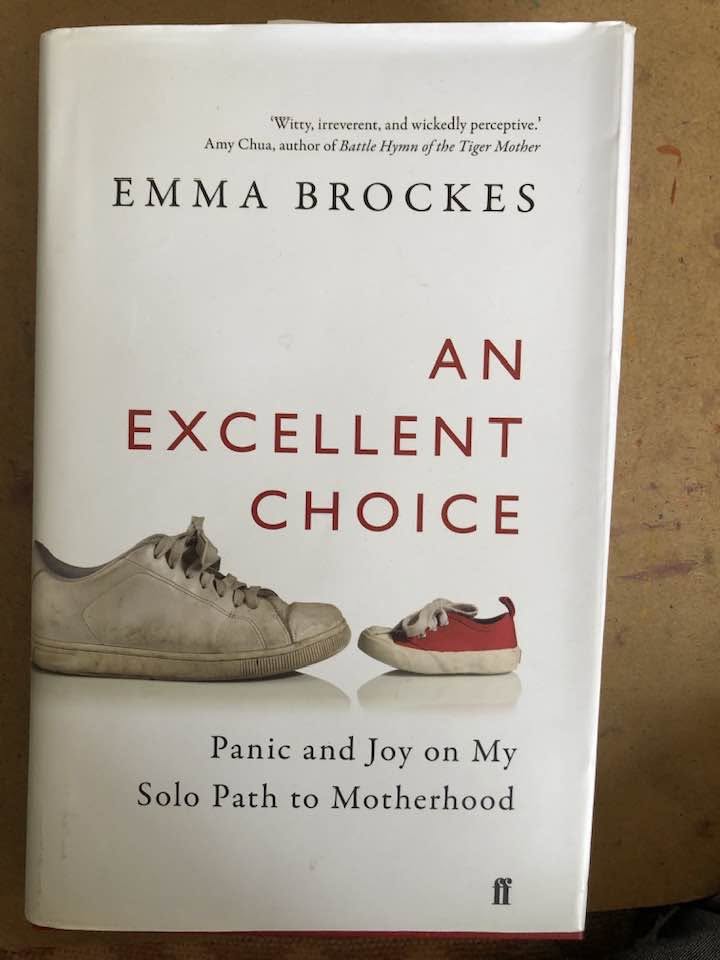 An Excellent Choice
Panic and Joy on my Solo Path to Motherhood
by Emma Brockes
A British journalist of 37, living in New York and in a same-sex non-live-in relationship, wants to be a mother. She goes through IUI and IVF, very expensively, and the latter works. A little better than she thought: twins!
She writes for the Guardian, and the book is intelligent and honest and thorough. We hear all about the procedures, and how people take the news, and there are many riffs on the difference between the NHS and the American medical system (doctors’ receptionists in the States routinely lie on the insurance forms because the insurer doesn’t cover XYZ, so when a patient has X or Y or Z test, it’s listed as A or B or C, which are covered). It’s a very modern story, what with all the gender discussions, and it’s very interesting too if the subject appeals to you (I never had kids but I love to read about obstetrical adventures).
There are many sociological discussions. “People give up their seats to me on the subway. (There is a definite social and racial pecking order to this. By far the quickest fellow passengers to offer me a seat are black men, followed by black women, followed by white women, followed by white men, particularly young ones in suits who tend to stare fixedly at their screens whenever someone old or pregnant moves into view.)”
She talks about her physical experiences of pregnancy: she goes to interview a musician in north London and is kept waiting 30 minutes on the doorstep. “It’s raining slightly, a refreshing summer rain, and instead of being annoyed I sit on a chair on the porch with my belly on my lap and have an almost plantlike feeling of contentment.”
Throughout the pregnancy she has tests all the time to monitor things. This seems to be the way it’s done now. I kept contrasting the super-caring with my own mother’s time: once she knew she’d conceived, that was pretty much it until the birth – she had no support system outside the family (which of course left it all up to her and demanded her constant care of them) and once the baby arrived, she had to cope with it and all of us, unaided. I don’t know how she survived. Certainly she didn’t know the baby’s sex or if it had defects, both of which are now tested for. You have to wonder though about all that scanning, and how it might affect the foetus.
I enjoyed this book a lot. I found it simply very interesting, and I liked the writer’s erudite yet personal style.
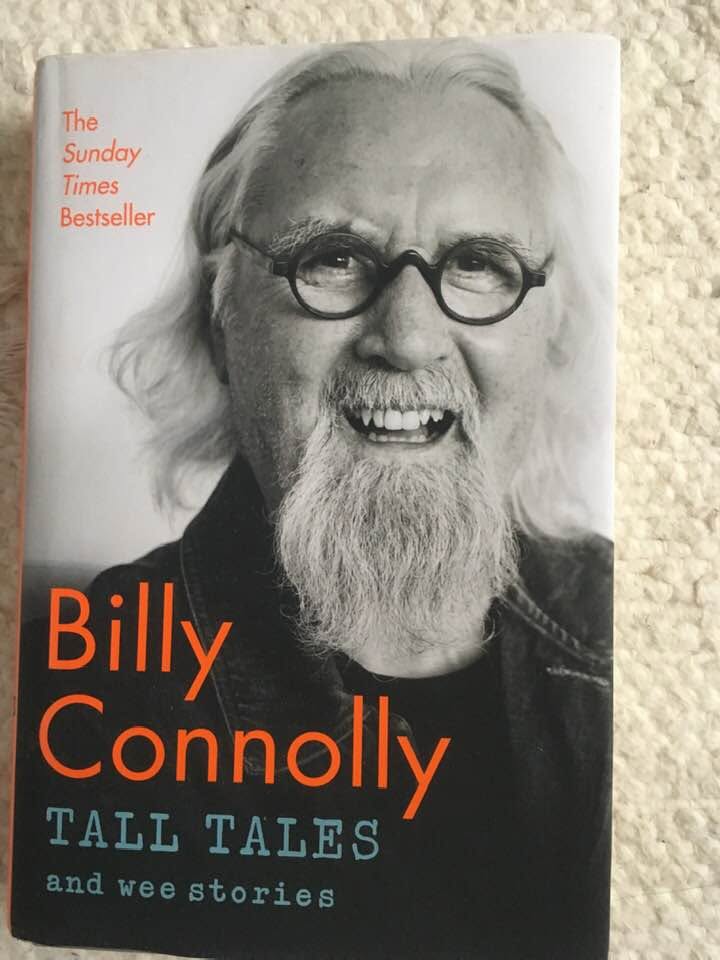 Tall Tales
and wee stories
by Billy Connolly
A very gritty Glaswegian comedian. I laughed a lot.
Seems to be having a good time telling it like he sees it!
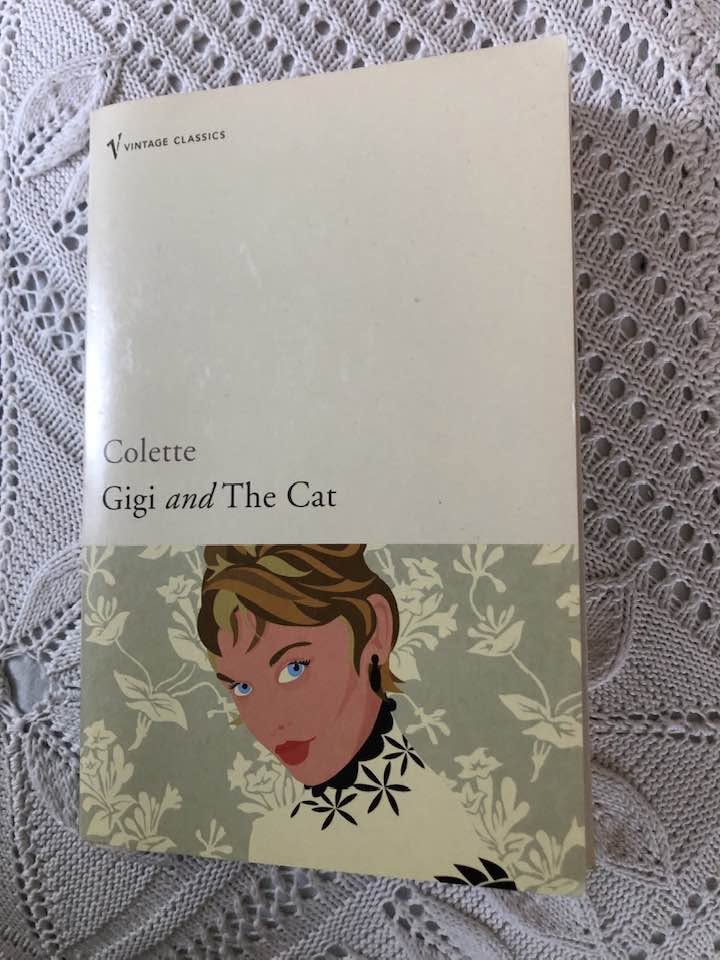 Gigi and The Cat
by Colette
This slim volume – 157 pages – comprises two stories, the short Gigi (1944) and the much longer The Cat (1933).
Colette can be relied upon to deliver beauty, subtlety, sensuality, and surprises in all her prose. It had been many years since I’d read her, and I was transported to that unique country which is surely the most sensuous in the world – and perhaps the most snobbish! I was agreeably surprised though by the intelligence… especially in La Chatte.
Gigi is about a long-legged, handsome 15-year-old girl who is known to be unusually childlike; her mother and her sophisticated aunt tell her about this shortcoming all day long, gazing at her too with a considering eye for her socially-marketable qualities, and correcting her at every turn; albeit lovingly. A wealthy man in his thirties (sugar plantations) visits often to chat with the mother, and plays with Gigi as if she was a child. Then he asks to marry her.
She refuses, and the elders are aghast – because of the money. The child turns out to know her own mind, and she just hadn’t wanted to be famous and go to clubs and races all day. Then she realised she loves him and would no doubt have to put up with something, so she says Yes. And everybody’s happy.
Now, of course, we are aghast at this picture! It seems that back in 1944 it didn’t seem so barbaric. So this story made me feel a bit… uneasy and indignant.
The next one was purely beautiful, and deeply touching.
A young man of 23 lives with his wise, quiet, and intelligent mother, some old servants, and a little Russian Blue cat, in a big old house with a huge and wonderful garden. He is due to marry in a week, and later, when an addition to the house is completed, the couple will move into it. For the intervening months they will live in a borrowed flat on the 9th floor of an apartment building on the outskirts of Paris.
The young new wife is jealous of the cat. The cat, when her beloved human leaves to marry, stops eating. The young man goes through a few months of painful ambivalence about his wife, even as they have lots and lots of sex, for which the young wife has a greed her husband finds unseemly. He misses his old house, his solitude, his cat. He brings the pining cat to the apartment.
I won’t tell you more in case you read it… but oh boy, this story brings up interesting intra-species questions. The writing is so deft, so courageous, so tender, so insightful… I was transported back to a heartache in my own life that has never left me. My Missouri beloved, Chris, whom I went to live with in 2005, had a cat who loved him just like that: he was her man, and they were intertwined.
I love cats and had only love for her, but she sabotaged me as much as she could, with pee and hisses and poop and swatting and snarls. That poor kitty was brought low, banished outside for poop-crimes, sidelined by a female human, even if one who meant her only well. Eventually she became old and was ‘put to sleep’… but I never forgot that her heartbreak was because of my presence. (She is immortalised in Love at Dancing Leaves: a Tantra Memoir.)
If you love cats and good writing, this story by Colette is a must-read. I’d even rate it above Doris Lessing’s cat book, if only just… it’s so rich in lushness, foliage, flower, feeling.
These reviews were previously posted on Facebook by the author, reproduced here with permission. Featured image by the author
Related articles
- Madhuri’s collection of short reviews: Late Evening Reading


Comments are closed.