

In this last part, Dharmen spoke about his life after the closure of the Ranch – interview given to Punya in Greece in 2019; transcribed, edited, and with updates by Srajan
Read Part 1: Living and Working in Osho’s Centres and Communes in the Netherlands
Read Part 2: Making money for the Ranch
Closing up
After the Ranch closed, the commune in Amsterdam started falling apart. People were leaving and there were no more workers in the disco. So we had to give up the disco. Some even dropped sannyas and said, “Well, I don’t want to have anything to do with this. I’m out.” And they packed their bags and left. But there was still a group of sannyasins who wanted to stay in Stad Rajneesh. It continued for another six years with about half of the original 200 residents.
We tried to keep it going. We were one of the communes that were actually making money. But after Osho left his body in 1990 we had to give up around 80 percent of the buildings and kept renting only the remaining 20 percent – one building. A few members of the commune remained.
It is still there today, now called Osho Mevlana, with a sannyas community of about 30 people. A lot of young people are living there. New sannyasins. There’s Dynamic, Kundalini and Evening Meetings. It’s a very nice place – it’s not directly on the street. You walk from the street through a nice garden. It’s very secluded.
And what about the books? I said, “Well, it’s finished, I am going somewhere else.” I didn’t want to continue with it – I was a bit too wild. Freewheeling. So Dassana, who was like the mama of the commune, asked Abhivandan, “Do you want to take over the books and tapes from Dharmen?” And he said, “Let me think about it.” The next day he came back and said, “Yes, I am going to do it.”
For 35 years he took care of Osho Publikaties in the Netherlands, all the Dutch books, the printing, everything. If you look at the Dutch books, they are really well written. Beautiful design. Beautiful advertising. Very good quality. And all for a really good price.
He was the right guy to take over because I started travelling again. Osho went back to India and Poona 2 started. I wanted to be there. But I am happy that at least I had set up the books and tapes. I made it solid. I gave it a good foundation.
And what about the discos? Our Amsterdam disco was closed, but in other countries they remained open. In Cologne, the discos weren’t asked to close because they were making money. After Sheela disappeared they simply went on – and the commune too – and they’re still there now. I believe the small disco is still there. But I am not sure about that. A few years ago I was in Cologne. That was actually really nice.
It’s a real pity that Osho Stad (the new name of Stad Rajneesh) closed because it had the potential of becoming something like Osho Risk or Osho Miasto. In Germany there are a few places in the countryside. Of course in the Netherlands there’s still the Humaniversity (which was called Grada Rajneesh at the time), Veeresh’s place. Independent. It had nothing to do with Amsterdam.
Actually, Sheela also went there and said to Veeresh, “You have to do it like this and this and this.” And he replied, “I am sorry, I am going to do it the way I want and not the way you want.” At the time Veeresh even wanted to drop sannyas. He didn’t, because as he said, “No, I cannot drop sannyas because Osho is my Master. And whatever happens here, his name will always be connected to the Humaniversity.” Of course, Sheela didn’t like anybody who was against her.
Veeresh’s place was a therapy centre, he didn’t have a commune and wasn’t sending money to the Ranch. Sheela kept only centres which were making money for the Ranch.
Miasto also stood firm against Sheela and is still going today. As is Osho Wajid, a commune and meditation centre in The Hague.
Osho Arrested and World Tour
Most of us were very concerned when Osho was arrested. I didn’t care about money. I didn’t care about the Ranch. I didn’t care about the commune. I cared about Osho, because I knew he was in great danger. He might not leave that jail alive!
We would follow the news, and while Osho was in jail – it took 12 days – we still kept the disco going. We kept the commune going. But we were very concerned about his health and his safety. That was the main thing. We were constantly asking ourselves, “Where is he, what is he doing?”
It was actually Hasya, Osho’s new secretary, who got the press moving, telling them: “You are the ones who need to help us find out where he is.”
When Osho came out of jail and went on his world tour, slowly, slowly the communes became smaller and smaller and smaller. People started finding their own jobs. More than a year later Osho was back in Poona.
He first landed in Bombay and gave discourses there in the winter of 1986, and then in January 1987 he moved to Poona.
We were all watching, “Where is he? Where is he?”
“He is in Uruguay.” “Then we go to Uruguay.”
“He is in Greece.” “Then we go to Greece.”
People would pack their bag and suddenly go to Uruguay, even if it was not possible to see Osho…
Poona 2, Osho Risk Denmark and Corfu
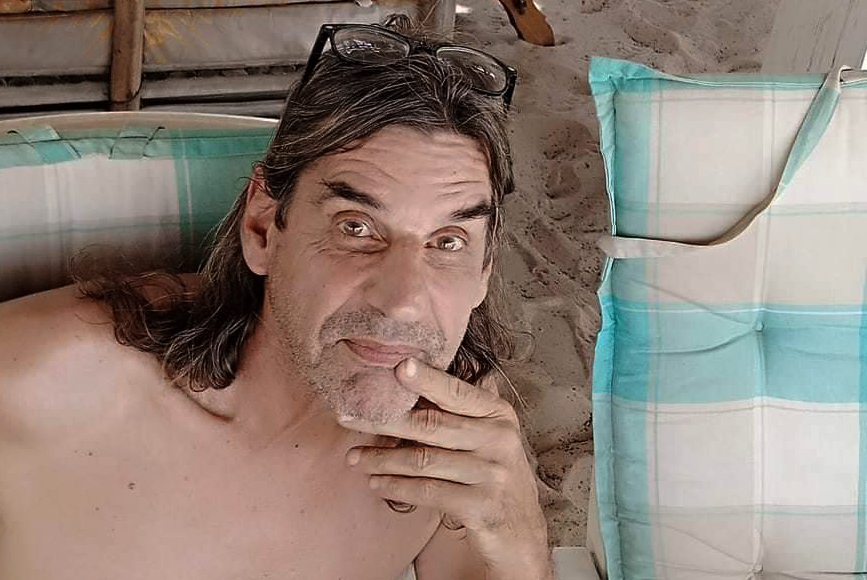
After the Ranch closed, for a while I worked on my own, and when Osho moved back to Poona in 1987, I went back to India. I was copying tapes again. Out of Jesus House. Together with one of Osho’s brothers. He was doing the Hindi tapes and I was doing the English tapes. It was a very small office. Tiny. You go up to the top of Jesus House, and then from the terrace down a few steps. And when I left that job, Atmo walked in and I showed him how to do it.
In the 1990s I lived in Osho Risk in Denmark. I moved there in 1991, after Osho had left his body, and remained for seven or eight years. Sudas was there already. It was Angie and a Danish sannyasin – I can’t remember his name, maybe it was Nishkam or Sundram – who had started the commune. Osho Risk is a beautiful place in the midst of the countryside, really flourishing. Really really beautiful. I had a great time there.
I have rented a house in Corfu, not far from here, and move between Greece and the Netherlands. I am now translating Zen, the Diamond Thunderbolt, from English to Dutch. For the last few months I have been translating these talks. There are six parts where he talks on priests and politicians. In one of these parts Osho talks about the Ranch experiment, and says (I am paraphrasing here): “I started this Ranch because I can talk and talk and talk. And a few people are listening. But I am still with my talking. I am standing on the side. And with creating this commune I have jumped into the river and I will show the world that what I say can be real. It can be done.”
I started translating about 15 years ago, although I had never formally studied Dutch. I was living on my own and still wanted to somehow be connected. I actually started translating for Salto TV because in Holland you need to have subtitles. That’s when I started translating Osho – for these subtitles.
In spite of the Ranch collapsing, all that working, working, working and sending money to the Ranch was worth it. Absolutely. Absolutely! I feel that everyone who was involved learned so much, also about being in the world, about doing business, all this. We were very successful. Nobody can deny that. That’s it. Nobody could have set up something like that. I think the whole Ranch experience was simply great. We did things nobody else could.
So actually, what did we create there in those four years? In terms of money: the first cashless society. No crime. No drugs. Recycling. Men and women, everyone equal. The first with AIDS prevention measures – with condoms.
And the animals. They were returning to the Ranch. I came out of my tent during the festival and what do I see? A huge deer standing in front of me – with big antlers. He was grazing. He looked at me with those big brown eyes. It was like, “Wow!” We looked at each other and I sat down. It was completely peaceful. I was not afraid of him. He was not afraid of me. So we looked at each other. And he went on grazing. Then he walked away, slowly slowly.
The animals were coming back. As far as I know Osho talked about that. These animals were coming back because they felt we were not hunters. We were not going to kill them. The animals trusted us.
And today?
by Srajan
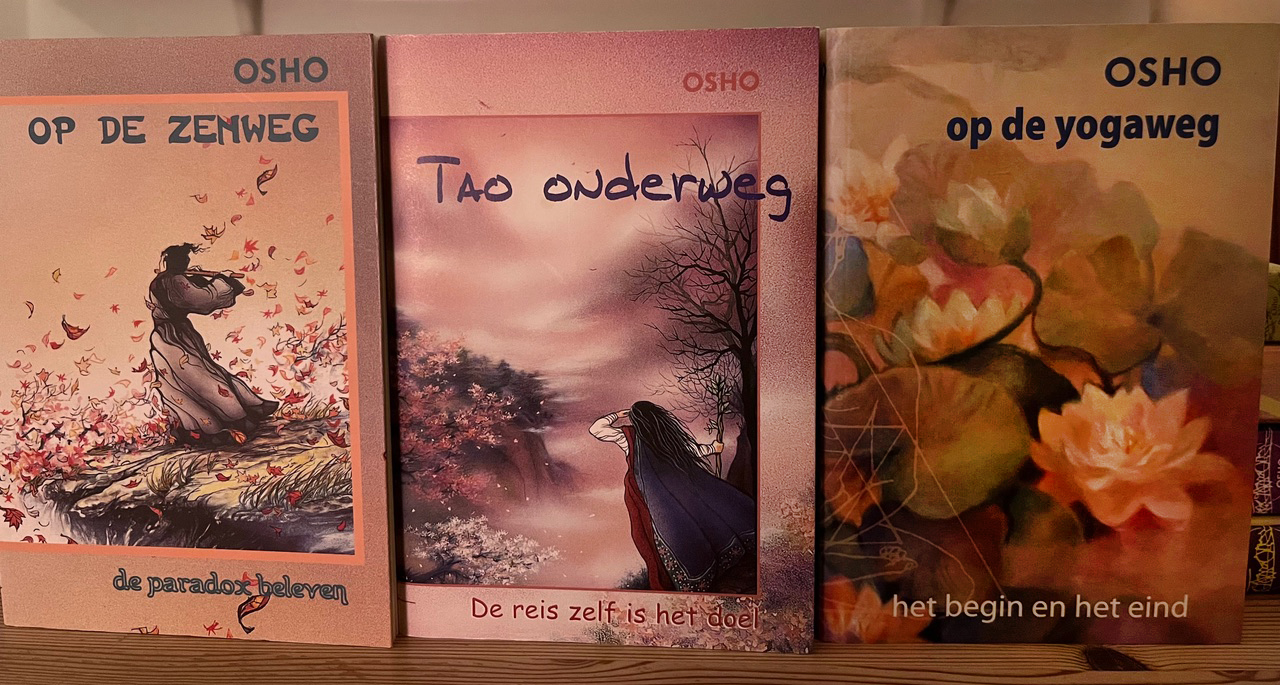 In 1988 Abhivandan moved Osho Publikaties, the books and tapes, to a suburb of Amsterdam and a few years later, to the east of the country. He left his body in 2018 (sannyas.wiki – In Memoriam). No Dutch Osho books have been published since then. As most people in the Netherlands speak English fluently and because of the publishing crisis, it is felt that it’s no longer worthwhile to put effort into translating Osho’s words into Dutch. However, I regularly translate his discourses and publish them on our website, Vrienden van Osho (vrienden-van-osho.nl).
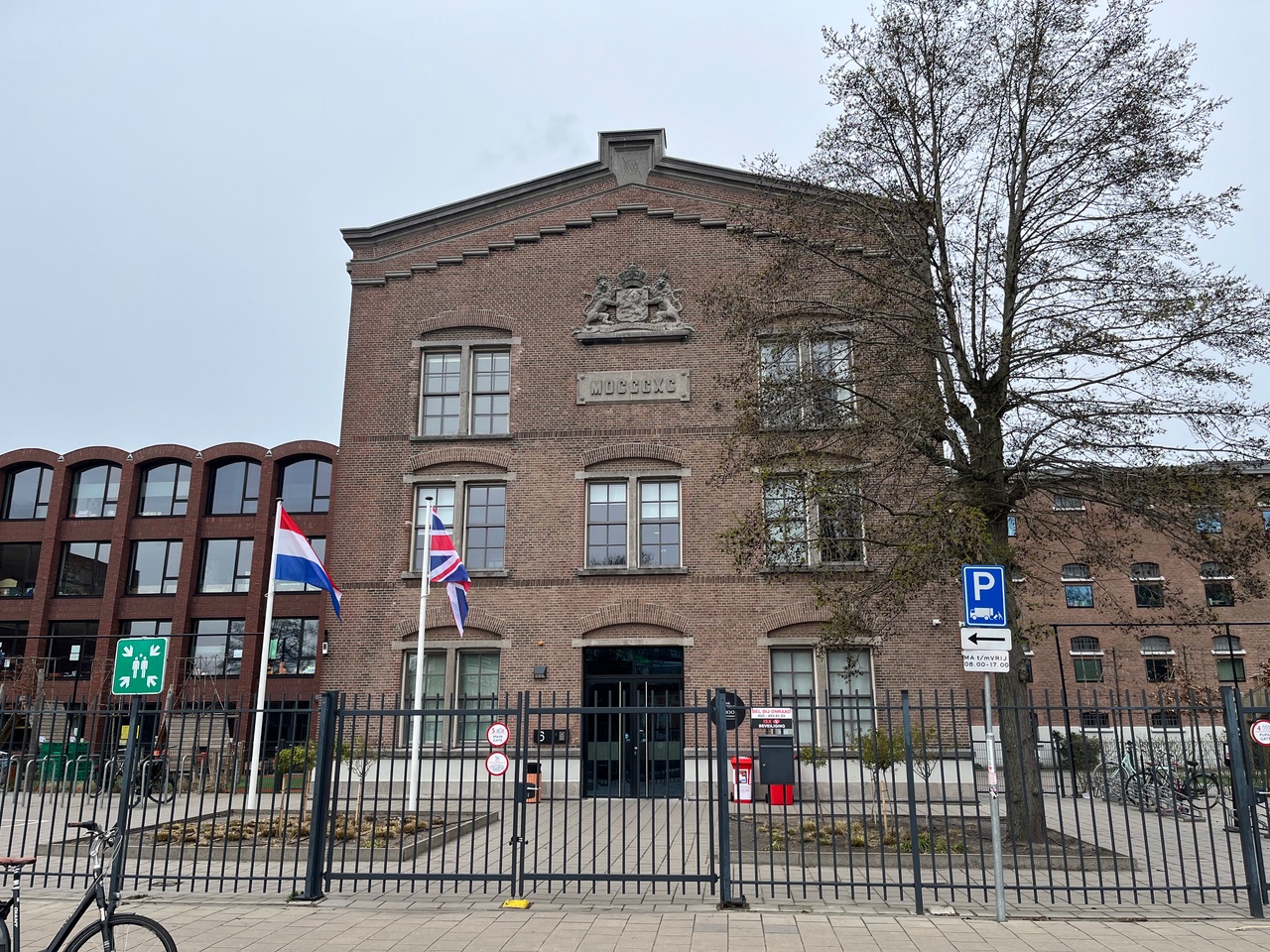
While the Heerde commune was still running, the sannyasins in Amsterdam rented one of the three wings of a jail! The one on the left side, with the facade with the large windows. We shared the central building with the cupola with artists and musicians who had their studios on the right wing of the complex.
The 1890s building was placed fairly in the middle of Amsterdam, on Havenstraat. It served as a prison, then it came into our hands, and then served as a prison again until its final closure in 2013-2014. At present one wing, ‘our’ wing, has been taken over by a school. Jail – sannyas commune – jail again – British School of Amsterdam. History takes funny turns. Nowadays you see schoolchildren in uniforms here, a very unfamiliar sight in Holland.
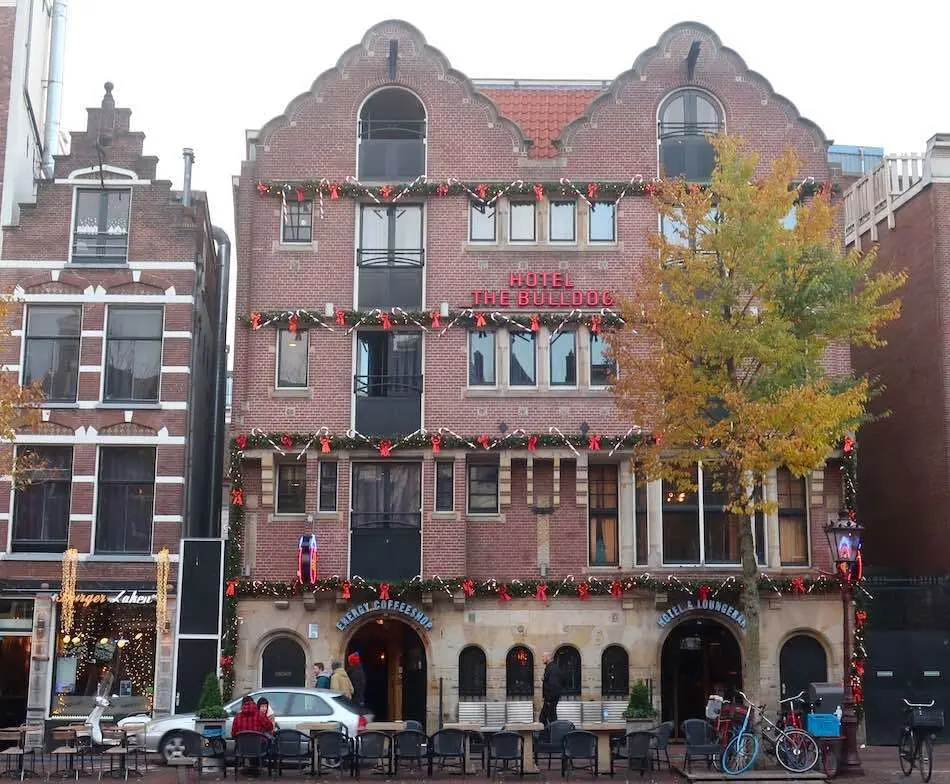 The building where our Zorba the Buddha Disco was housed in the Red Light District, on Oudezijds Voorburgwal 216, is now a hotel, The Bulldog. On a tourist website it reads: “Zorba the Buddha disco had a futuristic snow-white interior and looked like an avant-la-lettre lounge club. They also conducted a joint meditation session a few times a night.” (toursinamsterdam.com)
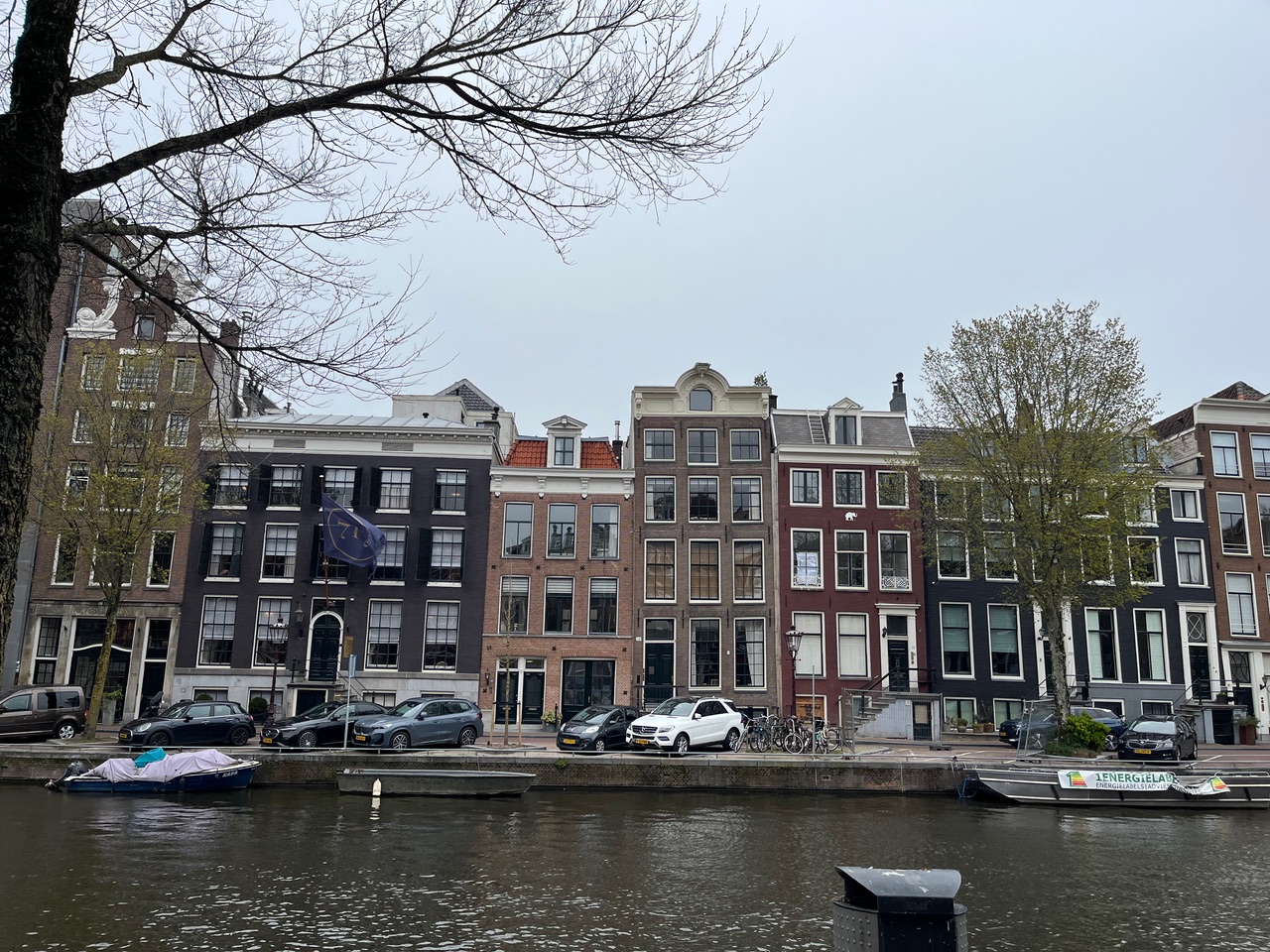 While the commune members were living in the ‘jail’, and later in the ‘monastery’, they opened a meditation centre in a prestigious down-town area, on Prinsengracht 719 (Prince’s Canal). It was right in the middle of the old city, on one of the main canals, in a tourist hotspot. That’s also where Dharmen had his book distribution office.
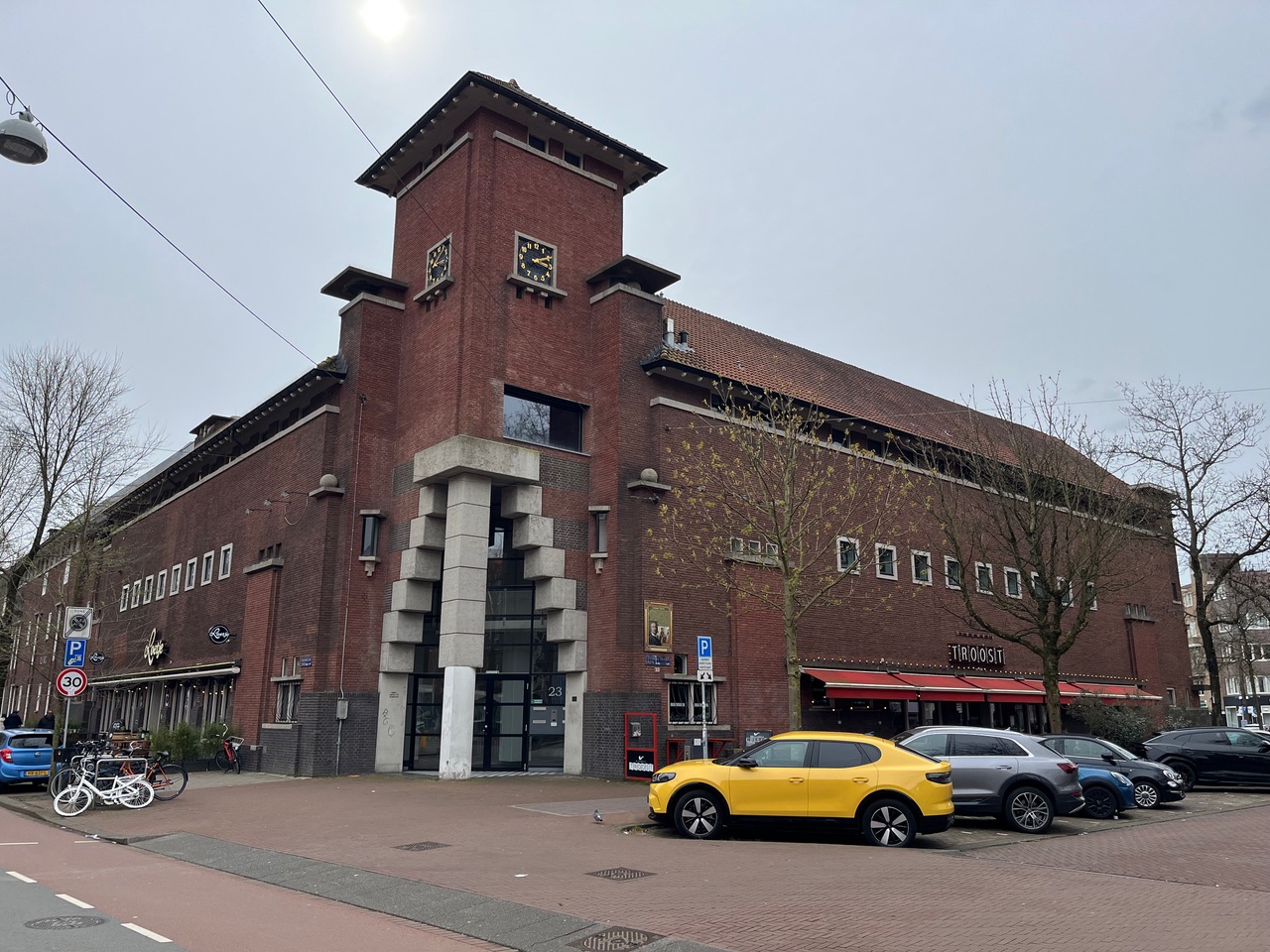 The ‘monastery’ is built along two roads (Pijnackerstraat and Cornelius Troostplein), with a beautiful garden in the middle and a church at the other end of the garden. The commune changed the name from Sadhana to Stad Rajneesh, and after 1989 it was called Osho Stad Amsterdam. Ojas took it over around 1988, when Dassana, who had been running it since 1981, left. One section of the monastery building, between the garden and the church (the one facing Cornelis Troostplein), was run as a youth hostel, called Caravanserai.
Like the Zorba Disco, the Caravanserai was a way of making money for the commune and the Ranch. A lot of young tourists from all over Europe – Italians, French, English – would come to Amsterdam. The city was a popular destination because of the tolerant soft drugs policy in the Netherlands. Sannyasin ‘runners’ would go around Central Station with flyers advertising the Caravanserai budget hotel.
The commune closed in 1991 because, with only half the number of residents compared to when we had taken it on, we could no longer afford the high rent. This group of 25-30 sannyasins decided to remain in the Caravanserai section. This new commune, consisting mainly of young people, is now called Osho Mevlana. Its location is very quiet; it’s just behind the church at the end of the garden. Mevlana offers daily Dynamic and Evening Meditation, and Kundalini Meditation once a week. Occasionally, groups and meditations are held in the afternoons. (osho-mevlana-commune.nl – sannyas.wiki)
The section of the ‘monastery’ facing Pijnackerstraat later became the Arbeidsburo (Job Centre), but now houses a film museum, as well as a Belgian brewery and a bar called ‘Troost’ (Comfort). The entrance on the corner of Ferdinand Bolstraat once took you to the meditation hall, but now leads to a restaurant.
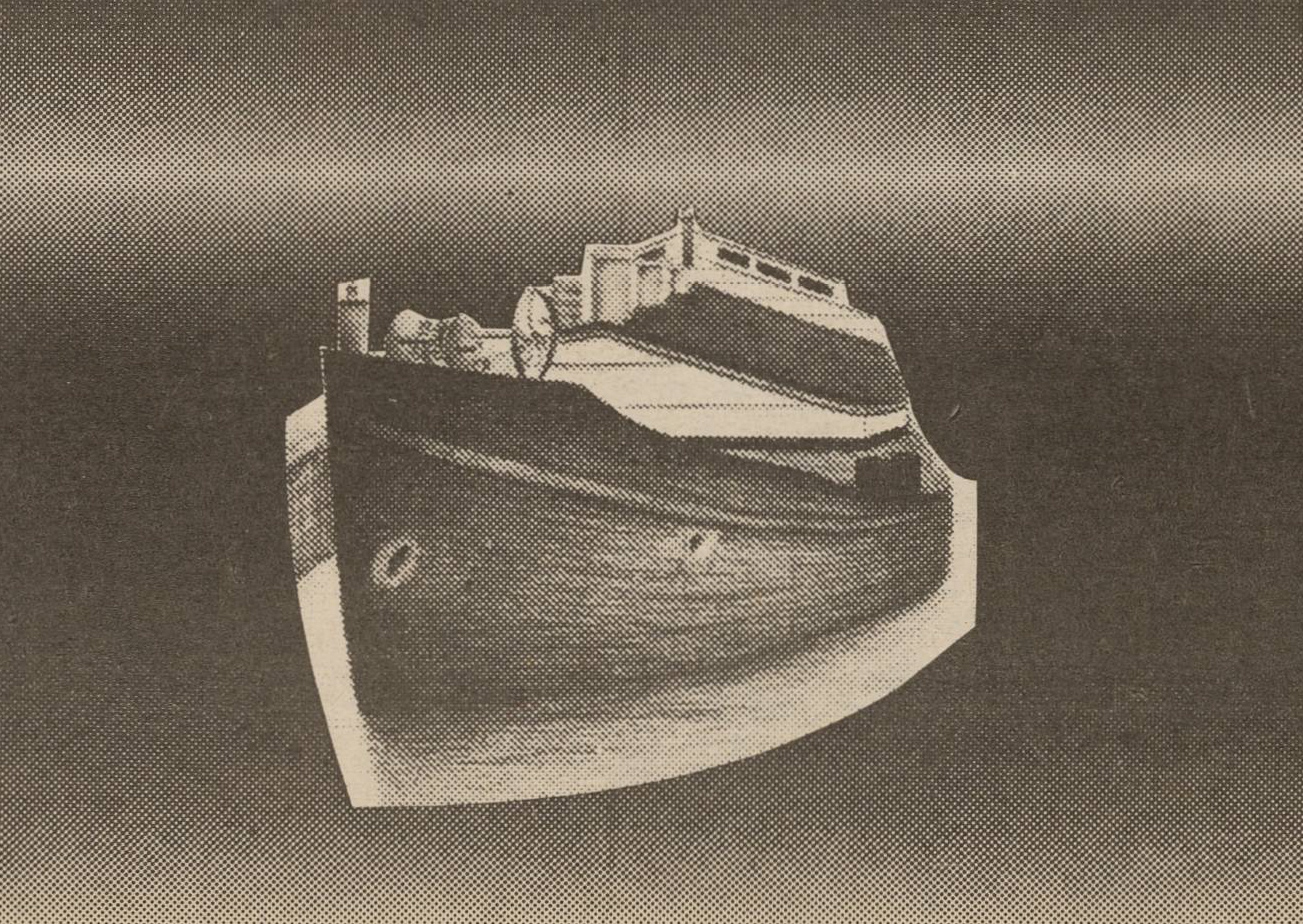 Speaking of youth hostels: Before the commune members moved to the ‘jail’, they had a meditation centre, Amitabh, on a houseboat. It was moored at the Oosterdok (East Dock) near the railway station, just off the Prins Hendrikkade. I did my first meditation weekend on the houseboat in January 1980; it blew my mind. Small as it was, it had a meditation room, a kitchen, a coffee bar and a few rooms which could be rented out to travellers.
When the commune moved to the ‘jail’, the remaining renting contract was taken over by Waduda and Bhikkhu (from New Earth Records) who turned the houseboat into a successful youth hostel, with 77 bunk beds. They called it Wu-Wei.
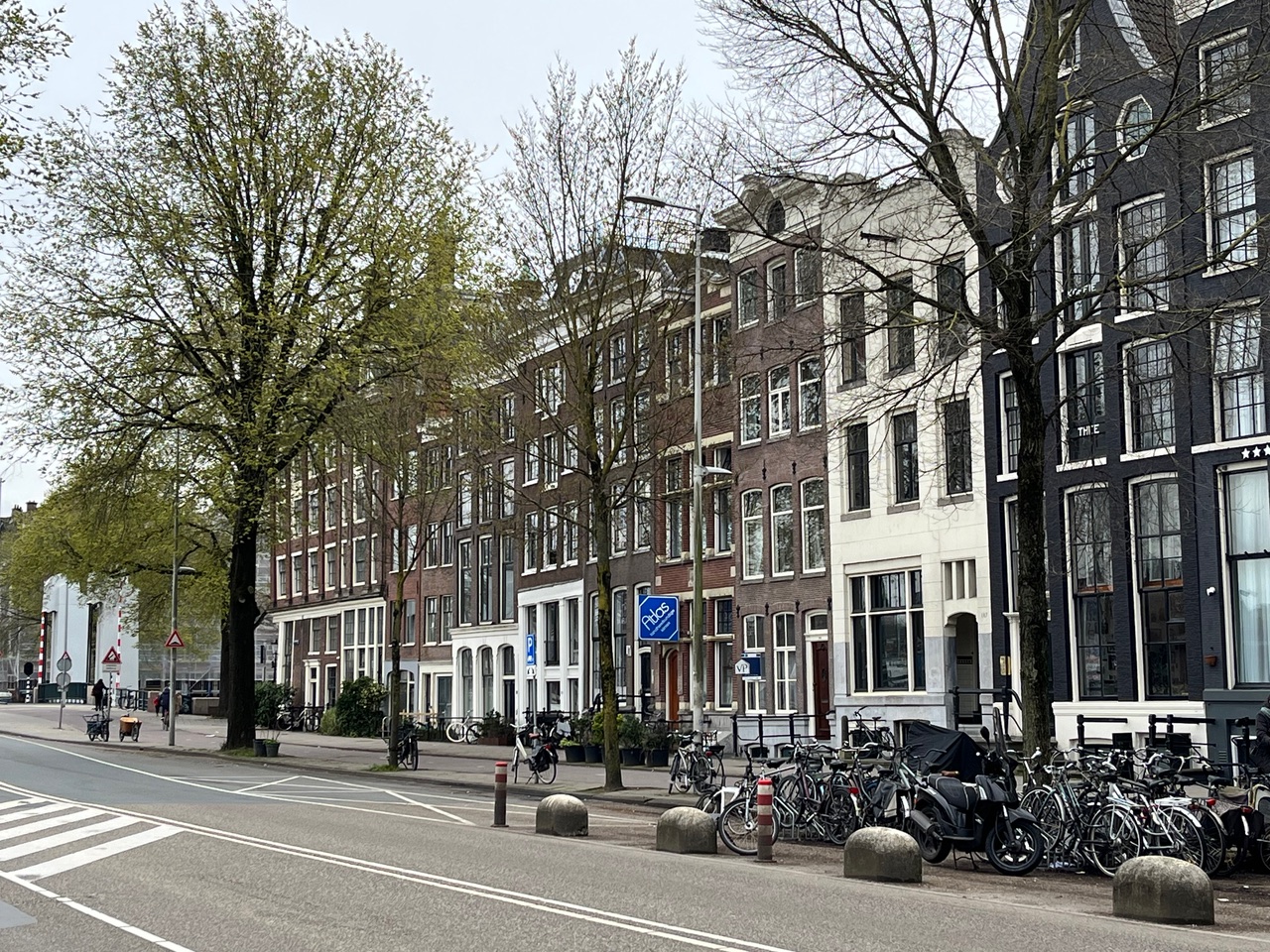 Before the centre on the houseboat was set up, on this same notable Prins Hendrikkade, a cutting-edge New Age centre, De Kosmos, had opened (the white building in the photo). It attracted many young visitors thanks to its health food café, the various dance classes, and Osho’s meditations that were also held there. Ojas, as well as Sambhavya from Israel, write in their memoirs of their first Dynamic or their first visit to the place. In the 19th century the building housed a maritime organisation and a clubhouse for sailors. On the facade it still says Zeemanshoop, which means Sailor’s Hope. De Kosmos was a centre from 1969 to 1992. Now it’s an art centre.
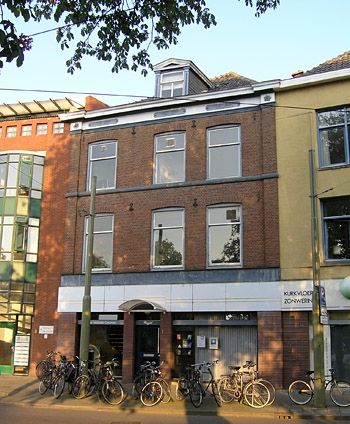 Osho Wajid, a commune and meditation centre in The Hague, refused to follow Sheela’s dictates, and survives to this day.
Osho festivals and Osho meditation leader trainings are held each year, and there is a daily meditation programme. (wajid.nl – sannyas.wiki)
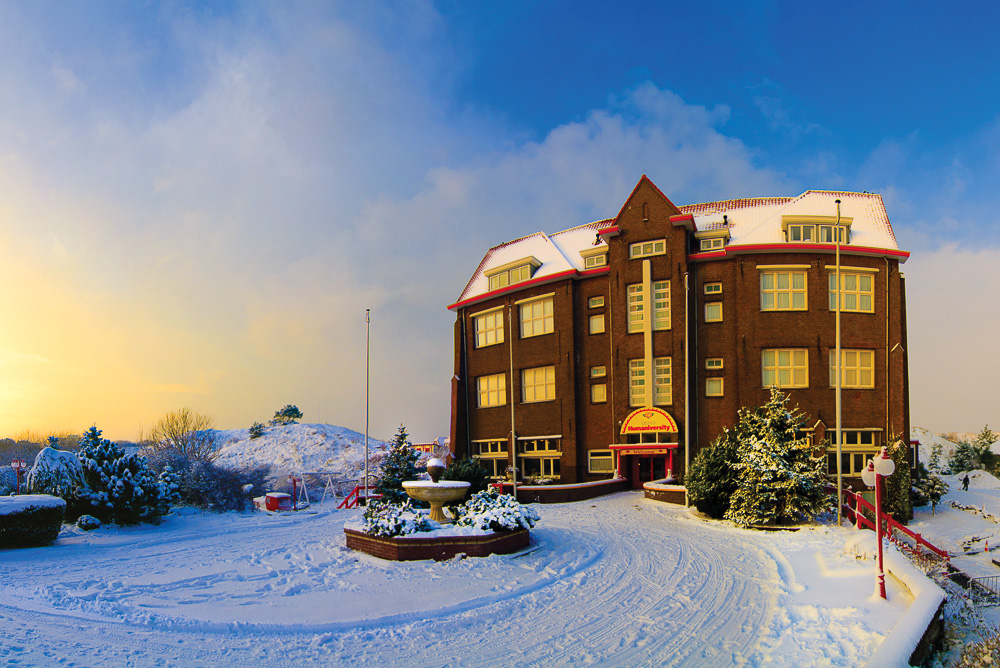 The Osho Humaniversity in Egmond aan Zee continues to offer a variety of courses and trainings (humaniversity.com – sannyas.wiki).
In 1983, after falling out with Sheela, Veeresh changed the name from Grada Rajneesh to Communiversity. Later it was called Humaniversity, then Osho Humaniversity. Veeresh left his body in 2015. Chandrika, Premdip and Geetee are carrying on the good work.
 Osho’s discourses (with Dutch subtitles) are broadcast weekly on Salto TV (salto.nl), a local television channel for Amsterdam. They are organised by Osho Mevlana (osho-mevlana-commune.nl – sannyas.wiki) together with Friends of Osho Foundation (vrienden-van-osho.nl – sannyas.wiki).
Salto A2 can now be viewed all over the country via Osho TV On Demand (salto.nl/osho-tv). Osho TV is also aired twice a week on local TV in Rotterdam. Tarangita has been passionately preparing the broadcasts for Osho TV since 1995, and I take care of the website and the newsletter. Credit for the translation of the discourses goes, of course, to Dharmen, and to Abhay, Prem Hanny, Kalakeli, Tarangita, and myself among others.
 Stichting Vrienden van Osho (Friends of Osho Foundation) was founded by Nandan in 1989. Nandan, a lawyer by profession, is also credited with organising the first digital catalogue of all the questions asked to Osho (The Quest). Samadhan then developed it into the Osho Archive Catalog, including the PDFs, audio and video of all Osho’s discourses (oshoarchive.org).
Together with Satyamo, Nandan collected and published the memoirs of over 60 sannyasins: Hoe Osho in mijn leven kwam (How Osho came into my life) (vrienden-van-osho.nl).
Stichting Vrienden van Osho receives donations from sannyasins all over the Netherlands in order to finance Osho TV, a website and a newsletter to keep the sannyasins informed and connected. Organisers, therapists and bodyworkers (Rebalancing, Tibetan Healing, Colourpuncture, Tantra, etc.) can advertise their meditations, festivals, groups and sessions on our website. (vrienden-van-osho.nl)
There are a few other places in the Netherlands where sannyasins come together to do groups and meditations. The White Cloud Ashram (whitecloudashram.nl) in a far north-east corner of the country, Nieuw Scheemda, is organising meditation retreats and a beautiful Osho Festival each year.
And the Life Force Fitness centre in Amersfoort (lifeforcefitness.nl) offers Osho’s meditative therapies on a regular basis.
Related articles
- Interview with Dharmen (3 Parts)
- Dharmen (1956-2023)
- Abhivandan Obit
- Veeresh Obit
- Nandan Obit (in Dutch)
Images from archive (Osho News, Facebook), Alamy, and present-day photos specially taken by Srajan



Comments are closed.